
Colorectal Cancer Screening: Why It Starts at 45 Now
If you’re 45 or older, your body is now in a higher-risk window for colorectal cancer - and screening isn’t optional anymore. In 2021, major health groups like the U.S. Preventive Services Task Force and the American Cancer Society officially lowered the recommended starting age from 50 to 45. This wasn’t just a tweak. It was a response to hard data: between 1995 and 2019, cases of colorectal cancer in people under 50 rose by 2.2% every year. Rectal cancer, in particular, jumped 3.2% annually in that group. The numbers don’t lie. Younger adults are getting sick, and catching it early saves lives.
Screening isn’t about waiting for symptoms. Most early-stage colorectal cancers cause none. By the time you feel pain, bleeding, or changes in bowel habits, it’s often too late. That’s why screening is your best defense. The most effective method? Colonoscopy. It’s the only test that finds and removes precancerous polyps during the same procedure. Removing a polyp doesn’t just prevent cancer - it stops it before it starts.
Colonoscopy: The Gold Standard, But Not the Only Option
Colonoscopy is still the most powerful tool we have. Done right, it cuts your risk of dying from colorectal cancer by 65%. It’s not perfect - bowel prep is brutal, sedation is required, and there’s a small risk of perforation (about 1 in 1,000 procedures). But the benefits far outweigh the downsides.
Here’s how it works: You drink a strong laxative the day before. It clears your colon so the doctor can see every inch. On the day of the test, you’re asleep for about 30 minutes while a thin, flexible tube with a camera slides through your colon. If they spot a polyp, they remove it right away. No second visit. No waiting. That’s why colonoscopy is recommended every 10 years for people at average risk.
But not everyone can or wants to do a colonoscopy. That’s where alternatives come in. The fecal immunochemical test (FIT) is a simple at-home stool test that checks for hidden blood - a sign of cancer or large polyps. It’s 79-88% accurate at detecting cancer, and you do it every year. It’s cheap, easy, and doesn’t require prep. But if it’s positive, you still need a colonoscopy to find out why.
Then there’s the multi-target stool DNA test (like Cologuard). It looks for DNA changes linked to cancer and blood in the stool. It’s more sensitive than FIT - catching 92% of cancers - but it also gives more false alarms. About 13% of people who take it get a positive result even when they’re healthy. That means unnecessary colonoscopies. It’s good for people who refuse colonoscopy, but not the first choice if you’re willing to do the real thing.
CT colonography (virtual colonoscopy) uses X-rays to create a 3D image of your colon. No sedation, no scope. But you still need bowel prep, and if they see anything suspicious, you still need a colonoscopy. Plus, you’re exposed to radiation - about the same as a chest CT. It’s an option, but not ideal for routine use.
Who Needs to Start Earlier Than 45?
If you have a family history of colorectal cancer or polyps, or if you’ve been diagnosed with inflammatory bowel disease (like Crohn’s or ulcerative colitis), your risk isn’t average. It’s much higher. In these cases, screening doesn’t wait until 45. You might start at 40, or even earlier - sometimes in your 20s if you have a genetic syndrome like Lynch syndrome or familial adenomatous polyposis (FAP).
For African Americans, who have the highest incidence and mortality rates from colorectal cancer in the U.S., guidelines are clear: colonoscopy is the preferred test. They’re 20% more likely to get CRC and 40% more likely to die from it. Starting at 45 is critical. And if you’ve had a polyp removed before, your follow-up schedule changes. Small polyps? Repeat colonoscopy in 5-10 years. Large or multiple polyps? Back in 3 years. It’s not one-size-fits-all.
Chemotherapy Regimens for Colorectal Cancer: What’s Used Today
If screening finds cancer, the next step is treatment. For early-stage cancers (Stage I or II), surgery alone is often enough. But if the cancer has spread to lymph nodes (Stage III) or beyond (Stage IV), chemotherapy becomes part of the plan.
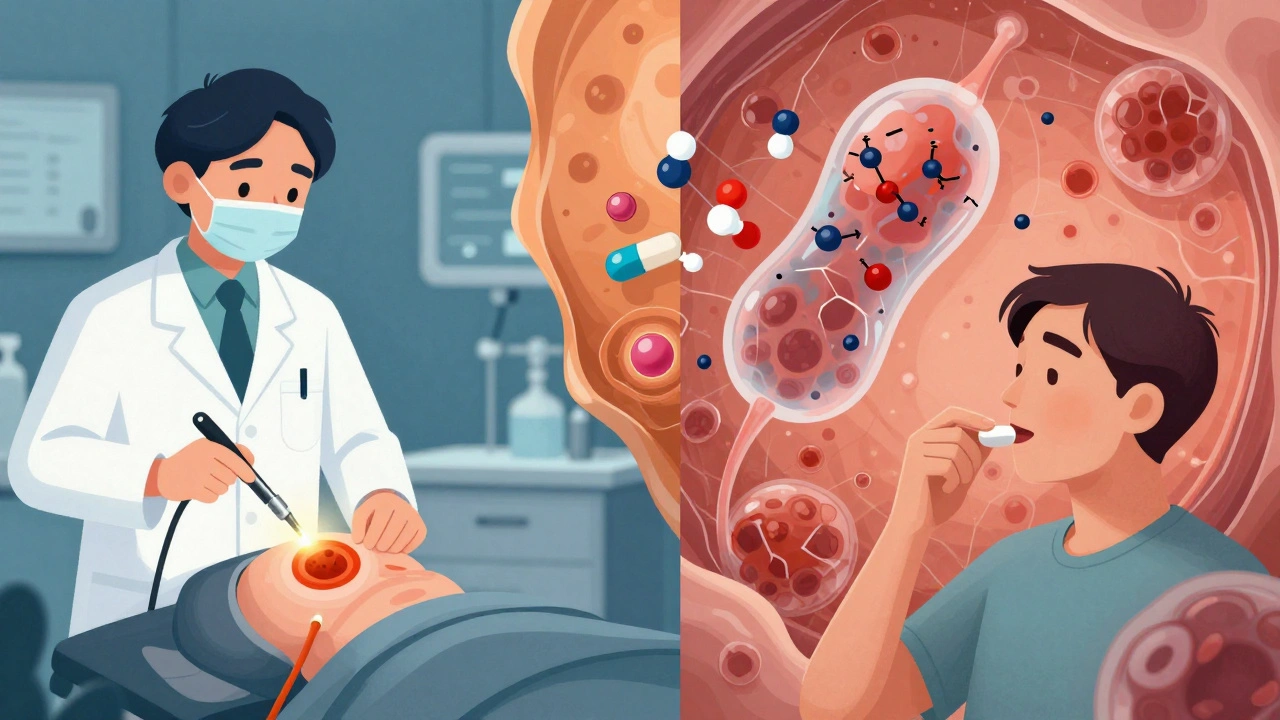
The most common chemotherapy regimens today are FOLFOX and CAPOX. FOLFOX combines three drugs: 5-fluorouracil (5-FU), leucovorin, and oxaliplatin. CAPOX swaps 5-FU and leucovorin for capecitabine (an oral pill) and keeps oxaliplatin. Both are effective. The choice often comes down to convenience and side effects. CAPOX lets you take a pill at home instead of sitting in a chair for hours getting IV drips. But oxaliplatin can cause nerve damage - cold sensitivity, tingling in fingers and toes - that can last months or even years.
For advanced cases (Stage IV), doctors add targeted drugs. Bevacizumab (Avastin) blocks blood vessel growth that feeds tumors. Cetuximab (Erbitux) and panitumumab (Vectibix) target a specific protein (EGFR) found in some CRC tumors. These aren’t for everyone. Your tumor must be tested for mutations in the KRAS and NRAS genes. If those genes are mutated, EGFR drugs won’t work. That’s why genetic testing is now standard before starting treatment.
Immunotherapy is changing the game for a small group. If your cancer has microsatellite instability-high (MSI-H) or mismatch repair deficiency (dMMR), drugs like pembrolizumab (Keytruda) can be incredibly effective. These drugs help your immune system recognize and kill cancer cells. For these patients, immunotherapy can be more effective than chemo - and with fewer side effects.
Screening Rates Are Still Too Low - And So Are Survival Rates
Despite all the evidence, only 67% of adults aged 50-75 in the U.S. are up to date with screening. That’s 1 in 3 people skipping a test that could save their life. The gap is even wider for uninsured people - only 58% get screened, compared to 78% for those with private insurance. African Americans are less likely to be screened than White Americans, even though they’re at higher risk.
Why? Cost, fear, access, and confusion. Some people think the prep is too hard. Others don’t know where to start. Many don’t realize their doctor can help them pick the right test. And if you live in a rural area, you might have to drive hours to find a clinic that does colonoscopies.
But here’s the thing: when caught early, colorectal cancer has a 90% five-year survival rate. That drops to 14% if it’s found at Stage IV. That’s not a small difference. That’s the difference between living and dying.
What You Can Do Right Now
- If you’re 45-75 and haven’t been screened: Talk to your doctor. Don’t wait for symptoms.
- Ask if colonoscopy is right for you - it’s the most effective option.
- If you can’t do a colonoscopy, ask about FIT. Do it every year.
- If you have a family history, ask about genetic testing and earlier screening.
- If you’ve had cancer: Make sure your treatment plan includes genetic testing for MSI-H/dMMR and KRAS/NRAS mutations.
Screening isn’t about being scared. It’s about being smart. One test, done once every 10 years, can stop cancer before it starts. Or catch it when it’s still curable. That’s not a gamble. That’s a guarantee.

What Happens After a Positive Test?
If your FIT or stool DNA test comes back positive, don’t panic. But don’t ignore it either. A positive result doesn’t mean you have cancer - it means something unusual was found. The next step is always a colonoscopy. That’s the only way to know for sure. Delaying it increases your risk.
After a colonoscopy, your doctor will give you a report. It will say what was found - no polyps, one small polyp, multiple polyps, or cancer. Based on that, they’ll tell you when to come back. No polyps? Wait 10 years. One small adenoma? Come back in 5-7 years. Multiple or large polyps? Back in 3 years. Cancer? You’ll be referred to an oncologist.
Some people think if they’ve had a clean colonoscopy, they’re fine forever. That’s not true. Polyps can grow back. New ones can form. That’s why sticking to the schedule matters.
Chemo Side Effects: What to Expect and How to Manage Them
Chemotherapy isn’t gentle. It attacks fast-growing cells - cancer cells, yes, but also hair follicles, gut lining, and bone marrow. That’s why side effects happen: fatigue, nausea, hair loss, low blood counts, and nerve pain.
Oxaliplatin, used in FOLFOX and CAPOX, causes cold sensitivity. You might feel pain just holding a cold drink. Avoid ice, cold air, and metal objects. Keep your hands and feet warm. Nerve damage can last months. Some people never fully recover.
Capecitabine (the pill version) can cause hand-foot syndrome - redness, swelling, and peeling on palms and soles. Avoid tight shoes. Use moisturizer. Tell your doctor if it gets worse.
Supportive care matters. Anti-nausea drugs, blood transfusions, and nutritional support can make a huge difference. Don’t suffer in silence. Ask for help.
Why This Matters More Than Ever
Colorectal cancer is preventable. It’s treatable. But only if you act. The guidelines changed because the disease changed. Younger people are getting it. More people are dying from it. But we have the tools to stop it.
Colonoscopy saves lives. Chemotherapy extends them. And both work best when you don’t wait.
At what age should I start colorectal cancer screening?
For people at average risk, screening should start at age 45. This is the current standard recommended by the U.S. Preventive Services Task Force, the American Cancer Society, and the American College of Gastroenterology. If you have a family history of colorectal cancer, inflammatory bowel disease, or a genetic syndrome like Lynch syndrome, you may need to start earlier - sometimes in your 20s or 30s. Always talk to your doctor about your personal risk.
Is colonoscopy the best screening test?
Yes, colonoscopy is the most effective screening method. It not only detects cancer but also prevents it by removing precancerous polyps during the same procedure. It reduces the risk of dying from colorectal cancer by up to 65%. While other tests like FIT or stool DNA are easier and non-invasive, they don’t remove polyps. If they’re positive, you still need a colonoscopy. For most people, colonoscopy every 10 years is the gold standard.
What are the main chemotherapy drugs used for colorectal cancer?
The most common chemotherapy regimens are FOLFOX (5-fluorouracil, leucovorin, oxaliplatin) and CAPOX (capecitabine, oxaliplatin). For advanced cancer, targeted drugs like bevacizumab (Avastin) or EGFR inhibitors (cetuximab, panitumumab) may be added - but only if your tumor has the right genetic profile. Immunotherapy drugs like pembrolizumab are used for tumors with MSI-H or dMMR mutations, which occur in about 15% of cases.
Can colorectal cancer be cured if caught early?
Yes. When detected at Stage I or II - before it spreads beyond the colon wall - the five-year survival rate is over 90%. Surgery alone is often enough. The key is catching it before symptoms appear. That’s why screening is so important. By the time you feel pain or notice blood in your stool, the cancer may already be advanced, and survival rates drop dramatically to around 14% for Stage IV.
Are at-home stool tests as good as colonoscopy?
They’re better than nothing, but not as good. Stool tests like FIT detect cancer with 79-88% accuracy, and stool DNA tests like Cologuard catch 92% of cancers. But they miss many precancerous polyps. They also have high false-positive rates, meaning many people end up having unnecessary colonoscopies. Colonoscopy is the only test that both detects and prevents cancer by removing polyps. If you’re healthy and willing to do it, colonoscopy is the best choice.
What if I’m over 75? Do I still need screening?
For people aged 76-85, screening is no longer routine. The decision should be personal. Talk to your doctor about your overall health, life expectancy, and prior screening history. If you’ve never been screened and are in good health, you might still benefit. But if you’ve had regular clean colonoscopies, the risk of developing cancer now is low. Screening after 85 is generally not recommended.
Does insurance cover colorectal cancer screening?
Yes. Under the Affordable Care Act, most insurance plans cover colorectal cancer screening at no cost to you - including colonoscopy, FIT, and stool DNA tests - when done for screening purposes, not because of symptoms. Medicare covers colonoscopy every 10 years for average-risk people, or every 2 years if you’re at high risk. If you’re uninsured, community health centers and state programs often offer free or low-cost screening.
Can lifestyle changes reduce my risk of colorectal cancer?
Yes. While you can’t change your genetics, you can reduce your risk. Avoid smoking, limit alcohol, stay physically active, and eat more fiber-rich foods like vegetables, fruits, and whole grains. Cut back on red and processed meats. Maintain a healthy weight. These habits won’t eliminate your risk, but they lower it - and they help with overall health too. Screening is still essential, even if you live a healthy lifestyle.







I got my colonoscopy last year and honestly? It was way less scary than I thought. The prep was gross, sure, but I slept through the whole thing. Now I feel like a superhero who beat cancer before it even showed up.
December 11Sarah Clifford