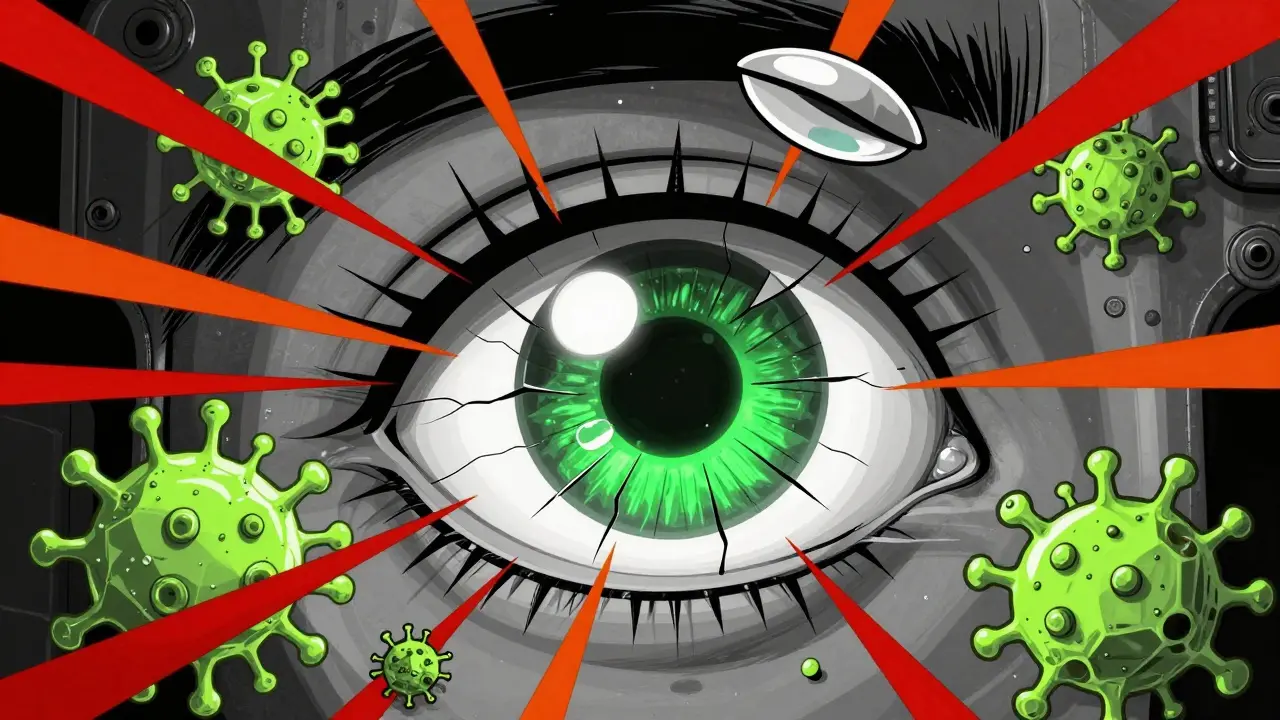
A corneal ulcer isn’t just a sore eye-it’s an open wound on the clear front surface of your eye that can steal your vision if ignored. For the 85 million people worldwide who wear contact lenses, this isn’t a rare scare. It’s a real, preventable danger. And if you’re wearing your lenses overnight, you’re 100 times more likely to develop one than someone who doesn’t. This isn’t fearmongering. It’s data from the Cleveland Clinic and the FDA. The moment you notice pain, redness, or blurry vision while wearing contacts, you need to act-fast.
What Exactly Is a Corneal Ulcer?
The cornea is your eye’s clear front window. It’s tough, but not invincible. A corneal ulcer is an open sore that forms when the surface breaks down, often because of an infection. It’s not the same as a scratch. A corneal abrasion is a surface scrape that usually heals on its own. An ulcer? That’s tissue loss. Bacteria, fungi, or viruses burrow in, eat away at the cornea, and leave behind a crater-like wound. Left untreated, it can scar your cornea, warp your vision, or even lead to blindness.Why Contact Lenses Are the #1 Risk Factor
You might think your lenses are clean because you rinse them with solution. But here’s the truth: your fingers, your sink, your shower, even your pillowcase can carry harmful microbes. When you wear contacts-especially overnight-you’re creating the perfect storm. Contacts block oxygen from reaching your cornea. That weakens its natural defenses. Then, bacteria from your hands or dirty solution get trapped under the lens. The longer you wear them, especially while sleeping, the more time those germs have to multiply. Studies show contact lens wearers are 10 times more likely to get a corneal ulcer than non-wearers. And if you sleep in them? That jumps to 100 times higher risk. Soft, extended-wear lenses are the worst offenders. They’re designed to be worn for days or weeks, but that convenience comes at a cost. Even if you don’t sleep in them, wearing them longer than recommended-say, a week past their replace-by date-increases your risk. Scratched lenses are another silent threat. A tiny tear you can’t see can harbor bacteria and scratch your cornea as you blink.What Symptoms Should You Never Ignore?
If you feel any of these, stop wearing your lenses right now and call your eye doctor:- Severe eye pain, even when you’re not touching your eye
- Blurry, hazy, or foggy vision that doesn’t clear up
- Red, bloodshot eyes that look worse than just tired
- White or gray spot on the clear part of your eye (the cornea)
- Excessive tearing or thick, pus-like discharge
- Extreme sensitivity to light-you can’t stand even normal indoor lighting

How Doctors Diagnose It
Your eye doctor won’t just look at your eye with a flashlight. They’ll use specialized tools:- Fluorescein staining: A harmless orange dye is dropped in your eye. Under blue light, any damaged areas glow green-making the ulcer visible.
- Slit-lamp exam: A high-powered microscope lets the doctor see the ulcer’s depth, size, and shape in detail.
- Corneal scraping: If the ulcer looks serious, they’ll gently take a tiny sample of the infected tissue and send it to a lab. This tells them if it’s bacterial, fungal, or viral.
- Visual acuity test: They’ll check how well you can see before and after treatment to track progress.
How It’s Treated-And Why Speed Matters
Treatment starts the moment you walk in the door. Waiting even a day can mean the difference between full recovery and permanent vision loss. For mild ulcers, doctors usually start with fluoroquinolone antibiotic eye drops-a broad-spectrum treatment that covers most common bacteria. You’ll need to use them every hour or two at first, then taper off as it heals. If the ulcer is large (over 2 mm), close to the center of your vision, or getting worse after 48 hours, they’ll do a corneal scraping right away. That way, they can target the exact germ causing the problem:- Bacterial: Fluoroquinolones or other antibiotics
- Viral: Antiviral drops like acyclovir
- Fungal: Special antifungal medications-these are harder to treat and take weeks

How to Prevent a Corneal Ulcer
The best treatment is avoiding the problem altogether. Here’s what actually works:- Never sleep in your lenses. Even "extended-wear" ones. The 100x risk increase isn’t a myth-it’s a warning.
- Replace your lenses on schedule. Daily, weekly, monthly-stick to it. Don’t stretch them.
- Wash your hands before touching your lenses. Soap and water. Dry with a lint-free towel.
- Use only recommended solutions. Never use tap water, saliva, or homemade saline. Water carries dangerous germs like Acanthamoeba, which cause hard-to-treat infections.
- Take your lenses out before swimming or showering. Even a splash can introduce microbes.
- Give your eyes a break. Wear glasses at least one day a week. Let your cornea breathe.
- Don’t reuse solution. Always dump the old solution and refill the case daily. Clean your case weekly with hot water and let it air dry.
What to Do If You Think You Have One
If you notice any symptoms:- Take your contacts out immediately.
- Don’t rub your eye. Don’t put in new lenses.
- Don’t wait until your next appointment. Call your eye doctor right away.
- If you can’t reach them, go to an urgent eye clinic or emergency room. Time is vision.
Final Reality Check
Contact lenses are safe-if you treat them like medical devices, not fashion accessories. They’re not like glasses. You can’t just toss them in your bag and forget them. They require daily care, discipline, and respect. The FDA, the Cleveland Clinic, and the American Academy of Ophthalmology all agree: improper lens use can lead to blindness. But the good news? You control the risk. Follow the rules. Listen to your eyes. And if something feels wrong-don’t ignore it. Your vision isn’t something you can afford to gamble with.Can a corneal ulcer heal on its own?
No. A corneal ulcer is an infection-driven open sore. It won’t heal on its own. Without treatment, it can spread, scar your cornea, or cause permanent vision loss. Even mild cases need medical care to prevent complications.
How long does it take to recover from a corneal ulcer?
Mild ulcers treated early can heal in 1 to 2 weeks. Severe cases, especially fungal or those requiring a corneal transplant, can take months. Recovery depends on the cause, size, and how quickly treatment started. Scarring may leave lasting vision changes even after the infection clears.
Are daily disposable lenses safer than monthly ones?
Yes. Daily disposables reduce the risk because you’re not reusing them. No buildup of protein, bacteria, or debris. Monthly lenses require strict cleaning and storage, and even then, they carry higher infection risk over time. If you’re prone to eye infections, daily lenses are the safer choice.
Can I wear glasses while I have a corneal ulcer?
Yes, you can wear glasses while healing. In fact, you should avoid all contact lenses until your doctor says it’s safe. Glasses won’t interfere with healing and can help you see clearly while your eye recovers.
Is it safe to use eye drops from a friend or leftover prescription?
Absolutely not. Eye drops are prescription medications. Using someone else’s drops-or an old bottle-can introduce new bacteria or worsen your infection. Always use fresh, doctor-prescribed drops. Never share or reuse them.
Can corneal ulcers come back after treatment?
Yes, if you return to risky behaviors. Sleeping in lenses, poor hygiene, or ignoring replacement schedules makes recurrence likely. Once you’ve had one ulcer, your eye is more vulnerable. That’s why following prevention rules isn’t optional-it’s essential.






bro i slept in my contacts for 3 days straight last month and my eye looked like a horror movie but i’m fine lmao. maybe the universe just likes me.
January 22Jamie Hooper