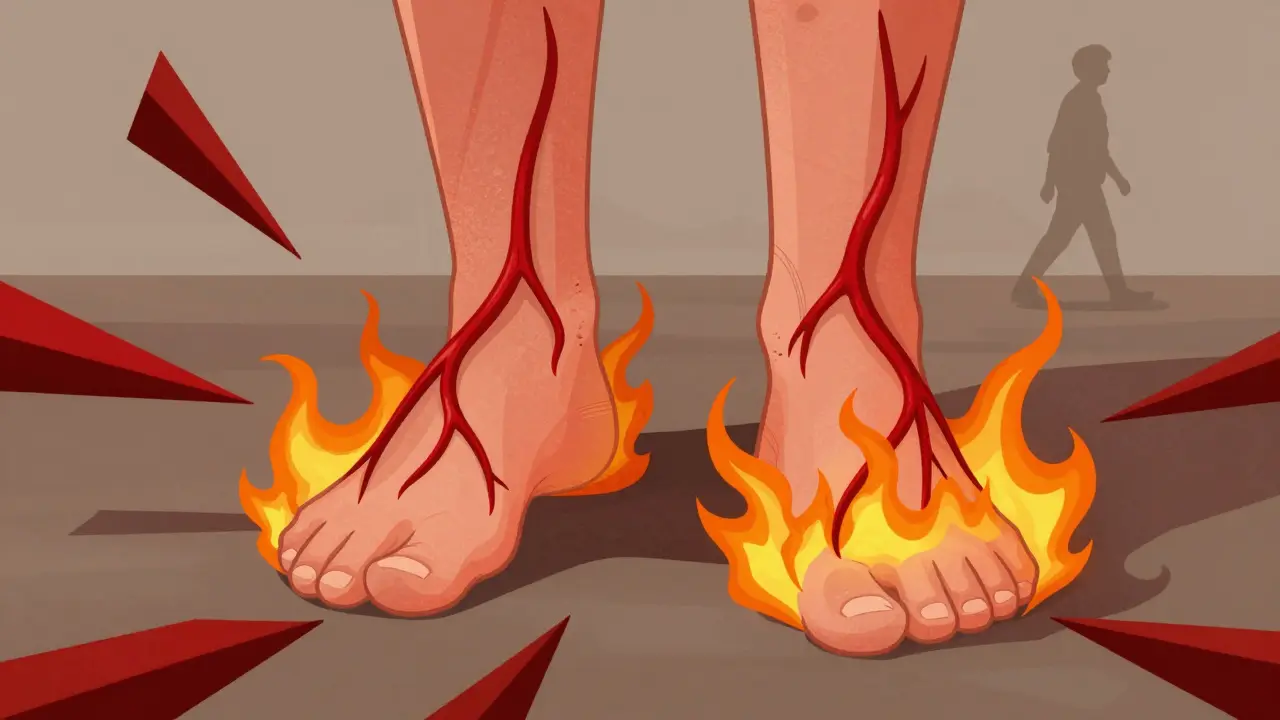
Living with diabetic neuropathy pain isn’t just about discomfort-it’s about losing control over your daily life. Burning feet. Tingling that won’t quit. Sensitivity so sharp even a bedsheet feels like sandpaper. And no matter how hard you try, nothing seems to fix the root cause. That’s because diabetic neuropathy pain can’t be reversed. But it can be managed. And done right, you can get back to walking, sleeping, and living without constant pain.
What You’re Really Fighting
Diabetic neuropathy isn’t a single condition. It’s nerve damage caused by years of high blood sugar. Over time, those elevated glucose levels wreck the tiny blood vessels that feed your nerves, especially in your feet and legs. The result? Nerves misfire. They send pain signals when there’s no injury. Or they go silent, leaving you unable to feel cuts, blisters, or infections-until it’s too late.Half of all people with diabetes will develop some form of nerve damage. About 1 in 5 of them deal with painful symptoms daily. And here’s the hard truth: no pill, patch, or injection can heal those damaged nerves. The goal isn’t cure-it’s control. Reduce pain enough to live without fear. Prevent foot ulcers. Avoid amputations.
The Four FDA-Approved Medications
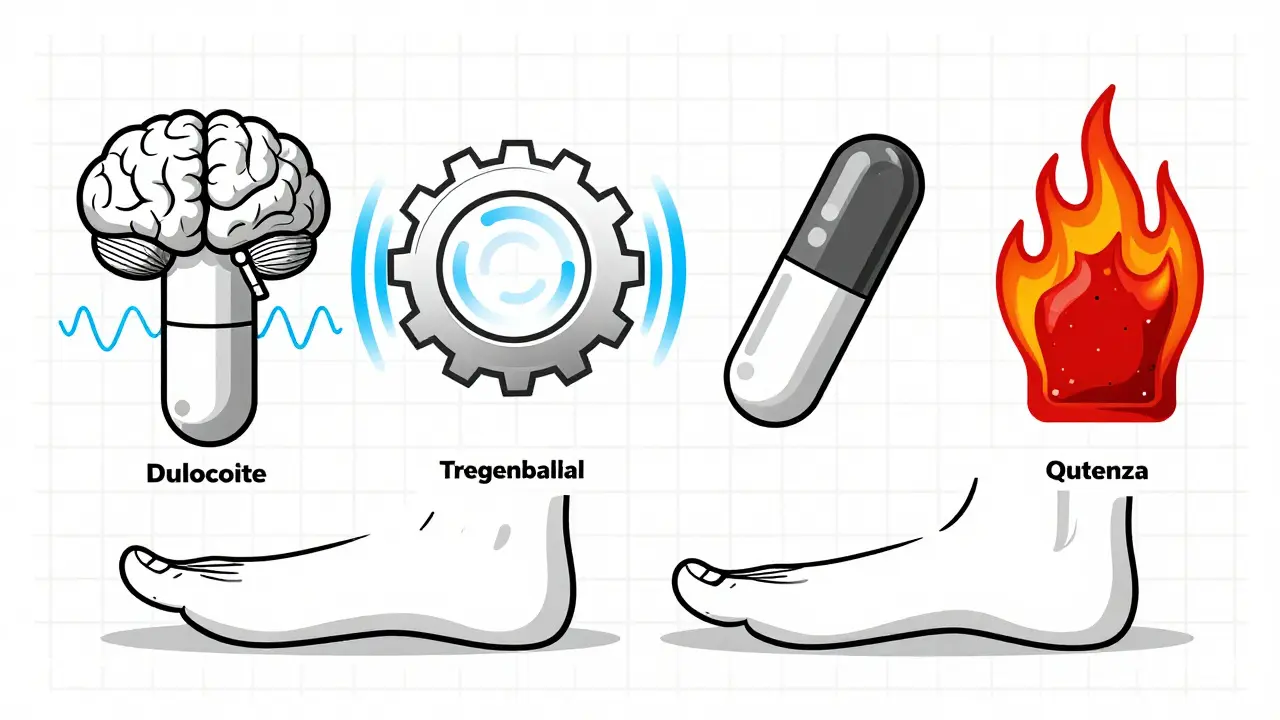
You won’t find a magic bullet. But there are four drugs the FDA has specifically approved for this type of pain. Each works differently. Each has trade-offs. And choosing the right one depends on your body, your other health issues, and what you can afford.- Duloxetine (Cymbalta): This is an SNRI, originally an antidepressant. It works by boosting serotonin and norepinephrine in your brain and spinal cord, which helps dampen pain signals. It’s taken once daily at 60mg. Many patients report not just less pain, but better mood too-important since depression affects up to a third of people with chronic neuropathy. Side effects? Nausea, dry mouth, and sometimes weight gain. But it’s affordable: generic duloxetine costs around $15 for a 90-day supply.
- Pregabalin (Lyrica): This one calms overactive nerves directly. It’s taken in divided doses, usually 75-150mg daily. It works fast-some feel relief in 48 hours. But it comes with heavy side effects: dizziness in 3 out of 10 people, sleepiness in 1 in 5. It’s also a controlled substance and costs up to $378 for 90 capsules, even with insurance. Many drop out because they can’t drive or feel too foggy.
- Tapentadol extended-release (Nucynta ER): This is an opioid-like painkiller, approved for moderate to severe pain. It’s used when other options fail. It’s not first-line because of addiction risk. But for someone with unbearable pain who’s tried everything else, it can be a lifeline-when tightly monitored.
- 8% capsaicin patch (Qutenza): This one’s unique. It’s applied directly to the skin on your feet by a doctor. The high-dose capsaicin literally depletes the pain-signaling chemical in your nerves. One 30- to 60-minute session can give you 3 months of relief. The catch? The application hurts like hell. You’ll feel intense burning during the treatment. But patients who stick with it say it’s worth it. One Reddit user reported 70% pain reduction after one application.
Common Off-Label Options
Many doctors reach for drugs not officially approved for neuropathy-but proven to help anyway. These are often cheaper and more accessible.- Gabapentin: Similar to pregabalin but older and much cheaper. A 90-day supply can cost as little as $4. Doses range from 300mg to 3,600mg daily. Side effects include dizziness and swelling. Many patients need to start low and go slow to avoid feeling like they’re drunk.
- Amitriptyline: A tricyclic antidepressant. It’s been used for nerve pain since the 1970s. Doses are low-10 to 100mg at night. It helps with sleep and pain. But side effects are rough: dry mouth, constipation, blurred vision, and drowsiness. It’s also risky for older adults or those with heart problems.
- Tramadol: A mild opioid. The NHS recommends it only as a third-line option after other treatments fail. It’s effective for some, but dependence and withdrawal are real risks. Don’t use it long-term unless absolutely necessary.
- 5% lidocaine patches (Lidoderm): These stick right on the painful area. They numb the skin without affecting your whole body. Great for localized foot pain. You can use up to three patches a day for 12 hours. No systemic side effects. But they don’t help if the pain is widespread.
What Doesn’t Work (And Why)
You’ll hear a lot of advice. Some of it is dangerous.NSAIDs like ibuprofen or naproxen? Avoid them. They don’t touch nerve pain. And for diabetics, they raise the risk of sudden kidney injury by more than double-even at normal doses.
Supplements like alpha-lipoic acid or B vitamins? They’re popular, but no strong evidence they reduce pain. Some may help with blood sugar control, but they won’t fix your nerves.
Opioids? The CDC strongly warns against using them for chronic pain like this. Addiction rates are 3% to 12% in long-term users. But here’s the nuance: for a small group with severe, unrelenting pain who’ve tried everything else, opioids can be part of a carefully managed plan. The key word is managed. No prescriptions without regular check-ins, urine tests, and clear goals.
Foot Care: The Real Lifesaver
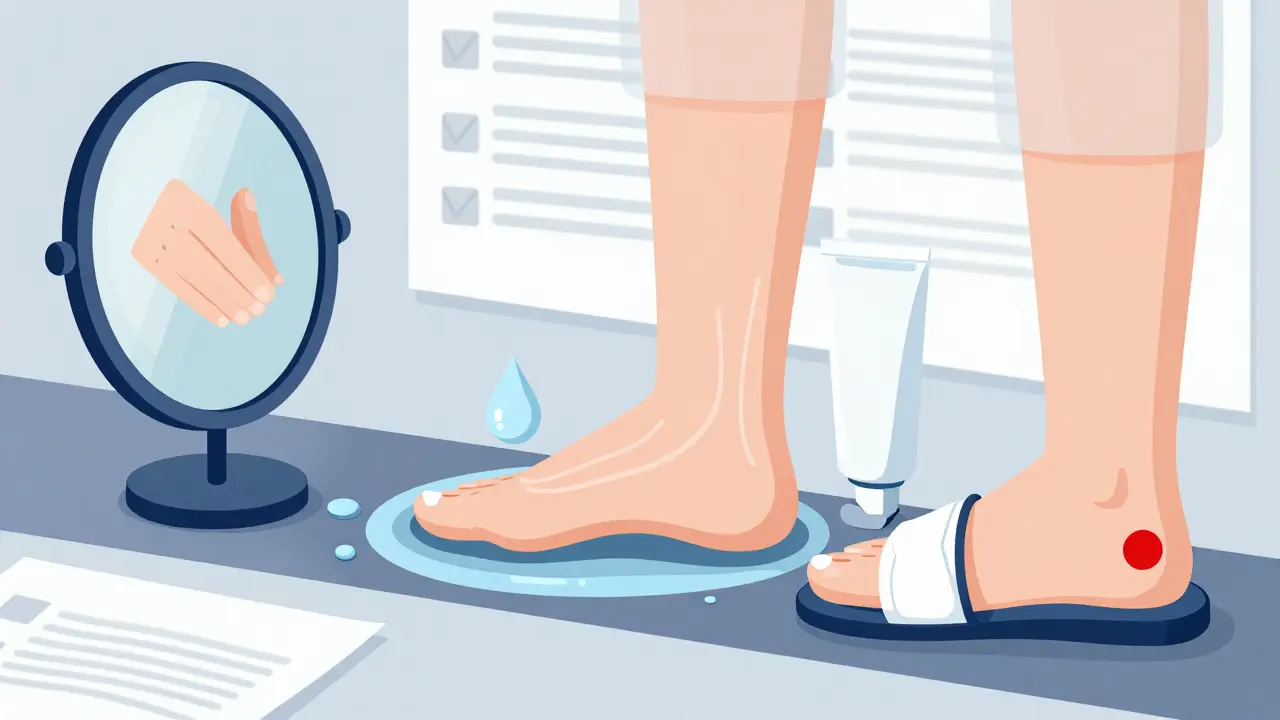
Medications help you feel better. Foot care keeps you from losing your foot.Diabetic neuropathy steals your ability to feel pain. That means you can step on a nail, get a blister from new shoes, or crack a toe without knowing it. That small injury turns into an infection. Then an ulcer. Then, in 15% of cases, amputation.
Here’s what you must do every day:
- Check both feet. Use a mirror or ask someone to help. Look for cuts, redness, swelling, blisters, or changes in skin color.
- Wash feet daily with lukewarm water. Never soak. Dry thoroughly-especially between the toes.
- Moisturize. Dry skin cracks. Use lotion on tops and bottoms, but not between toes.
- Trim toenails straight across. Don’t cut into the corners. Fungal nails? See a podiatrist.
- Wear shoes that fit. No barefoot walking-not even indoors. Even a tiny pebble can cause damage you won’t feel.
- Get an annual foot exam. Your doctor should test sensation with a 10g monofilament. If you can’t feel it, your risk of ulcers skyrockets.
Special diabetic socks and custom shoes are often covered by Medicare. Ask your doctor for a referral to a certified pedorthist. These aren’t luxury items-they’re medical equipment.
Choosing the Right Medication: A Real-World Guide
There’s no one-size-fits-all. Here’s how to think about it:- If you’re depressed or anxious: Start with duloxetine. It treats both pain and mood.
- If cost is a major issue: Try gabapentin. It’s cheap and effective for many.
- If your pain is only in your feet: Ask about the capsaicin patch. One treatment can last months.
- If you’re older or have heart issues: Avoid amitriptyline. It can mess with your heart rhythm.
- If you’re on other medications: Tell your doctor everything. Pregabalin and duloxetine can interact with blood pressure drugs, antidepressants, and even some antibiotics.
Start low. Go slow. Give each medication 4 to 8 weeks at the right dose before deciding if it works. Most people need to try two or three before finding one that fits. Don’t give up after one failed attempt.
What’s Coming Next
The field is changing fast. In 2023, the FDA accepted a new drug called mirogabalin for review. Early trials show 42% pain reduction-better than some current options. And researchers are now testing drugs that protect nerves before damage happens, not just treat pain after it starts.One exciting area is precision medicine. A 2023 study found that your genes can predict whether duloxetine will work for you. If you have certain variations in the CYP2D6 enzyme, you’re 73% more likely to respond. Genetic testing isn’t routine yet-but it’s coming.
Meanwhile, SGLT2 inhibitors (like Farxiga and Jardiance), originally for blood sugar, are showing surprising nerve-protective effects. The DAPA-NEURO trial results are due in late 2024. If they pan out, these drugs might become part of standard care-not just for glucose, but for nerve health too.
When to Call Your Doctor
Pain management isn’t a solo mission. You need your care team. Call if:- Your pain gets worse, or spreads.
- You develop new numbness in your hands or arms.
- You notice a sore on your foot that doesn’t heal in 2 days.
- You feel dizzy, confused, or have swelling in your legs.
- You can’t take your meds because of side effects.
Don’t wait. Foot ulcers can turn deadly in days. Pain that suddenly changes might mean something else-like a pinched nerve or infection.
Can diabetic neuropathy pain go away on its own?
No. Once nerve damage from diabetes has occurred, it doesn’t heal on its own. The goal of treatment is to stop it from getting worse and reduce pain enough to improve daily life. Blood sugar control is critical to prevent further damage, but it won’t reverse what’s already done.
Is gabapentin better than pregabalin for diabetic neuropathy?
They work similarly, but pregabalin has more consistent research backing and slightly better pain relief in studies. However, gabapentin is much cheaper and often just as effective for many people. The choice often comes down to cost and side effects. Some tolerate gabapentin better; others find pregabalin’s dosing easier (once or twice daily vs. three times).
Why do I need to check my feet every day?
Nerve damage means you can’t feel injuries. A small cut, blister, or ingrown toenail can become infected without you noticing. By the time you feel pain, the infection may have spread deep into the tissue or bone. Daily checks catch problems early-before they turn into ulcers or amputations.
Can I use over-the-counter pain creams for diabetic neuropathy?
Most OTC creams (like Bengay or Icy Hot) don’t help nerve pain. They only affect surface skin. The only topical option proven to work is the 5% lidocaine patch (Lidoderm), which requires a prescription. The 8% capsaicin patch (Qutenza) is even more effective but must be applied by a doctor.
What’s the most important thing I can do to reduce neuropathy pain?
Keep your blood sugar in target range. That’s the only way to stop the damage from getting worse. Medications help you feel better, but without good glucose control, pain will keep returning, and your risk of foot problems will stay high. Aim for an A1C under 7%, as recommended by the American Diabetes Association.
Next Steps
Start today. Write down your pain level on a scale of 1 to 10. Look at your feet. Check for any red spots or sores. Call your doctor and ask: "Which medication do you recommend first, and why?" and "Can you refer me to a podiatrist for a foot exam?"Don’t wait for pain to get worse. Don’t assume nothing can be done. With the right meds, the right foot care, and the right support, you can live with diabetic neuropathy-not be ruled by it.






The pharmacokinetics of duloxetine and pregabalin are fundamentally distinct-SNRI-mediated descending inhibition versus calcium channel modulation at α2-δ subunits. Clinical efficacy correlates with CYP2D6 metabolizer status, particularly for duloxetine. The 8% capsaicin patch remains underutilized due to procedural discomfort, despite robust NNT of 2.8 for ≥50% pain reduction.
January 23Foot care protocols must emphasize monofilament testing; loss of protective sensation elevates ulcer risk by 6.5x. Medicare CPT 11055 covers annual diabetic foot exams-ensure documentation includes monofilament response at 10 sites.
Ryan Riesterer