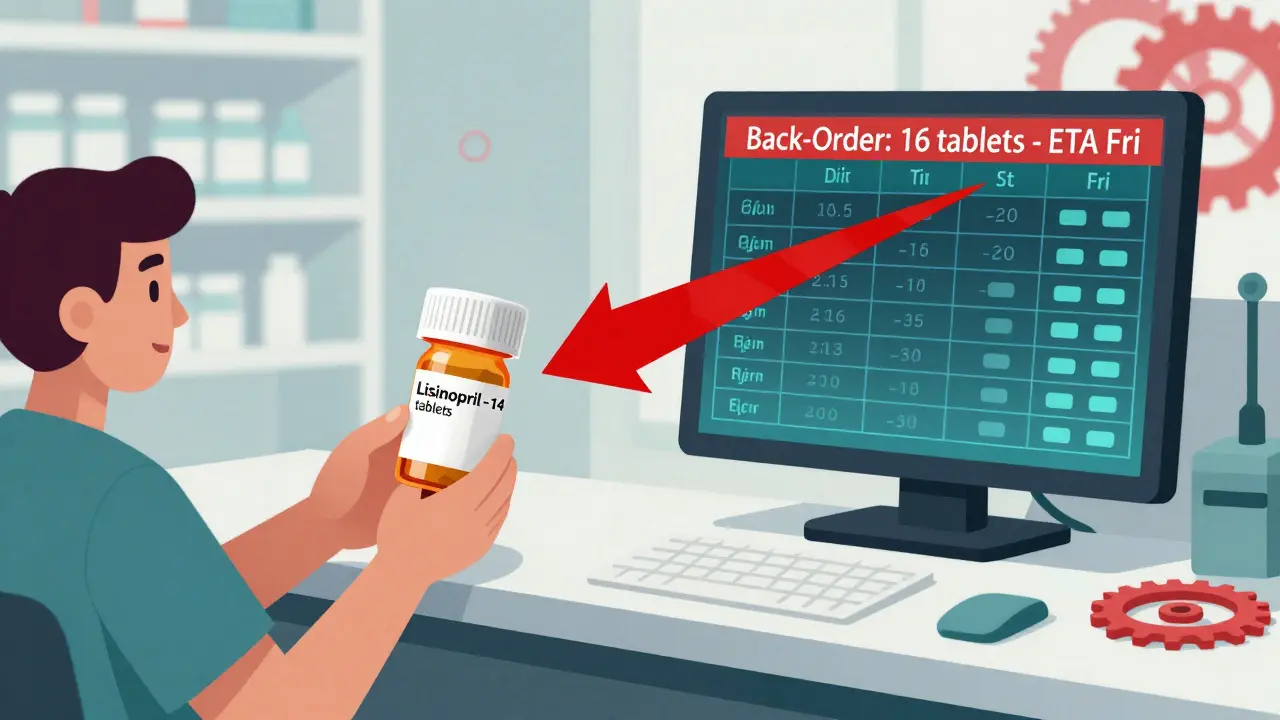
When a customer orders medication and only part of it is available, or none of it is in stock right away, you’re dealing with a partial fill or a back-order. In pharmacy settings, these aren’t just logistical hiccups-they’re potential sources of serious dispensing errors. A missed dose, a delayed refill, or a wrong shipment can lead to patient harm, regulatory violations, or lost trust. The good news? With the right system, you can handle these situations cleanly, safely, and without adding stress to your team or your patients.
Why Partial Fills and Back-Orders Are Risky in Pharmacies
In retail or mail-order pharmacies, up to 12% of prescriptions face some kind of fulfillment delay, according to industry data from 2024. That’s more than one in ten orders. What makes this dangerous isn’t just the delay-it’s the lack of clear tracking. If a patient gets half their medication today and the rest next week, but the system doesn’t flag that the second half is still pending, they might assume the full course is complete. That’s a recipe for underdosing, especially with antibiotics, anticoagulants, or psychiatric meds.
And back-orders? They’re even trickier. If a drug is out of stock and you promise it’ll arrive in three days-but it doesn’t-you’ve created a silent gap in care. Patients may not call to check. They may stop taking their meds. Or worse, they might buy from an unregulated online source because they’re desperate.
These aren’t theoretical risks. In 2023, a major U.S. pharmacy chain faced a state audit after 17 patients reported missing doses due to untracked back-orders. The root cause? No system linked partial shipments to the original prescription. The fix? A standardized process with real-time inventory updates and automated patient alerts.
Set Clear Back-Order Policies for Different Medications
Not all drugs are the same. You need to treat them differently.
- Tier 1: Critical medications-like insulin, seizure meds, or heart drugs. These should never be partially filled unless absolutely necessary. If they’re out of stock, notify the patient immediately and offer a therapeutic alternative (if approved by the prescriber) or a temporary supply from a nearby pharmacy.
- Tier 2: Chronic condition meds-like blood pressure or diabetes pills. These can be partially filled if the patient has at least a 5-day supply. But you must log the remaining quantity and auto-schedule a follow-up alert for when the rest arrives.
- Tier 3: Non-essential or discontinued drugs-if a medication is discontinued or rarely ordered, don’t back-order it. Instead, notify the prescriber and suggest a substitute. Letting a back-order sit for weeks on a drug no one uses just ties up cash and creates confusion.
Most pharmacies still use one-size-fits-all rules. That’s why 38% of negative reviews on pharmacy software platforms mention confusion over what was shipped and what’s still coming. Set tiered policies in your system. Train your staff to recognize which tier each prescription belongs to. And never let a Tier 1 drug sit in back-order status for more than 48 hours without patient contact.
Use Real-Time Inventory Tracking with 5-Second Updates
Imagine this: a patient calls to ask if their metformin is ready. You check your system-it says “in stock.” You pull it off the shelf. But five minutes ago, another tech filled a priority order for the last two bottles. Now you’re short. That’s a dispensing error waiting to happen.
The fix? Your inventory system must update in real time-within 5 to 10 seconds of any transaction. That means every time a bottle is picked, scanned, or returned, the system reflects it instantly. No delays. No manual syncs.
Pharmacies using systems with live inventory updates report 27% fewer fulfillment errors and 18% higher patient satisfaction. It’s not magic-it’s accuracy. If your system doesn’t do this, it’s not fit for modern pharmacy work. Look for platforms that integrate with your point-of-sale, e-prescribing tools, and automated dispensing cabinets. If they don’t sync within seconds, keep looking.
Generate Separate Invoices for Each Partial Shipment
When you ship part of an order, you’re creating a new fulfillment event. That means a new invoice. Not a note. Not a comment. A real, separate invoice linked to the original order number.
Why? Because patients and insurance companies need clear records. If a patient gets billed for the full amount upfront and then gets a partial fill, they’ll assume the rest is coming-and they’ll be confused when they get a second bill later. Worse, insurers may deny payment if the invoice doesn’t match what was shipped.
Best practice: When you ship the first half of a 30-day supply, generate Invoice #12345-1. When the rest ships, generate Invoice #12345-2. Each should list only the items shipped, with prorated pricing based on quantity. Your system should auto-calculate this. If it doesn’t, you’re doing manual math-and that’s where mistakes creep in.
Also, never charge the patient until the medication is actually shipped. Charging upfront for a back-order creates distrust. Patients don’t want to pay for something they haven’t received. Let them pay only when it’s in their hands. This simple rule cuts complaints by 28%, according to eFulfillmentService’s 2024 survey of pharmacy operators.
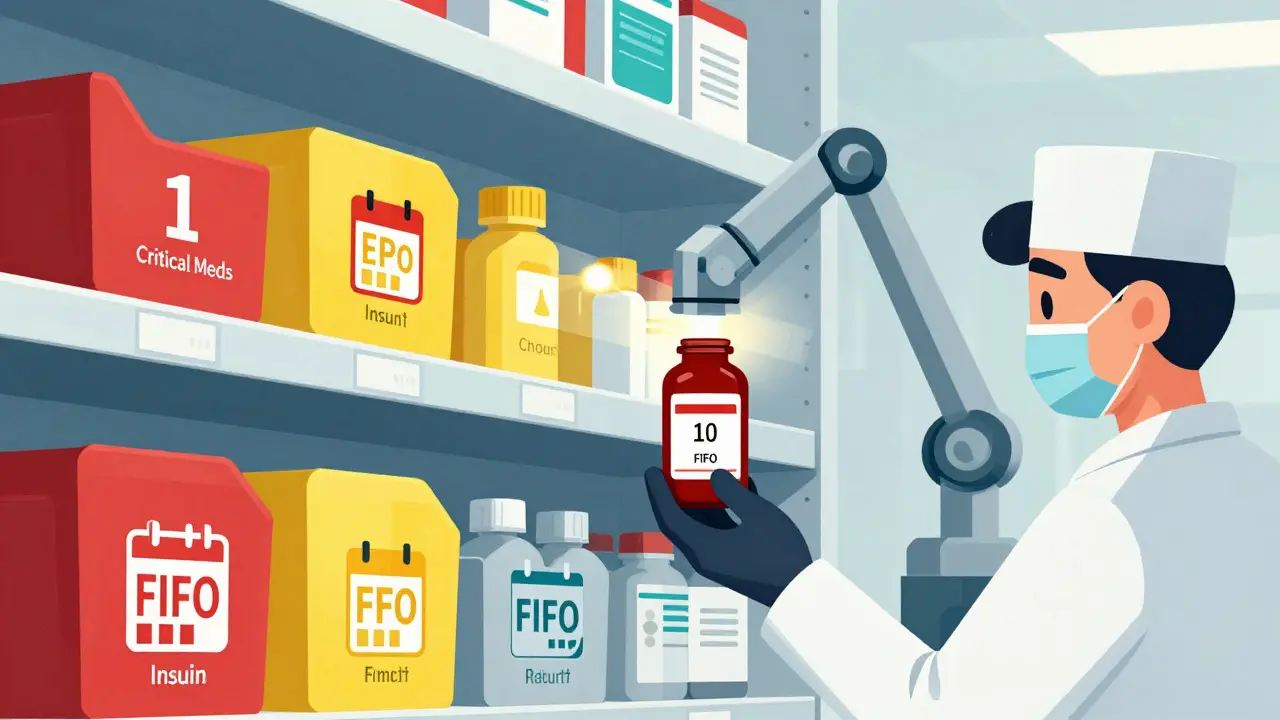
Implement FIFO for Faster, Safer Fulfillment
First-In, First-Out isn’t just a warehouse rule-it’s a patient safety rule.
When a new shipment of levothyroxine arrives, you don’t put it in the back and pull from the older stock. You use the oldest bottles first. Why? Because expired meds are dangerous. And if you’re back-ordering, you’re already working with delayed inventory. The last thing you need is to ship a bottle with 11 months left on the expiration date when you have one with 14 months.
FIFO also speeds things up. When a back-order arrives, you don’t have to reorganize your shelves. You just grab the new stock and ship it out immediately. One pharmacy in Manchester cut their back-order processing time from 72 hours to 4 hours by switching to strict FIFO. That’s not just efficiency-it’s care.
Train your technicians to scan and sort by expiration date at the time of receiving. Use color-coded bins or labels. Audit your stock weekly. If you’re still manually checking expiration dates, you’re risking patient safety.
Communicate Early, Often, and Clearly
The biggest cause of patient frustration isn’t the delay-it’s the silence.
Patients don’t mind waiting if they know when to expect it. But if you don’t tell them, they’ll assume the worst. That’s why 47% more patients now expect updates on back-orders than they did in 2019.
Set up automated alerts:
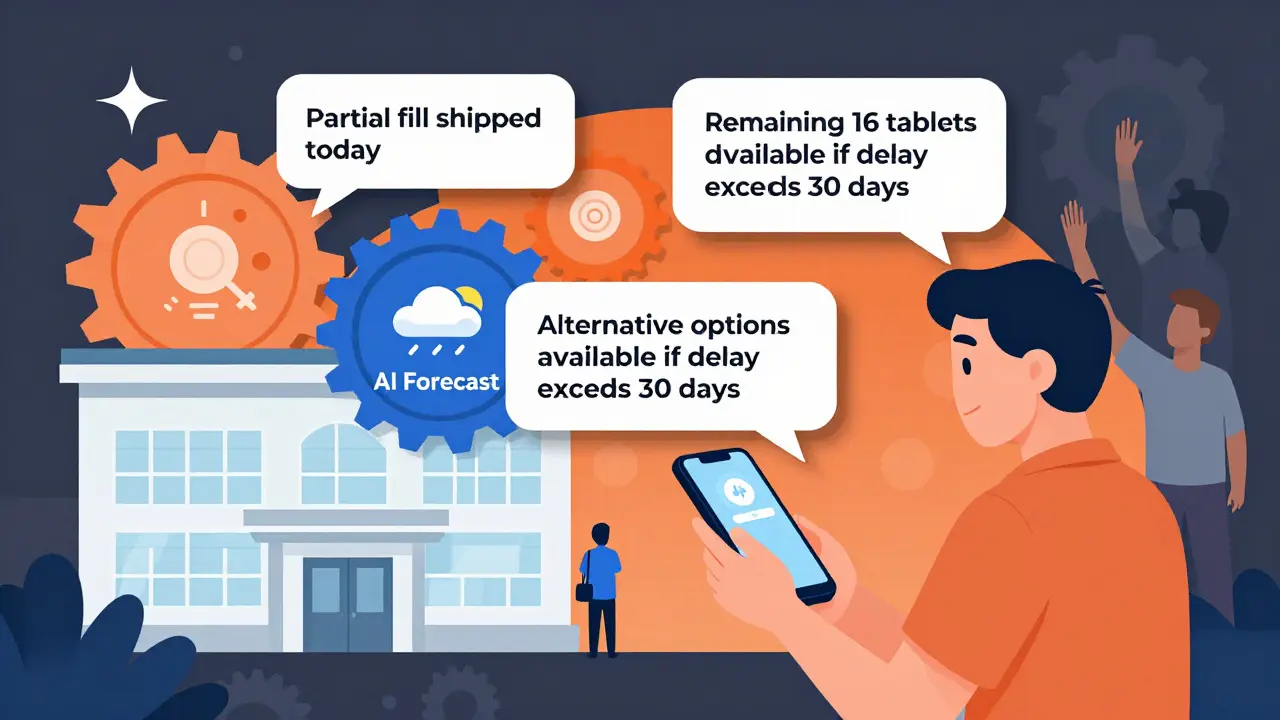
- When a back-order is created: “Your prescription for lisinopril is partially available. We’re shipping 14 tablets today. The remaining 16 will ship by Friday, Feb 2.”
- When the second half ships: “Your remaining lisinopril has been dispatched. Tracking #12345.”
- If the back-order can’t be fulfilled within 30 days: “We’re unable to source your medication. Here are two alternative options approved by your prescriber.”
Use SMS, email, and portal notifications-don’t rely on phone calls. Most patients won’t answer. But they’ll read a text.
And always give them control. Let them choose: “Would you like to wait for the full order, or receive what’s available now?” This simple option reduces cancellations by 39%.
Train Your Team and Audit Weekly
Technology helps-but people make or break the system.
Staff need 2-3 weeks of training to master back-order workflows. Don’t skip this. Teach them:
- How to identify Tier 1, 2, and 3 meds
- When to override auto-approval for high-risk drugs
- How to check for duplicate back-orders on the same patient
- How to use the system’s tracking tags to link partial shipments
Then, run weekly audits. Pick 20 random back-orders from the past week. Check:
- Was the patient notified?
- Was the correct quantity shipped?
- Was a separate invoice generated?
- Was the expiration date checked?
If even one item fails, you’ve got a process gap. Fix it before it becomes a patient safety issue.
Watch Out for These Common Mistakes
Even good systems fail when people cut corners. Here are the top errors we see:
- Not tagging partial shipments-This causes returns and refund chaos. If a patient gets a partial fill and returns the wrong bottle, you won’t know which one was shipped.
- Using the same invoice for all shipments-This confuses insurance billing and patient records.
- Ignoring expiration dates on back-ordered stock-You could be shipping near-expired meds without realizing it.
- Letting back-orders sit longer than 30 days-This violates new California law (SB-1287, 2025) and erodes trust.
- Not offering alternatives-If a drug is out for weeks, don’t just wait. Talk to the prescriber. Suggest a generic or similar medication.
One pharmacy in Manchester lost a major insurer contract because they kept shipping expired insulin from back-orders. They didn’t have a system to flag near-expiry stock. They fixed it with FIFO and weekly audits-but only after a patient was hospitalized.
What’s Next? AI and Sustainability Are Changing the Game
By 2026, AI will predict back-orders before they happen. Systems will look at weather delays, supplier lead times, seasonal demand spikes, and even local flu outbreaks to forecast shortages. Some platforms already reduce unexpected back-orders by 41%.
And sustainability matters. More patients care about carbon footprints. If you’re shipping a partial order and then shipping the rest separately, you’re using more fuel. Some pharmacies are now bundling partial fills into one shipment when possible-reducing emissions and costs.
You don’t need AI tomorrow. But you do need to start thinking ahead. The pharmacies that win are the ones who treat back-orders not as a problem to survive-but as a chance to build trust.
Final Thought: Back-Orders Are a Test of Your System-and Your Values
Every back-order is a moment of truth. Will you let your patient wonder? Or will you guide them? Will you charge them upfront? Or wait until they get the medicine? Will you ship the oldest bottle? Or the newest?
These aren’t just operational choices. They’re ethical ones. The best pharmacy isn’t the one with the most stock. It’s the one that handles scarcity with honesty, precision, and care.
What’s the difference between a partial fill and a back-order?
A partial fill happens when some-but not all-items in a prescription order are available and shipped immediately. A back-order means none of the items are in stock, so the full order is delayed until inventory arrives. Partial fills are proactive; back-orders are reactive. Both require tracking to avoid errors.
Should I charge patients upfront for back-ordered medications?
No. Charging before the medication is shipped reduces trust and increases complaints. Only bill when the item is actually dispatched. This aligns with patient expectations and insurance billing standards. Many pharmacies see a 28% improvement in patient satisfaction scores by switching to pay-upon-shipment.
How long should a back-order take to fulfill?
Set a hard limit of 30 days. After that, notify the patient and offer alternatives or cancellation. This matches industry standards and complies with new regulations like California’s SB-1287 (effective Jan 2025). If a drug routinely takes longer than 30 days to restock, you need to adjust your supplier relationships or reorder thresholds.
Can I use the same invoice for partial shipments?
No. Each shipment must have its own invoice linked to the original order number. Using one invoice for multiple shipments confuses insurance claims, patient records, and returns. Your pharmacy software should auto-generate separate invoices with prorated pricing based on what’s shipped each time.
What should I do if a back-ordered drug is discontinued?
Don’t back-order discontinued drugs. Contact the prescriber immediately and suggest an approved alternative. If no substitute exists, notify the patient and help them find the medication through another pharmacy or specialty distributor. Never let a discontinued drug sit in back-order status-it’s a liability.
How often should I audit my back-order process?
At least once a week. Pick 20 random back-orders and verify: Was the patient notified? Was the correct quantity shipped? Was the expiration date checked? Was a separate invoice generated? If any item fails, investigate the root cause and retrain staff. Weekly audits prevent small errors from becoming patient safety incidents.
Handling partial fills and back-orders without errors isn’t about having the most advanced software. It’s about building habits-of communication, accuracy, and care. Start with your inventory rules. Train your team. Audit your work. And never stop asking: ‘What would I want if this were my medication?’






So let me get this straight-we’re now treating pharmacy inventory like a Netflix queue? ‘Your prescription is queued for delivery in 3-5 business days…’ Meanwhile, grandma’s blood pressure is climbing and her kid’s texting her ‘u ok?’ because the meds didn’t show up. We’re automating the hell out of everything but still forgetting the human in the loop.
January 28Phil Davis