When you pick up a prescription, you might see a pill that looks completely different from the one you’ve taken before. Same name, same dosage, but a different color, shape, or even logo. It’s not a mistake. It’s a generic drug. And if you’re confused or worried, you’re not alone. Nearly half of patients in a 2021 FDA survey said they weren’t sure if generics worked as well as brand-name drugs. That’s where infographics come in.
Why Visuals Matter for Generic Medication Education
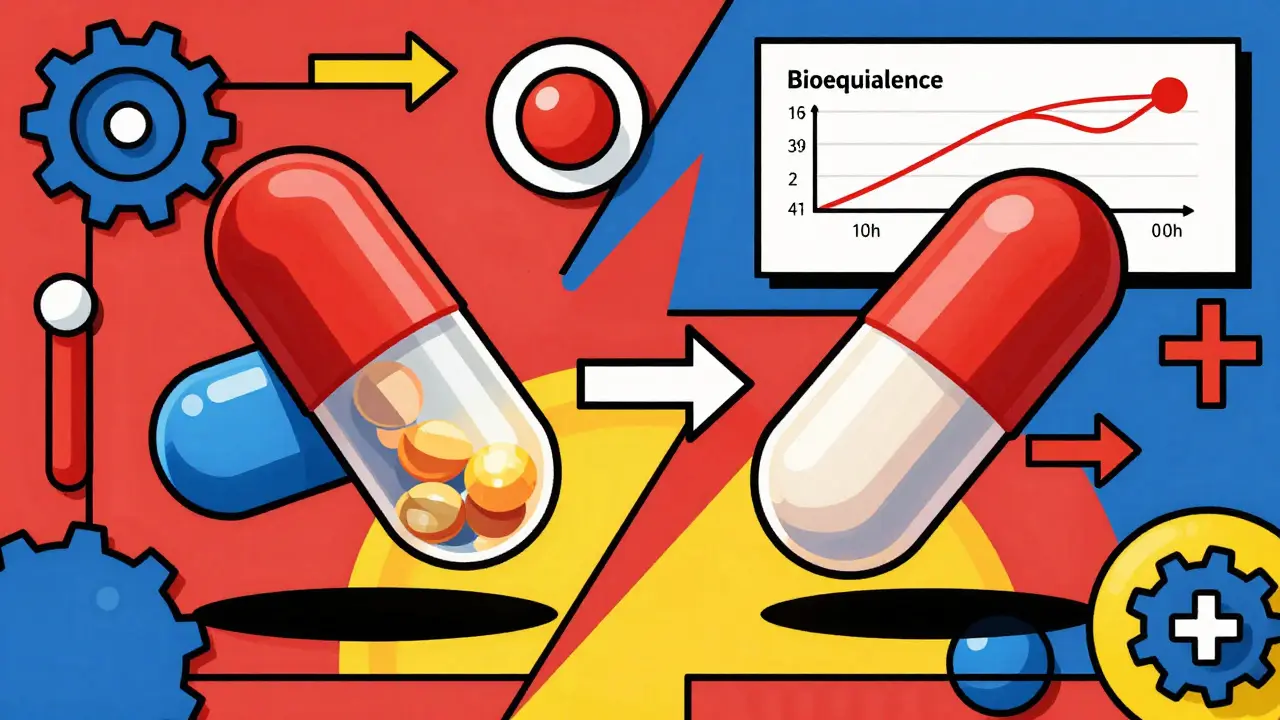
Text alone doesn’t cut it. A 2021 study in the Journal of Health Communication found that patients who saw a simple infographic about generic drugs understood key facts 3.2 times better than those who only got verbal advice from their doctor. Why? Because visuals turn abstract science into something you can see. Think about it: how do you explain that two pills-one costing $4 and another $150-do the exact same thing? Words like "bioequivalence" or "pharmacokinetics" mean nothing to most people. But a side-by-side graph showing how fast each pill dissolves in the body? That clicks.How FDA Infographics Break Down the Science
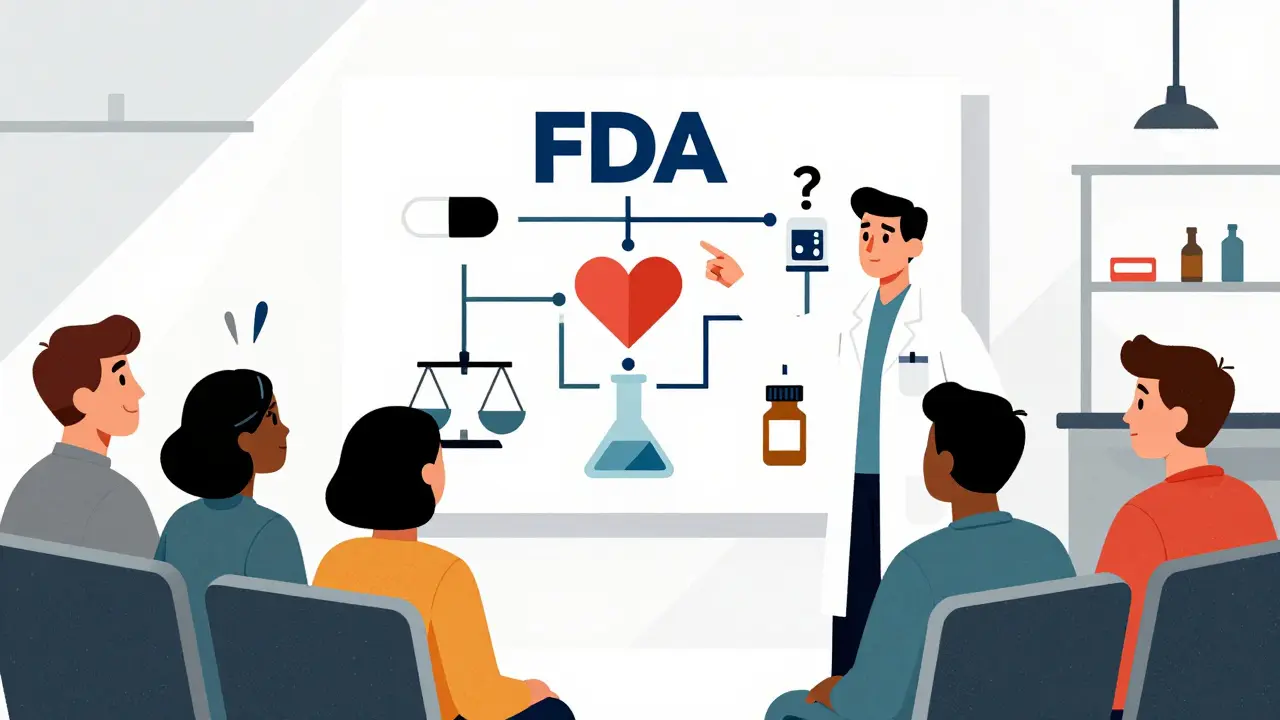
The U.S. Food and Drug Administration (FDA) leads the way in creating clear, evidence-based visual tools. Their most popular infographic, "What Makes a Generic the Same as a Brand-Name Drug?", uses a simple flowchart to show the steps a generic drug must pass before approval. It walks you through:- Same active ingredient
- Same strength and dosage form
- Same route of administration
- Same performance in the body (bioequivalence tested in healthy volunteers)
What’s Inside the Files: Technical Details You Should Know
These aren’t just pretty pictures. They’re built for real-world use. FDA infographics are designed to work everywhere:- File size: between 142KB and 958KB (easy to download on slow connections)
- Dimensions: 8.5 x 11 inches (standard letter size) for printing, or 16 x 20 for clinic walls
- Resolution: 300 DPI for crisp printing
- Color: CMYK for professional printing, not just RGB for screens
- Accessibility: high-contrast colors, alt text for screen readers, and language at an 8th-grade reading level
Where These Infographics Are Used-and How They Help
At Kaiser Permanente’s Southern California clinics, pharmacists started using FDA infographics during consultations in 2022. The result? 78% of pharmacists now keep them on hand. 63% say patients are less likely to refuse a generic after seeing the visuals. One pharmacist on Reddit said they printed the main infographic and keep it behind the counter: "It cuts counseling time in half. Patients stop asking if it’s "real" medicine." In pharmacies, these visuals help reduce confusion over appearance differences. A patient might say, "This isn’t the same pill I took last month." The infographic shows them: "Same active ingredient. Different filler. Still works."Where the Current Tools Fall Short
Even the best infographics have gaps. Dr. Aaron Kesselheim from Harvard pointed out in JAMA Internal Medicine that most visuals treat all generic drugs the same. But for drugs like warfarin (a blood thinner) or levothyroxine (for thyroid conditions), tiny differences in how the body absorbs the drug can matter. These infographics don’t show that. Also missing? Clear visual cues for when a pharmacist needs to notify the doctor before switching generics. The Institute for Safe Medication Practices flagged this in 2023. Right now, it’s only mentioned in small text. And while the FDA offers all materials in Spanish, other organizations like GTMRx only translate about 30% of theirs. That leaves millions of non-English speakers without clear guidance.Health Equity and the Missing Piece
A 2023 Kaiser Family Foundation study found that 34.7% of African American patients and 28.3% of Hispanic patients expressed higher concerns about generic quality than 22.1% of White patients. Yet, until recently, almost no infographics addressed why generics help reduce these disparities. The FDA’s 2023 update added a new handout: "Generic Drugs and Health Equity". It shows how lower-cost generics mean fewer people skip doses because they can’t afford them. It’s the only one of its kind-and it’s 958KB, packed with data. This matters because cost is often the real reason people avoid generics, not safety.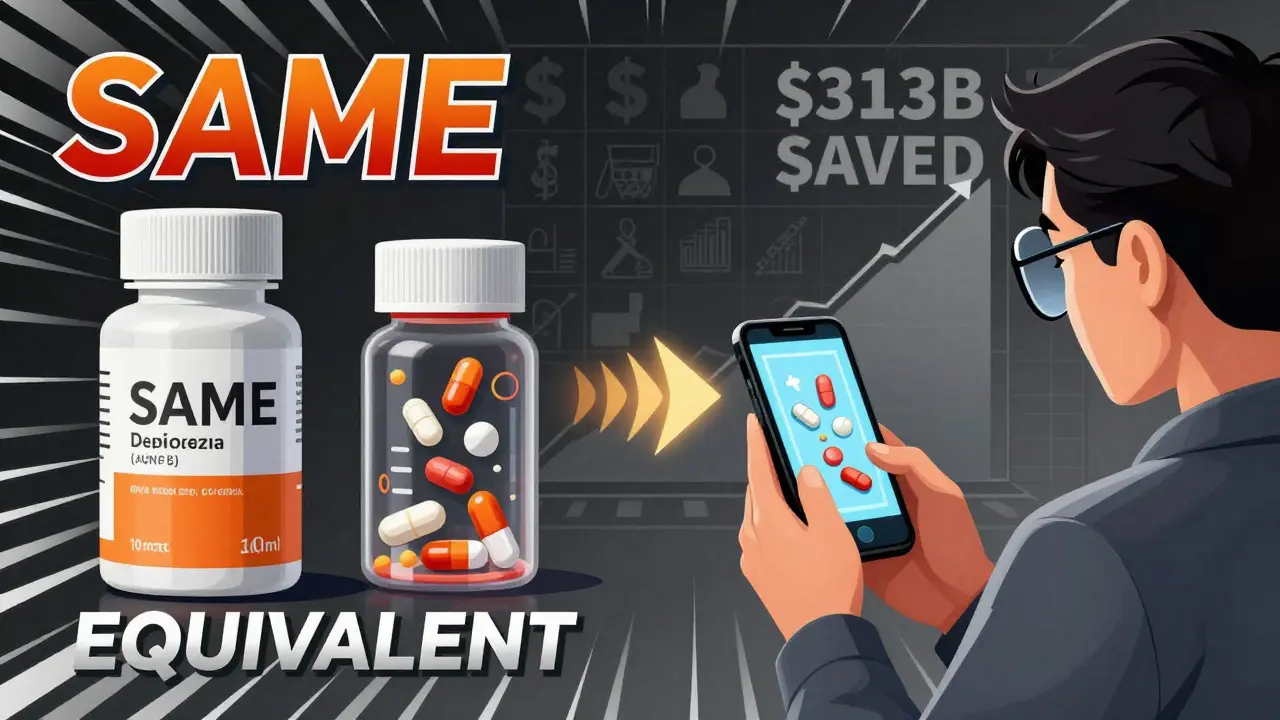
What’s Next? Interactive and AR Tools
The field is evolving. In January 2023, GTMRx launched interactive infographics where you can input your meds and get a personalized assessment. Early users saw a 27% improvement in understanding. And by Q2 2024, the FDA plans to roll out an augmented reality (AR) feature. Imagine scanning your pill bottle with your phone and seeing a 3D model of the active ingredient-then watching it dissolve side-by-side with the brand-name version. It’s not science fiction. It’s already been tested at the FDA’s Digital Health Summit.How to Use These Tools in Real Life
You don’t need to be a doctor to use these resources. Here’s how:- Ask your pharmacist for the FDA’s "Facts About Generic Drugs" infographic. They often have printed copies.
- Download the PDFs from fda.gov/generics and save them on your phone.
- Bring them to your next doctor’s visit. Point to the bioequivalence chart when you’re unsure.
- Share them with family members who are confused about switching to generics.
- If you’re a healthcare provider, print them and put them in waiting rooms. Use the 15-minute FDA training module (free online) to learn how to explain them.
Why This All Matters
Generic drugs saved the U.S. healthcare system $1.68 trillion between 2010 and 2019. In 2023 alone, they saved $313 billion. But none of that matters if people don’t take them. Misunderstanding leads to refusal. Refusal leads to worse health. Worse health leads to higher costs. These infographics aren’t just pretty pictures. They’re tools that fix a broken conversation. They turn fear into understanding. They turn confusion into confidence. And they’re free, accessible, and backed by real science.If you’ve ever been told "it’s just a generic" and felt uneasy, this is your answer. The science is clear. The visuals are simple. And now, you know where to find them.
Are generic drugs really as safe as brand-name drugs?
Yes. The FDA requires generic drugs to have the same active ingredient, strength, dosage form, and route of administration as the brand-name version. They must also prove they work the same way in the body through bioequivalence testing. This isn’t a guess-it’s a strict regulatory process. In fact, the FDA inspects manufacturing sites for generics just as often as for brand-name drugs. Over 90% of prescriptions filled in the U.S. are for generics-and they’ve been used safely by millions for decades.
Why do generic pills look different from brand-name ones?
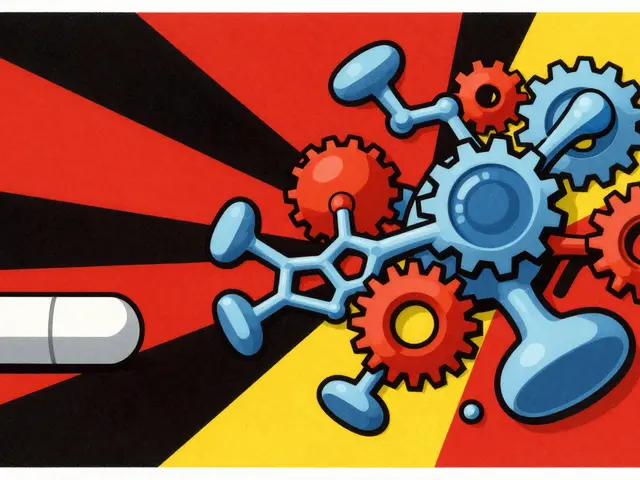
The difference in color, shape, or size comes from inactive ingredients like dyes, fillers, or coatings. These don’t affect how the drug works. Brand-name companies hold patents on the pill’s appearance, so generic manufacturers must make theirs look different. But the active ingredient-the part that treats your condition-is identical. Infographics from the FDA clearly show this side-by-side, so you know it’s not a different drug.
Can I trust generics if they’re much cheaper?
Absolutely. Generics cost less because manufacturers don’t repeat the expensive research and marketing that brand-name companies do. The drug’s formula is already proven. Generic companies only need to prove their version works the same way. That’s why they can offer the same medicine at a fraction of the price. The FDA’s data shows generics save patients an average of $1,000 per year per prescription. Lower cost doesn’t mean lower quality.
Do all generics work the same way, even for serious conditions like epilepsy or thyroid disease?
For most people, yes. But for drugs with a narrow therapeutic index-like warfarin, levothyroxine, or some anti-seizure medications-even small changes in how the body absorbs the drug can matter. That’s why some doctors and pharmacists prefer to keep patients on the same generic manufacturer. The FDA’s current infographics don’t highlight this nuance, but your pharmacist can advise you. If you’re on one of these medications, ask for personalized guidance. You might need to stick with one brand or generic version for consistency.
Where can I find these infographics?
The FDA offers all their generic drug infographics for free at fda.gov/generics. You can download them as PDFs, print them, or share them digitally. Many pharmacies and clinics also have printed copies available. If you’re a healthcare provider, the FDA’s "Stakeholder Toolkit" includes social media posts, patient handouts, and training modules-all free to use.