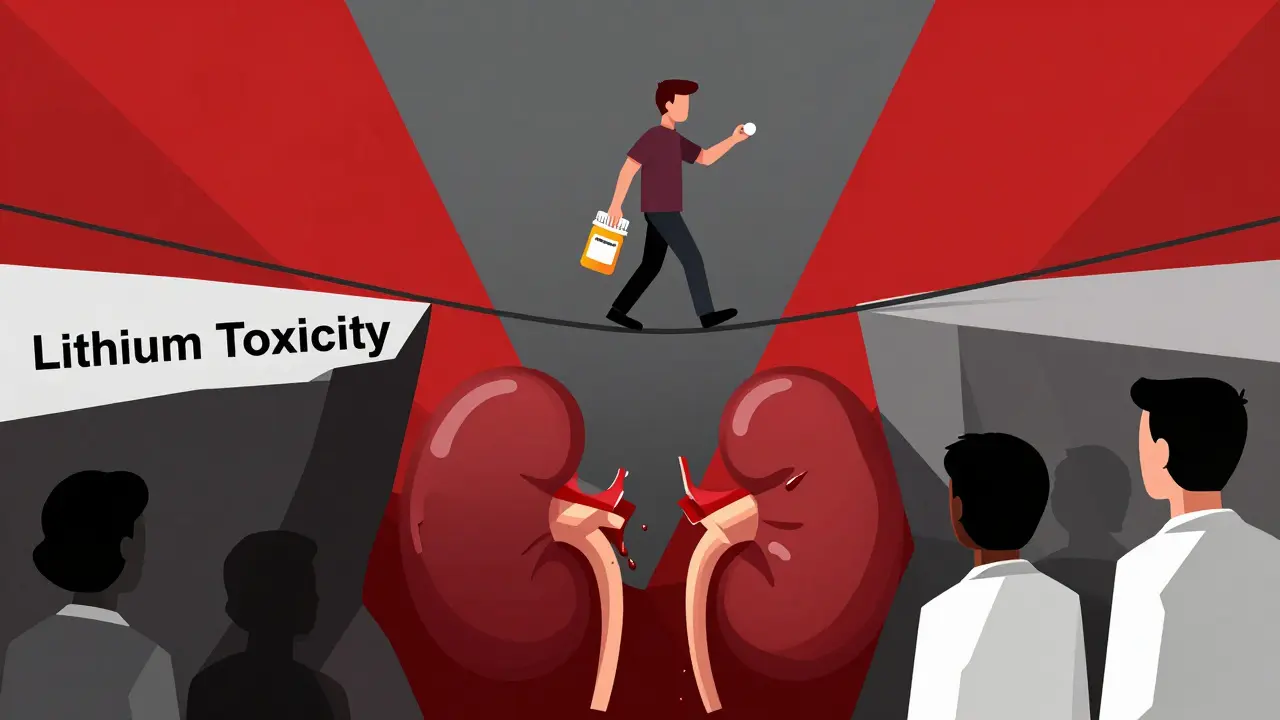
When you're taking lithium for bipolar disorder, your body is already on a tightrope. Lithium works, but it doesn't take much to push it into the danger zone. Now add a common painkiller like ibuprofen or naproxen - and you're walking blindfolded over that same rope. This isn't a theoretical risk. It's a well-documented, preventable, and often deadly interaction that sends people to the hospital every single day.
Why This Interaction Is So Dangerous
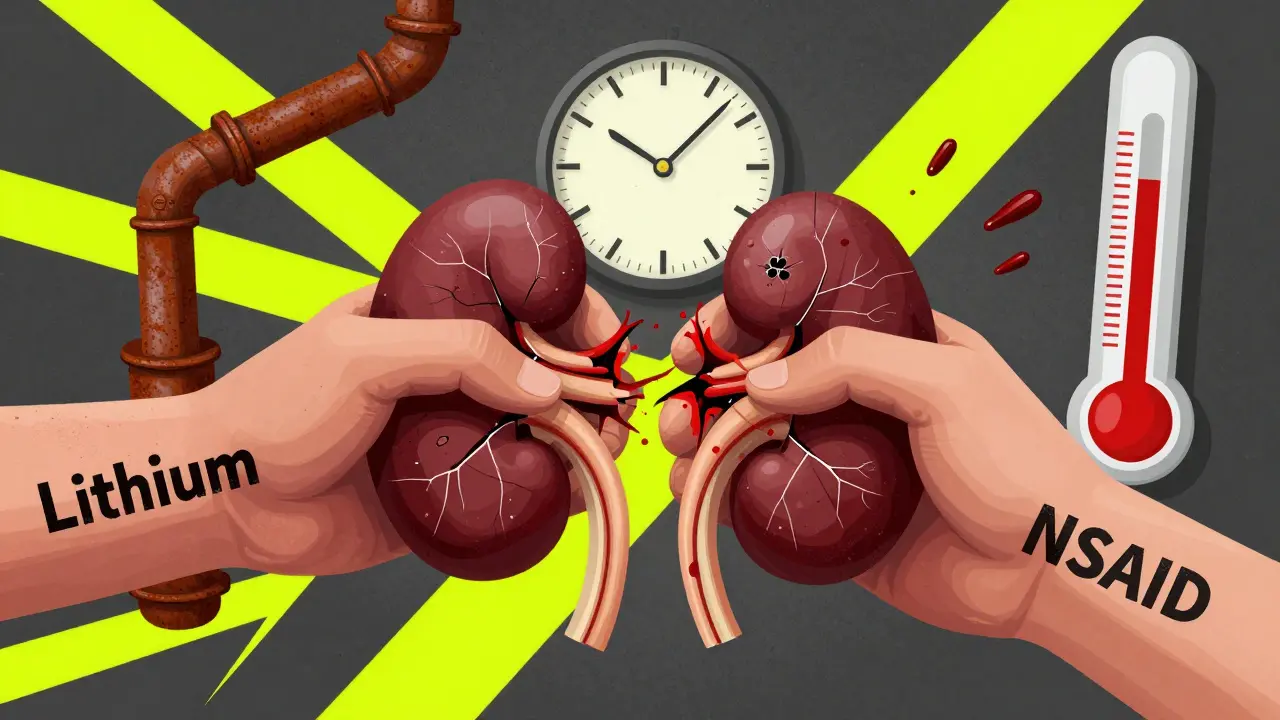
Lithium doesn't get broken down by your liver. It leaves your body through your kidneys. That's why doctors check your blood levels regularly - too little and it doesn't work; too much and you get poisoned. NSAIDs - the class of drugs that includes ibuprofen, naproxen, diclofenac, and others - mess with your kidney's ability to filter lithium out. They do this by blocking prostaglandins, chemicals your kidneys need to keep blood flowing properly. When that flow drops, lithium builds up in your blood. Studies show lithium levels can jump by 25% to 60% within just 48 hours of starting an NSAID.This isn't just about feeling shaky. Rising lithium levels cause real, life-threatening toxicity. Symptoms include severe tremors, confusion, slurred speech, vomiting, muscle weakness, and seizures. In extreme cases, it leads to coma or death. But even if you don't crash immediately, the damage is still happening. The combination of lithium and NSAIDs doesn't just cause temporary toxicity - it accelerates permanent kidney damage.
The Kidney Takes the Double Hit
Lithium alone can harm the kidneys over time. It accumulates in the cells lining the kidney tubules, where it interferes with normal function and triggers inflammation. NSAIDs make this worse. By reducing blood flow to the kidneys, they create an ischemic environment - basically, starving the tissue of oxygen. When you combine these two effects, you're not just adding risks. You're multiplying them.A 2023 study in JAMA Network Open looked at over 12,000 patients on lithium. Those who took NSAIDs had a 3.2 times higher risk of acute kidney injury compared to those who didn't. The risk was highest in the first 30 days - meaning damage can happen fast. For people over 65, the risk was even worse. Nearly half of all lithium-related kidney injuries in older adults were tied to NSAID use.
Not All NSAIDs Are Created Equal
Some NSAIDs are far worse than others. If you're on lithium and need pain relief, not all painkillers are equally dangerous.- Indomethacin - Increases lithium levels by 40-60%. Avoid completely.
- Piroxicam - Raises levels by 25-35%. High risk.
- Ibuprofen - Increases levels by 20-30%. Commonly used, dangerously common.
- Naproxen - Similar to ibuprofen. Still risky.
- Celecoxib - Only 10-15% increase. Still not safe if you have kidney issues.
- Aspirin - Minimal effect. Sometimes used cautiously.
The myth that "low-dose" or "short-term" NSAIDs are safe is dangerous. Even a single dose can trigger a spike in lithium levels. And the effect doesn't vanish when you stop the NSAID. Your kidneys can take 7-10 days to fully recover their ability to clear lithium. That means if you took ibuprofen for a headache last week, your lithium level could still be dangerously high today.
What About Acetaminophen?
Here's the good news: acetaminophen (Tylenol) doesn't interfere with lithium clearance. It doesn't affect kidney blood flow. Multiple studies show it causes less than a 5% change in lithium levels. That makes it the safest pain reliever for people on lithium.But even acetaminophen has limits. Stick to 3,000 mg per day max - higher doses can damage your liver, especially if you drink alcohol or have other liver conditions. For chronic pain, some doctors may consider tramadol, which has a modest effect (10-15% lithium increase) but doesn't harm the kidneys directly. Still, it's not ideal due to addiction risk.
Who's Most at Risk?
This isn't a risk for everyone - but it's a huge risk for certain groups:- People over 65 - Kidney function naturally declines with age. Even small drops in filtration can cause lithium to pile up.
- Those with existing kidney problems - If your eGFR is below 60 mL/min/1.73 m², you're already in danger zone. Adding NSAIDs? You're playing Russian roulette.
- People taking multiple medications - If you see a primary care doctor, a rheumatologist, and a psychiatrist, each might not know about the others' prescriptions.
- Patients with dehydration - Diuretics, heat, illness, or poor fluid intake make lithium toxicity far more likely.
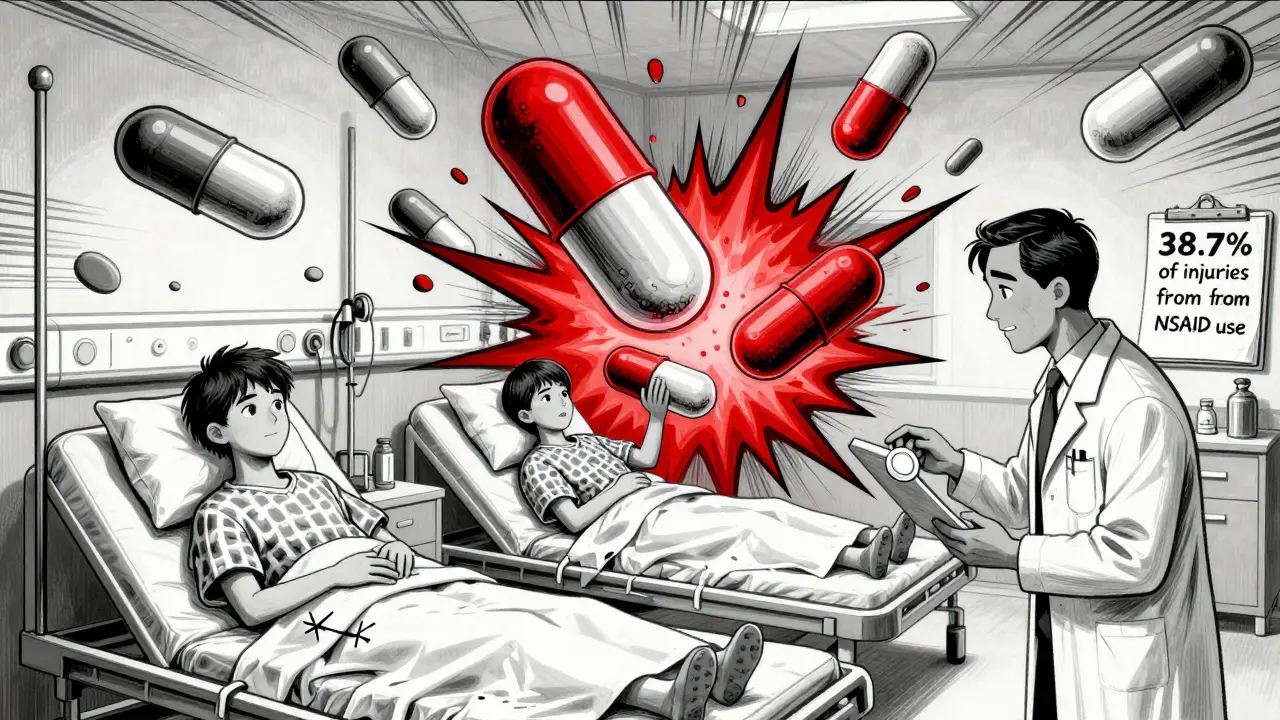
One study found that 38.7% of all lithium-related acute kidney injuries in US nephrology clinics were directly caused by NSAID use. And in 82% of those hospitalizations, the patient had been prescribed the NSAID by someone who didn't know they were on lithium.
What Should You Do?
If you're on lithium:- Never take an NSAID without talking to your psychiatrist or nephrologist. Even "over-the-counter" ones.
- Use acetaminophen first. It's your safest bet for headaches, back pain, or arthritis.
- If you must use an NSAID, limit it to 3-5 days max. And drink plenty of water - at least 3 liters a day.
- Get your lithium level checked 48-72 hours after starting any NSAID. Your doctor should order this. Don't wait for symptoms.
- Ask for a written warning. Your prescription should include a note: "Avoid NSAIDs. Use acetaminophen instead."
Many patients report being prescribed NSAIDs by doctors who didn't know they were on lithium. A 2023 study found that only 58% of primary care providers correctly identified NSAIDs as high-risk for lithium users. That means you have to be your own advocate.
The Bigger Picture
This isn't just about one drug interaction. It's about how healthcare fails patients with chronic mental illness. Lithium is one of the most effective mood stabilizers ever made - it cuts suicide risk by nearly half. But because it requires careful monitoring, it's often sidelined. Meanwhile, pain is treated with quick fixes - and no one connects the dots.Health systems are starting to wake up. Kaiser Permanente cut lithium-NSAID co-prescribing from 32% to under 12% by adding mandatory alerts in their electronic records. The FDA now requires a boxed warning on lithium labels. But change is slow. In the Veterans Health Administration, co-prescribing only dropped from 30% to 25% - a barely noticeable improvement.
The real solution? Better communication. Better education. And most of all - listening to patients. Reddit threads filled with stories of tremors, hospitalizations, and permanent kidney damage aren't just anecdotes. They're a warning system that the medical system has ignored for too long.
What’s Next?
Researchers are testing new drugs that might protect the kidneys during NSAID use without interfering with lithium clearance. Early trials show promise. But until then, the answer is simple: avoid NSAIDs. Use acetaminophen. Monitor closely. And never assume your doctor knows - because sometimes, they don't.Can I take ibuprofen if I'm on lithium?
No, you should avoid ibuprofen if you're on lithium. It can increase lithium levels in your blood by 20-30%, raising your risk of toxicity. Even short-term use can cause dangerous side effects like tremors, confusion, or kidney injury. Use acetaminophen (Tylenol) instead for pain relief.
How long does the lithium-NSAID interaction last?
The interaction doesn't end when you stop taking the NSAID. Your kidneys can take 7-10 days to fully recover their ability to clear lithium. That means even if you took ibuprofen a week ago, your lithium level could still be elevated. Always check your lithium level before restarting or continuing lithium therapy after NSAID use.
Is celecoxib safe with lithium?
Celecoxib is less risky than other NSAIDs, but it's not safe. It still increases lithium levels by 10-15%, and in patients with existing kidney problems, that’s enough to cause toxicity. The American Society of Nephrology recommends avoiding all NSAIDs - including celecoxib - in patients on lithium unless absolutely necessary and under close monitoring.
What painkiller is safest with lithium?
Acetaminophen (Tylenol) is the safest option. It doesn’t interfere with lithium clearance or kidney function. Stick to no more than 3,000 mg per day to avoid liver damage. For chronic pain, tramadol may be considered under supervision, but it carries addiction risks and still slightly increases lithium levels.
Should I stop lithium if I need NSAIDs?
Don't stop lithium on your own. If you need NSAIDs for a short-term issue like a sprain or surgery, your doctor can temporarily lower your lithium dose, increase fluid intake, and monitor your blood levels closely. For long-term pain, switching to acetaminophen or exploring non-drug therapies (like physical therapy) is safer than stopping lithium - which carries its own risks, including relapse and increased suicide risk.
Can lithium and NSAIDs cause permanent kidney damage?
Yes. Studies show that repeated or prolonged use of NSAIDs with lithium can lead to chronic kidney disease. In one study, 35% of patients hospitalized for lithium-NSAID toxicity developed permanent kidney damage, with eGFR declines of over 40%. This damage is often irreversible and may eventually require dialysis.



Oh my god, I can't believe this isn't common knowledge. I had a friend almost die because her PCP prescribed ibuprofen for her migraine while she was on lithium. No one asked about her meds. She ended up in the ER with tremors and confusion. I swear, if you're on lithium, you need a tattoo that says 'NO NSAIDS' on your forehead.
March 10And don't even get me started on how doctors just assume you know this stuff. It's not your fault if you didn't. It's their failure.
I'm so mad. Why isn't this on every prescription label? Why isn't it a pop-up in every EHR? Why do we still live in a world where people have to Google their own safety?
I'm not even mad at the patients. I'm mad at the system. It's broken. And we're all paying for it.
Use Tylenol. Seriously. Just use Tylenol. It's not that hard.
Katy Shamitz