
Over 35 million Americans take statins for heart health, and nearly 50 million take vitamin D supplements for bone strength. That means millions of people are combining these two substances. But what does the real research say? Does vitamin D help with statin side effects like muscle pain? Let’s cut through the noise.
What the Research Shows About Vitamin D and Statin Interactions
Vitamin D is a fat-soluble vitamin essential for bone health and immune function, commonly taken as a supplement by millions of Americans. It’s derived from cholesterol and plays a role in calcium absorption. Statins are medications like atorvastatin or simvastatin that lower cholesterol by blocking a key enzyme in cholesterol production. They’ve been used since the 1980s to prevent heart disease.
At first glance, it seems simple: statins reduce cholesterol, and vitamin D comes from cholesterol. So maybe statins lower vitamin D levels? But reality is messier. Studies show conflicting results. Some found statins increase vitamin D levels, while others show decreases. Why? Because different statins work differently in the body.
Does Vitamin D Help with Statin Muscle Pain?
The biggest question for many people is whether taking vitamin D supplements eases muscle pain from statins. The VITAL trial was a large, rigorous study of 2,083 statin users, published in 2022. It found no difference in muscle symptoms between those taking vitamin D and those on placebo. Specifically, 31% of people in both groups reported muscle pain. This held true regardless of their starting vitamin D levels. For those with low vitamin D (under 20 ng/mL), 33% in the vitamin D group had symptoms versus 35% in the placebo group. Not a meaningful difference.
Other studies back this up. The American College of Cardiology (ACC) states clearly: "Routine vitamin D testing or supplementation isn’t recommended for statin users to prevent muscle symptoms." Yet many people still try it. On Reddit’s statin community, 54% of survey respondents claimed vitamin D helped their muscle pain. But science doesn’t support this for most people.
How Statins Affect Vitamin D Levels
Research on how statins impact vitamin D levels is all over the place. A 2019 study found statin users had significantly higher vitamin D levels than non-users. Those taking atorvastatin had the highest levels (23.03 ng/mL on average). But a separate 2018 study with 125 participants found the opposite: statin users had lower vitamin D (15.82 ng/mL) compared to controls (20.57 ng/mL). Why the difference?
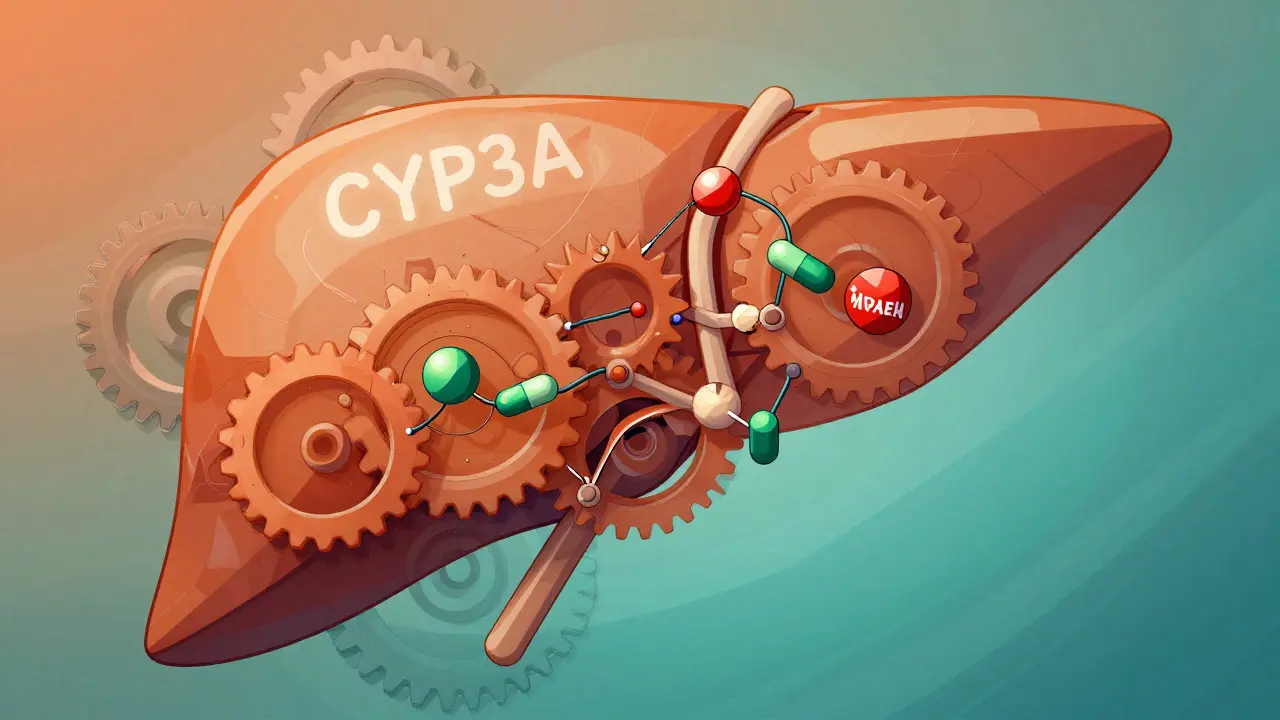
It comes down to the type of statin. CYP3A4 metabolism is a liver pathway that processes certain drugs. Statins like atorvastatin, simvastatin, and lovastatin rely heavily on this pathway. Some research suggests these statins might actually boost vitamin D absorption by affecting cholesterol transporters in the gut. But other statins like pravastatin or rosuvastatin don’t use CYP3A4 much, so they don’t show this effect.

Which Statins Interact Most with Vitamin D?
Not all statins play the same role in vitamin D interactions. The key is whether they’re processed by the CYP3A4 enzyme system in the liver. Statins that use this pathway-atorvastatin, simvastatin, and lovastatin-have the most potential for interaction with vitamin D. For example, a 2015 study found that taking 800 IU of vitamin D daily for six weeks lowered atorvastatin levels in the blood. This could theoretically reduce the drug’s effectiveness.
On the flip side, rosuvastatin and pravastatin don’t rely on CYP3A4. A 2012 study showed rosuvastatin significantly raised vitamin D levels in patients, while fluvastatin didn’t. This suggests rosuvastatin might help maintain vitamin D levels, but it’s not a guaranteed fix for muscle pain.
What Experts Recommend
Major health organizations are clear: don’t take vitamin D supplements just to prevent statin muscle pain. The ACC says there’s no evidence it works. The European Society of Cardiology (ESC) agrees, noting that while vitamin D deficiency might worsen muscle symptoms in some cases, supplementation hasn’t been proven to help. The American Pharmacists Association advises monitoring vitamin D levels only if muscle symptoms persist, not as routine practice.
But there’s nuance. If you’re already deficient in vitamin D (levels below 20 ng/mL), your doctor might still recommend supplementation for general health reasons. The ESC guidelines state maintaining adequate vitamin D (at least 20 ng/mL) is important for overall health, even if it doesn’t specifically help with statin side effects.
What Should You Do If You’re on Statins?
First, don’t self-prescribe vitamin D supplements to fix muscle pain. Talk to your doctor before making changes. If you’re experiencing muscle pain, your doctor will check your vitamin D levels and rule out other causes. They might switch you to a different statin, like rosuvastatin or pravastatin, which have fewer interactions with vitamin D.
For most people, the best approach is to focus on proven strategies: regular exercise, a balanced diet, and avoiding excessive alcohol. If your vitamin D levels are low, supplementing for bone health is fine-but it won’t solve statin-related muscle issues. Remember: the VITAL trial and other major studies show no benefit for this specific purpose.
What’s Next in Research?
Scientists are still digging deeper. The PRECISION trial, currently enrolling 5,000 statin users with muscle symptoms, is testing whether vitamin D helps only specific subgroups-like those with very low vitamin D levels (under 12 ng/mL). Results are expected in late 2025. Meanwhile, Johns Hopkins researchers are studying how genetic differences in vitamin D processing might affect how people respond to statins. This could explain why some studies show benefits and others don’t.
Does vitamin D help with statin muscle pain?
No. The largest study on this, the VITAL trial, found no difference in muscle symptoms between people taking vitamin D and those taking a placebo. This was true for all vitamin D levels, including in people with severe deficiency. Major health organizations like the American College of Cardiology do not recommend vitamin D for preventing statin muscle pain.
Do statins lower vitamin D levels?
Research is mixed. Some studies show statins increase vitamin D levels, while others show decreases. This depends on the type of statin. Atorvastatin and rosuvastatin have been linked to higher vitamin D levels in some cases, while others show no effect. There’s no consistent pattern, so routine vitamin D testing for statin users isn’t recommended.
Which statins interact most with vitamin D?
Statins processed by the CYP3A4 enzyme system-atorvastatin, simvastatin, and lovastatin-have the most potential for interaction with vitamin D. These can affect how vitamin D is absorbed or how the statin works in your body. Rosuvastatin and pravastatin don’t rely on CYP3A4, so they’re less likely to interact.
Should I take vitamin D if I’m on a statin?
Only if your doctor confirms you’re deficient in vitamin D for general health reasons. Don’t take it specifically to prevent muscle pain from statins-research shows it doesn’t work for that. If you have low vitamin D levels, supplementing for bone health is fine, but it won’t solve statin-related side effects.
Is it safe to take vitamin D and statins together?
Yes, for most people. There’s no evidence that taking vitamin D supplements with statins causes dangerous side effects. However, some studies suggest high-dose vitamin D might slightly lower atorvastatin levels in the blood, which could affect its effectiveness. Always talk to your doctor before adding supplements to your regimen.





Research on vitamin D and statins is complex The VITAL trial showed no difference in muscle symptoms between supplement and placebo groups However the underlying mechanisms are not fully understood Statins affect cholesterol synthesis pathways which may influence vitamin D metabolism CYP3A4 enzyme involvement varies among statins Atorvastatin and simvastatin have different metabolic pathways This could explain conflicting study results It's important to note individual variation Many people self-prescribe supplements without medical guidance This can lead to unnecessary complications The ACC guidelines are clear on this issue However real-world practice often diverges from evidence-based recommendations Patients should consult healthcare providers before making changes There's no substitute for professional medical advice Always prioritize evidence over anecdotal reports
February 5Phoebe Norman