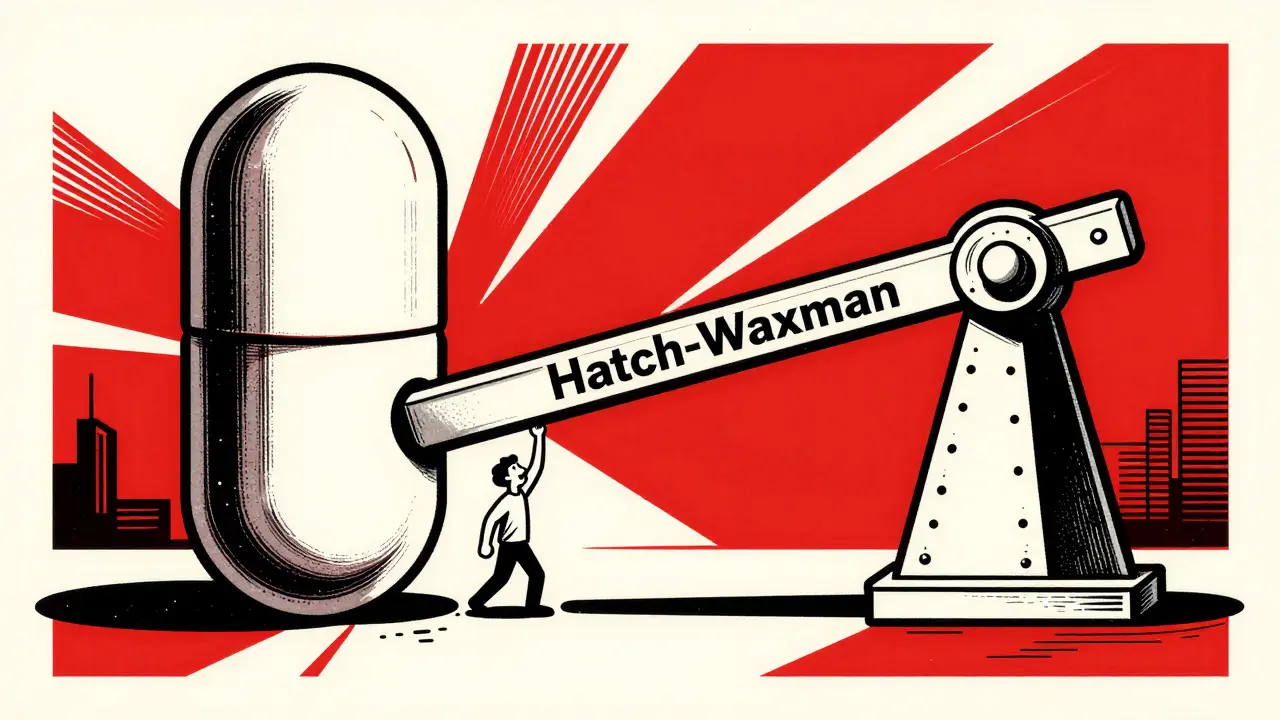
Imagine paying $500 for a medication that could cost $10 if a competitor were allowed to sell it. This isn't a hypothetical scenario; it's the core of the battle over antitrust laws in the pharmaceutical industry. When a brand-name company manages to block a generic version of a drug from hitting the shelves, the cost isn't just financial-it's a matter of public health. If people can't afford their meds, they stop taking them.
The Game of Patents and the Orange Book
To understand how competition is stifled, you first have to understand the Orange Book. This is the FDA's official list of patents for approved drugs. For a generic company to enter the market, they usually file an Abbreviated New Drug Application (ANDA).
Things get interesting with what's called a "Paragraph IV certification." This is essentially a legal challenge where a generic maker claims the brand's patent is either invalid or doesn't apply to the generic version. To reward the risk of suing a giant pharmaceutical company, the first generic company to successfully do this gets 180 days of market exclusivity. It's a high-stakes race: win the legal battle, and you get a temporary monopoly before the rest of the generic competitors flood in.
Pay-for-Delay: The Art of the Bribe
One of the most controversial tactics in the industry is the "pay-for-delay" agreement. This happens when a brand-name company pays a generic competitor to stay out of the market for a few more years. On paper, it might look like a legal settlement to end a patent dispute, but in reality, it's often a way to buy more time for a high-priced monopoly.
The U.S. Supreme Court stepped in during the 2013 FTC v. Actavis case, ruling that these large, unexplained payments can violate antitrust laws. Consider the case of Gilead Sciences, which paid roughly $246.8 million in 2023 to settle claims that it tried to thwart competition for its HIV medications. When these deals happen, the public pays the price through higher pharmacy bills.
| Number of Generic Competitors | Estimated Price Impact | Timeframe |
|---|---|---|
| 1 Generic Entry | At least 20% decrease | Within 1 year |
| 5 Generic Competitors | Up to 85% total decline | Long-term |
| No Generics (Monopoly) | 100% Brand Pricing | Patent Life |
Product Hopping and Sham Petitions
When the law closes one loophole, companies often find another. "Product hopping" is a subtle strategy where a company slightly modifies a drug's formula-maybe changing it from a tablet to a capsule-just before the original patent expires. They then move all their marketing and patients to the "new" version, making the old generic version irrelevant before it's even launched.
Then there are "sham citizen petitions." The FDA allows citizens to raise concerns about a drug's safety. While this is usually a good thing, some companies use it as a weapon. They file a flood of baseless petitions to trigger FDA reviews, which can freeze the approval of a generic competitor for months or years. The Federal Trade Commission (FTC) is currently fighting this in court, notably in a case against Teva Pharmaceuticals regarding the drug Copaxone.
Global Perspectives: EU and China
The U.S. isn't the only place fighting these battles. In the European Union, the European Commission focuses heavily on regulatory abuse. This includes "disparagement," where brand companies spread misleading rumors about the safety or effectiveness of generics to scare patients away from switching. According to European officials, these delays cost EU consumers nearly €11.9 billion every year.
China has recently taken a very aggressive stance. In January 2025, they released new Antitrust Guidelines for the Pharmaceutical Sector. They've identified "hardcore restrictions" like price-fixing and market division. Interestingly, China is now using AI to monitor pricing trends and detect collusion via messaging apps and algorithms, showing a shift toward high-tech enforcement.
Why This Matters for the Average Patient
All these legal terms-Paragraph IV, ANDA, product hopping-translate to one thing: affordability. When antitrust laws work, the cost of a drug can drop by 30% to 90% compared to the brand name. When they don't, patients suffer. A 2022 Kaiser Family Foundation survey revealed that 29% of U.S. adults skip or don't take their medications as prescribed because they simply cannot afford them.
The financial impact is staggering. Between 2005 and 2014, generic competition saved U.S. consumers $1.68 trillion. This proves that antitrust enforcement isn't just a legal formality-it's a vital economic engine that ensures life-saving medicine doesn't become a luxury item.
What is a "pay-for-delay" deal?
A pay-for-delay deal is an agreement where a brand-name drug manufacturer pays a potential generic competitor to keep its lower-cost version off the market for a specific period. This allows the brand company to maintain its monopoly prices for longer.
How does the Orange Book affect generic drugs?
The Orange Book lists the patents that protect a brand-name drug. Generic companies must check this book to determine if they can launch their product or if they need to challenge the listed patents through a Paragraph IV certification to enter the market legally.
What is product hopping?
Product hopping occurs when a company introduces a slightly modified version of a drug (like a new dosage form) just before the original patent expires. By switching patients to the new version, they prevent generic competitors from capturing the market share of the original drug.
Do generic drugs actually save money?
Yes. Data shows that the first generic entry typically drops prices by 20% within a year, and when five or more generics are available, the price often drops by about 85% of the original brand price.
What are sham citizen petitions?
These are petitions filed with the FDA that lack a legitimate scientific basis but are designed to trigger a review process. This process can delay the approval of a generic competitor's application, effectively extending the brand company's monopoly.


![Buy Generic Topamax (Topiramate) Online Cheap Safely in the UK [2025 Guide]](/uploads/2025/08/thumbnail-buy-generic-topamax-topiramate-online-cheap-safely-in-the-uk-2025-guide.webp)
Oh sure because paying a company to NOT make a cheaper drug is just such a reasonable business practice lol
April 15it's totally not like they're just holding our health hostage for a few extra quarters of profit
Catherine Mailum