Supplement Safety & Interaction Checker
Disclaimer: This tool is for educational purposes only. It is not a substitute for professional medical advice. Always consult your doctor or pharmacist before starting any new supplement.
Safety Analysis
Analysis:
Select options above to see the risk analysis.
💡 Safety Tip:
Always check for third-party certifications like the USP Verified Mark.
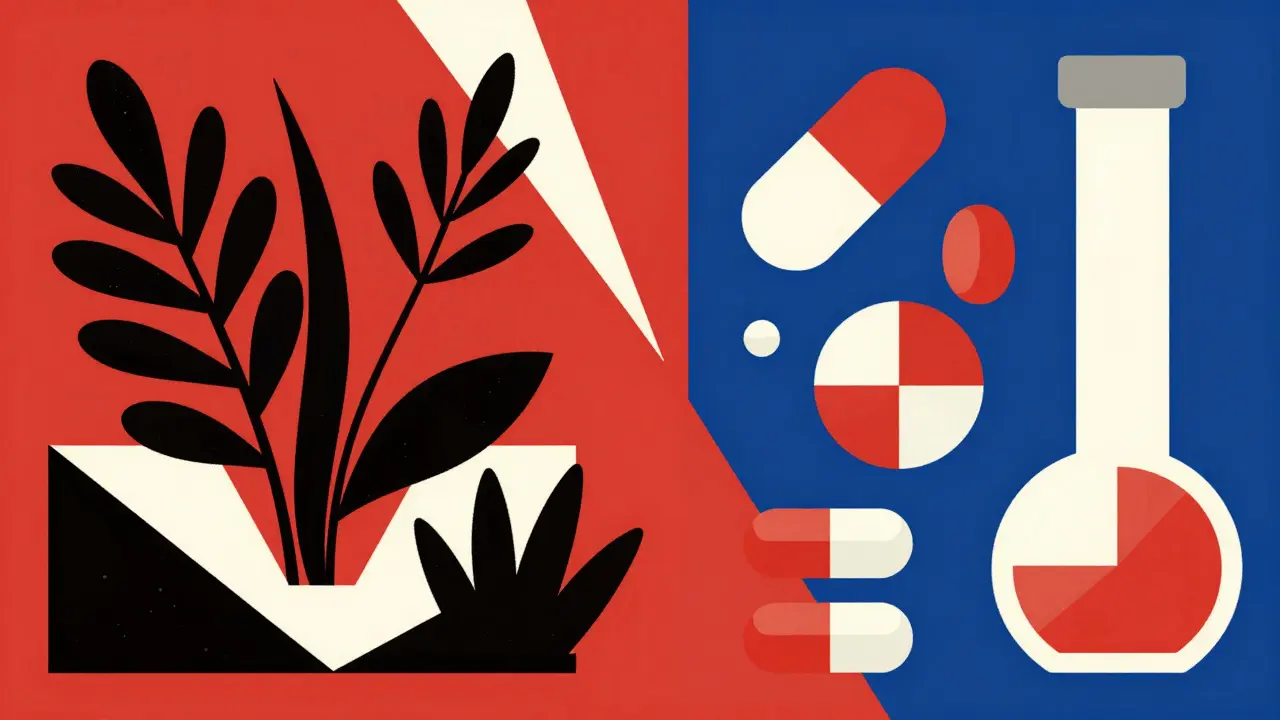
You've probably seen it on a thousand labels: "All Natural." In our minds, that phrase usually translates to "safe," "pure," and "gentle on the body." It's a comforting thought-that something grown in a field is inherently better than something synthesized in a lab. But here is the cold, hard truth: nature doesn't care about your safety. Some of the most potent toxins on Earth are 100% natural. When we talk about supplement interactions, the "natural" label can actually become a dangerous blind spot that puts your health at risk.
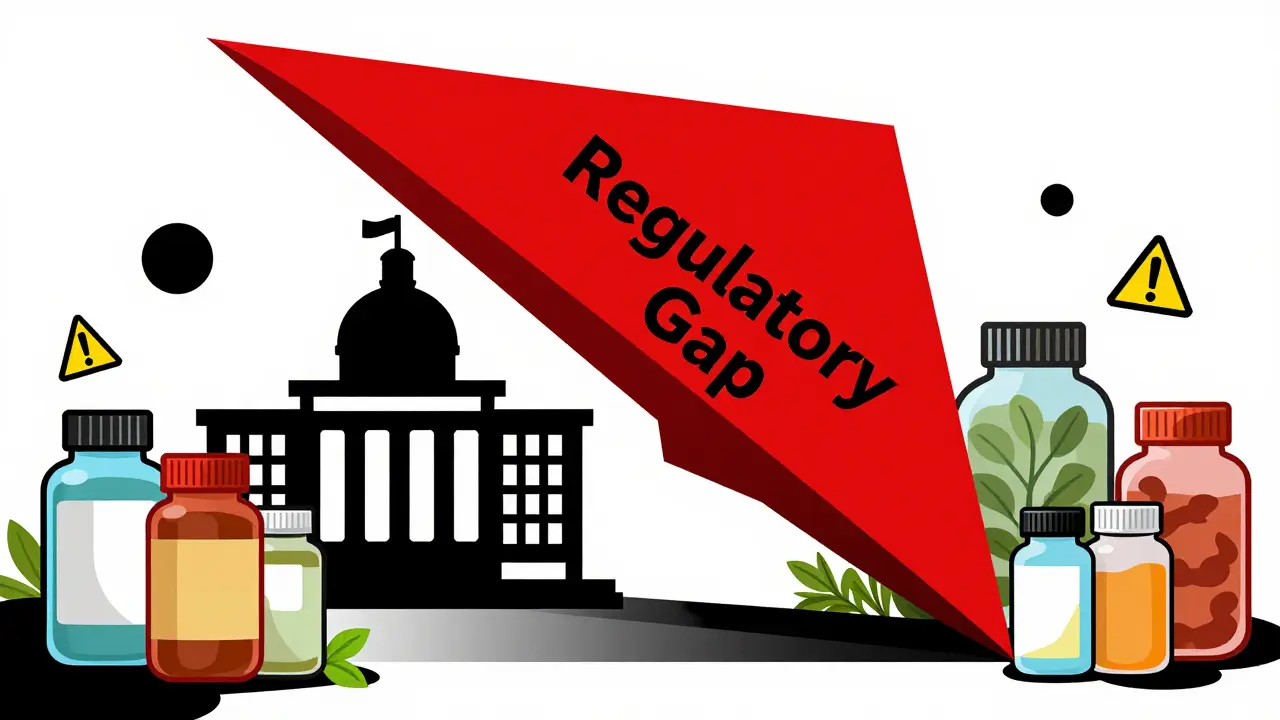
The core of the problem is a massive gap in how we perceive risk versus how these products are actually regulated. We tend to trust herbs because they feel intuitive, while we fear pharmaceuticals because they feel "chemical." However, the reality is that both can be dangerous, and the way they interact in your bloodstream is where things get complicated.
The "Natural" Fallacy and the Regulatory Gap
Many people believe that because a supplement comes from a plant, it doesn't need the same scrutiny as a prescription drug. This is a misunderstanding of the law. In the United States, there is a massive legal divide created by the Dietary Supplement Health and Education Act (DSHEA) of 1994. This law classifies herbal supplements as dietary supplements, not drugs. This means they don't have to prove they are safe or effective before they hit the shelves.
Compare that to Pharmaceuticals, which are synthetic or semi-synthetic compounds that must undergo rigorous FDA clinical trials to prove safety and efficacy . A drug company spends millions of dollars and years of research to ensure that a pill does what it says and doesn't kill the patient. Supplement companies, on the other hand, follow basic sanitation standards known as CGMP (Current Good Manufacturing Practice), but they aren't required to conduct the same level of clinical testing. If a supplement is dangerous, the FDA often only finds out *after* people start getting sick.
| Feature | Pharmaceuticals | Natural Supplements |
|---|---|---|
| Pre-market Approval | Required (Clinical Trials) | Not Required (Self-Affirmed) |
| Efficacy Proof | Mandatory evidence of benefit | Not required for market entry |
| Manufacturing | Strict FDA facility inspections | Basic CGMP sanitation standards |
| Safety Monitoring | High (Strict post-market reporting) | Low (Significant underreporting) |
When "Natural" Becomes Dangerous
To believe that natural equals safe is to ignore botanical history. Take Foxglove, for example. It's a beautiful garden plant, but it contains a chemical used to create heart medicine. If you eat the plant itself, it can be deadly. This isn't a "chemical" problem; it's a biology problem.
Then there are the supplements that made it to market before the red flags went up. Ephedra was widely used for weight loss and energy until the FDA banned it in 2004 because it was linked to heart attacks and strokes. Kava, often used for anxiety, has been associated with severe liver damage in some users. These aren't rare occurrences; they are systemic risks associated with using potent biological compounds without standardized dosing.
The danger isn't always the product itself, but the *lack* of knowledge about it. A Consumer Reports survey found that 68% of supplement users wrongly believe the FDA tests supplements for safety before they reach the market. When you don't know the rules of the game, you're more likely to make a gamble with your health.
The Interaction Reality: The Hidden Danger
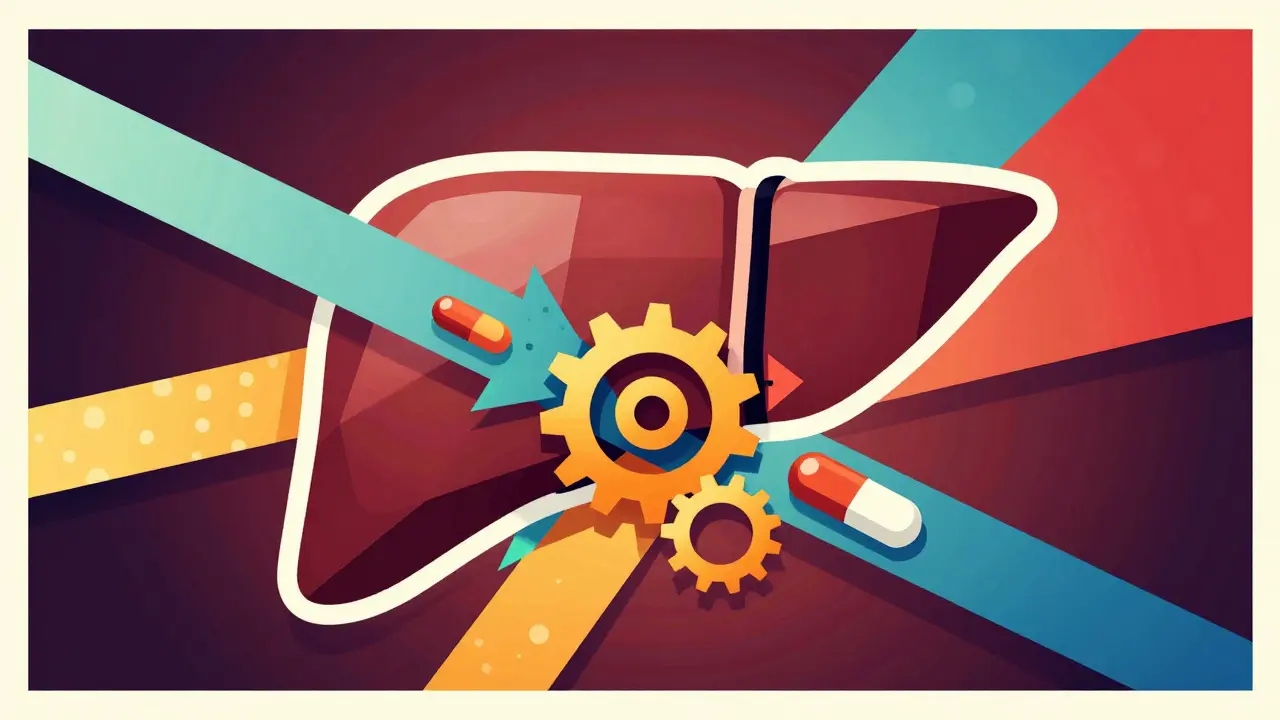
The most critical risk isn't necessarily taking a supplement alone-it's taking a supplement and a pharmaceutical at the same time. Your liver processes most of these substances using the same set of enzymes. If a supplement occupies those enzymes, your medication can either build up to toxic levels in your blood or be cleared out too quickly to work.
A classic example is St. John's Wort, which is often used to treat mild depression. While it's "natural," it is a powerful enzyme inducer. It can make birth control pills less effective, leading to unplanned pregnancies, or render blood thinners useless, increasing the risk of clots. It can also trigger manic episodes in people with bipolar disorder.
This creates a dangerous scenario because many people don't tell their doctors about the supplements they take. A study in JAMA Internal Medicine showed that 70% of patients don't disclose supplement use to their physicians. If your doctor doesn't know you're taking a "natural" remedy, they can't warn you about a potentially lethal interaction.
Comparing the Toll: Toxicity vs. Underreporting
If you look at the numbers, you might see that pharmaceutical deaths are higher-around 100,000 annually in the U.S., often linked to opioid addiction or severe allergic reactions. In contrast, deaths from herbs are reported as extremely rare. Does this mean herbs are safer? Not necessarily.
The problem is reporting bias. People who experience a side effect from a prescription drug are likely to report it to their doctor or the FDA's MedWatch program. People who feel sick after taking a "natural" tea or supplement often assume it's just a mild reaction or a "detox" process and never report it. In 2022, there were 120,000 adverse event reports for prescription drugs, but only 1,200 for supplements. It's highly unlikely that supplements are 100 times safer; it's more likely that we are simply blind to the data.
How to Use Natural Products Without the Risk
You don't have to avoid supplements entirely, but you do need to change how you approach them. Stop looking for the word "natural" and start looking for third-party verification. Since the FDA doesn't pre-test these products, look for seals like the USP Verified Mark. This means an independent lab has confirmed that what is on the label is actually in the bottle and that there are no dangerous contaminants like heavy metals.
Here is a simple rule of thumb for staying safe:
- Full Disclosure: Tell your pharmacist and doctor about every single thing you take, including vitamins, herbal teas, and "natural" powders.
- Verify the Source: Buy from brands that provide a Certificate of Analysis (CoA) for their batches.
- Avoid "Blends": Proprietary blends often hide the exact dosage of ingredients, making it impossible to know if you're at risk for an interaction.
- Monitor Your Body: If you start a new supplement and feel unusual fatigue, nausea, or heart palpitations, stop immediately. Don't assume it's a "healing crisis."
Are all pharmaceutical drugs synthetic?
No. Many pharmaceuticals are derived from natural sources but are isolated, purified, and standardized in a lab. For example, digoxin used for heart failure comes from the foxglove plant. The difference is that the pharmaceutical version has a precise, measured dose, whereas the raw plant contains unpredictable amounts of the active chemical.
Why is St. John's Wort considered dangerous with other meds?
St. John's Wort affects the cytochrome P450 enzyme system in the liver. These enzymes are responsible for breaking down many common medications. By speeding up these enzymes, St. John's Wort causes your body to clear out other drugs faster than intended, which can make those medications fail.
Does the FDA regulate the quality of supplements?
The FDA monitors supplements, but only in a limited capacity. Under DSHEA, the FDA focuses on basic sanitation and labeling rather than proving a product is safe or works before it is sold. They generally only intervene after a product is proven to be harmful to the public.
Can natural products cause addiction?
Yes. While synthetic opioids have a well-known risk of addiction, some natural compounds can also be habit-forming or lead to dependency depending on the substance and the dose. "Natural" does not mean a substance cannot alter brain chemistry or create a physical dependence.
What should I do if I suspect a supplement interaction?
Contact your healthcare provider immediately. Bring the bottle of the supplement with you so they can check the exact ingredients and dosage. Do not simply stop a prescription medication to take a supplement without professional guidance, as this can cause dangerous withdrawal or a return of symptoms.