CBD Drug Interaction Checker
Enter the prescription medications you're taking to check for potential CBD interactions. This tool identifies interactions based on CYP450 enzyme inhibition.
Your medications:
Your results will appear here after checking interactions.
When you take CBD oil with your prescription meds, you might not realize you’re playing Russian roulette with your liver. It’s not hype. It’s science. And it’s happening to thousands of people right now - especially those using CBD for anxiety, pain, or epilepsy while still on blood thinners, antidepressants, or seizure meds.
What Happens When CBD Meets Your Pills?
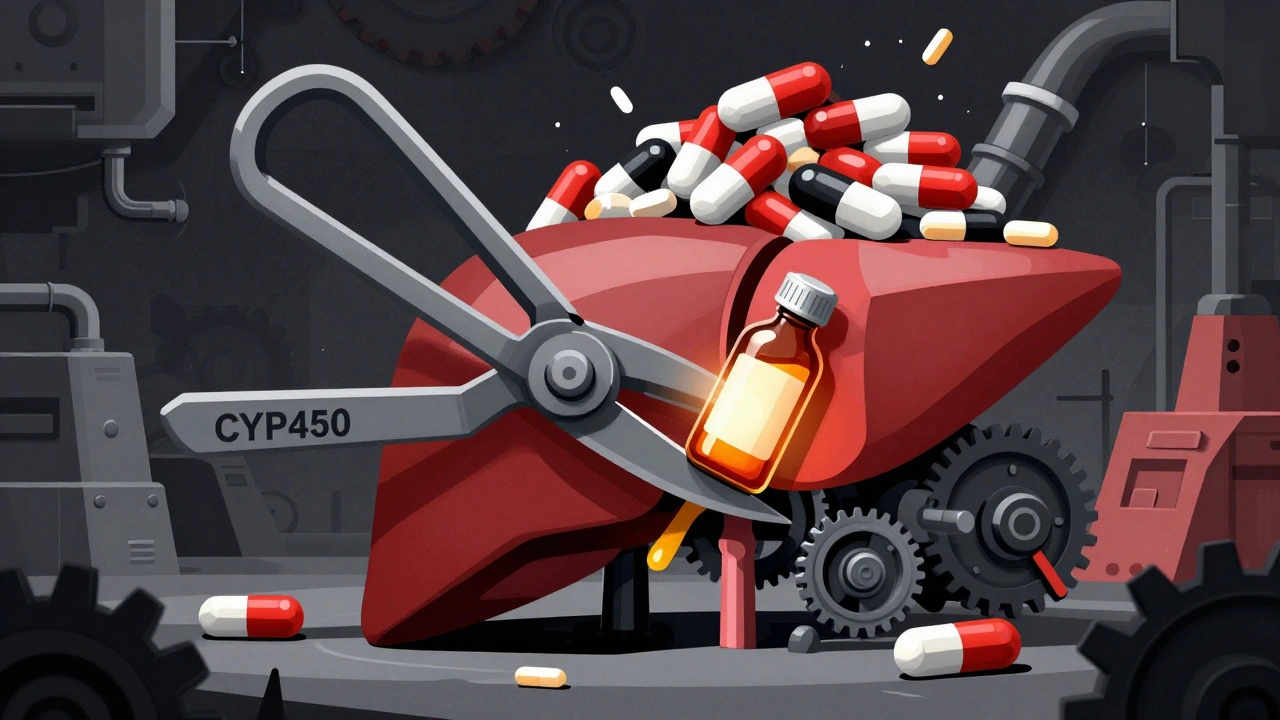
Your body uses a family of enzymes called CYP450 to break down about 80% of all prescription drugs. Think of them as tiny molecular scissors in your liver. They chop up medications so your body can get rid of them. But CBD? It doesn’t just pass through. It shuts down those scissors.
Studies show CBD strongly inhibits CYP2C9, CYP2C19, CYP3A4, and CYP2D6 - the exact enzymes that handle warfarin, clobazam, sertraline, and fentanyl. When these enzymes slow down, your meds don’t get cleared. They build up. And that’s when things go wrong.
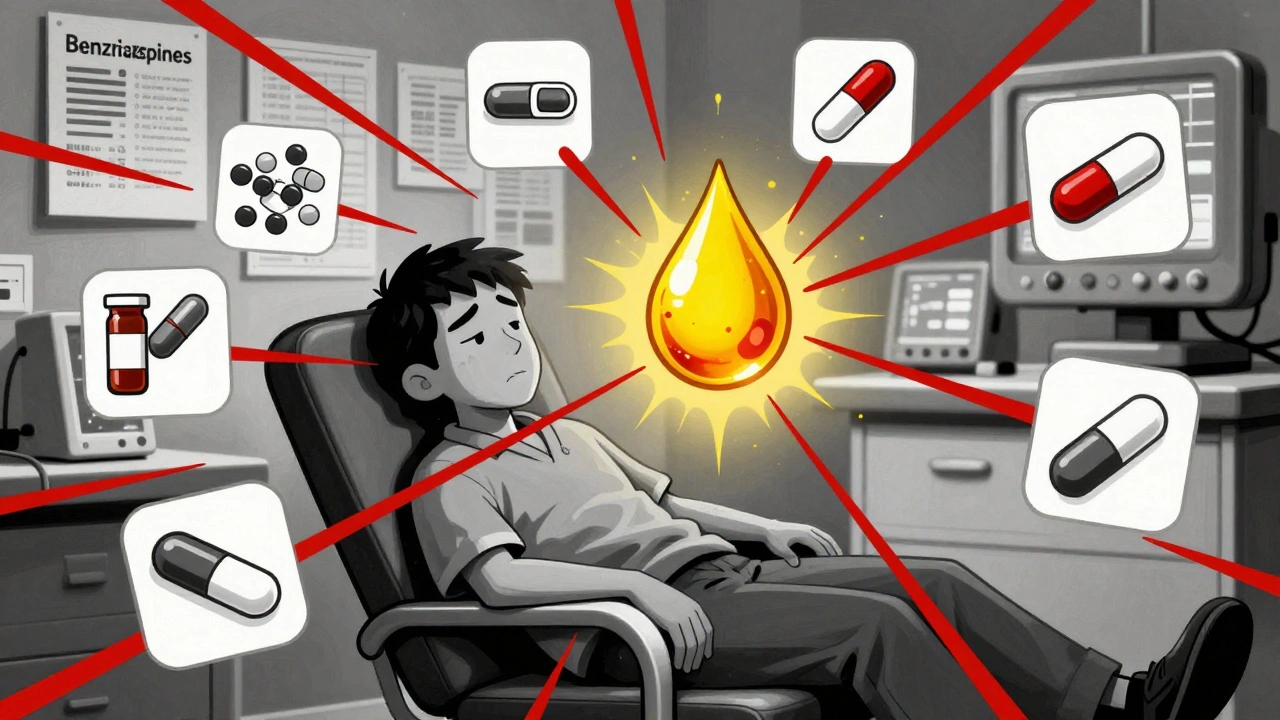
Take clobazam, a common anti-seizure drug. In one FDA-monitored trial, patients taking Epidiolex (pure CBD) saw their clobazam levels spike by 60%. That’s not a little bump - that’s enough to turn a calm patient into a drooling, sleepy mess. One Reddit user described it perfectly: “My neurologist had to cut my clobazam dose in half. I couldn’t even walk straight.”
Why Sedation Is the Red Flag
Sedation isn’t just “feeling tired.” It’s your nervous system drowning in leftover drugs. When CBD blocks the enzymes that clear benzodiazepines, opioids, or antipsychotics, those drugs stay in your bloodstream longer than they should. The result? Dizziness, confusion, falls, even respiratory depression.
A 2023 study of 217 medical cannabis users found that 34% experienced increased sedation when combining CBD with prescription meds. The worst cases? People on CYP2C19-metabolized drugs like clobazam or diazepam. Nearly 6 out of 10 of them felt dangerously sleepy.
And it’s not just prescription drugs. Over-the-counter sleep aids, allergy meds like diphenhydramine, and even some herbal supplements like kava or valerian root can amplify this effect. Combine them with CBD? You’re stacking sedatives. And your body doesn’t know the difference.
The Real Danger: Blood Thinners and Warfarin
Warfarin is one of the most dangerous drugs to mix with CBD. It’s a narrow therapeutic index drug - meaning the difference between working and causing a stroke or a bleed is tiny. The target INR (a blood clotting measure) is 2 to 3. Go above 4? You’re at serious risk.
One patient on PatientsLikeMe reported their INR jumped from 2.5 to 5.8 in just 10 days after starting CBD oil. They ended up in the ER needing vitamin K to reverse the bleeding risk. That’s not rare. The FDA’s adverse event database has over 140 reports of CBD-related bleeding or sedation events since 2018. Nearly a third involved blood thinners.
Why? CBD inhibits CYP2C9, the main enzyme that breaks down warfarin. No enzyme = warfarin piles up. No warning. No alert. Just a silent, deadly buildup.
Not All CBD Is Created Equal
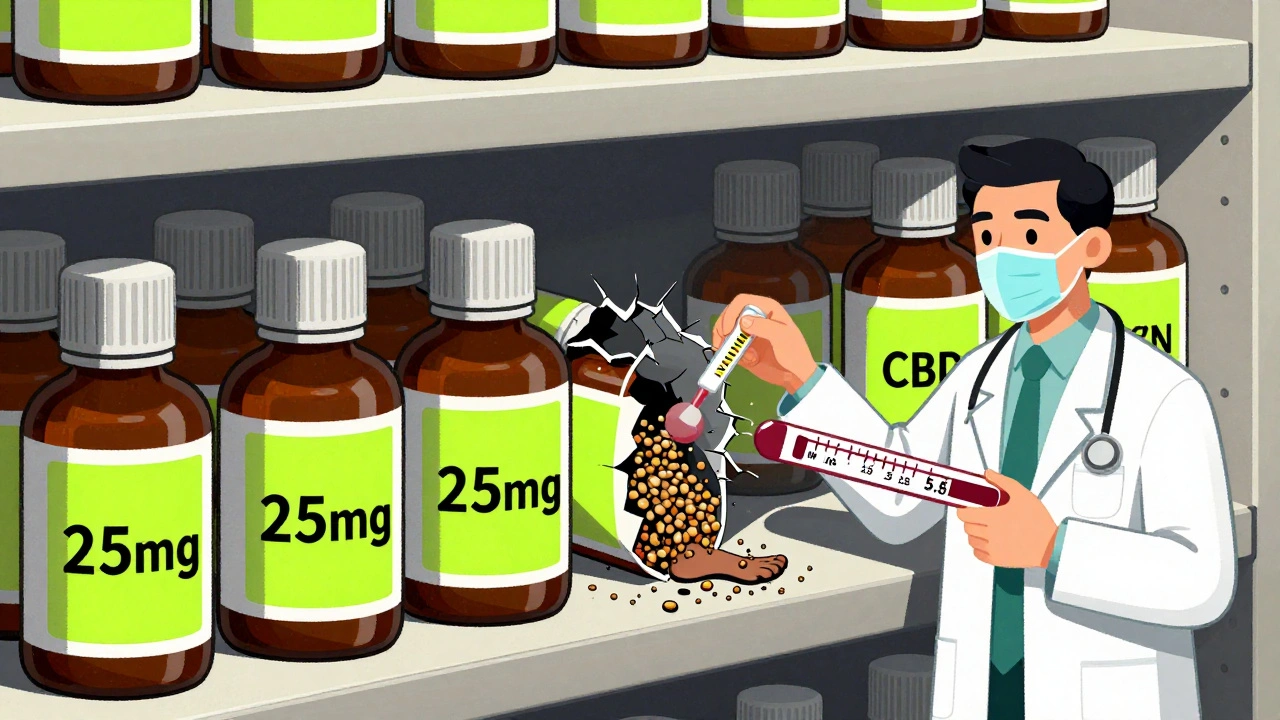
Here’s the scary part: most people aren’t taking pharmaceutical-grade CBD. They’re buying bottles off Amazon, gas stations, or Instagram influencers. A 2022 JAMA study tested 84 CBD products. Nearly half had less CBD than labeled - some had only 42% of what was on the bottle. Others had way more. One product had 121%.
That means you think you’re taking 25 mg of CBD a day. But you could be getting 100 mg. Or 10 mg. No one’s checking. No one’s regulating. And your doctor has no way of knowing what’s actually in your bottle.
Even worse, many products contain trace THC or other cannabinoids like CBN, which also inhibit CYP enzymes. So you’re not just dealing with CBD - you’re dealing with a cocktail of unknowns.
Which Medications Are Most at Risk?
Here’s a clear list of drug classes you should avoid mixing with CBD - unless you’re under close medical supervision:
- Anticoagulants: Warfarin, rivaroxaban
- Antiepileptics: Clobazam, valproate, stiripentol
- Antidepressants: Sertraline, fluoxetine, amitriptyline (all metabolized by CYP2D6 or CYP2C19)
- Benzodiazepines: Diazepam, alprazolam, lorazepam
- Opioids: Fentanyl, oxycodone, methadone (CYP3A4 substrates)
- Statins: Atorvastatin, simvastatin (CYP3A4)
- Immunosuppressants: Cyclosporine, tacrolimus
If your med has a “narrow therapeutic index” on its label - meaning small changes in dose can cause serious harm - treat it like a landmine. CBD is the trigger.
What Should You Do?
You don’t have to quit CBD. But you need to act smart.
- Talk to your doctor - before you start. Bring the bottle. Tell them exactly how much you’re taking. Don’t say “a few drops.” Say “10 mg twice daily.”
- Get blood tests. If you’re on warfarin, ask for an INR check 3-5 days after starting CBD. If you’re on clobazam, ask for a drug level test. It’s not optional - it’s life-saving.
- Don’t guess the dose. Start low. 5 mg once a day. Wait a week. Watch for drowsiness, dizziness, or confusion. If nothing happens, slowly increase.
- Separate timing. Take your CBD 3-4 hours apart from your prescription meds. It won’t stop inhibition, but it can reduce peak overlap.
- Consider alternatives. CBG and CBDV show much weaker CYP inhibition in early studies. Not proven, but promising. Talk to a pharmacist who knows cannabinoids.
The Cleveland Clinic found that 78% of CBD-drug interaction cases were fixed by adjusting doses - not stopping CBD. That’s the key: management, not avoidance.
The Bigger Picture
The CBD market hit $28.6 billion in 2023. Over 60 million Americans use it. And nearly half of them are taking it with prescription drugs. Yet, most pharmacists aren’t trained to ask about it. Most doctors don’t know the enzyme names.
That’s changing. The FDA has issued warning letters to 15 CBD companies for not including interaction warnings. The American Pharmacists Association now requires 3 hours of continuing education on this topic. Universities are rolling out training programs. The European Medicines Agency now demands CYP450 interaction data on all cannabinoid labels.
But until you’re in a clinic where someone checks your meds and your CBD bottle side by side - you’re on your own.
What’s Coming Next?
Scientists are working on solutions. Axim Biotechnologies is testing a nanoparticle CBD delivery system that may reduce liver enzyme interference. The University of Washington is building a free online tool called the “Cannabis-Drug Interaction Checker” - set to launch in mid-2024. And NIH is running a major trial (NCT04893224) measuring CBD’s exact effect on warfarin levels in 120 volunteers.
But none of that helps you today.
Right now, your safety depends on two things: knowing which drugs are risky, and being honest with your healthcare team. No guesswork. No assumptions. No “it’s just a supplement.”
Supplements don’t cause ER visits. But CBD, when mixed with the wrong meds, does. Every day. In homes, in clinics, in hospitals. You don’t need to fear CBD. But you do need to respect it.
Can I take CBD with my blood pressure medication?
It depends. CBD can interact with some blood pressure drugs, especially those metabolized by CYP3A4, like amlodipine or diltiazem. It may cause your blood pressure to drop too low, leading to dizziness or fainting. If you’re on these meds, start with 5 mg of CBD and monitor your BP twice daily for the first week. Talk to your doctor about checking your levels.
Does CBD interact with antidepressants like Zoloft?
Yes. Zoloft (sertraline) is broken down by CYP2C19 and CYP2D6 - both inhibited by CBD. This can cause serotonin buildup, increasing the risk of serotonin syndrome: agitation, rapid heart rate, high fever, tremors. If you’re on Zoloft and start CBD, watch for new anxiety, sweating, confusion, or muscle stiffness. Call your doctor immediately if these appear.
Is full-spectrum CBD riskier than isolate?
Yes. Full-spectrum CBD contains THC, CBN, and other cannabinoids - all of which inhibit CYP enzymes. THC itself inhibits CYP2C9 and CYP2C19. Even small amounts can add to CBD’s effect. CBD isolate has fewer interacting compounds, making it a safer choice if you’re on prescription meds. But even isolate can cause interactions - it’s still CBD.
How long does CBD stay in your system?
CBD can stay in your bloodstream for 2-5 days, depending on dose and frequency. But its effect on liver enzymes lasts longer - up to 7-10 days after your last dose. That means even if you skip a day, you’re still at risk of interactions. Don’t assume a break means safety.
Should I stop CBD before surgery?
Yes. Surgeons and anesthesiologists need to know if you’re taking CBD. It can interfere with pain meds, sedatives, and blood pressure control during and after surgery. Stop CBD at least 7 days before any procedure. Tell your surgical team exactly what you’ve been taking - brand, dose, and frequency.
Final Warning: Don’t Assume It’s Safe
Just because something is “natural” doesn’t mean it’s harmless. CBD isn’t a vitamin. It’s a potent biochemical agent that changes how your body handles life-saving drugs. Thousands of people are using it safely. But thousands more are silently risking overdose, bleeding, or sedation because no one told them.
If you’re on any prescription medication - especially for epilepsy, mental health, heart disease, or pain - talk to your doctor before touching CBD. Bring the bottle. Ask for a blood test. Don’t be embarrassed. This isn’t about judgment. It’s about survival.


So I started CBD for my back pain last month and didn’t think twice about my blood pressure med. Now I’m dizzy every time I stand up. Thanks for the wake-up call - I’m calling my doctor tomorrow.
December 5Shayne Smith