You have been taking a biologic medication for years. It works. You trust it. Then your doctor or pharmacist suggests a switch to a biosimilar. Suddenly, doubt creeps in. Is this new version just as good? Will it still control your symptoms? Are you becoming a guinea pig for a cheaper alternative?
These fears are completely normal. Biologics are complex, life-saving treatments for conditions like rheumatoid arthritis, Crohn's disease, and cancer. But the short answer is yes: biosimilars work just as well as the original reference biologics. Decades of rigorous testing and millions of patient-years of real-world data prove that there are no clinically meaningful differences in safety, purity, or potency.
Understanding why they are effective-and how they differ from generic drugs-can help you make an informed decision about your health without letting fear dictate your treatment plan.
Biosimilars vs. Generics: Why They Are Not the Same
To understand biosimilars, you first need to understand what they are not. They are not generics. If you take a generic aspirin, you get the exact same chemical molecule as the brand-name version. The molecules are identical, down to the atom.
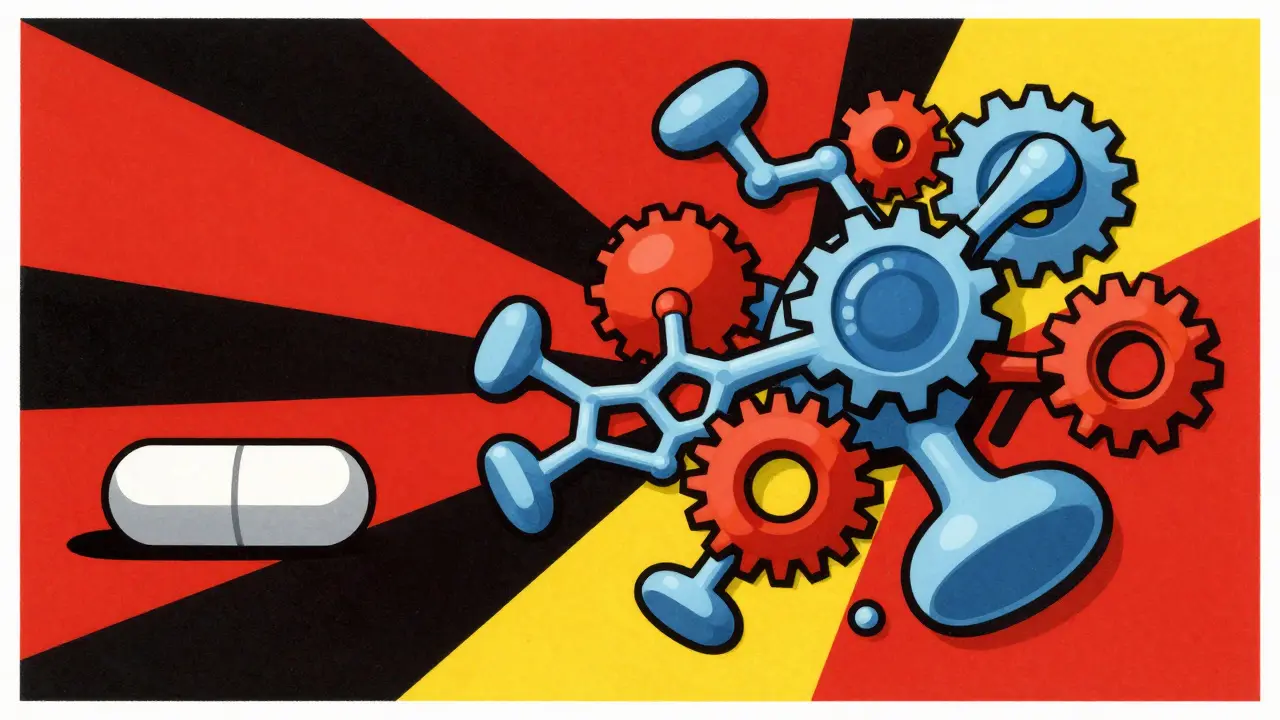
Biologics are different. They are large, complex proteins made inside living cells, such as bacteria or yeast. Because they are produced by living organisms, every batch has tiny natural variations. This makes it impossible to create an "identical" copy. Instead, regulators require manufacturers to create a product that is "highly similar" to the original, with no clinically meaningful differences.
| Feature | Generic Drug | Biosimilar |
|---|---|---|
| Source | Synthetic chemical synthesis | Living cells (bacteria, yeast) |
| Molecular Structure | Identical to brand name | Highly similar, not identical |
| Regulatory Pathway | Abbreviated New Drug Application (ANDA) | Biologics License Application (BLA) 351(k) |
| Clinical Testing | Bioequivalence studies only | Analytical, preclinical, and often clinical trials |
This complexity means biosimilars undergo a much more rigorous approval process than generics. While a generic drug mainly needs to prove it dissolves at the same rate in your stomach, a biosimilar must pass hundreds of analytical tests to prove its structure and function match the reference product.
The Rigorous Science Behind Approval
When the U.S. Food and Drug Administration (FDA) approves a biosimilar, it isn't guessing. The agency uses a "totality of evidence" approach. This means they look at every piece of data available before saying yes.
First comes the analytical characterization. Manufacturers perform between 200 and 300 analytical tests on multiple batches of the drug. These tests check everything from the protein's shape to how it binds to receptors in your body. If the biosimilar matches the reference product here, it is a strong sign of similarity.
Next are pharmacokinetic (PK) and pharmacodynamic (PD) studies. PK studies measure how your body absorbs, distributes, metabolizes, and excretes the drug. PD studies measure what the drug does to your body. For a biosimilar to be approved, the 90% confidence interval for these metrics must fall within a tight range-typically 80% to 125% of the reference product's performance. This ensures the drug behaves in your system exactly as expected.
Finally, if needed, clinical trials are conducted. Unlike traditional drug trials that compare against a placebo, biosimilar trials usually compare directly against the reference biologic. A landmark meta-analysis published in 2022 examined 1,711 patients across six disease settings, including lung cancer, breast cancer, and lymphoma. The results showed overall response rates (ORR) nearly identical to the reference drugs. For example, the ORR ratio for a bevacizumab biosimilar versus the reference in non-small cell lung cancer was 1.02, indicating virtually no difference in effectiveness.

Real-World Evidence: What Happens After Approval?
Clinical trials are controlled environments. Real life is messy. That is why real-world evidence (RWE) is so important. It tells us how biosimilars perform when prescribed to thousands of diverse patients in everyday medical practice.
The data is overwhelmingly positive. In inflammatory bowel disease (IBD), a Canadian study tracking 1,200 patients found no significant differences in treatment persistence or adverse event rates between the infliximab biosimilar CT-P13 and the reference infliximab over 24 months. Similarly, a European study involving 3,450 rheumatoid arthritis patients showed equivalent drug survival rates at 12 months for the adalimumab biosimilar ABP501 compared to the reference adalimumab (82.3% vs. 81.7%).
Oncology patients also see comparable results. The NOR-SWITCH trial, a randomized, double-blind study of 480 cancer patients, found equivalent clinical outcomes between originator rituximab and its biosimilar RTXM83. Overall response rates were 72.9% for the biosimilar and 69.3% for the reference, a statistically insignificant difference.
Patient voices confirm these findings. On the PatientsLikeMe platform, an analysis of 1,245 patients using the adalimumab biosimilar Amjevita showed 87% reported equivalent symptom control compared to 89% using the reference Humira. Adverse event rates were identical at 23%. When asked directly, 92% of patients switched from reference infliximab to the biosimilar Inflectra reported no change in disease control.
Cost Savings and Healthcare Access
If biosimilars work just as well, why do they exist? The primary driver is cost. Biologics are expensive to develop and manufacture. When patents expire, biosimilars enter the market, creating competition that drives prices down.
In the United States, biosimilars are typically priced 15% to 30% lower than reference products. In Europe, where biosimilars have been available since 2006, discounts can range from 25% to 85%, depending on the level of competition. This price reduction is not just good for insurance companies; it improves access for patients who might otherwise struggle to afford their medication.
A 2022 study by the Congressional Budget Office estimated that biosimilars reduce prices of reference biologics by 26% within three years of entry. For Medicare Part B alone, this competition saves approximately $1.3 billion annually. Over the next decade, the CBO projects biosimilars will save the U.S. healthcare system $169 billion. These savings allow healthcare systems to treat more patients with the same resources.

Addressing Common Concerns and Myths
Despite the data, hesitation remains. A 2021 survey found that 38% of U.S. physicians expressed concerns about biosimilar efficacy, largely due to misinformation or lack of familiarity. Let’s address the most common worries.
Concern: Immunogenicity (Antibody Response)
Some worry that slight differences in the biosimilar could cause the immune system to attack the drug. While theoretically possible, real-world evidence has not substantiated this concern. Studies show immunogenicity profiles are comparable between biosimilars and reference products. Regulatory agencies require strict assessment of immunogenicity during approval to ensure any risks are identified early.
Concern: Switching Risks
Patients often fear that switching back and forth between the reference product and a biosimilar (or between different biosimilars) could cause problems. However, data supports safe switching. A 2023 study in Clinical Rheumatology showed equivalent outcomes when switching between adalimumab biosimilars. Drug retention at 12 months was 84.2% for those who switched multiple times versus 85.7% for those who stayed on one product-a negligible difference.
Concern: Long-Term Safety
Critics argue we don’t know enough about long-term effects beyond five years. Dr. Paul Kim, a professor at UCLA, noted in a 2022 JAMA editorial that while current evidence is reassuring, continued pharmacovigilance is warranted. However, Dr. G. Caleb Alexander of Johns Hopkins stated that the totality of evidence from over 100 biosimilars approved globally demonstrates no clinically meaningful differences in safety. The FDA actively monitors post-marketing safety, and no major safety signals have emerged that distinguish biosimilars from their reference counterparts.
How to Navigate the Switch
If your provider recommends a biosimilar, here is what you can expect. The process should be transparent and collaborative.
- Consultation: Your doctor should explain why they are recommending the switch, citing cost savings or formulary requirements. Ask questions. You have the right to know which specific biosimilar you are receiving.
- Education: Reputable providers use standardized education materials. These help reduce patient refusal rates significantly. For example, Kaiser Permanente reduced refusal rates from 22% to 5% through targeted counseling.
- Monitoring: Standard switching protocols involve gradual transition with 1-3 months of monitoring. Keep track of your symptoms. If you notice changes, report them immediately. Remember, disease flares can happen naturally and may not be related to the medication change.
- Interchangeability Awareness: Check your state laws. As of January 2024, 48 U.S. states have interchangeability laws allowing pharmacists to substitute biosimilars without direct prescriber intervention, similar to generics. However, you can always request the reference product if you prefer, though your insurance may not cover the full cost.
The global biosimilars market is growing rapidly, valued at $10.1 billion in 2023 and projected to reach $38.5 billion by 2030. With major players like Sandoz, Samsung Bioepis, and Amgen leading the way, and 127 candidates in development, biosimilars are becoming a standard part of care. Adoption rates vary by specialty, with rheumatology seeing 78% uptake and oncology at 31%, reflecting earlier market entry in non-oncology indications.
Are biosimilars safer than generic drugs?
Biosimilars and generics serve different purposes and have different risk profiles. Generics are chemically identical to their brand-name counterparts, making their safety profile virtually indistinguishable. Biosimilars are highly similar but not identical copies of complex biological products. Both undergo rigorous regulatory review. Biosimilars require extensive analytical, preclinical, and clinical testing to demonstrate no clinically meaningful differences in safety or efficacy. Neither is inherently "safer"; both are held to high standards appropriate for their complexity.
Can I refuse a biosimilar and stay on the reference biologic?
Yes, you can generally refuse a biosimilar. However, insurance coverage may differ. Many health plans prioritize biosimilars due to lower costs, meaning you might face higher out-of-pocket expenses for the reference product. Discuss your preferences with your doctor and pharmacist. In some cases, prior authorization may be required to continue the reference biologic.
What does "interchangeable" mean for a biosimilar?
An "interchangeable" biosimilar has met additional FDA requirements demonstrating that switching between it and the reference product poses no additional risk in terms of safety or diminished efficacy. This designation allows pharmacists to substitute the biosimilar for the reference product at the pharmacy level without consulting the prescriber, similar to how generic drugs are substituted. Not all biosimilars are designated as interchangeable, but all are considered medically equivalent.
Why are biosimilars cheaper than reference biologics?
Biosimilars are cheaper primarily because they do not bear the full cost of initial research and development. The reference biologic manufacturer invests billions in discovering the drug and conducting early-stage trials. Biosimilar manufacturers rely on existing knowledge of the reference product, focusing their investment on proving similarity rather than novelty. Additionally, increased competition in the market drives prices down further.
Is it safe to switch between different biosimilars of the same drug?
Current evidence suggests it is safe. Studies, such as one published in Clinical Rheumatology in 2023, have shown equivalent clinical outcomes when patients switch between different adalimumab biosimilars. Drug retention rates were comparable between those who switched multiple times and those who remained on a single product. However, consistent monitoring by your healthcare provider is recommended to ensure continued efficacy and manage any potential side effects.