Opioid Risk Assessment Tool
Assess Your Risk Factors
Complete this quick assessment to understand your personalized risk for opioid-induced respiratory depression. Based on Cleveland Clinic and FDA research.
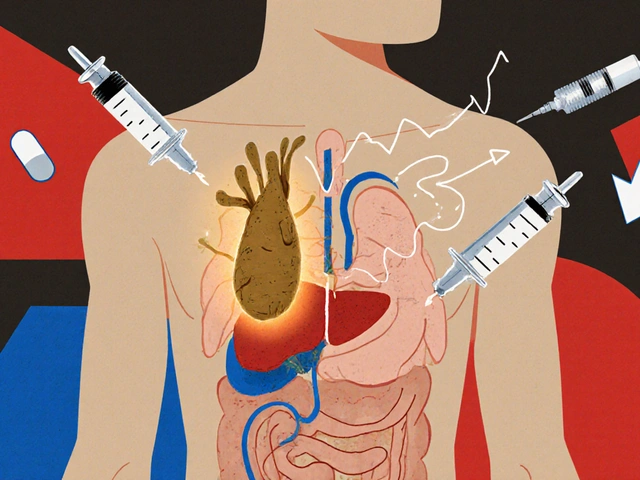
When someone takes an opioid - whether it’s oxycodone, fentanyl, or even a prescription painkiller after surgery - their breathing can slow down. Not just a little. Enough to stop. And if no one notices, it can kill them. This isn’t rare. It’s happening in hospitals, nursing homes, and even at home. Respiratory depression from opioids and other medications is one of the most preventable causes of death in modern medicine. Yet, too often, it’s missed until it’s too late.
What Respiratory Depression Actually Looks Like
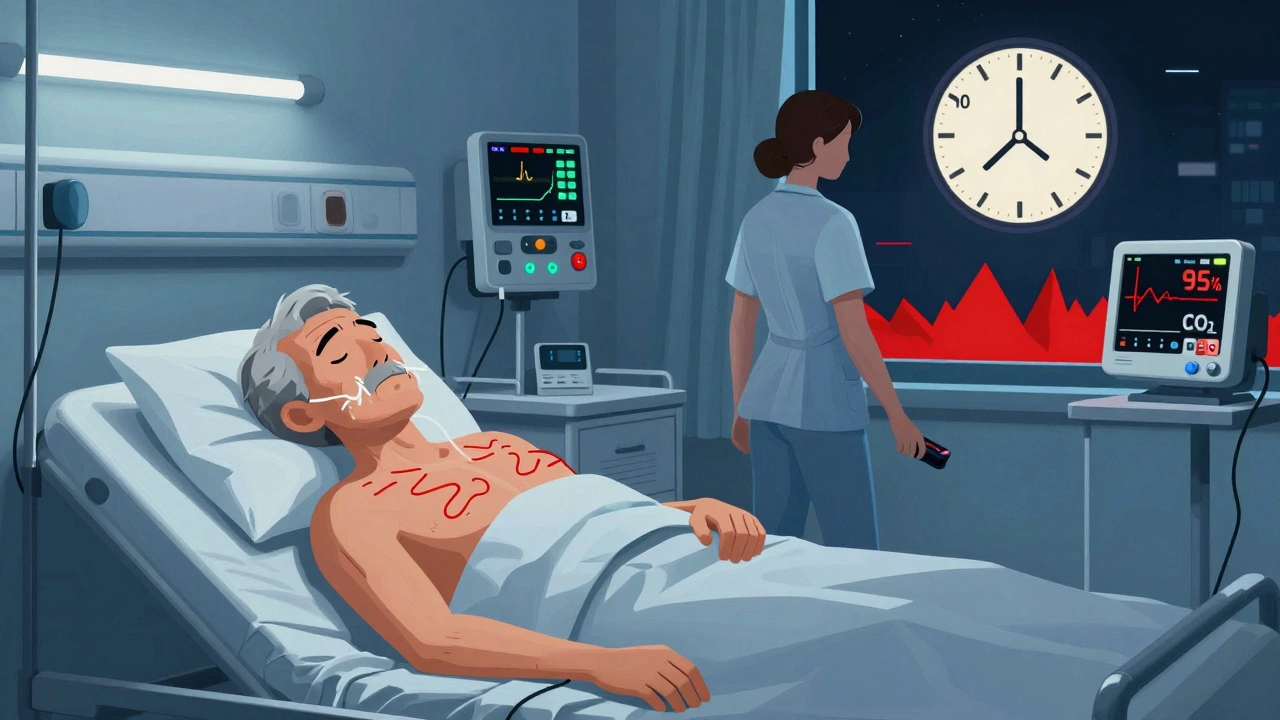
Respiratory depression isn’t just "breathing slowly." It’s when the brain stops telling the lungs to work. The person may look asleep, but they’re not resting - they’re failing. Their breaths become shallow, spaced out, and irregular. Fewer than 8 breaths per minute. That’s the red line. At the same time, oxygen levels drop below 85%. Carbon dioxide builds up. Their body doesn’t react to it. They don’t gasp. They don’t wake up. That’s the danger.Many assume oxygen masks or nasal prongs fix the problem. They don’t. Supplemental oxygen can make someone look fine on a pulse oximeter while their carbon dioxide levels climb dangerously high. You can have 95% oxygen saturation and still be in respiratory arrest. That’s why relying only on oxygen readings is a deadly mistake.
The Cleveland Clinic found that in confirmed cases of opioid-induced respiratory depression, slow breathing happens in 100% of cases. But other signs show up too: extreme tiredness (78%), confusion (53%), nausea (65%), dizziness (29%), and even a fast heartbeat (37%). These aren’t side effects - they’re warning signs. If someone on opioids is unusually sleepy, hard to wake, or confused, don’t wait. Check their breathing.
Who’s at Highest Risk?
Not everyone who takes opioids will have this reaction. But some people are sitting on a ticking clock. The data is clear:- People over 60 - 3.2 times more likely
- Women - 1.7 times more likely
- Those who’ve never taken opioids before - 4.5 times more likely
- Anyone with two or more other health problems - risk jumps by 2.8 times for each
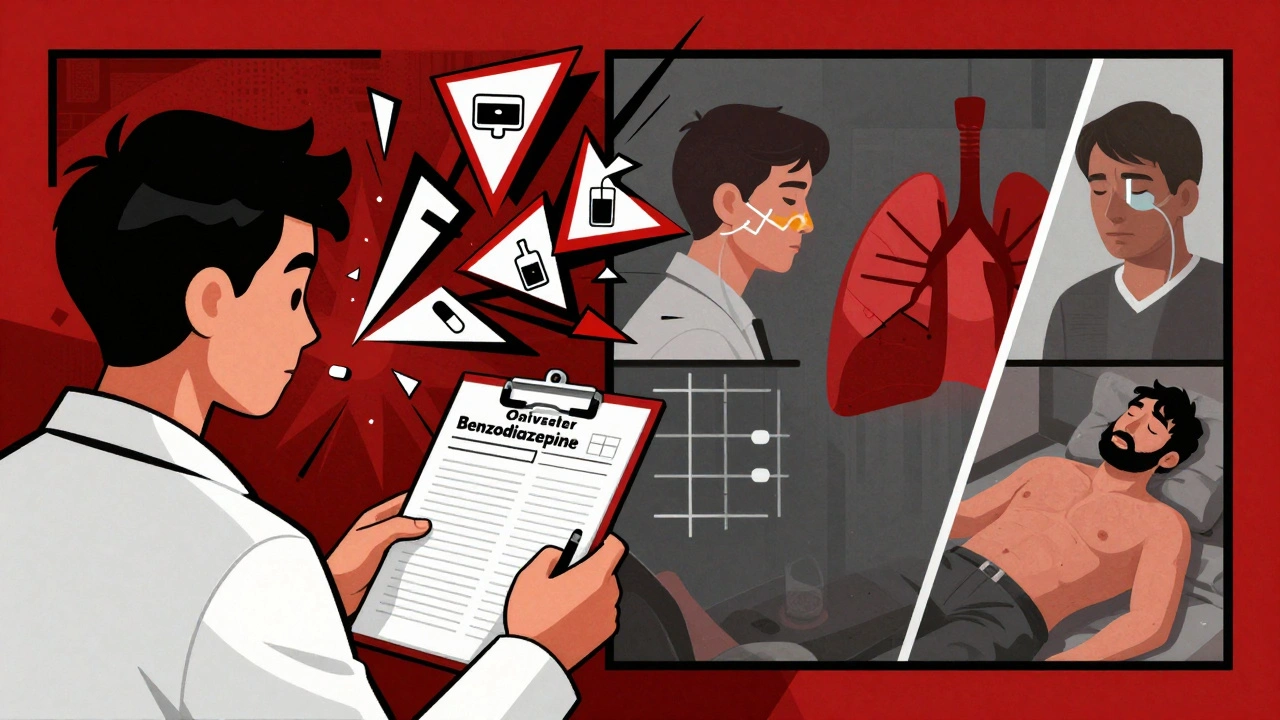
- Anyone taking benzodiazepines (like Xanax or Valium), alcohol, or sleep aids - risk spikes 6.3 times
And here’s the worst part: combining opioids with benzodiazepines doesn’t just add risk - it multiplies it. Studies show this mix increases respiratory depression risk by 14.7 times. That’s not a small interaction. It’s a medical emergency waiting to happen. Yet, doctors still prescribe them together. Patients still take them. And hospitals still don’t always monitor for it.
How Hospitals Miss It - And Why
You’d think hospitals would be safe places for people on opioids. But the reality is grim. A study by the Anesthesia Patient Safety Foundation found that patients checked every four hours are unmonitored 96% of the time. That means for almost the entire night, someone could be dying - and no one knows.Alarm fatigue is real. Nurses hear too many false alarms from poorly calibrated machines. They start ignoring them. Only 42% of nurses can correctly identify early signs of respiratory depression in simulation tests. That’s not training failure - it’s system failure. Hospitals aren’t giving staff the tools to spot this early.
Only 31% of U.S. hospitals use validated risk assessment tools. Most still rely on outdated checklists or gut feeling. And even when they do monitor, they often use the wrong tools. Pulse oximetry alone? Fine if the patient isn’t on oxygen. But if they are? Capnography - which measures carbon dioxide in exhaled air - is the gold standard. It catches problems 94% of the time, compared to 89% for pulse oximetry. Yet, many units still don’t have capnography monitors in place.
What Works: Real Solutions That Save Lives
Some hospitals are getting it right. The Cleveland Clinic cut respiratory depression cases by 47% using three simple changes:- Continuous monitoring for high-risk patients (those with two or more risk factors)
- Pharmacist-led opioid dosing - no more automatic 10mg every 4 hours
- Mandatory staff training - everyone learns to recognize the signs, not just nurses
They also stopped fixed-schedule dosing for opioid-naïve patients. Instead, they wait two hours after each dose to check breathing before giving another. That’s it. No fancy tech. Just common sense.
Technology is catching up, too. New FDA-approved tools like the Opioid Risk Calculator (ORC), launched in January 2023, use 12 patient factors - age, weight, kidney function, history of sleep apnea, meds - to predict individual risk with 84% accuracy. Some smart monitors now predict respiratory depression 15 minutes before symptoms appear. But here’s the catch: only 22% of U.S. hospitals use full protocols that meet safety guidelines. Community hospitals? Just 14%.
What to Do If You’re Giving or Taking Opioids
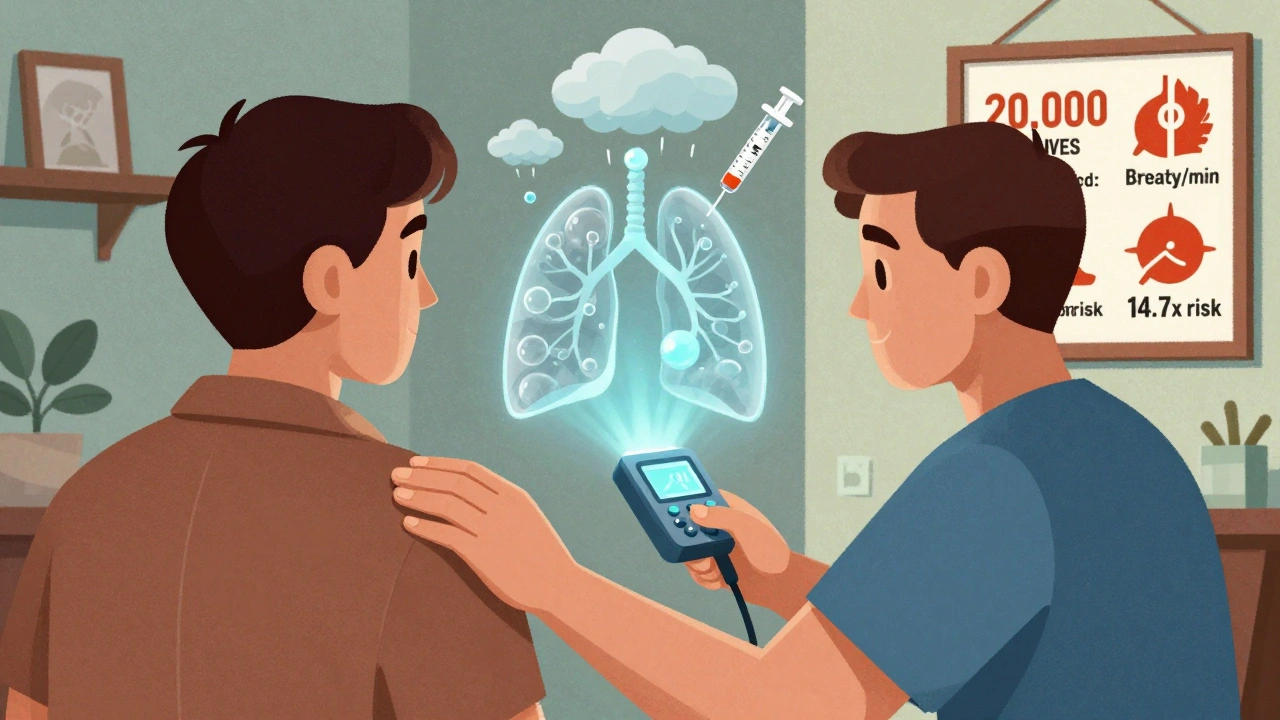
If you’re caring for someone on opioids - at home or in a facility - here’s your action plan:- Check breathing every hour for the first 2-4 hours after a dose
- Count breaths for a full 30 seconds. If it’s less than 8 per minute, call for help immediately
- Don’t rely on oxygen levels alone - look for slow, shallow breaths
- If they’re hard to wake up, don’t shake them - try speaking loudly, then gently pinch the shoulder
- Keep naloxone (Narcan) on hand. It reverses opioid effects. Know how to use it
- Never mix opioids with alcohol, benzodiazepines, or sleep meds
For patients: Tell your doctor if you’ve never taken opioids before. Ask if you’re at high risk. Ask if you need continuous monitoring. If you’re going home with opioids, make sure someone is there to watch you for the first 24 hours. Don’t assume you’ll wake up if you stop breathing.
The Bigger Picture: Why This Keeps Happening
Respiratory depression from opioids isn’t an accident. It’s a systemic failure. The Centers for Medicare & Medicaid Services (CMS) calls it a "never event" - meaning hospitals get penalized if it happens. They lose up to 3% of their reimbursement. And yet, it still happens. Why? Because monitoring is expensive. Training takes time. Risk tools aren’t mandatory.The market for OIRD detection gear grew from $287 million in 2020 to $412 million in 2023. That’s progress. But money doesn’t fix culture. The real fix is changing how we think about opioids. They’re not just painkillers. They’re brain depressants. And their most dangerous side effect isn’t nausea - it’s silence.
Every year, 20,000 Americans need naloxone to survive opioid-induced respiratory depression. That’s 20,000 chances missed. 20,000 people who might have lived if someone had just counted their breaths.
Can you die from respiratory depression caused by opioids even if you’re on oxygen?
Yes. Oxygen masks or nasal prongs can keep blood oxygen levels high while carbon dioxide builds up dangerously in the blood. This is called "silent hypoxia" in the context of opioid use. The person may appear stable on a pulse oximeter, but their brain is suffocating from CO2 poisoning. Capnography - which measures exhaled carbon dioxide - is needed to catch this. Relying only on oxygen readings can delay life-saving intervention.
How quickly can respiratory depression turn fatal?
It can happen in under 10 minutes. Once breathing drops below 8 breaths per minute and becomes shallow or irregular, oxygen levels begin to fall. Without intervention, brain damage can occur within 3-5 minutes. Death can follow within 10-15 minutes. That’s why continuous monitoring and rapid response are critical. Waiting for someone to turn blue is already too late.
Is naloxone always safe to use?
Naloxone is safe and life-saving, but it must be used correctly. Giving too much too fast can cause sudden, severe opioid withdrawal - especially in people with chronic pain or opioid dependence. Symptoms include vomiting, seizures, rapid heart rate, and extreme agitation. In cancer patients or those on long-term opioids, naloxone can destroy pain control. The key is titration: give small doses (0.4 mg) every 2-3 minutes until breathing improves. Never give a full dose all at once unless the person is unresponsive and not breathing.
Can non-opioid medications cause respiratory depression too?
Yes. Any drug that depresses the central nervous system can cause it. Benzodiazepines (like diazepam), barbiturates, sleep aids (like zolpidem), muscle relaxants (like cyclobenzaprine), and even high doses of certain antihistamines can slow breathing. Alcohol is especially dangerous when mixed with these. The risk multiplies when combined with opioids - which is why polypharmacy is the biggest red flag.
Are there new treatments being developed to avoid respiratory depression?
Yes. Researchers are developing "biased agonists" - new opioid drugs that activate pain-relief pathways in the brain without triggering the breathing-suppressing ones. These are in Phase III clinical trials. Also, AI-powered monitoring systems are being trained to predict respiratory depression before symptoms appear, using heart rate variability, movement, and breathing patterns. The NIH has invested $37.5 million in this research for 2024, aiming to find genetic markers for susceptibility and non-reversal treatments that restore breathing without taking away pain relief.




Respiratory depression is not merely a medical concern-it is a failure of systemic vigilance. In my country, we do not rely on technology alone. We teach families to count breaths, to observe, to act. The science is clear. The tools exist. What is missing is the collective will to prioritize human life over convenience. This is not about opioids. It is about how we value care.
December 12sandeep sanigarapu