After a heart attack, bypass surgery, or other major cardiac event, your body needs time to heal-but it also needs movement. Too much rest can weaken your heart and muscles, while too much activity too soon can be dangerous. The key is finding the right balance. That’s where cardiac rehab comes in. It’s not just a suggestion-it’s one of the most effective ways to get your heart back on track and stay out of the hospital.
Why Exercise After a Heart Event Matters
It might sound surprising, but moving more after a heart event actually lowers your risk of another one. Studies show people who complete a formal cardiac rehab program cut their chance of dying within five years by 30%. That’s not a small number. It’s life-changing. Why? Because exercise helps your heart pump more efficiently, lowers blood pressure, improves cholesterol, and reduces stress-all things that protect your heart long-term.
But here’s the catch: not all exercise is safe right after a heart event. Jumping into a run or lifting heavy weights too soon can put too much strain on a healing heart. That’s why structured programs exist. They’re built on decades of research, not guesswork. The goal isn’t to get you back to your old routine-it’s to help you build a new, safer one that lasts.
The Three Phases of Safe Cardiac Exercise
Recovery isn’t a single step. It’s a process, broken into three clear phases. Each one has specific goals, rules, and activity levels. Skipping ahead can be risky. Going too slow can delay progress. Here’s what each phase looks like in real terms.
Phase 1: Hospital and Early Recovery (Days 1-7)
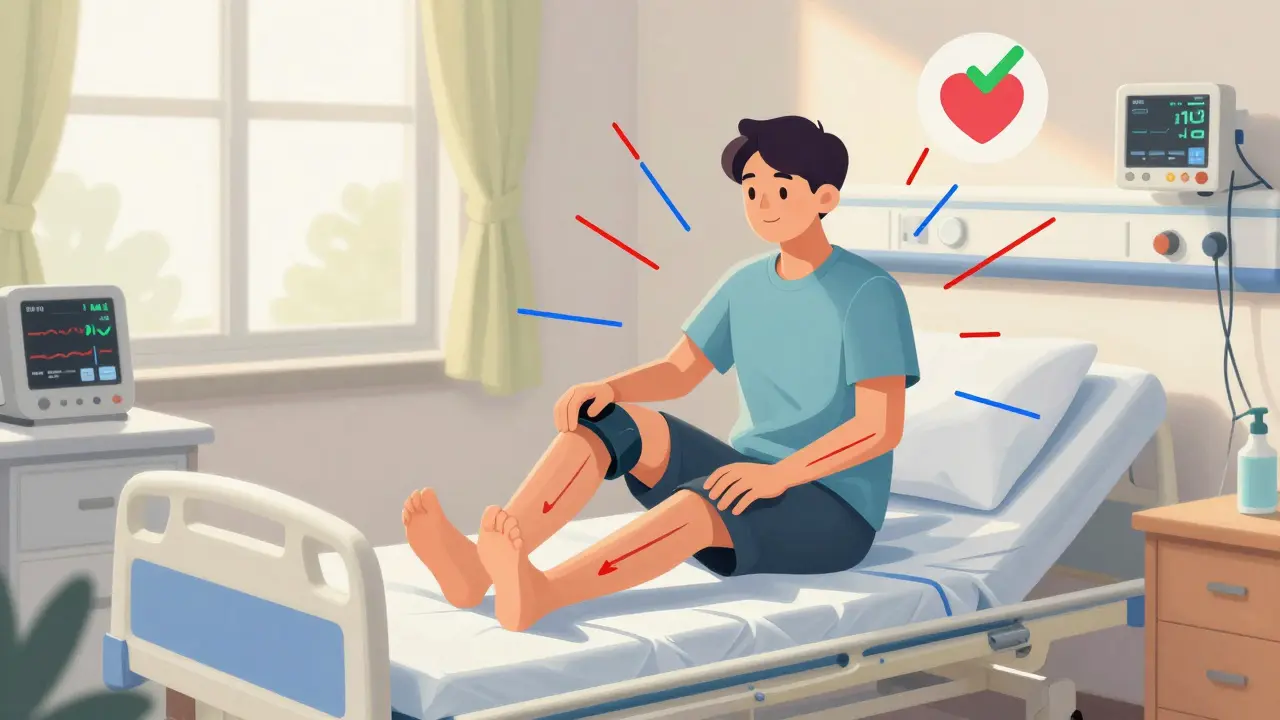
This phase starts the moment you’re stable after your event. In the hospital, you’re not expected to run. You’re expected to move-gently. Simple exercises like ankle pumps (flexing and pointing your feet) and seated marching (lifting one knee at a time while sitting) help blood flow and prevent clots. These aren’t workouts. They’re safety measures.
Activity during this time is measured in METs-metabolic equivalents. One MET is what your body uses just sitting still. After a heart event, you’ll start at 1-2 METs. That’s like walking slowly around your room. If you feel dizzy, short of breath, or get chest discomfort, stop. These are warning signs, not signs you’re trying too hard.
Phase 2: Early Outpatient (Weeks 2-8)
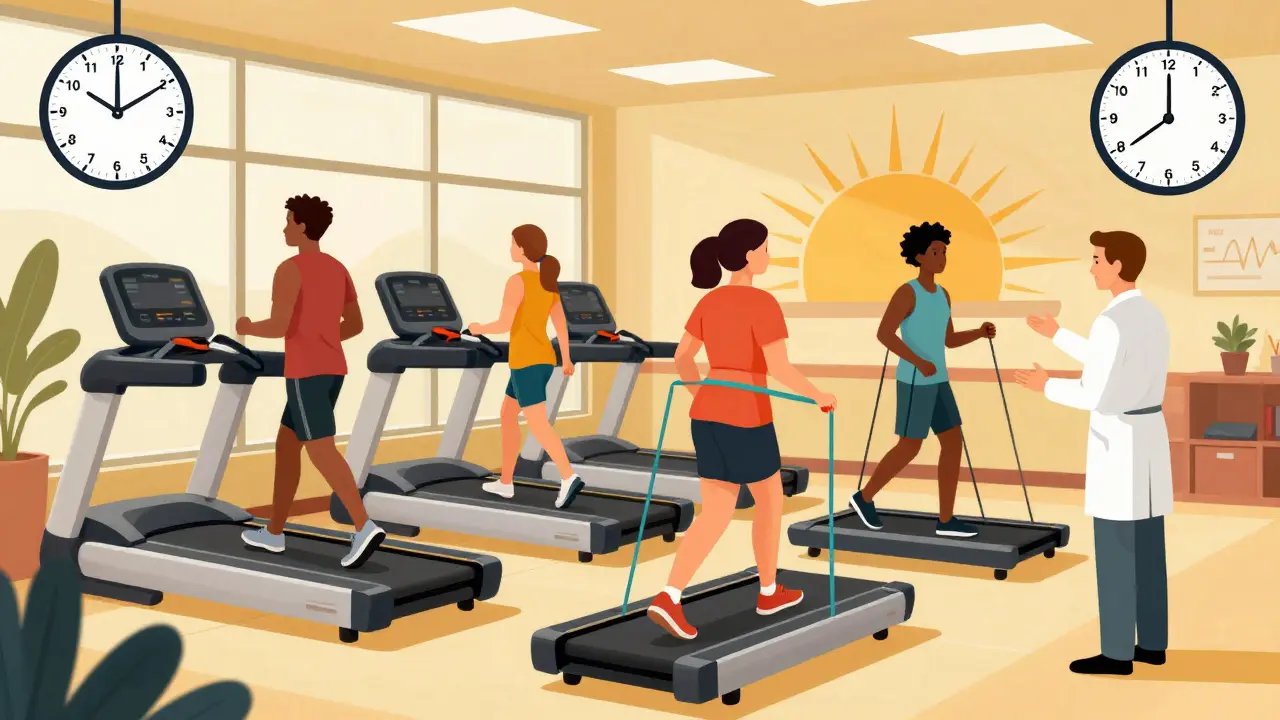
This is when real progress begins. You’re discharged from the hospital but still under supervision. Most programs meet 2-3 times a week for 6-12 weeks. Your sessions include walking on a treadmill, using a stationary bike, or doing light resistance exercises with bands or small weights.
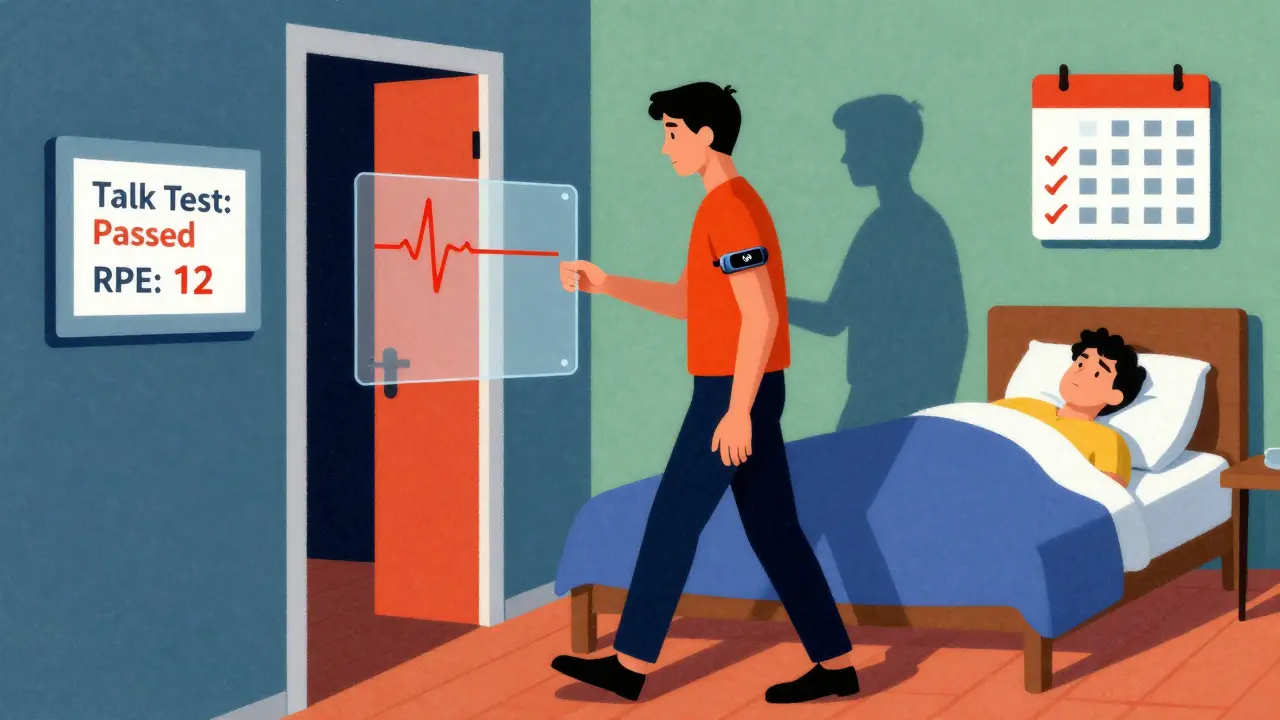
The intensity is carefully controlled. You’ll aim for a Rating of Perceived Exertion (RPE) of 11-14 on a scale of 6-20. That’s “light to somewhat hard.” Another way to check: can you talk comfortably while exercising? If you’re gasping for air, you’re going too hard. Your heart rate should be about 20-30 beats above your resting rate. If you’re on beta-blockers, your max heart rate might be lower-your rehab team will adjust for that.
Most people start with 5-10 minutes of walking daily and build up to 30 minutes over six weeks. It’s slow. But that’s the point. You’re not racing. You’re rebuilding.
Phase 3: Long-Term Maintenance (After 8 Weeks)
Once you’ve completed your formal rehab program, you’re not done. You’re just getting started. This phase is about making exercise a lifelong habit. The American Heart Association recommends at least 150 minutes of moderate-intensity aerobic activity per week. That’s 30 minutes, five days a week. Or 75 minutes of vigorous activity if you’re cleared for it.
You should also do muscle-strengthening activities two days a week. That could mean bodyweight squats, wall push-ups, or light dumbbells. No need for heavy lifting. Consistency matters more than intensity.
Many people find they can eventually return to activities they loved-gardening, swimming, even golf. But always check with your doctor first. What’s safe for one person might not be safe for another.
Supervised vs. Self-Directed Exercise
You might think, “I’ve got a fitness tracker. I can just do this on my own.” And maybe you can-but only after you’ve done it right under supervision first.
People who go through formal cardiac rehab recover 25% faster than those who try to do it alone. They’re also 30% less likely to die within five years. Why? Because supervised programs don’t just give you a workout plan. They teach you how to listen to your body.
Without guidance, 27% of patients unknowingly push past safe heart rate limits in the first month. That’s not bravery-it’s risk. And when something goes wrong, there’s no one there to help. In rehab centers, staff monitor your heart rhythm, blood pressure, and symptoms in real time. If something looks off, they stop you. That’s priceless.
That said, if you’re low-risk-no major damage, no other health issues-and you’ve completed Phase 2 under supervision, then transitioning to a self-managed routine is possible. But even then, keep a symptom journal. Note how you feel after each session. That’s your best tool.
Warning Signs: When to Stop
Exercise should feel challenging, not terrifying. But if you feel any of these, stop immediately and call your doctor:
- Chest pain or pressure
- Pain spreading to your arm, neck, jaw, or back
- Dizziness or lightheadedness
- Unusual shortness of breath (not just from exertion)
- Palpitations or irregular heartbeat
- Sudden weakness or numbness on one side
- Slurred speech or confusion
These aren’t “maybe” signs. They’re red flags. Don’t ignore them. Don’t push through. Your heart isn’t just a muscle-it’s a lifeline. Treat it like one.
What About Medications?
Many people after a heart event take beta-blockers. These drugs help control heart rate and blood pressure-but they also lower your max heart rate. That means your target heart rate zone might be lower than what you’d see on a general fitness chart.
If you’re on beta-blockers, your heart rate might be 20-30% lower than before your event. Don’t try to match old numbers. Use your RPE scale instead. If you’re breathing comfortably and can talk, you’re likely in the right zone.
Other meds like diuretics can make you dehydrated. Drink water before, during, and after exercise. And avoid extreme heat. Hot weather + heart condition = extra strain.
Real-World Tips from People Who’ve Been There
People who stick with it say the same things:
- Use the talk test. If you can sing, you’re not working hard enough. If you can’t say a full sentence, you’re going too hard.
- Exercise when your meds peak. If you take blood pressure meds in the morning, work out an hour after. That’s when they’re most effective.
- Keep a journal. Write down how you felt before, during, and after each session. Patterns emerge over time.
- Find a buddy. Whether it’s a fellow rehab patient or a family member, having someone to walk with makes it easier to stick with it.
- Don’t wait for perfect weather. If it’s too cold or rainy, walk in a mall, use a treadmill at home, or do chair exercises. Movement matters more than location.
Barriers and How to Overcome Them
Even though cardiac rehab works, only 20-30% of eligible patients in the U.S. enroll. Why? Transportation issues, work schedules, cost concerns, and lack of awareness.
But things are changing. Medicare now covers 36 sessions after a qualifying heart event. Many programs offer telehealth options too. You can do virtual check-ins, use Bluetooth heart rate monitors, and get real-time feedback from your rehab team-all from home.
And it’s working. One study found 89% of patients stuck with hybrid (in-person + virtual) programs. If you can’t get to a center, ask your doctor about remote options. They’re safer than going it alone.
What’s Next? The Future of Cardiac Rehab
Rehab isn’t stuck in the past. New research shows that even high-intensity interval training (HIIT)-short bursts of harder effort followed by rest-can be safe and effective for stable patients. A 2024 study found it improved fitness 37% more than steady-state walking.
And tech is catching up. Mayo Clinic is testing AI tools that adjust your workout in real time based on your heart rhythm and breathing. Imagine a wearable that tells you, “Slow down,” before you even feel tired.
But the biggest change? Earlier movement. New guidelines now say low-risk patients can start walking within 24 hours after a stent procedure-instead of waiting two days. That’s a big shift. It means recovery doesn’t have to mean lying still.
Final Thoughts: You Can Do This
After a heart event, fear is normal. You might worry every time your heart beats faster. That’s okay. But don’t let fear stop you from moving. Exercise isn’t the enemy-it’s your ally. The right kind of movement, done safely, gives you back control. It gives you more energy. It gives you peace of mind.
Start slow. Listen to your body. Use the tools you’re given. And don’t do it alone. Cardiac rehab isn’t just about exercise. It’s about learning how to live again-with confidence, not fear.
Can I start exercising the same day after a heart attack?
For low-risk patients, light movement like ankle pumps and seated marching can begin within 24 hours after a stent or minor heart event. But heavy activity, walking long distances, or lifting weights should wait until you’re cleared by your rehab team. Always follow your doctor’s specific instructions.
Is walking enough for cardiac rehab?
Yes, walking is the foundation of cardiac rehab-especially in the early stages. It’s low-impact, easy to monitor, and highly effective at improving circulation and endurance. As you progress, you can add cycling, swimming, or light strength training, but walking remains a core part of long-term heart health.
How long does cardiac rehab last?
Formal programs typically last 12 weeks with 2-3 sessions per week. But that’s just the start. The goal is to transition into lifelong habits. Most people continue exercising for years after completing the program. Think of it as a launchpad, not a finish line.
Can I do cardiac rehab at home?
You can, but only after completing Phase 1 and Phase 2 under supervision. Home programs work best when paired with remote monitoring tools like Bluetooth heart rate monitors and virtual check-ins with your rehab team. Never skip the initial supervised phase-it’s critical for safety.
What if I can’t afford cardiac rehab?
Medicare and most private insurers cover cardiac rehab after a qualifying heart event. If you’re denied coverage, ask your doctor for a letter of medical necessity. Many hospitals also offer sliding-scale fees or community-based programs. Don’t assume it’s unaffordable-ask for help.
How do I know if I’m exercising too hard?
Use the talk test: if you can’t speak in full sentences, you’re going too hard. Also watch for chest pain, dizziness, extreme shortness of breath, or heart palpitations. If any of these happen, stop and rest. If symptoms don’t go away in 5 minutes, call your doctor.
Can I return to sports or physical hobbies after cardiac rehab?
Many people do-golf, swimming, cycling, even hiking. But it depends on your heart’s condition. Always get clearance from your cardiologist first. Start slowly, avoid extreme heat or cold, and never push through pain. Your rehab team can help you build a safe return plan.





After my stent they told me to walk around the hospital hallway for 5 minutes. I did 10. Thought I was a goddamn superhero. Ended up in the ER 3 hours later with a heart rate of 148. No more heroics. Listen to the damn program. It's not a suggestion it's a lifeline.
February 8John Sonnenberg