
Every year, millions of Medicare beneficiaries get a free, one-on-one session with a pharmacist to review all their medications. This isn’t a routine refill check. It’s called a Comprehensive Medication Review (CMR), and if you’re eligible, it could prevent dangerous drug interactions, cut your out-of-pocket costs, and even save your life. But here’s the catch: the better you prepare, the more value you get out of it. Skip the prep, and you might walk away with nothing more than a handout you’ll never read again.
What Exactly Is a Medicare Annual Medication Review?
The Medicare Annual Medication Review, or Comprehensive Medication Review (CMR), is a required service for all Medicare Part D plans. It’s not optional. Under federal rules, your plan must offer it at least once every 12 months if you meet certain criteria. The goal? To make sure every pill, capsule, supplement, and over-the-counter drug you’re taking actually makes sense together.
This isn’t just a pharmacist glancing at your list. It’s a full 30- to 60-minute conversation where they look at everything: prescription drugs, pain relievers like ibuprofen, herbal teas, fish oil, vitamins, even that sleep aid you take once a week. They check for duplicates, dangerous interactions, side effects you might not realize are linked to your meds, and whether you’re even taking them as prescribed.
Since 2025, eligibility has broadened. You qualify if you have at least three chronic conditions - like diabetes, high blood pressure, or heart disease - and spend more than $1,623 out-of-pocket on Part D-covered drugs in a year. Even if you only take five prescriptions, if you’re managing multiple health issues, you’re likely eligible. Your plan should mail you a notice, but don’t wait. Call them. Ask if you qualify.
Why This Review Matters More Than You Think
Most seniors take between five and ten medications. That’s a lot to keep track of. Add in OTCs, supplements, and creams, and it’s easy to lose count. A 2023 study found that seniors forget, misremember, or leave out an average of 2-3 medications when asked to list them. That’s not laziness - it’s human. But when a pharmacist doesn’t know about your daily aspirin or your turmeric capsules, they can’t spot a problem.
Here’s what happens when you don’t prepare:
- Your blood thinner interacts with your fish oil - no one knew you were taking it.
- You’re taking two different pills for the same condition - doubling your dose without realizing it.
- A side effect you thought was "just aging" - like dizziness or confusion - is actually from a drug interaction.
- You’re paying $80 a month for a drug that has a $15 generic version.
One Reddit user, "SeniorHealth101," shared how their pharmacist caught a dangerous interaction between their blood thinner and fish oil. "I had no idea they could clash," they wrote. "That one 45-minute chat probably saved me from a hospital trip."
On the flip side, a Medicare.gov review from January 2024 says: "Went in without my pill bottles. Pharmacist couldn’t verify doses. Had to reschedule. Lesson learned."
When patients come prepared, satisfaction jumps from 42% to 78%. That’s not a small gap. That’s life-changing.
Step-by-Step: How to Prepare for Your Review
You don’t need to be a medical expert. You just need to be organized. Here’s exactly what to do - and how long it takes.
Step 1: Gather Every Medication You Take
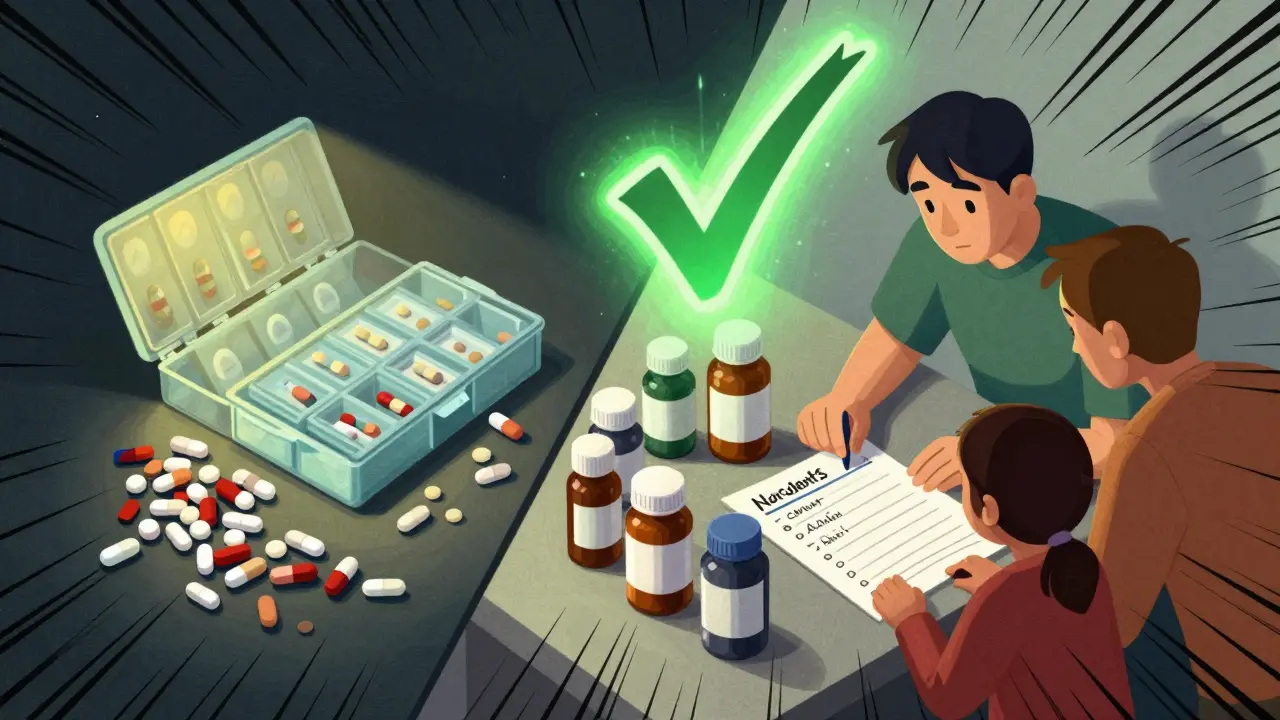
Get all your bottles - prescriptions, OTCs, supplements - and bring them in their original containers. Don’t rely on memory. Don’t trust your pill organizer. Bring the real bottles. This includes:
- Prescription drugs (even if they’re from different doctors)
- Over-the-counter pain relievers (ibuprofen, acetaminophen, naproxen)
- Antacids, laxatives, sleep aids
- Vitamins (especially B12, D, calcium)
- Herbal supplements (ginkgo, garlic, St. John’s Wort, turmeric)
- Topical creams or patches (like lidocaine or fentanyl patches)
Why? Because labels have dosages, expiration dates, and prescribing doctors. The pharmacist needs to see them. This step takes 20-30 minutes. Set a timer. Don’t rush.
Step 2: Write Down Your Top Concerns
What’s bothering you? Write it down. No judgment. No filtering. For example:
- "I feel dizzy after I take my blood pressure pill."
- "I forget to take my diabetes meds on weekends."
- "I’m spending $300 a month on this one drug. Is there a cheaper option?"
- "I’ve been constipated since I started this new pain med."
- "My daughter says I’m taking too many pills. Am I?"
These are your questions. The pharmacist’s job is to answer them. If you don’t write them, you’ll forget them. This takes 15-20 minutes. Use a notepad. Or your phone. Just write them.
Step 3: Track Recent Health Changes
Have you been hospitalized? Had a fall? Had new lab results? Changes in your weight or appetite? These matter. A recent fall might mean your blood pressure med is too strong. A drop in kidney function could mean a drug needs to be adjusted.
Write down:
- Any recent hospital visits or ER trips
- New symptoms (fatigue, confusion, swelling, nausea)
- Changes in your ability to do daily tasks (bathing, walking, cooking)
- Recent lab reports (especially kidney, liver, or blood sugar tests)
This adds another 10-15 minutes. But it’s worth it. Your pharmacist doesn’t have access to your doctor’s records unless you give permission. So you’re the bridge.
Step 4: Create a Simple Medication Timeline
Make a two-column list:
| Medication | When Started / Last Change |
|---|---|
| Metformin | Jan 2023 |
| Atorvastatin | Mar 2022 |
| Aspirin 81 mg | Oct 2023 (after heart scan) |
| Calcium + D3 | June 2024 |
| Benadryl | As needed since 2021 |
This helps the pharmacist see patterns. Did you start a new drug right before your dizziness began? Did you stop one and then get worse? This step takes 30-45 minutes. Use a free template from Medicare.gov or write it by hand.
Step 5: Bring Someone With You
It’s okay to feel overwhelmed. Bring a family member, friend, or caregiver. Two ears are better than one. They can remember questions you forgot, catch details you miss, and help you understand the action plan later.
Don’t feel guilty. This isn’t a solo mission. It’s a team effort.
What Happens During the Review
When you sit down, the pharmacist will:
- Compare your list to your pharmacy records
- Check for duplicate drugs or harmful interactions
- Ask about side effects and how well you’re taking your meds
- Review costs and suggest cheaper alternatives
- Explain how to take each drug correctly
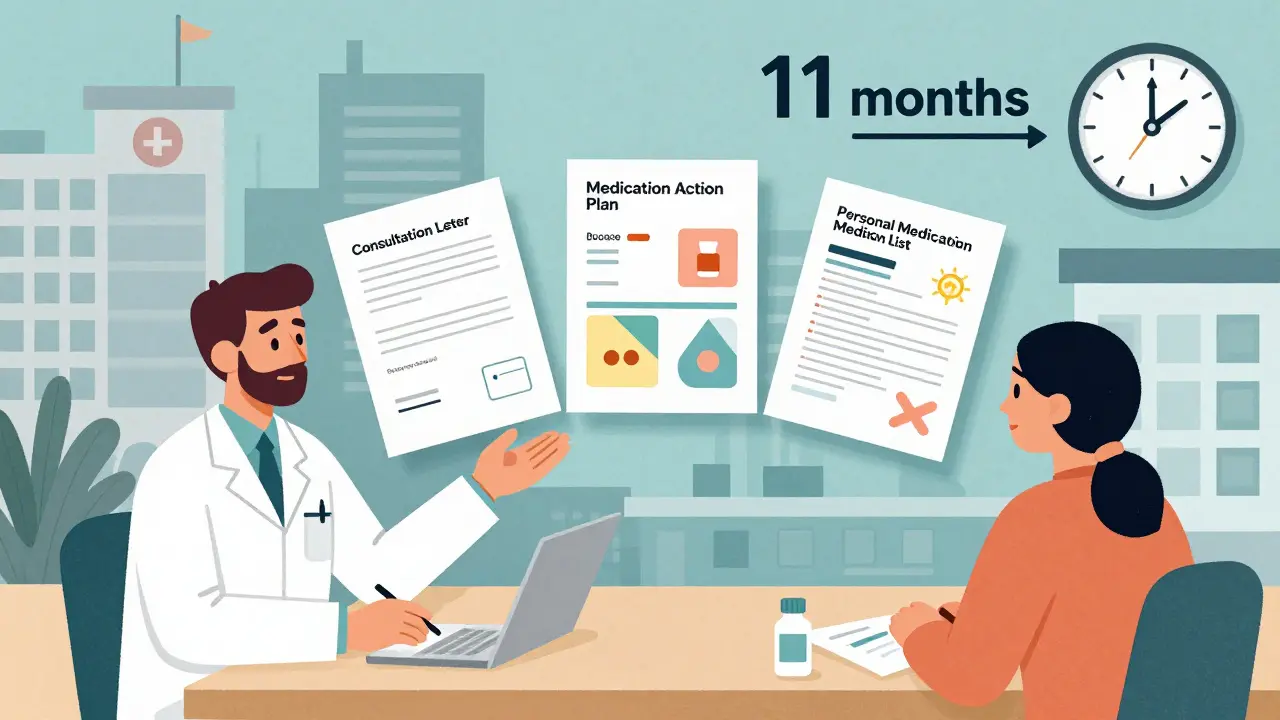
Then, they’ll give you three documents:
- Consultation Letter - a summary of what was discussed
- Medication Action Plan - clear steps you should take (e.g., "Switch to generic," "Stop OTC ibuprofen")
- Personal Medication List - an updated, easy-to-read list you can carry in your wallet
These aren’t just paperwork. They’re your roadmap. Keep them. Share them with your doctor.
What to Do After the Review
The review doesn’t end when you leave. Now comes the action.
- Follow the action plan. If they recommend switching drugs, call your doctor. Don’t wait.
- Update your personal medication list. Add new meds. Cross out ones you stopped.
- Share the list with your primary care doctor and any specialists.
- Set a reminder: "Next CMR in 11 months." Don’t wait for a letter.
And if you don’t get a review? Call your Part D plan. Ask: "Am I eligible? When can I schedule mine?" You’re entitled to it. They’re required to offer it.
Common Mistakes (And How to Avoid Them)
Based on thousands of reviews and feedback:
- Mistake: "I didn’t bring my supplements." Solution: Every pill counts. Even the "natural" ones.
- Mistake: "I just told them what I thought I was taking." Solution: Bring the bottles. Always.
- Mistake: "I didn’t have any questions." Solution: You don’t need to be an expert. Just say: "I’m tired all the time. Is this normal?"
- Mistake: "I didn’t follow up." Solution: If they say "switch to a cheaper drug," call your pharmacy. Don’t assume it happened.
What’s New in 2025 and Beyond
CMRs are getting smarter. In 2024, CMS updated rules to include people with just two chronic conditions if they’re at high risk. That means more seniors qualify. The cost threshold dropped to $1,623, so even if you’re not on 8 drugs, you might still be eligible.
Also, 68% of Part D plans now connect directly to electronic health records. That means your pharmacist might already have your lab results. But don’t rely on that. Still bring your info. The system isn’t perfect.
And in 2023, CMS started testing AI tools that help you prepare. One pilot tool asked users simple questions and auto-generated a medication list. Users who used it missed 22% fewer dangerous interactions. It’s not mandatory yet - but it’s coming.
Final Thought: This Is Your Health - Take Charge
A Medicare Annual Medication Review isn’t a box to check. It’s your chance to take control. You’re not just a patient. You’re the manager of your own health. The pharmacist is there to help - but they need your truth. Your bottles. Your questions. Your story.
Don’t wait for a letter. Don’t assume you’re not eligible. Don’t skip the prep. Thirty minutes of preparation today could prevent a hospital stay tomorrow.
Who qualifies for a Medicare Annual Medication Review?
You qualify if you have at least three chronic health conditions (like diabetes, heart disease, or COPD), take multiple Part D-covered medications, and spend more than $1,623 out-of-pocket on those drugs in a year. As of 2025, some beneficiaries with two high-risk conditions may also qualify. Your Part D plan must notify you if you’re eligible, but you can call them anytime to ask.
Do I have to pay for this review?
No. The Medicare Annual Medication Review is a free service required by law for all Part D plans. You won’t be charged a copay or fee, whether the review happens in person, over the phone, or via video call.
What if I don’t take many medications? Do I still need this?
Even if you take just two or three prescriptions, if you have multiple chronic conditions or spend over $1,623 a year on meds, you likely qualify. Also, many seniors take OTCs or supplements they don’t think count - but those can interact dangerously with prescriptions. The review looks at everything.
Can I do the review over the phone or online?
Yes. The review can be done in person, over the phone, or through a secure video call. Many plans now offer telehealth options. But even if it’s virtual, you still need to have your medication bottles ready to show on camera or have them nearby for reference.
What if the pharmacist finds a problem? Do I have to change my meds?
No. The pharmacist can recommend changes - like switching to a cheaper drug, stopping an unnecessary one, or adjusting the dose - but only your doctor can make the final decision. The review gives you information. You and your doctor decide what to do next. Always discuss recommendations with your prescriber before making changes.
How often should I get a medication review?
Medicare requires a full Comprehensive Medication Review at least once a year. But if your medications change - like after a hospital stay, a new diagnosis, or a doctor’s visit - you can request another review anytime. Don’t wait for the annual notice.





This whole thing is a scam. They want you to bring your bottles so they can track what you're taking... then sell it to Big Pharma. I heard they're using barcode scanners to build profiles on seniors. Next thing you know, your insurance will drop you for 'non-compliance' because you took ibuprofen. I'm not falling for it. Bring your meds? Nah. I'll just keep my pills in a shoebox like always.
February 28Byron Duvall