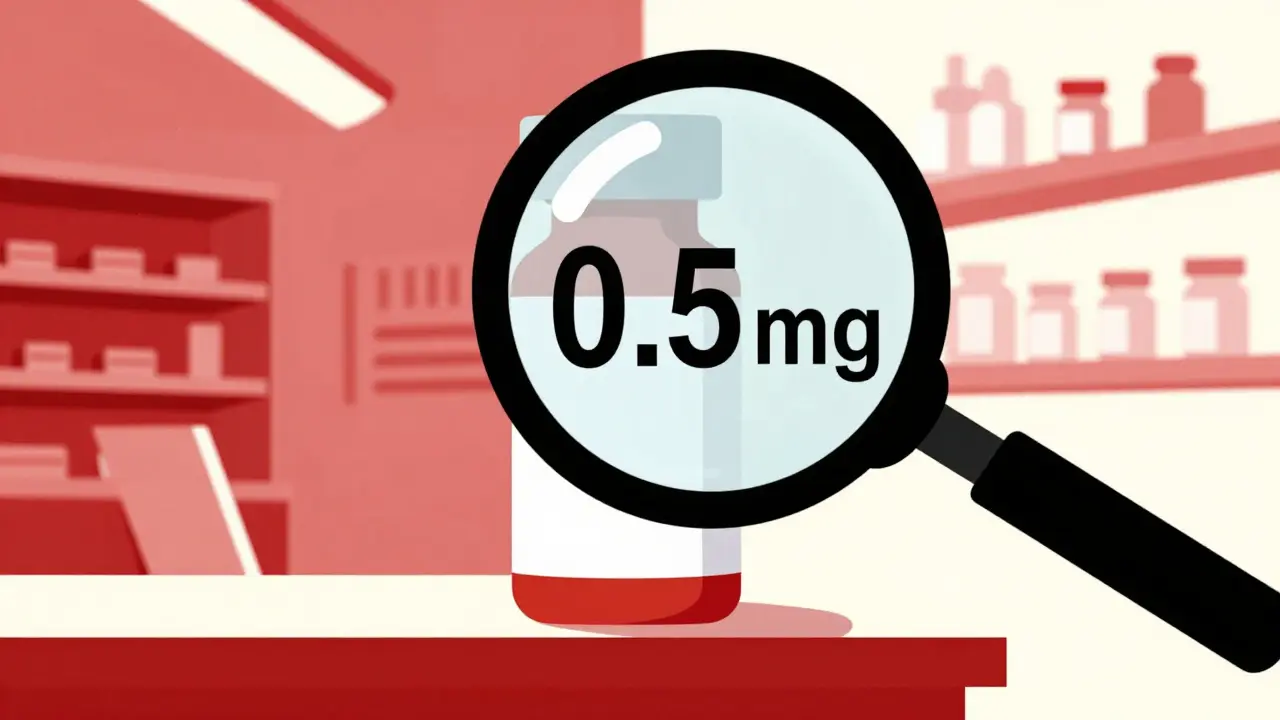
A tiny decimal point in the wrong place or a confusing label can be the difference between a curative dose and a life-threatening emergency. In the fast-paced environment of a pharmacy, dispensing errors often happen not because of a lack of knowledge, but because of simple human slips during the final stages of preparation. Whether it is a 10-fold dosing error with levothyroxine or a liquid medication miscalculation, the stakes are incredibly high.
The goal of a rigorous double-check is simple: intercept the mistake before the medication leaves the building. By implementing a structured verification process for strength and quantity, pharmacies can stop approximately 87% of potential errors involving strength miscalculations. This is especially critical for high-alert medications like insulin, opioids, and anticoagulants, which are disproportionately involved in fatal dosing mistakes.
The Core of Strength and Quantity Verification
Double-checking isn't just glancing at a bottle to see if the name matches. It is a formal safety practice where a pharmacist or technician verifies the accuracy of the prescribed drug strength and the total quantity before the medication is released. The Institute for Safe Medication Practices is a leading authority that establishes targeted medication safety best practices for community pharmacies to prevent patient harm. According to their guidelines, a true double-check requires more than a visual scan; it requires an active cognitive process.
When verifying strength, you aren't just looking for the number; you are confirming the relationship between the dose and the total volume. A common pitfall occurs with injectable products where clinicians mistake the "strength per mL" for the total amount of drug in the container. To combat this, standards like USP <7> the United States Pharmacopeia general chapter on labeling requirements mandate that the total strength per volume must be more prominent-at least 50% larger in font size-than the concentration per mL.
Avoiding the "Ten-Fold" Trap
One of the most dangerous errors in pharmacy is the ten-fold error, where a patient receives ten times the intended dose. This usually happens because of a missing leading zero (writing ".5 mg" instead of "0.5 mg") or an unnecessary trailing zero (writing "5.0 mg" instead of "5 mg"). These small typographic choices can lead to catastrophic results, particularly in pediatric care where dosing is precision-based.
To prevent this, the NCPDP is the National Community Pharmacy Dispensing Panel, which provides standardized dosing designations for oral liquid medication labels recommends a strict rule: always use a leading zero before a decimal for amounts less than one, and never use a trailing zero. This simple formatting rule targets the 12.7% of pediatric liquid medication incidents that stem from these specific decimal errors.
| Method | Error Detection Rate | Time Investment | Key Strength |
|---|---|---|---|
| Simple Visual Check | 38% | Low | Fast for low-risk items |
| Independent Recalculation | 92% | High (~47 sec/script) | Catches decimal errors |
| Barcode Scanning (BCMA) | 83% | Medium | Eliminates manual reading errors |
Practical Steps for a Foolproof Double-Check
To move from a casual check to a safety-critical verification, follow these concrete steps during the dispensing workflow:
- Perform Independent Recalculation: Do not just look at what the previous technician wrote. Calculate the dose-to-strength ratio yourself from the original prescription. This method catches nearly 92% of decimal-related errors.
- Verify Total Quantity: For controlled substances, specifically Schedule II medications, cross-reference the actual count against the order. The DEA the Drug Enforcement Administration, which mandates strict documentation and verification of controlled substances requires this be documented with the verifying pharmacist's initials.
- Match the Dosing Device: If you are dispensing a liquid, don't just give a generic teaspoon. Provide a calibrated metric-only dosing device, such as an oral syringe for volumes under 10 mL. Using household utensils like spoons is a primary cause of liver toxicity in children due to volume confusion.
- Visual Confirmation of Labeling: Ensure the "total drug amount" is the most prominent piece of information on the label, following the FDA's 2018 guidance to prevent clinicians from mistaking concentration for total dose.
Overcoming the "Productivity Pressure"
The biggest enemy of medication safety is the clock. Many pharmacy technicians report feeling rushed by corporate productivity metrics, sometimes being expected to process over 35 scripts per hour. When a "code brown" staffing shortage hits, the temptation to bypass double-checks increases. However, the data shows that facilities using structured protocols experience 78% fewer strength-related errors than those using informal methods.
For independent pharmacies with smaller staffs, the lack of a second set of eyes is a genuine hurdle. In these cases, leveraging technology like Barcode-Assisted Medication Verification (BCMA) can fill the gap. While the initial investment ranges from $15,000 to $25,000, the reduction in errors-and the avoidance of CMS penalties for preventable mistakes-makes it a necessary long-term investment.
The Role of Patient Counseling in Verification
The final check happens at the counter. Patient counseling is not just a courtesy; it is a critical safety layer. When a pharmacist explains the strength and quantity to the patient, it creates a final opportunity to catch an error. According to 2023 data, counseling decreases misunderstandings by 82%.
Ask the patient to confirm the dose they expect. If a patient says, "I usually take 0.5 mL," but the bottle is labeled for 5 mL, you have just caught a potentially fatal error. This human-centric verification complements the technical checks performed in the back end of the pharmacy.
Why is a leading zero so important in medication dosing?
A leading zero (e.g., 0.5 mg) prevents the decimal point from being overlooked. If written as ".5 mg", a reader might miss the dot and interpret it as 5 mg, leading to a ten-fold overdose. This is a primary cause of pediatric dosing errors.
What is the difference between drug strength and concentration?
Strength refers to the total amount of the active drug in the container (e.g., 50 mg total), while concentration is the amount of drug per unit of volume (e.g., 10 mg/mL). Confusing the two often leads to clinicians administering the total strength of the bottle instead of a single dose.
Which medications require the most stringent double-checking?
High-alert medications, including insulin, opioids, and anticoagulants, require the most rigor. These drugs have a narrow therapeutic index, meaning a small error in strength or quantity can lead to immediate and severe patient harm or death.
Are household teaspoons acceptable for liquid medications?
No. Household teaspoons vary wildly in size. Experts recommend metric-only dosing devices, like oral syringes, because they reduce administration errors by 76% compared to household utensils.
How does barcode scanning improve safety over manual checks?
Barcode scanning reduces dispensing errors by about 83% because it removes the risk of human misreading. While a human might see "10mg" and "100mg" as similar at a glance, a barcode scanner identifies the specific NDC and strength mismatch instantly.
Next Steps for Pharmacy Teams
If you are managing a pharmacy or working as a technician, start by auditing your current labels. Ensure that all liquid medications follow the "no trailing zero" and "mandatory leading zero" rules. If your workflow is currently based on visual checks, try implementing one week of independent recalculation for all high-alert medications and track how many discrepancies you find.
For those in high-volume environments, the focus should be on "protected time" for verification. Establish a rule that the final check cannot be interrupted by phone calls or customer queries. Creating a physical or mental "quiet zone" for the final double-check can significantly reduce the likelihood of a slip occurring during the most critical step of the process.





The whole concept of using oral syringes for anything under 10 mL is a total game-changer for pediatric safety. I've seen way too many frantic parents trying to eyeball a kitchen spoon and it's just a recipe for a disaster. The precision of a calibrated device really removes that layer of anxiety for everyone involved.
April 11Sarina Montano