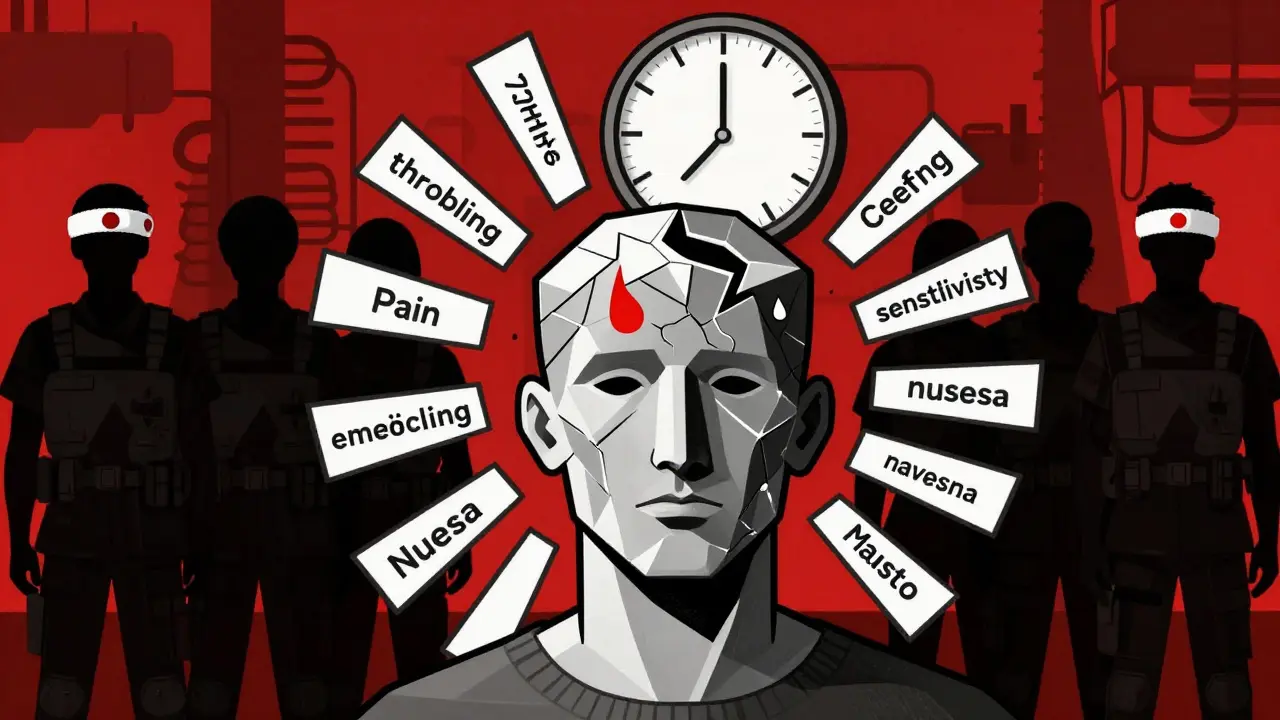
When a migraine hits, it’s not just a headache. It’s a full-body experience - throbbing pain on one side of your head, sensitivity to light and sound, nausea, and sometimes vision changes that make you feel like you’re losing control. For nearly migraine sufferers in the U.S., this isn’t occasional. It’s a chronic condition that rewires daily life. The good news? We now have more tools than ever to stop attacks before they start and treat them effectively when they do.
Understanding Migraine: More Than Just a Headache
Migraine is a neurological disorder, not just a bad headache. According to the International Classification of Headache Disorders (ICHD-3), a typical migraine attack lasts between 4 and 72 hours. The pain is usually one-sided, pulsing, and worsens with movement. You’ll often feel sick to your stomach, light-sensitive, or overwhelmed by noise. Some people get warning signs - called aura - like flashing lights, tingling in the hands, or trouble speaking. These symptoms can last 5 to 60 minutes before the headache kicks in. About 18% of women and 6% of men in the U.S. deal with migraines. That’s 39 million people. Chronic migraine - defined as having headaches on 15 or more days per month for over three months - affects about 4% of those with the condition. The key to managing it? Two strategies: stopping attacks when they happen (acute treatment) and preventing them from happening so often (preventive care).Preventive Treatments: Reducing the Frequency
Prevention isn’t about eliminating every single attack - it’s about cutting down how often they happen and how bad they feel. The goal? A 50% or greater reduction in headache days per month, which can dramatically improve quality of life.Medications for Prevention
Several classes of drugs are proven to reduce migraine frequency. First-line options include:- Beta-blockers like propranolol and metoprolol - originally used for high blood pressure, they’re now standard for migraine prevention. Doses range from 80 to 200 mg daily.
- Anticonvulsants such as topiramate (50-200 mg daily) and valproate. Topiramate is effective but comes with side effects: word-finding trouble, memory lapses, and weight loss. About half of people stop taking it within six months because of these effects.
- Calcium channel blockers like verapamil (120-480 mg daily). These are often used when beta-blockers don’t work or aren’t tolerated.
- Antidepressants like amitriptyline (10-100 mg at night). Even if you’re not depressed, this drug helps calm overactive nerves in the brain.
The Game-Changers: CGRP Monoclonal Antibodies
In 2018, the FDA approved the first migraine-specific preventives: CGRP inhibitors. These are injectable drugs that block a molecule in the brain linked to migraine pain. They include:- Erenumab (Aimovig): monthly shot
- Fremanezumab (Ajovy): monthly or quarterly shot
- Galcanezumab (Emgality): monthly shot
- Eptinezumab (Vyepti): IV infusion every 3 months
Botox for Chronic Migraine
For those with chronic migraine (15+ headache days/month), Botox (onabotulinumtoxinA) is FDA-approved. It’s injected into 31-39 spots on the head and neck every 12 weeks. Studies show it reduces headache days by about 8-9 per month. It’s not a cure, but for many, it’s the only thing that works after other treatments fail.Non-Drug Prevention: Devices and Mindfulness
Not everyone wants pills. Neuromodulation devices offer medication-free options:- Cefaly: A headband worn for 20 minutes daily that stimulates nerves above the eyebrows. In one trial, 38% of users saw at least half their migraine days reduced.
- gammaCore: A handheld device that stimulates the vagus nerve in the neck. Used 3 times daily for 90 seconds each time. Studies show a 30% reduction in migraine frequency.
- Mindfulness and stress reduction: An 8-week program of meditation and breathing exercises reduced headache days by 1.4 per week in a 2022 JAMA Neurology study. Stress is a top trigger - managing it matters.
Acute Treatment: Stopping the Attack in Its Tracks
When a migraine strikes, speed matters. The sooner you treat it, the better the chance of stopping it before it fully develops.Over-the-Counter (OTC) Options
For mild to moderate attacks, start here:- NSAIDs: Ibuprofen (400 mg) or naproxen (500-850 mg). These work for about 20-30% of people, giving pain-free results within 2 hours.
- Combination analgesics: Products like Excedrin Migraine (acetaminophen + aspirin + caffeine). They’re effective for many, especially if taken early.
Triptans: The Gold Standard
Triptans are the most widely used migraine-specific acute treatment. There are seven types:- Sumatriptan (oral, nasal spray, injection)
- Rizatriptan
- Eletriptan
- Zolmitriptan
- Almotriptan
- Frovatriptan
- Naratriptan
Newer Acute Options: Gepants and Ditans
These are breakthroughs for people who can’t use triptans:- Gepants (ubrogepant, rimegepant): Oral pills that block CGRP. Rimegepant (Nurtec ODT) is also approved for prevention. In trials, about 19-21% of users were pain-free at 2 hours - better than placebo.
- Ditans (lasmiditan): A newer option that targets serotonin receptors without narrowing blood vessels. Safe for people with heart issues. But it can cause dizziness and sleepiness.
Anti-Nausea Medications
Nausea is part of the migraine package. Drugs like metoclopramide, prochlorperazine, and chlorpromazine - often given as injections in ERs - are highly effective. In one study, metoclopramide relieved nausea in 70% of patients. These are often paired with pain meds for better results.What NOT to Use: Opioids and Barbiturates
Doctors strongly advise against using opioids (like oxycodone) or barbiturates (like butalbital) for migraines. They don’t treat the root cause. They just mask the pain - and they’re addictive. Worse, using them 10 or more days a month almost guarantees you’ll develop medication-overuse headache. The American Headache Society says they should only be used if nothing else works - and even then, only for a few days.
Combination Therapy Works Best
Real-world data from over 5,000 migraine patients shows the best outcomes come from using both preventive and acute treatments together. People on combination therapy were 62% more likely to cut their headache days by half or more than those using only one type of treatment. Prevention reduces the number of attacks. Acute meds stop the ones that slip through.What Really Triggers Migraines?
Knowing your triggers is half the battle. A 2023 survey of over 1,200 migraine sufferers found:- Stress: 89%
- Weather changes: 72%
- Sleep disruption: 65%
- Specific foods (cheese, alcohol, processed meats): 58%

Challenges and Real-Life Hurdles
Even with all the advances, many people still struggle:- Insurance denials: 67% of patients report at least one denial for CGRP therapies. Manufacturers now offer prior authorization support - and it works 85% of the time.
- Side effects: Topiramate causes cognitive fog for 68%. Triptans cause chest tightness in 63%. These side effects lead many to quit.
- Medication-overuse: Using painkillers too often turns episodic migraine into chronic. One Reddit user shared: “Using Excedrin 15 days a month led to daily headaches. It took six months to detox.”
- Access to specialists: Only 4.5 million of the 40 million U.S. migraine sufferers see a headache specialist. But primary care providers trained in migraine management now have 87% higher diagnostic accuracy after specialized training.
What’s Next? The Future of Migraine Care
The field is moving fast. In 2023, the FDA approved atogepant (Qulipta) - the first drug that works for both acute and preventive use. Clinical trials are testing non-invasive vagus nerve stimulators (gammaCore Sapphire II) and even gene therapies targeting CGRP pathways. Digital tools like the Relieve app have already shown a 32% reduction in headache days. By 2030, experts predict 75% of migraine patients will have personalized treatment plans - combining genetic testing, wearable sensors that detect early physiological changes, and AI-driven apps that predict attacks before they happen.Key Takeaways
- Migraine is a neurological disorder - not just a headache.
- Prevention and acute treatment work best together.
- CGRP inhibitors (Aimovig, Ajovy, etc.) are highly effective but expensive and often denied by insurance.
- Triptans are the go-to for acute relief, but not safe for everyone.
- Neuromodulation devices like Cefaly and gammaCore offer real, drug-free options.
- Stress, sleep, and weather are the top triggers - track them.
- Avoid opioids and barbiturates. They make things worse.
- See a headache specialist if you’re not getting relief. You’re not alone - and better options exist.
Can migraine be cured?
There’s no cure for migraine yet, but it can be effectively managed. Many people reduce attacks by 75% or more with the right combination of prevention, acute treatment, and lifestyle changes. Some even reach long-term remission, especially with newer CGRP therapies and consistent trigger management.
How long does it take for preventive meds to work?
It varies. Beta-blockers and topiramate usually take 4-8 weeks to show full effect. CGRP monoclonal antibodies can start working in as little as 1-2 weeks, with noticeable improvement by month 2. Botox takes about 4-6 weeks after the first treatment cycle. Patience is key - don’t stop too soon.
Are neuromodulation devices effective?
Yes, for many. Devices like Cefaly and gammaCore have been proven in clinical trials to reduce migraine frequency by 30-40%. They’re especially helpful for people who can’t take medications due to side effects or health conditions. They require daily use, though - consistency matters.
Why do some people get migraines only during certain times of the month?
This is called menstrual migraine. Hormonal shifts - especially drops in estrogen before your period - trigger attacks in about 60% of women with migraine. It’s often more severe and harder to treat. Preventive strategies like short-term CGRP inhibitors or NSAIDs taken a few days before and during menstruation can help. The upcoming 2024 ICHD-3 update will include clearer diagnostic criteria for this subtype.
Can I use triptans and gepants together?
Not in the same attack. You should wait at least 2 hours between using a triptan and a gepant. Using them too close together can increase side effects. Some doctors recommend alternating them - triptans for severe attacks, gepants for milder ones or if you have heart concerns. Always check with your provider.
What should I do if my migraine doesn’t respond to any treatment?
You’re not alone - about 30-40% of people are considered treatment-resistant. The next step is seeing a headache specialist. They may explore off-label options, combination therapies, or newer treatments in clinical trials. Some benefit from nerve blocks, IV infusions of magnesium or lidocaine, or even behavioral therapies like biofeedback. Don’t give up - new options are coming fast.




Been living with migraines for 12 years and let me tell you - Cefaly changed my life. No more daily pills, no more brain fog. Just put on the headband, close my eyes, and breathe. It’s not magic, but it’s mine. I don’t need to explain it to anyone who hasn’t been there. Just do it.
February 23kirti juneja