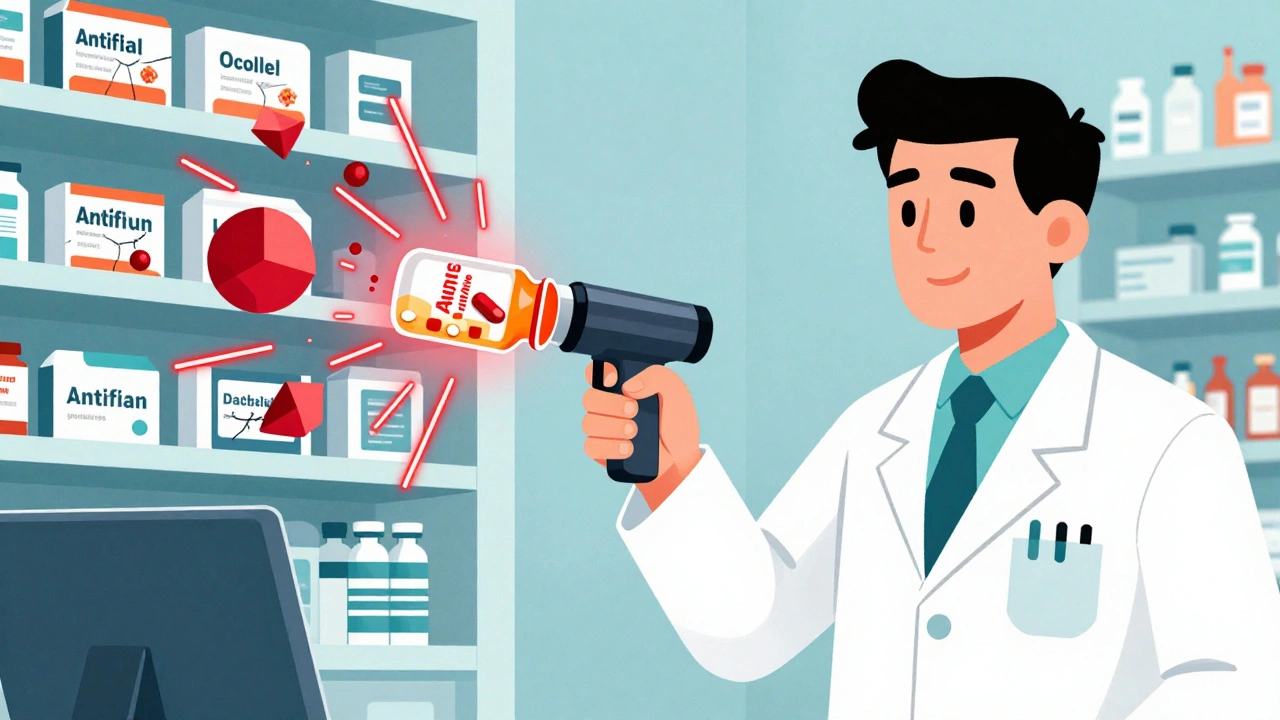
Every year, millions of fake pills, contaminated injections, and mislabeled medicines slip into the global drug supply. Some look identical to the real thing. Others are packaged with fake barcodes, misspelled labels, or slightly off colors. And if a pharmacist doesn’t catch them, they end up in the hands of someone who’s already sick - and now could be in even greater danger.
That’s why pharmacist education on counterfeit detection isn’t just important - it’s life-or-death work. No one else is standing between patients and these dangerous products. Pharmacists are the last line of defense.
Why This Training Isn’t Optional Anymore
In 2024, law enforcement agencies around the world uncovered over 6,400 incidents of counterfeit drugs, stolen medicines, and illegal distribution. That’s not a number you can ignore. These weren’t just a few bad batches. They involved more than 2,400 different medicines - from antibiotics to cancer drugs to insulin.
It’s not just about street vendors selling fake Viagra anymore. Criminal networks now target high-value specialty drugs - biologics, oncology treatments, and even vaccines. They use sophisticated packaging, fake serial numbers, and exploit gaps in international supply chains. Some counterfeit drugs contain no active ingredient. Others have too much, or the wrong chemicals - like antifreeze in insulin vials.
The U.S. passed the Drug Supply Chain Security Act (DSCSA) in 2013 to track prescription drugs from manufacturer to pharmacy. It’s the most advanced system in the world. But in many countries, there’s no such system. Even in the U.S., counterfeiters find ways in - through online pharmacies, stolen goods, or corrupt distributors. That’s why training can’t stop at licensing. It has to be continuous, practical, and updated.
What Pharmacists Are Actually Learning
Modern training doesn’t just teach you to look for blurry printing or crooked labels. That’s the 2000s approach. Today’s programs focus on behavior, technology, and systems.
One major shift? Learning to question price. If a medication is being offered at 70% below the wholesale acquisition cost, it’s a red flag. No legitimate wholesaler sells that way. The Partnership for Safe Medicines says pharmacists should always verify the distributor’s name on the manufacturer’s official website. If the supplier isn’t listed, don’t accept the product.
Another key lesson: specialty drugs don’t travel through normal channels. Insulin, oncology drugs, and rare disease treatments are distributed through tightly controlled networks. If you get a shipment of a specialty drug from a company you’ve never heard of - even if the box looks perfect - stop. Call the manufacturer. Verify the lot number. Don’t rely on the invoice.
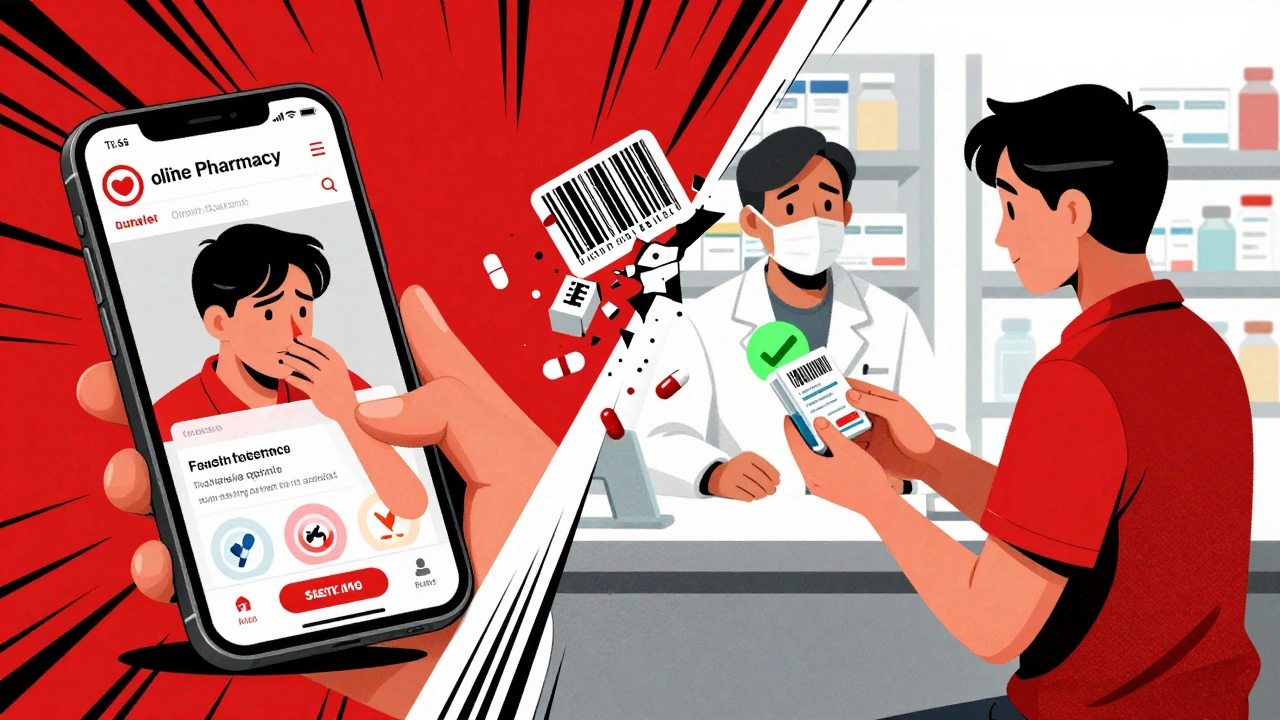
And then there’s the rise of online sales. Interpol’s Operation Pangea XVI in 2025 shut down 13,000 illegal websites selling fake medicines. These sites look real. They have fake certifications, professional designs, and even fake customer reviews. Pharmacists are now trained to recognize how patients are being lured into buying these drugs - and how to talk to them about the risks.
Technology Is Changing the Game
Remember when pharmacists had to call the manufacturer to check a batch number? Or compare labels under a magnifying glass? That’s gone.
Now, tools like RxAll’s handheld devices use spectral analysis and AI to scan a pill or vial in seconds. The device compares the chemical signature against a database of verified drugs. It doesn’t just tell you if it’s fake - it tells you what’s wrong. Is the active ingredient missing? Is the binder contaminated? Is the tablet density off?
These tools are being used in hospitals, community pharmacies, and even in mobile clinics in remote areas. Pharmacists who’ve used them say their confidence jumped. One pharmacist in Texas told a reporter: “I used to stress every time a new shipment came in. Now I scan it. In five seconds, I know. I can focus on the patient, not the paperwork.”
Training now includes hands-on time with these devices. It’s not enough to know what to look for - you need to know how to use the tech that finds it.
Global Training Programs That Work
The World Health Organization and the International Pharmaceutical Federation didn’t wait for governments to act. In 2021, they launched a competency-based curriculum funded by the European Union. It was tested with 355 pharmacy students in Cameroon, Senegal, and Tanzania. After the training, students’ ability to identify counterfeit drugs improved by 68%.
The curriculum covers:
- How counterfeit drugs are made and distributed
- Physical and chemical indicators of falsification
- How to report suspicious products
- Working with law enforcement and regulators
It’s available in English and French. And as of late 2024, WHO is rolling out an updated global version - this time with a strong focus on online sales, which exploded after 2020.
In the U.S., pharmacists often complete continuing education courses like TrainingNow.com’s 45-minute Medicare Fraud, Waste, and Abuse (FWA) course. While it’s focused on compliance, it includes real-world scenarios on detecting diverted and fake drugs. Many pharmacists take it because it’s mobile-friendly - they can finish it during a lunch break or while waiting for a prescription to fill.
What’s Missing in Most Training
Not all training is created equal. Some programs still teach the old-school methods - checking seals, comparing fonts, calling suppliers. That’s not enough anymore.
The biggest gap? Patient education. Pharmacists know how to spot a fake. But do they know how to explain it to a patient who bought a $20 version of a $1,200 cancer drug online? Do they have scripts for that conversation?
Some programs, like RxAll’s, include patient-facing resources. These help pharmacists give patients simple, clear warnings: “This isn’t from your doctor’s pharmacy. It could be dangerous.”
Another missing piece? Follow-up. A one-time course doesn’t cut it. Counterfeiters adapt. New drugs are targeted. New packaging tricks emerge. Training needs to be ongoing - not a checkbox.
What You Can Do Right Now
If you’re a pharmacist:
- Check if your pharmacy has a counterfeit detection protocol. If not, ask for one.
- Ask about access to verification tools like handheld scanners. If your pharmacy doesn’t have them, push for funding.
- Take a course. Even a 45-minute one. TrainingNow.com, PowerPak, and FIP’s WHO curriculum are all reputable.
- Know your manufacturer’s authorized distributor list. Bookmark it. Check it every time you get a new shipment.
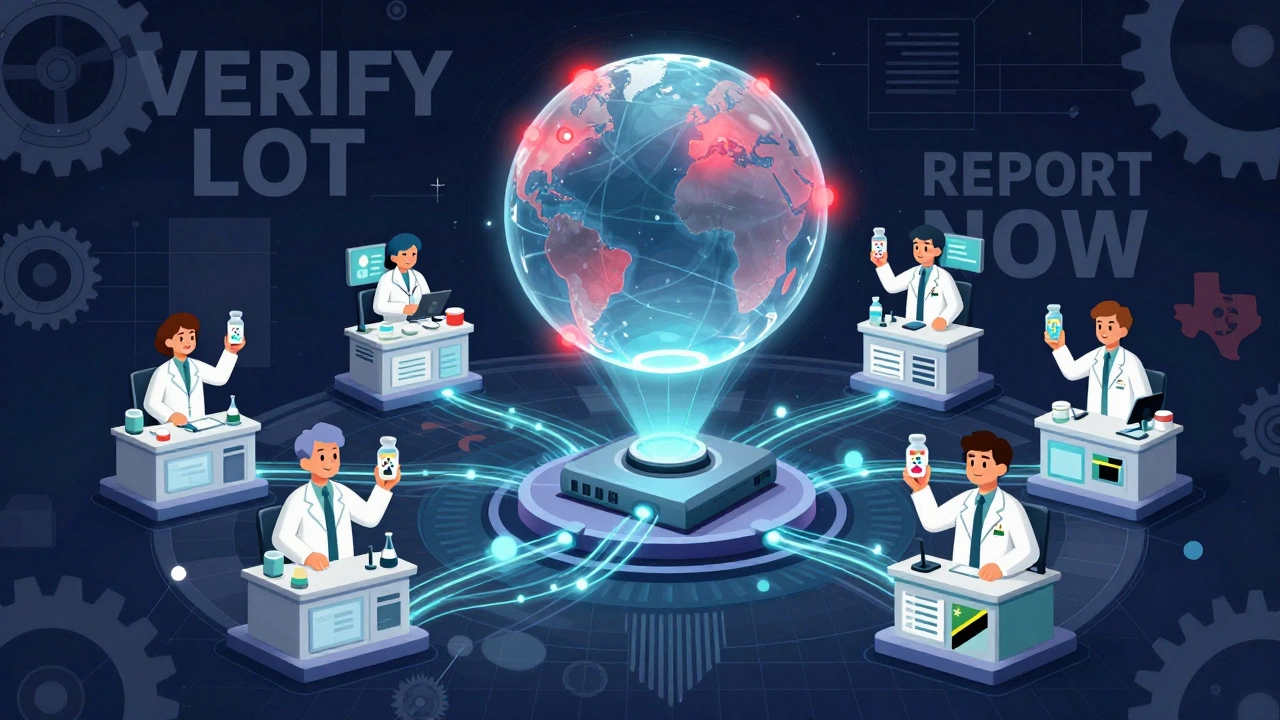
- Report suspicious products. You’re not just protecting your pharmacy - you’re protecting patients.
If you’re a pharmacy owner or manager:
- Make counterfeit detection part of onboarding. Don’t wait for a crisis.
- Invest in verification tech. The cost of one counterfeit drug reaching a patient can mean lawsuits, reputational damage, or worse - a death.
- Partner with local health departments. Many offer free training resources.
- Encourage your staff to join networks like RxAll’s online forum. Real-time sharing saves lives.
The Bigger Picture
This isn’t just about training. It’s about culture. For too long, the pharmacy profession treated counterfeit drugs as someone else’s problem - maybe law enforcement’s, maybe the FDA’s. But the data doesn’t lie. Pharmacists are on the front line. And when they’re trained, they’re effective.
Pfizer’s Anti-Counterfeiting Program has stopped over 302 million fake doses since 2004. That’s not because of raids or seizures. It’s because pharmacists were trained to recognize the signs and speak up.
The fight isn’t over. Criminals are smarter. The supply chain is more complex. But with the right training, pharmacists aren’t just reacting - they’re preventing.
How can I tell if a drug is counterfeit just by looking at it?
You can’t rely on appearance alone. Modern counterfeiters replicate packaging perfectly. Signs like misspellings, mismatched colors, or poor seals used to be reliable - but today’s fakes often pass visual inspection. The only sure way is to verify the lot number with the manufacturer, check the distributor against the official list, or use a verification device that scans chemical signatures. Never assume a drug is real just because it looks right.
Are counterfeit drugs only a problem in developing countries?
No. While supply chain gaps make some countries more vulnerable, counterfeit drugs are a global issue. In 2024, over 6,400 incidents were reported across 136 countries - including the U.S., Canada, the UK, and Australia. Online sales make it easy for fake drugs to reach any country. Even in places with strong regulations, criminals exploit loopholes, stolen inventory, or compromised distributors.
Is it enough to just check the barcode or serial number?
Checking a barcode or serial number is a good start, but it’s not enough. Counterfeiters can clone legitimate barcodes or reuse old ones from recalled batches. The real test is verifying the number with the manufacturer’s official system - not just a third-party website. Many fake drugs have valid-looking serial numbers that are recycled or stolen. Always cross-check with the manufacturer’s website or hotline.
What should I do if I suspect a drug is counterfeit?
Isolate the product immediately. Do not return it to the supplier or give it to the patient. Contact your pharmacy’s compliance officer or regulatory body - in the U.S., that’s the FDA’s MedWatch program. Report the incident, including photos, lot numbers, and supplier details. If you’re unsure who to contact, call your state pharmacy board. Reporting helps track patterns and stop larger networks.
Can patients help prevent counterfeit drugs?
Yes. Patients should buy medications only from licensed pharmacies - not websites that don’t require a prescription. They should check if the pharmacy is verified by the National Association of Boards of Pharmacy (NABP) or equivalent in their country. Pharmacists can give patients a simple handout: “If it’s too cheap, it’s probably fake. Buy from your trusted pharmacy.” Educating patients reduces demand and makes it harder for criminals to succeed.
Do I need special certification to handle counterfeit drug detection?
No formal certification is required in most countries - but many employers require continuing education in fraud and diversion prevention. In the U.S., CMS used to mandate a specific course, but now it only requires training within 90 days of hire, with no required provider. Programs like FIP/WHO’s curriculum or PowerPak’s course are widely accepted and recommended. The key is documented training, not a certificate.
Next Steps for Pharmacists
Start small. Pick one thing to improve this week.
- If you’ve never verified a drug with the manufacturer’s website - do it today.
- If your pharmacy doesn’t have a counterfeit response plan - draft one with your team.
- If you’re unsure about a shipment - don’t dispense it. Call the manufacturer.
The next fake drug that slips through? It might be yours. But with the right training, you won’t let it happen.


lol why are we even talking about this? everyone knows the pharmacy system is a joke. i got my insulin from a website that looked like a 2005 Geocities page and it worked fine 😅
December 2Saket Modi