ATP7B Gene: What It Does, How Mutations Affect Health, and What You Need to Know
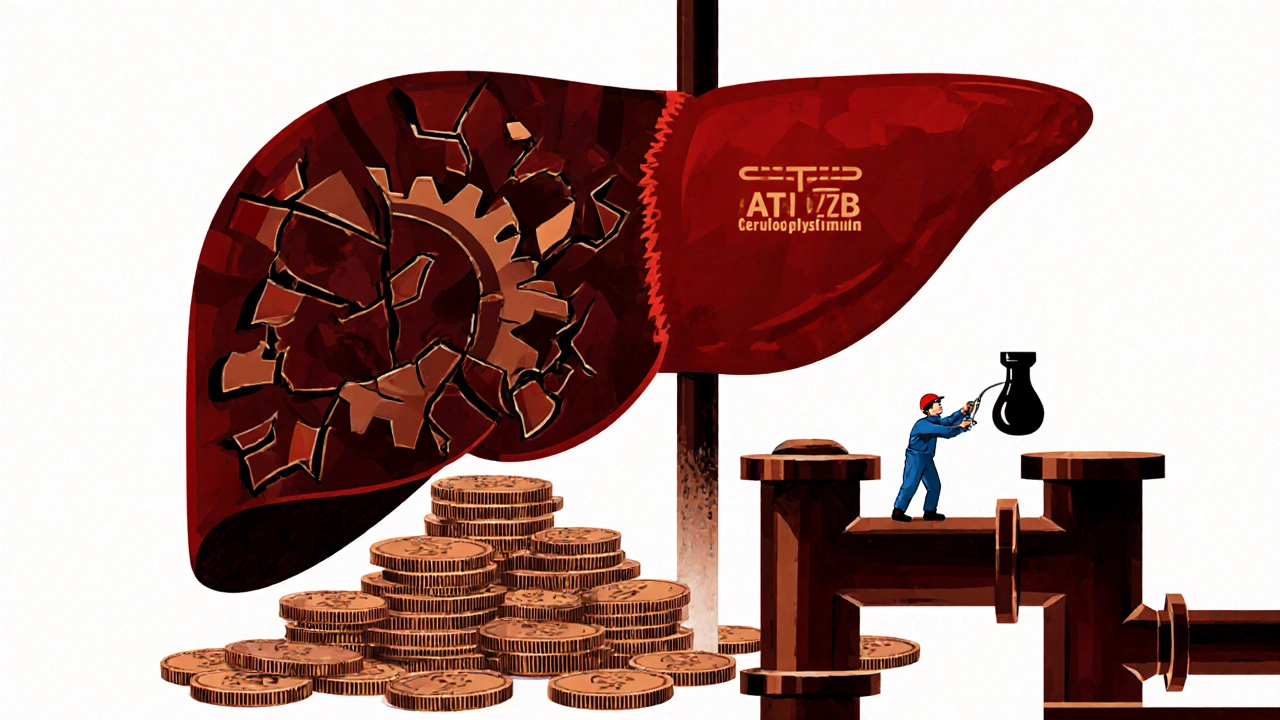
When your body processes food, it absorbs copper—a mineral needed for nerve function, blood vessel health, and energy production. But too much copper is toxic. That’s where the ATP7B gene, a gene that encodes a protein responsible for moving copper out of liver cells and into bile for elimination. Also known as the Wilson disease gene, it acts like a copper exit door in your liver. If this gene doesn’t work right, copper piles up where it shouldn’t—starting in the liver, then spreading to the brain, kidneys, and eyes. This isn’t just a rare genetic quirk. It’s the root cause of Wilson disease, a condition that can quietly destroy organs if left untreated.
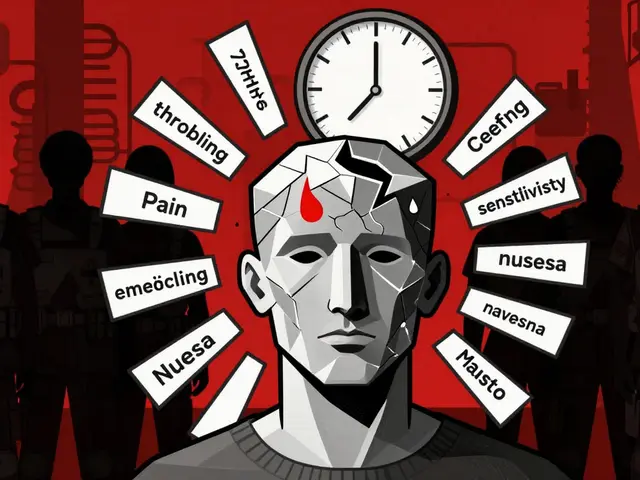
People with two faulty copies of the ATP7B gene, a gene that regulates copper transport and is inherited in an autosomal recessive pattern develop Wilson disease. Symptoms often show up between ages 5 and 35. Early signs include fatigue, jaundice, or unexplained liver problems. Later, neurological issues creep in—tremors, trouble speaking, mood swings. Some patients develop a telltale greenish ring around the cornea called Kayser-Fleischer rings. These aren’t random symptoms. They’re direct results of copper poisoning from a broken ATP7B gene.
What’s often missed is how this gene connects to other health issues. Some people with partial ATP7B dysfunction may have unexplained liver enzyme spikes or early-onset osteoporosis. Others might be misdiagnosed with hepatitis or psychiatric disorders before the real cause is found. Testing for ATP7B mutations isn’t routine—but it should be if you have unexplained liver disease, neurological symptoms, or a family history of Wilson disease. Blood and urine copper tests help, but genetic testing confirms it.
And here’s the practical part: if you have Wilson disease, treatment isn’t about fancy drugs. It’s about blocking copper absorption and flushing out what’s already there. Zinc pills stop your gut from grabbing copper from food. Chelators like penicillamine bind copper and help your kidneys dump it. But if you miss doses or stop treatment, copper builds up again. That’s why sticking to the plan matters more than anything else.
It’s also worth noting that ATP7B isn’t the only player in copper balance. Other genes and enzymes help move copper around, but none are as critical as this one. Even if you don’t have Wilson disease, understanding how ATP7B works helps explain why some medications or supplements might affect your copper levels. For example, long-term use of certain antibiotics or high-dose zinc can interfere with copper absorption—but that’s different from a genetic failure.
The posts below cover real cases and practical advice tied to this gene. You’ll find how Wilson disease is diagnosed, how it’s managed over decades, what medications to avoid, and how liver transplants can be a last-resort fix. You’ll also see how copper toxicity shows up in unexpected places—like in people misdiagnosed with Parkinson’s or chronic fatigue. This isn’t theory. These are stories from real patients and doctors who’ve seen what happens when the ATP7B gene fails—and how to fix it before it’s too late.