Deprescribing: How to Safely Reduce Unnecessary Medications
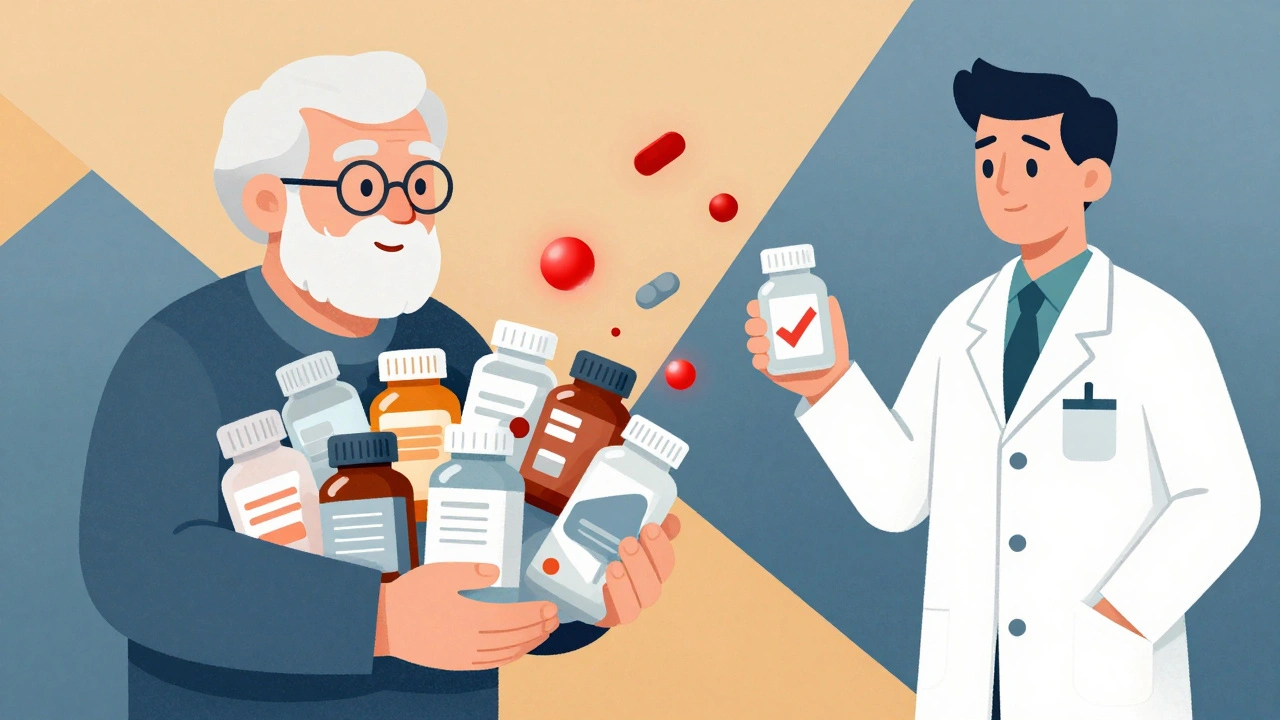
When you take too many drugs, your body doesn’t just get overwhelmed—it starts to break down. Deprescribing, the planned process of reducing or stopping medications that are no longer needed or may be doing more harm than good. It’s not about quitting pills cold turkey—it’s about working with your doctor to untangle a web of drugs that might have piled up over years. Many people, especially older adults, end up on meds they don’t need because each new condition brings another prescription. One drug causes a side effect, so another is added to fix it. This loop? That’s the prescribing cascade, when a side effect is mistaken for a new disease and treated with another drug. It’s common, and it’s dangerous. Studies show that nearly 1 in 3 older adults on five or more medications face a higher risk of falls, confusion, kidney damage, or even hospitalization.
Polypharmacy, the use of multiple medications at once, often without clear benefit. isn’t always avoidable—some people truly need several drugs. But too often, we keep giving pills long after they’ve served their purpose. A blood pressure med started after a heart attack? Maybe it’s still needed. A sleep aid from five years ago? Probably not. A daily aspirin taken "just in case"? That’s now debated in guidelines. Drug withdrawal, the careful process of stopping a medication to avoid rebound effects or dangerous symptoms. isn’t simple. Stopping a beta blocker like timolol too fast can spike your blood pressure. Quitting a steroid suddenly can crash your adrenal system. That’s why deprescribing isn’t DIY—it’s a step-by-step plan, often done over weeks or months, with close monitoring.
Deprescribing isn’t just for seniors. It applies to anyone on long-term meds—like those taking antidepressants, painkillers, or acid reducers for years without review. The goal? Fewer pills, fewer side effects, better quality of life. You don’t need to be sick to benefit from this. If you’ve ever thought, "I feel worse since I started this," or "I can’t remember why I’m taking this," you’re already thinking like someone ready for deprescribing. Below, you’ll find real-world guides on how to safely stop medications, spot hidden risks, and talk to your doctor about cutting back—without putting your health at risk.