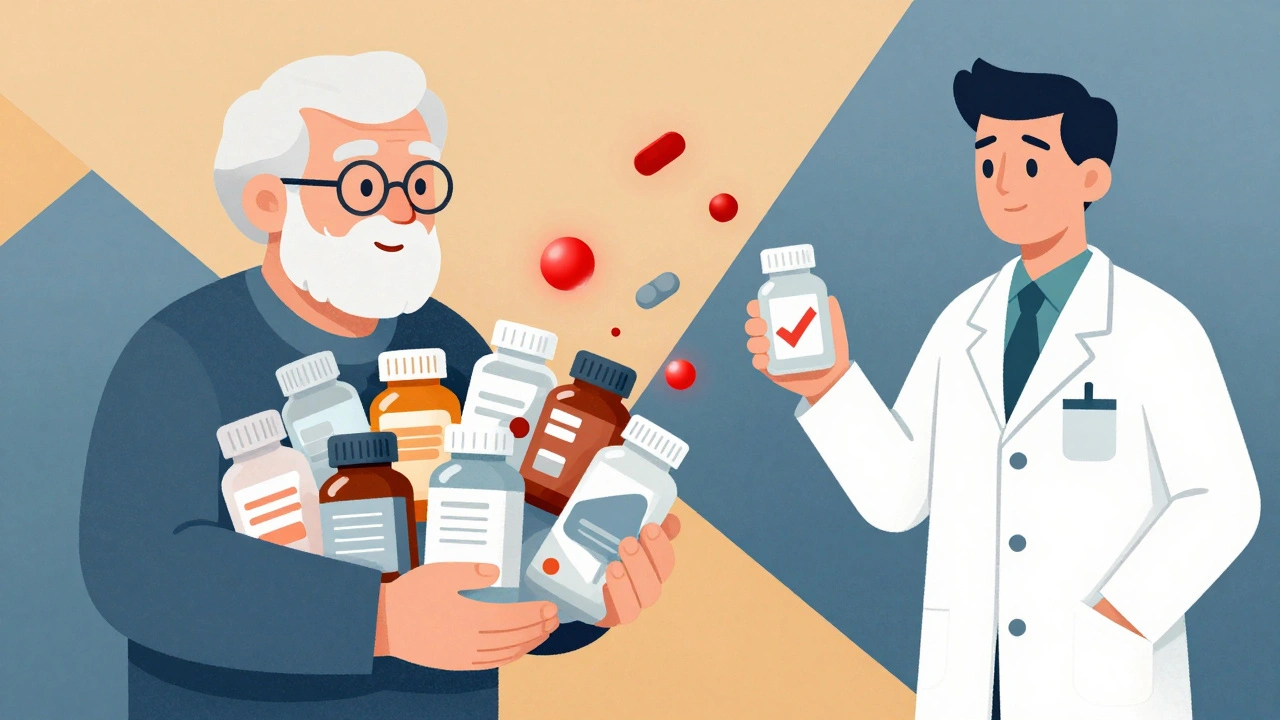
More than one in five adults over 65 in the UK are taking ten or more prescription drugs. It’s not rare. It’s becoming the norm. But taking five, seven, or twelve pills a day doesn’t mean it’s safe. In fact, the more medications you take, the higher the chance of dangerous drug interactions, side effects, falls, confusion, or hospital visits. The good news? You don’t have to accept this as unavoidable. There are clear, practical steps you can take to cut the clutter, reduce risks, and keep your body working the way it should.
What Exactly Is Polypharmacy?
Polypharmacy isn’t just taking a lot of pills. It’s when you’re regularly using five or more medications at the same time. That’s the number doctors use to flag increased risk. But here’s the catch: some people need all those meds. Their heart, diabetes, arthritis, and high blood pressure all require treatment. That’s called appropriate polypharmacy. The real danger is inappropriate polypharmacy-when you’re on drugs that don’t help anymore, cause more harm than good, or were prescribed just to fix a side effect from another pill.
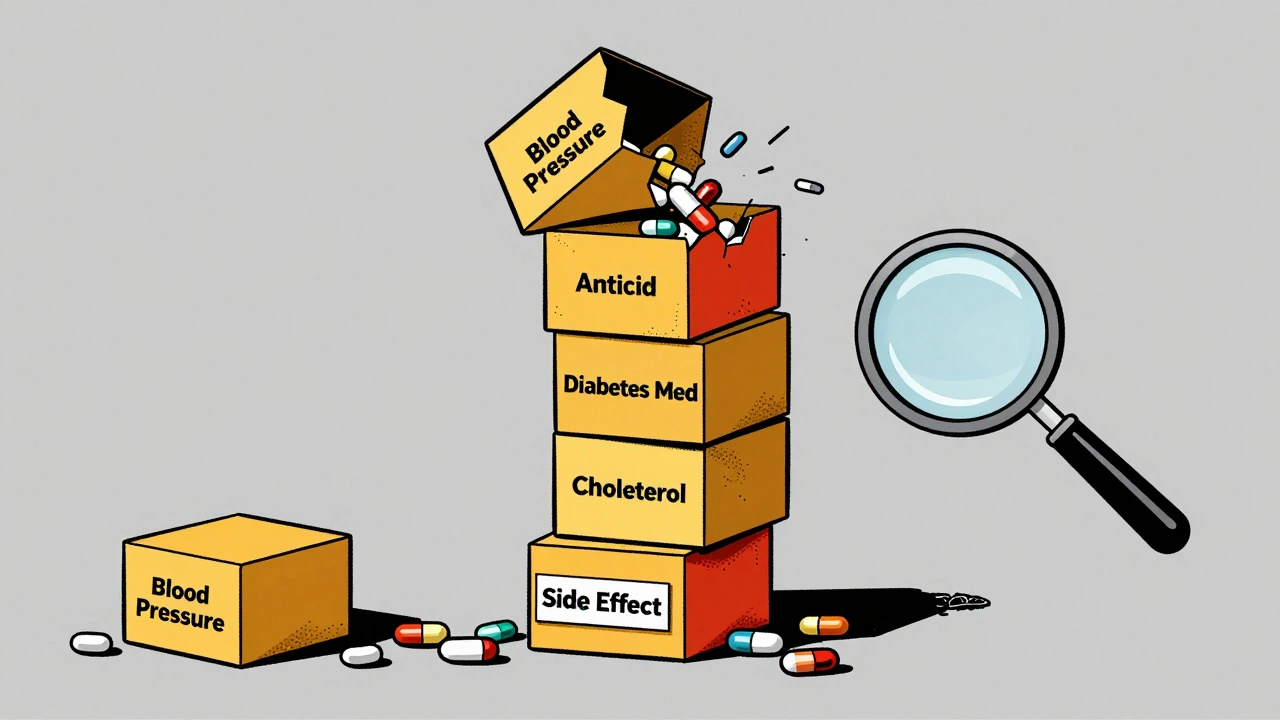
Think of it like stacking boxes. One box holds your blood pressure medicine. Another holds your cholesterol drug. But then you get a stomach upset from one of them, so you’re given an antacid. That antacid makes your diabetes pill less effective, so your doctor adds another diabetes med. Now you’re on six pills to fix five problems-some of which were created by the others. That’s a prescribing cascade. And it’s more common than you think.
Why Do People End Up on So Many Drugs?
You didn’t wake up one day with ten prescriptions. It happened slowly. Maybe you saw one doctor for your heart, another for your joints, and a third for your sleep. Each focused on their piece of the puzzle. No one looked at the whole picture. That’s care fragmentation. It’s not anyone’s fault-it’s how the system works.
Another big reason? People keep taking meds long after they’re needed. A painkiller from a year-old injury. A statin prescribed before you changed your diet. An antidepressant started during a tough time that’s now passed. These don’t always get reviewed. And then there’s the over-the-counter stuff: ibuprofen for aching knees, calcium supplements, herbal teas, ginseng, turmeric capsules. Many people don’t tell their doctor about these, but they can clash with prescription drugs too.
And let’s not forget the simple truth: we forget. A pill gets missed. A dose gets doubled. A new med gets added without checking what’s already on the list. That’s how mistakes happen.
How to Spot Trouble Before It Starts
You don’t need to be a doctor to notice warning signs. Here’s what to watch for:
- New dizziness or balance problems-especially if you’ve just started a new med
- Confusion, memory lapses, or feeling foggy
- Unexplained fatigue or weakness
- Stomach upset, nausea, or loss of appetite
- Bruising easily or unusual bleeding
- Sudden changes in mood or sleep
These aren’t just “getting older.” They could be your body reacting to a bad mix. If you notice any of these after starting a new drug-or even if they’ve been going on for months-talk to your pharmacist or GP. Don’t wait.
One tool doctors use is the Beers Criteria-a list of medications that are risky for older adults. It’s not a rulebook, but it’s a starting point. If you’re on any of these, ask: Is this still helping? Is there a safer option?
Deprescribing: Stopping Pills Is Sometimes the Best Medicine
Most people think the goal is to add more meds. But sometimes, the best thing you can do is stop one-or two-or five.
Deprescribing isn’t about quitting meds cold turkey. It’s a careful, planned process. Some drugs can’t be stopped suddenly. Blood pressure pills, antidepressants, steroids, and certain pain meds need to be tapered down slowly. Stopping them too fast can cause rebound high blood pressure, panic attacks, or severe pain. That’s why you never do this alone.
Start by making a list of every pill, capsule, patch, and supplement you take. Include the dose, why you take it, and who prescribed it. Bring this to your next appointment. Then ask: “Which of these am I still taking for a reason?”
Some meds can be stopped safely right away. Others need a plan. Your doctor might suggest cutting one dose in half for two weeks, then stopping. Or switching to a lower-risk alternative. The key is to monitor how you feel after each change. Keep notes. Did your sleep get better? Did the dizziness fade? That’s your body telling you what’s working.
Your Medication Master List: The Most Important Tool You Own
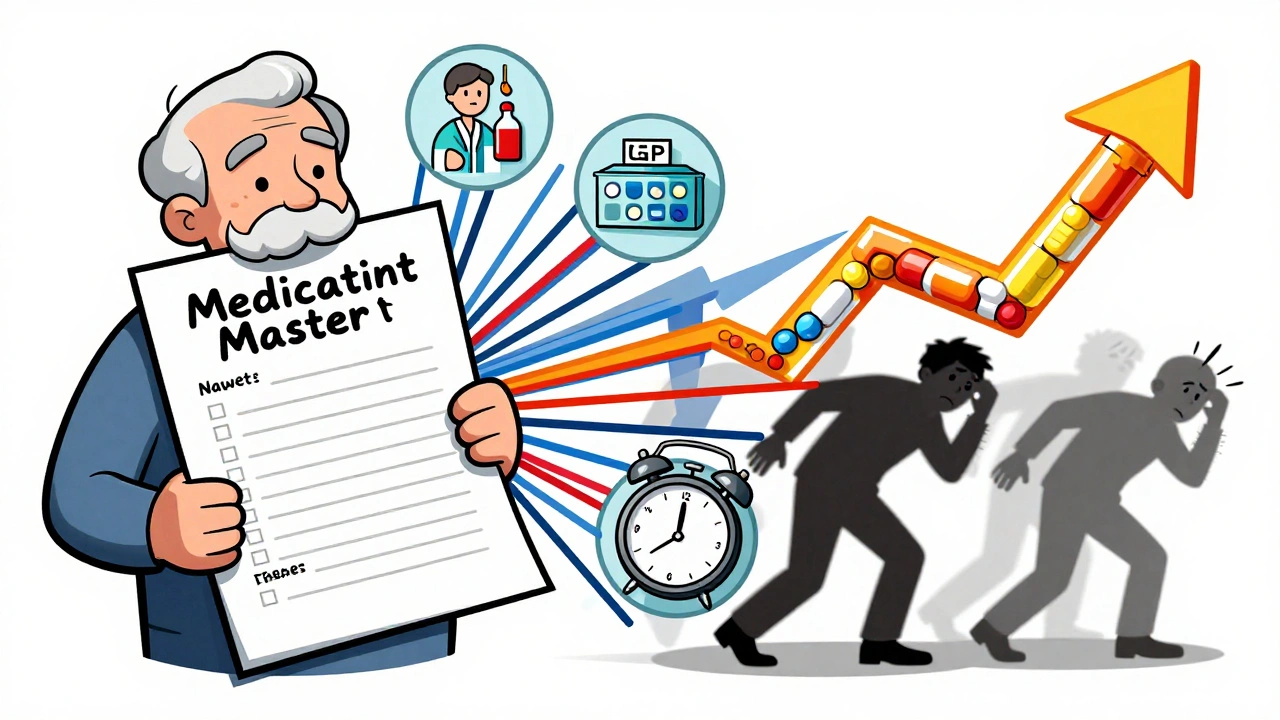
Every patient I’ve worked with who stayed safe had one thing in common: they kept a current, written list of everything they took. Not on their phone. Not in their head. On paper. In their wallet.
Here’s what to include for each medication:
- Name (brand and generic, if different)
- Dose (e.g., 10 mg, 2 tablets)
- How often (e.g., once daily, every 8 hours)
- Why you take it (e.g., “for high blood pressure,” “for arthritis pain”)
- Who prescribed it (doctor’s name)
- Special instructions (e.g., “take with food,” “avoid grapefruit,” “do not drink alcohol”)
Example: Lipitor 20 mg: 1 tablet at bedtime for high cholesterol, prescribed by Dr. Patel, avoid grapefruit and alcohol.
Update this list every time your meds change-even if it’s just a new bottle from the pharmacy. Keep a copy at home, in your bag, and give one to your main doctor and pharmacist. If you go to A&E, this list could save your life.
One Pharmacy, One Team, One Plan
Using the same pharmacy for all your prescriptions isn’t just convenient-it’s critical. Pharmacists are trained to spot interactions. If you get your blood pressure med from one place, your painkiller from another, and your supplements from an online store, no one sees the full picture. But if everything comes through one pharmacy, the pharmacist can flag a dangerous mix before you even walk out the door.
And don’t forget your GP, nurse, and pharmacist should be talking to each other. If you’re seeing multiple specialists, ask for a medication review meeting. Many practices now offer these. It’s not a one-off. It’s part of your ongoing care.
Bring a family member or caregiver to appointments if you can. They’ll remember things you miss. They can ask, “Why are we still giving this?” That question alone has stopped dozens of unnecessary prescriptions.
Simple Habits That Make a Big Difference
Adherence is the silent killer. If you don’t take your meds right, they won’t work-and they might hurt you.
Link your pills to daily habits. Brush your teeth? Take your morning meds right after. Eat breakfast? That’s your time for the next set. Use a pill organizer with clear labels. Set phone alarms. Don’t rely on memory.
And if you’re ever unsure-whether it’s about timing, dosage, or whether you even need a pill-ask. Don’t guess. Don’t skip. Don’t double up. Call your pharmacist. They’re there to help.
What to Do Next: A Simple Action Plan
Here’s what you can do in the next 7 days:
- Write down every medication and supplement you take, including OTC and herbal products.
- Take that list to your pharmacist. Ask: “Are any of these known to interact with each other?”
- Book an appointment with your GP. Say: “I’m on several medications. Can we review what’s still necessary?”
- Ask if any meds can be stopped or lowered. Don’t be afraid to say, “I don’t want to take more than I need.”
- Start using a pill organizer and update your Medication Master List.
- Choose one pharmacy for all your prescriptions.
- Write down any new symptoms and bring them to your next visit.
This isn’t about cutting corners. It’s about cutting risks. Every pill you don’t need is one less chance for something to go wrong.
When to Get Help Immediately
Some reactions need urgent care. Call 111 or go to A&E if you experience:
- Sudden confusion or trouble speaking
- Severe dizziness or fainting
- Chest pain or irregular heartbeat
- Swelling of the face, lips, or throat
- Bruising or bleeding you can’t explain
- Severe rash or peeling skin
These could signal a dangerous interaction or allergic reaction. Don’t wait. Bring your Medication Master List with you.
Managing multiple medications isn’t about memorizing every detail. It’s about staying in control. You don’t have to accept confusion, side effects, or hospital visits as normal. With the right tools and questions, you can take back your health-one pill at a time.
What is polypharmacy, and why is it dangerous?
Polypharmacy means taking five or more medications at the same time. It’s dangerous because each new drug increases the chance of harmful interactions, side effects, falls, confusion, or organ damage. Not all polypharmacy is bad-if each medication is necessary and well-monitored-but when meds are added without review, or to treat side effects of other drugs, the risks rise sharply.
Can I stop taking some of my meds on my own?
No. Stopping certain medications suddenly can cause serious problems like rebound high blood pressure, seizures, anxiety, or severe pain. Some drugs need to be tapered down slowly under medical supervision. Always talk to your doctor or pharmacist before changing how you take any medication-even if you think it’s no longer needed.
What’s the difference between prescription drugs and supplements?
Prescription drugs are tested for safety, effectiveness, and interactions before being approved. Supplements like vitamins, herbs, or fish oil aren’t held to the same standard. Many can interfere with prescription meds-for example, St. John’s Wort can make blood thinners or antidepressants less effective. Always tell your doctor about every supplement you take, even if you think it’s harmless.
How often should I get my medications reviewed?
At least once a year, or anytime your health changes-like after a hospital stay, a fall, or if you start feeling different. If you’re on five or more meds, ask for a formal medication review during your annual health check. Some GP practices offer these as standard for older patients.
Can a pharmacist help me with my medication list?
Yes. Pharmacists are trained to spot drug interactions, check for duplicates, and identify medications that may no longer be needed. If you get all your prescriptions from one pharmacy, they can track everything you take-including over-the-counter and supplements-and flag potential risks before you even leave the counter.
What should I bring to my medication review appointment?
Bring your complete Medication Master List, including all prescriptions, over-the-counter drugs, vitamins, and herbal supplements. Also bring the actual bottles or packaging if you can. If you’ve noticed any new symptoms-dizziness, fatigue, memory issues-write them down. This helps your doctor understand what’s happening in your body.
Is it normal to feel confused about my meds?
No. Feeling confused about why you’re taking certain pills, when to take them, or what they’re for isn’t normal-it’s a red flag. It often means your regimen is too complex or hasn’t been reviewed properly. Ask for help. You have the right to understand every medication you take.
How can I avoid prescribing cascades?
A prescribing cascade happens when a side effect from one drug is mistaken for a new condition and treated with another drug. To avoid this, always ask: “Could this symptom be caused by one of my current meds?” If you develop a new issue after starting a new pill, don’t assume it’s a new disease. Bring it up with your doctor and ask if it’s a known side effect.







man i totally get this. i saw my grandpa go through this last year - 12 pills a day, no one ever sat down with him to ask if he really needed them all. he started feeling foggy, then fell once, and turns out half his meds were for stuff that didn’t even matter anymore. we got his doc to cut it down to 5 and he’s been walking better than in years. sometimes less really is more. just wish more doctors actually listened.
December 2Arun kumar