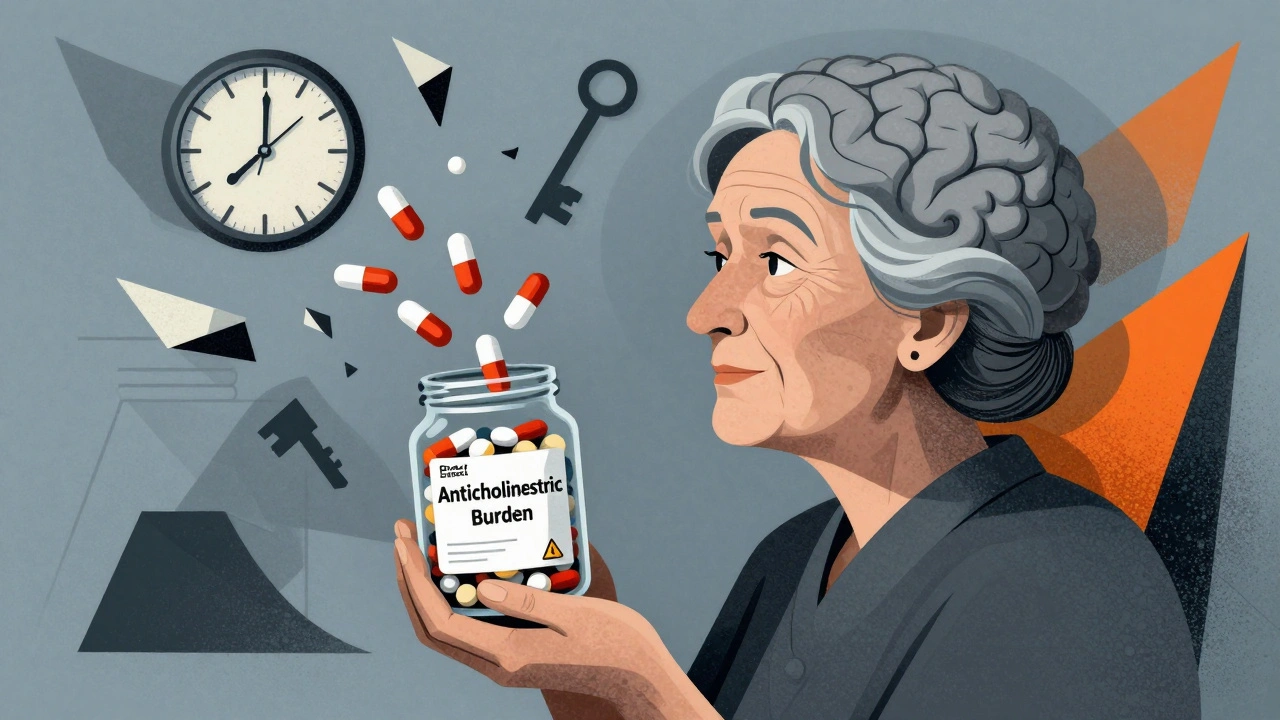
Many older adults take medications every day to manage conditions like allergies, overactive bladder, depression, or sleep problems. But what if some of those everyday pills are quietly harming their memory and thinking? That’s the reality of anticholinergic burden-a hidden risk that’s quietly affecting millions of seniors across the UK and beyond.
What Exactly Is Anticholinergic Burden?
Anticholinergic burden isn’t one drug. It’s the combined effect of multiple medications that block a brain chemical called acetylcholine. This chemical is essential for memory, attention, and clear thinking. When too many drugs block it, the brain struggles to function normally. The problem isn’t just about taking one strong anticholinergic drug. It’s about stacking them up. A senior might take diphenhydramine (Benadryl) for allergies, oxybutynin for bladder control, and amitriptyline for nerve pain or sleep. Each one carries a small risk. Together, they add up-like a slow leak in a boat. Over time, the water rises. Doctors use a scoring system called the Anticholinergic Cognitive Burden (ACB) scale to measure this. Medications are ranked from Level 1 (mild) to Level 3 (strong). A score of 3 or higher is linked to measurable cognitive decline. A score of 6 or more? That’s a red flag.Which Medications Are the Biggest Culprits?
Not all anticholinergics are the same. Some are obvious, others sneak in under the radar. Here are the most common ones linked to cognitive risk in older adults:- First-generation antihistamines: Diphenhydramine (Benadryl), chlorpheniramine, hydroxyzine. These are in many over-the-counter sleep aids and cold medicines.
- Overactive bladder drugs: Oxybutynin, tolterodine, solifenacin. Oxybutynin is especially risky-strong anticholinergic effects that reach the brain.
- Tricyclic antidepressants: Amitriptyline, nortriptyline. Often prescribed for depression, nerve pain, or insomnia, even when safer options exist.
- Antipsychotics: Chlorpromazine, thioridazine. Used for dementia-related agitation, but carry heavy cognitive risks.
- Muscle relaxants: Cyclobenzaprine, orphenadrine.
How Do These Drugs Actually Hurt the Brain?
It’s not just about feeling foggy. Brain scans tell a clearer story. In a 2016 JAMA Neurology study, older adults taking medium-to-high anticholinergic drugs showed a 4% drop in glucose metabolism in areas of the brain tied to Alzheimer’s disease. That’s the same region that lights up in early dementia. MRI scans from the Indiana Memory and Aging Study found that long-term users lost brain volume faster-0.24% more per year than non-users. That’s like losing an extra teaspoon of brain tissue every year, just from medication. These drugs don’t just slow you down-they target specific skills:- Executive function: Planning, organizing, switching tasks. Each 1-point increase in ACB score meant a 0.15-point yearly drop in performance on word association tests.
- Episodic memory: Remembering names, events, conversations. Each point on the ACB scale led to a 0.08-point annual decline in recall tests.
- Processing speed: How fast you react or answer questions. This was the least affected-suggesting the damage is targeted, not general.
Real People, Real Changes
Behind the numbers are real stories. On AgingCare.com, a caregiver named Jen wrote: “My mother’s confusion cleared within two weeks of stopping her bladder medication. Her doctor had no idea it was causing this.” The FDA recorded over 1,200 cognitive-related adverse events in seniors between 2018 and 2022. Confusion was the top complaint. Memory loss came second. Delirium-sudden, severe mental confusion-wasn’t rare. A 2021 survey by the National Council on Aging found that 63% of older adults were never told these drugs could hurt their memory. Over 4 in 10 said they’d have chosen a different treatment if they’d known.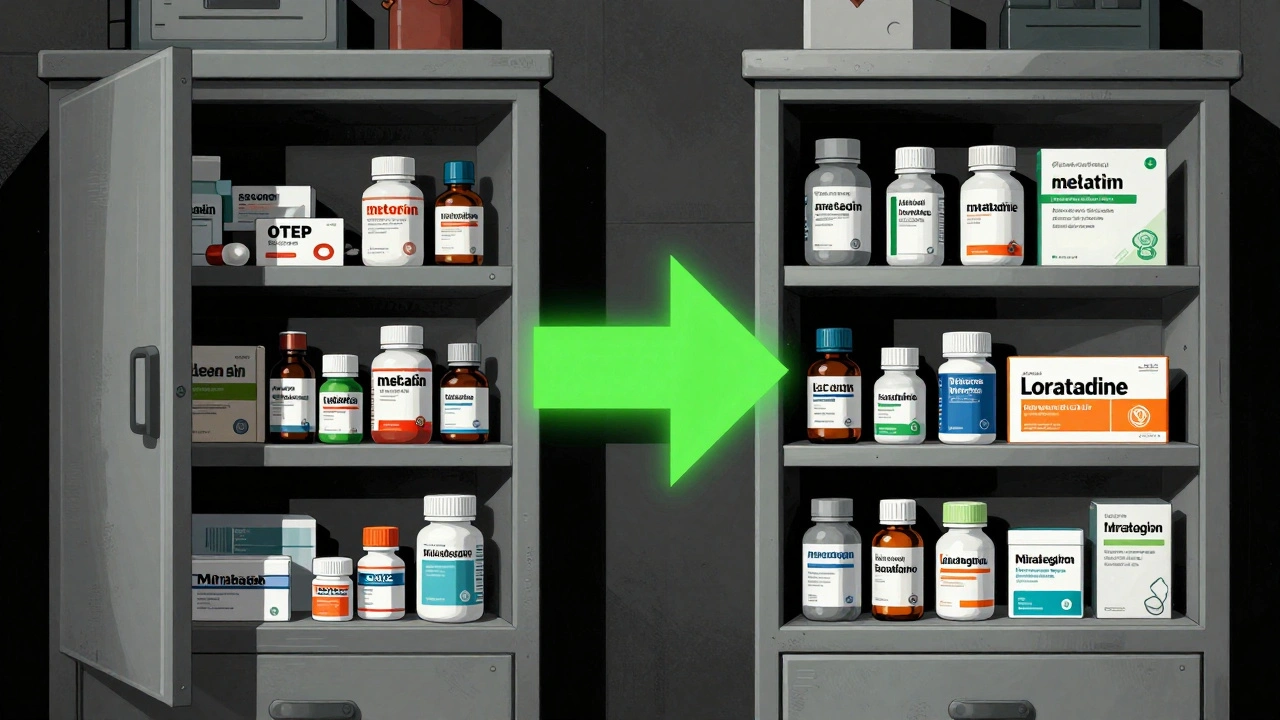
Can the Damage Be Reversed?
Yes-sometimes, surprisingly quickly. The 2019 DICE trial followed 286 older adults who gradually stopped taking anticholinergic drugs. After 12 weeks, their Mini-Mental State Exam (MMSE) scores improved by 0.82 points on average. That’s not a cure, but it’s meaningful progress. Many caregivers report noticing clearer thinking, better focus, and less confusion within weeks of stopping. But here’s the catch: it takes time. The brain doesn’t bounce back overnight. Deprescribing-phasing out these drugs safely-usually takes 4 to 8 weeks. Stopping cold turkey can cause withdrawal symptoms or make the original condition worse. That’s why it’s not about just cutting pills. It’s about replacing them with safer options.What Are the Safer Alternatives?
For nearly every anticholinergic drug, there’s a better choice:- Allergies or sleep: Switch from diphenhydramine to loratadine (Claritin), cetirizine (Zyrtec), or melatonin for sleep.
- Overactive bladder: Oxybutynin is high-risk. Try mirabegron (Myrbetriq), which works differently and doesn’t cross into the brain. Solifenacin (VESIcare) is a middle-ground option-lower brain penetration than oxybutynin.
- Depression or nerve pain: Amitriptyline is outdated for seniors. SSRIs like sertraline or SNRIs like duloxetine are safer and just as effective.
- Insomnia: Avoid sedating antihistamines. Try cognitive behavioral therapy for insomnia (CBT-I)-it’s more effective long-term than pills.
Why Isn’t This Fixed Already?
The evidence has been clear for over a decade. So why are so many seniors still on these drugs? One reason: doctors are overwhelmed. A 2021 survey of over 1,200 family doctors found that reviewing a patient’s full medication list for anticholinergic risk takes an average of 23 minutes. Most appointments are 10 to 15 minutes. Another reason: inertia. If a patient has been on a drug for years, it’s easier to keep prescribing it than to re-evaluate. And many seniors don’t mention side effects-they assume memory lapses are just part of aging. A 2022 study in the Journal of the American Medical Directors Association found that only 39% of nursing home residents with high anticholinergic scores had their meds reviewed within three months of being flagged.
What Can You Do?
If you or a loved one is over 65 and taking any of these medications, here’s what to do:- Make a full list of every pill, patch, and liquid you take-including OTC meds and supplements.
- Check the ACB score using the free American Geriatrics Society’s ACB Calculator app (launched in 2024). Just enter the drug names.
- Ask your doctor: “Is this medication necessary? Is there a safer alternative? Could we try reducing or stopping it?”
- Don’t stop cold. Work with your doctor to taper off slowly. Sudden withdrawal can cause rebound symptoms.
- Track changes. Note any improvements in memory, focus, or confusion after adjustments.
The Bigger Picture
Experts now call anticholinergic burden one of the top 10 modifiable risk factors for dementia. That means it’s something we can actually change. Studies estimate it could be behind 10-15% of dementia cases in older adults. That’s not a small number. That’s hundreds of thousands of people whose memory loss might have been prevented. The National Institute on Aging is funding a $14.7 million study called CHIME, which will test whether actively reducing anticholinergic drugs can delay or even prevent cognitive decline in 3,500 seniors. Results are expected in 2027. For now, the message is simple: anticholinergic burden is real, measurable, and often avoidable. What you take for allergies, bladder control, or sleep might be quietly stealing your clarity. But you don’t have to accept it.Frequently Asked Questions
Can over-the-counter sleep aids like Benadryl really cause memory problems?
Yes. Diphenhydramine, the active ingredient in Benadryl and many sleep aids, is a strong anticholinergic. Even occasional use can cause confusion in older adults. Long-term use is linked to higher dementia risk. Safer sleep options include melatonin, cognitive behavioral therapy for insomnia (CBT-I), or non-anticholinergic sleep aids like doxylamine (used cautiously).
Is it safe to stop anticholinergic medications on my own?
No. Stopping suddenly can cause withdrawal symptoms like increased bladder urgency, anxiety, or rebound insomnia. Always work with your doctor to create a gradual tapering plan. The goal is to reduce risk without triggering new problems.
What if I need the medication for a serious condition like depression?
Antidepressants like amitriptyline are high-risk, but depression in older adults needs treatment too. The solution isn’t to leave it untreated-it’s to switch to safer alternatives like SSRIs (e.g., sertraline, escitalopram) or SNRIs (e.g., duloxetine), which have little to no anticholinergic effect and are just as effective.
How long does it take to see improvement after stopping these drugs?
Some people notice clearer thinking within 2 to 4 weeks. For others, it takes 8 to 12 weeks. Brain changes don’t reverse overnight. The DICE trial showed measurable cognitive improvements after 12 weeks of gradual reduction. Patience and consistency matter.
Are there any tools to check if my meds are risky?
Yes. The American Geriatrics Society launched a free mobile app in 2024 called the ACB Calculator. Just enter your medications, and it gives you a total anticholinergic burden score based on the latest ACB scale. It’s designed for patients and caregivers-no medical training needed.
Why do doctors still prescribe these drugs if they’re risky?
Many doctors know the risks, but time and tradition get in the way. A 2021 survey found only 37% of family doctors felt they had enough time in appointments to review all meds. Also, some conditions-like severe overactive bladder-have limited alternatives. But the trend is shifting: new guidelines, updated warnings, and safer drugs are making it easier to choose better options.





The anticholinergic burden metric is a textbook example of pharmacovigilance lagging behind clinical reality. The ACB scale, while useful, is still a crude proxy-ignoring polypharmacodynamic interactions, CYP450 metabolism variations, and blood-brain barrier permeability differences across geriatric subpopulations. We’re applying a one-size-fits-all score to a cohort with wildly heterogeneous pharmacokinetics. This isn’t risk stratification-it’s algorithmic overreach disguised as evidence-based medicine.
December 5And let’s not pretend deprescribing is a benign intervention. The DICE trial’s 0.82-point MMSE improvement? Statistically significant, clinically negligible. You’re trading a slow cognitive decline for acute withdrawal syndromes, rebound insomnia, and uncontrolled urinary incontinence. The real problem isn’t the drugs-it’s the lack of integrated geriatric care infrastructure to support safe transitions.
Also, why are we still using the Beers Criteria like it’s gospel? It’s a 2015 framework updated in 2023 with no new RCTs to validate its predictive power. We’re treating guidelines like commandments, not hypotheses.
And don’t get me started on the ACB Calculator app. A mobile app run by laypeople? That’s not empowerment-that’s liability waiting to happen. If a 78-year-old with mild cognitive impairment stops amitriptyline because an app says ‘score: 6-STOP NOW,’ we’re going to see ER visits spike. This isn’t progress. It’s pharmaceutical populism.
an mo