Dog Antidepressant Overdose: Signs, Risks, and What to Do
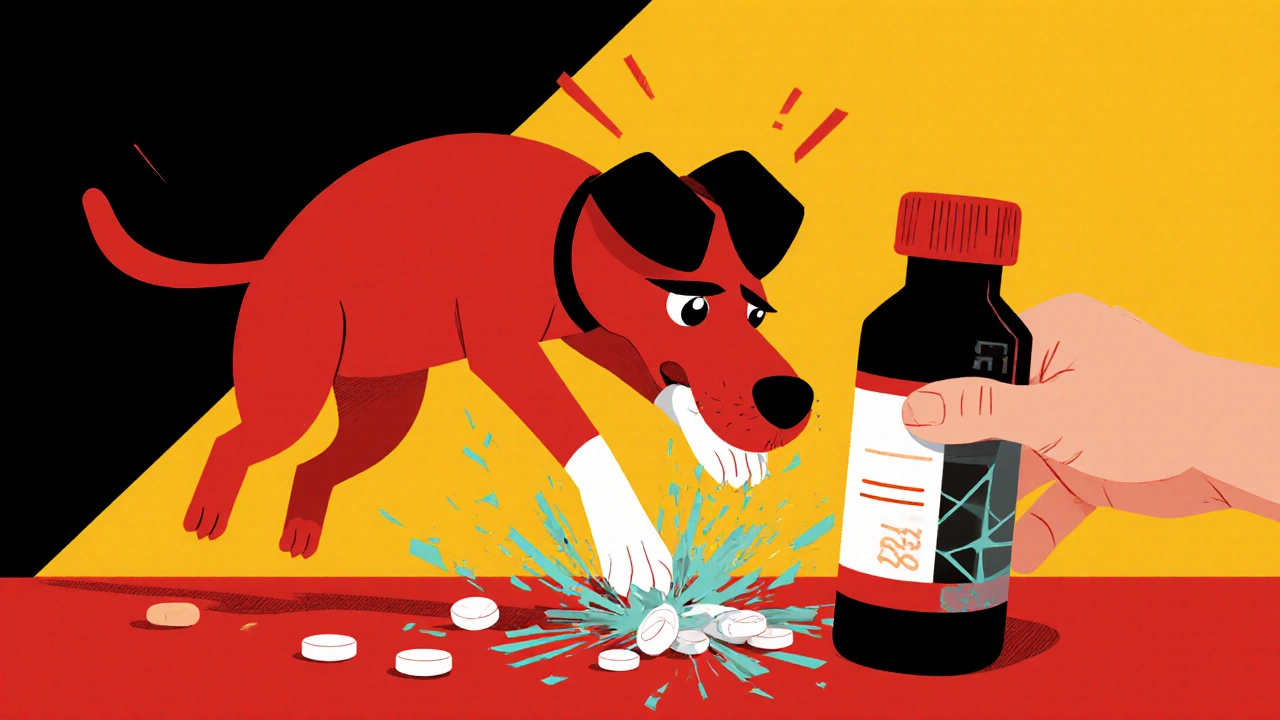
When a dog ingests an antidepressant meant for humans, it’s not just a mistake—it’s a medical emergency. Dog antidepressant overdose, a dangerous accidental ingestion of human psychiatric medications like SSRIs or SNRIs. Also known as serotonin syndrome in dogs, it occurs when the drug floods the nervous system, triggering uncontrolled nerve activity that can shut down vital functions. These aren’t rare incidents. Dogs sniff out pill bottles, chew through purses, or swallow dropped pills without a second thought. And because human doses are far higher than what a dog’s body can handle, even one pill can be fatal.
Antidepressants like fluoxetine, a common SSRI used in both humans and dogs under veterinary supervision are especially risky when taken in excess. In dogs, fluoxetine is prescribed for anxiety or OCD at tiny, calculated doses. But if your dog gets into your 20mg or 40mg pill, that’s 5 to 10 times their safe limit. The same goes for sertraline, citalopram, or venlafaxine. Symptoms show up fast—within 1 to 2 hours. Vomiting, tremors, high body temperature, rapid heart rate, seizures, and collapse are all red flags. Serotonin syndrome, a dangerous overstimulation of serotonin receptors in the brain and body is the real threat. It doesn’t always look like a drug overdose. Sometimes it looks like a seizure disorder or heat stroke. That’s why waiting to see if your dog "gets better" is never an option.
What you do in the next 30 minutes can save your dog’s life. Don’t wait for symptoms. If you suspect ingestion, call your vet or an emergency animal poison control center immediately. Have the pill bottle ready—dosage, name, and time of ingestion matter more than you think. Don’t try to induce vomiting unless instructed. Some drugs make vomiting dangerous. Your vet might need to administer activated charcoal, IV fluids, or medications to calm nerve activity. The sooner treatment starts, the better the outcome. Many dogs recover fully if treated early. Others don’t make it if help is delayed.
This isn’t just about keeping pills out of reach. It’s about understanding how easily accidents happen. Your dog doesn’t know the difference between your medicine and a treat. They don’t understand why you take pills every morning. That’s why storing meds in locked cabinets, never leaving pills on counters, and checking pockets before doing laundry are simple habits that prevent tragedies. And if you’ve ever had to rush your dog to the vet because of a medication mix-up—you know how fast things can spiral.
The posts below cover real cases, prevention tips, and what vets actually do when a dog overdoses on antidepressants. You’ll find guidance on how to safely manage your own medications around pets, how to recognize early warning signs, and what to say when you call for help. This isn’t theoretical. These are stories from people who’ve been there—and lived to tell it.