Grapefruit and Statins: What You Need to Know About This Dangerous Interaction
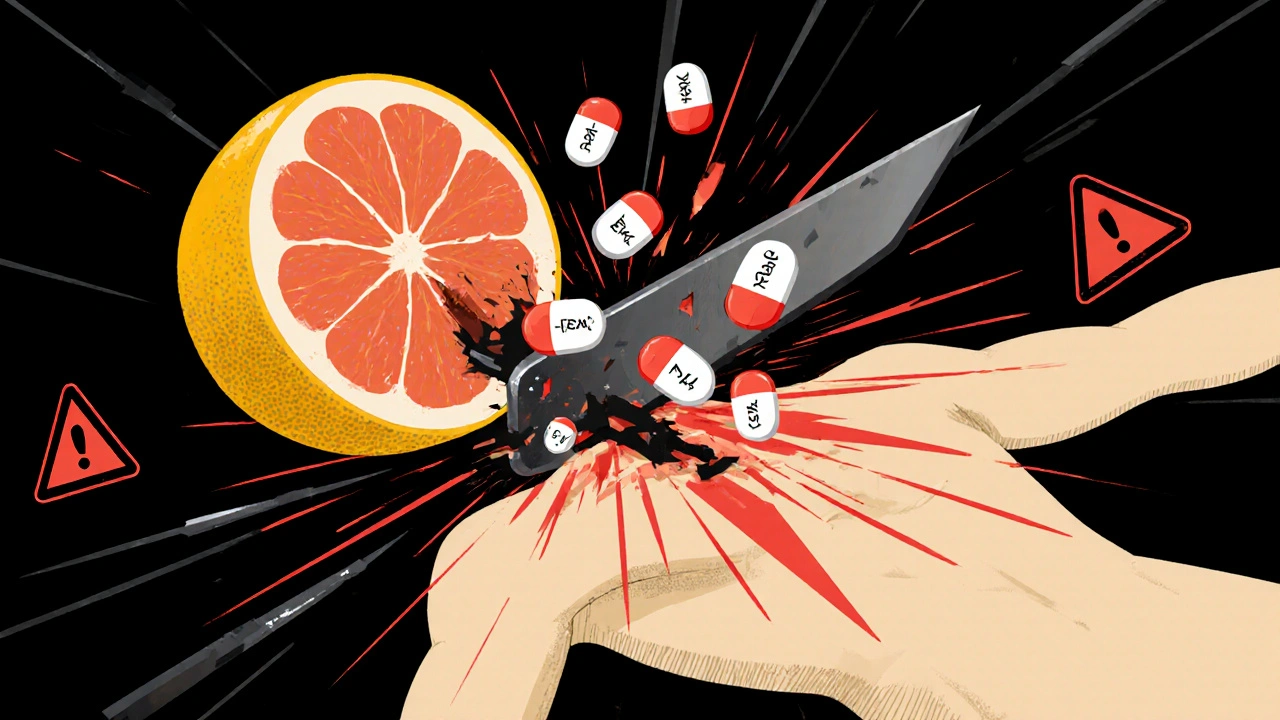
When you take grapefruit, a common citrus fruit known for its tart flavor and high vitamin C content. Also known as pomelo, it can interfere with how your body processes certain medications. For people on statins, a class of drugs prescribed to lower LDL cholesterol and reduce heart disease risk, eating grapefruit or drinking grapefruit juice isn’t just a harmless habit—it can be risky. The interaction isn’t theoretical. It’s been documented in clinical studies and real-world cases where people ended up in the hospital with severe muscle damage because their statin levels spiked too high.
This happens because grapefruit blocks an enzyme in your gut called CYP3A4, which normally breaks down statins before they enter your bloodstream. When that enzyme is shut down, your body absorbs way more of the drug than intended. Some statins are affected more than others. Simvastatin and lovastatin are the worst offenders—just one glass of grapefruit juice can double or even triple their levels. Atorvastatin is also affected, but less so. Rosuvastatin, pravastatin, and fluvastatin are safer choices if you like grapefruit. The problem doesn’t go away with time. Even if you’ve been drinking grapefruit juice for years with no issues, the risk stays the same. And it’s not just the fruit—grapefruit extract, supplements, and even some juices labeled "orange" with added grapefruit can trigger the reaction.
What does this mean for you? If you’re on a statin, check with your doctor or pharmacist before adding grapefruit to your diet. Don’t assume your medication is safe just because you’ve never had a problem. Many people don’t realize they’re at risk until they feel muscle pain, weakness, or dark urine—signs of rhabdomyolysis, a rare but life-threatening condition. The fix is simple: swap grapefruit for oranges, tangerines, or other citrus that don’t interfere. Or switch to a statin that doesn’t interact. This isn’t about giving up your favorite breakfast drink. It’s about making sure your medication works the way it’s supposed to—without putting your health at risk.
Below, you’ll find real-life guides on how to avoid dangerous drug interactions, spot hidden risks in your medicine cabinet, and understand exactly what’s happening when food and pills collide. These aren’t theory pages—they’re practical checklists, patient stories, and medical insights you can use today to protect your health.