Patent Jurisdiction: Where Drug Patents Are Enforced and Challenged
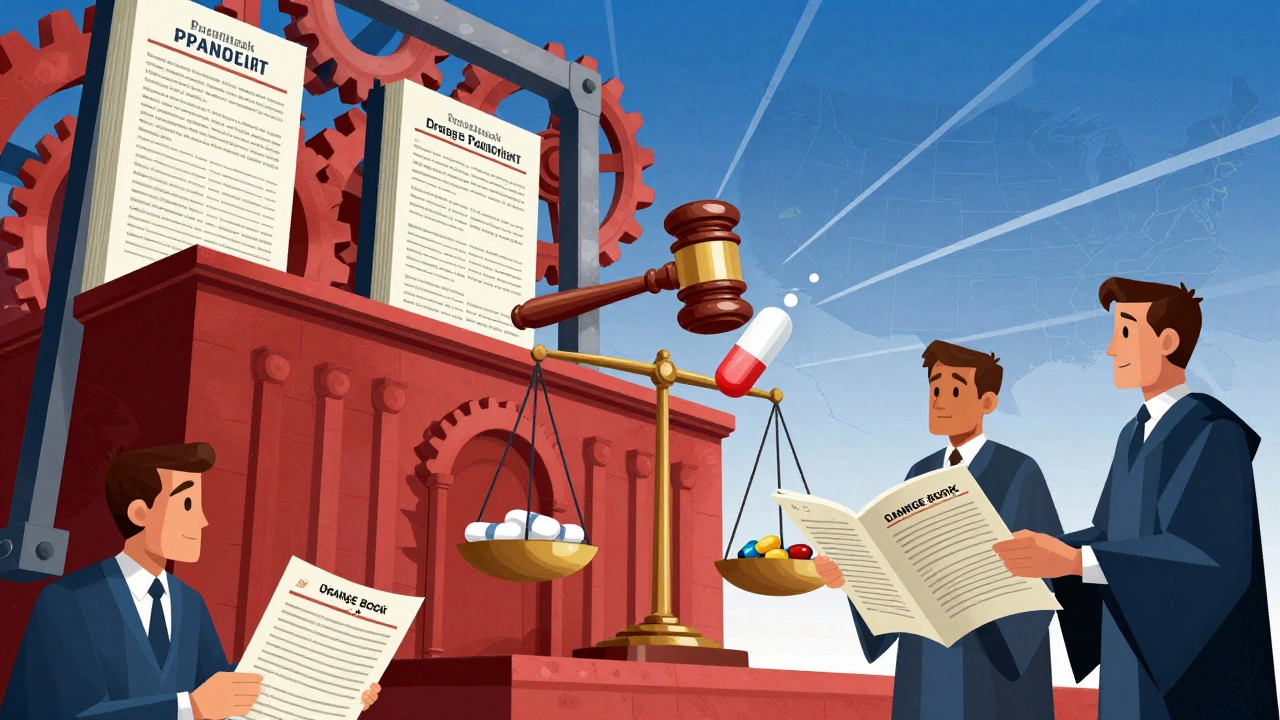
When a pharmaceutical company patents a new drug, patent jurisdiction, the legal territory where a patent is valid and enforceable. It's not just a paperwork detail—it decides who can make the drug, where it’s sold, and how soon cheaper versions become available. A patent filed in the U.S. doesn’t automatically protect that drug in India or Brazil. Each country has its own rules, courts, and timelines for approving or rejecting patent claims. That’s why a drug might still be under patent in the U.S. but already available as a generic in Canada or South Africa.
Generic drug substitution, the process where pharmacists swap brand-name drugs for cheaper versions. It’s a direct result of patent jurisdiction. In some states, pharmacists can switch brands without asking you—unless the patent is still active or the doctor specifically says "do not substitute." But if the patent expires in one country but not another, that’s where legal gray areas pop up. For example, a drug might be off-patent in the U.S. after 20 years, but still protected in Germany for another year. That’s why you might see the same medication priced differently across borders.
FDA, the U.S. agency that approves drugs and oversees patent exclusivity periods. The FDA doesn’t grant patents—that’s the job of the U.S. Patent and Trademark Office. But it does control when generics can enter the market by recognizing patent expiration dates, exclusivity windows, and legal challenges. If a generic maker files a patent challenge, the FDA can’t approve the drug until the court decides. That’s why some generic versions take years to appear, even after the patent technically expires.
Patent jurisdiction also affects who gets access to life-saving drugs. In low-income countries, local laws sometimes allow compulsory licensing—letting local companies produce generics even if the patent is still active elsewhere. That’s how HIV medications became affordable in Africa. But in places with strict patent enforcement, those same drugs stay out of reach for years.
And it’s not just about big pharma. Patent battles over small molecules—like the ones used in migraine meds or blood thinners—can delay cheaper options for years. You might be taking a drug that’s technically off-patent, but legal loopholes keep generics out. That’s why knowing where a patent stands isn’t just a legal issue—it’s a health issue.
Below, you’ll find real-world examples of how patent jurisdiction shapes your medication choices—from why your insulin costs more in one state than another, to how a court case in Texas can delay a generic version of your RA drug. These aren’t abstract legal concepts. They’re the hidden reasons behind your prescription price, your pharmacy’s stock, and sometimes, whether you can even get the medicine you need.