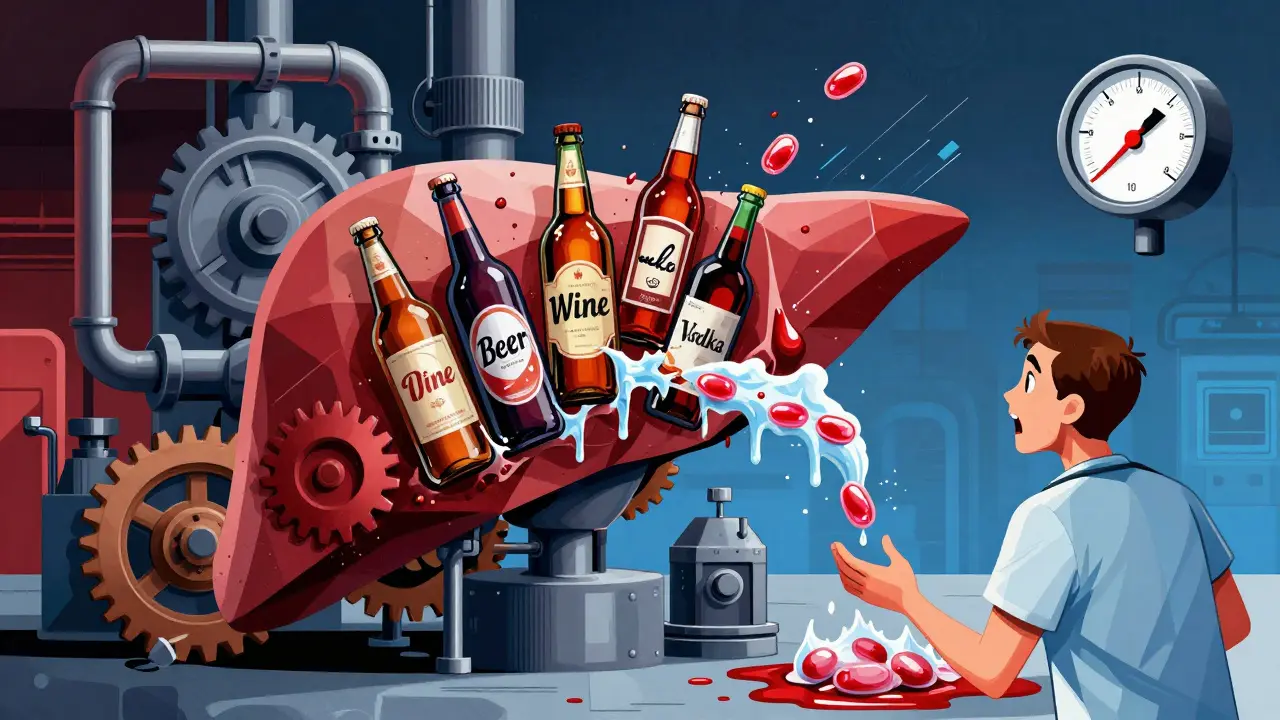
Drinking alcohol might seem harmless - a beer after work, a glass of wine with dinner. But if you’re on diabetes medication, that drink could send your blood sugar crashing overnight. It’s not just a myth. It’s a real, life-threatening risk that thousands of people with diabetes face every year - and many don’t even realize it until it’s too late.
Why Alcohol and Diabetes Meds Don’t Mix
Your liver is the main organ that keeps your blood sugar stable. When you’re not eating, it releases glucose to keep your energy levels steady. But when you drink alcohol, your liver prioritizes breaking down the alcohol instead. This shuts down its ability to make new glucose for hours. If you’re also taking insulin or sulfonylureas like glipizide or glyburide, your blood sugar can drop fast - and keep dropping. The American Diabetes Association (ADA) says alcohol can reduce blood glucose by 15-20 mg/dL within just 2-3 hours. That’s enough to push someone from a safe level of 120 mg/dL down to 100 mg/dL - and then lower still. And the danger doesn’t stop there. Alcohol also dulls your body’s warning signs. You might feel dizzy, sweaty, or shaky - classic signs of low blood sugar - but your brain thinks you’re just drunk. That’s how people end up passing out without anyone realizing they need help.Which Medications Carry the Highest Risk?
Not all diabetes drugs react the same way with alcohol. Some are far more dangerous than others.- Insulin: Even a small amount of alcohol can extend the risk of low blood sugar for up to 24 hours. This is especially risky at night. You might go to bed feeling fine, but wake up in the middle of the night with a blood sugar of 40 mg/dL.
- Sulfonylureas (glyburide, glipizide, gliclazide): These drugs force your pancreas to release more insulin. When alcohol blocks your liver’s glucose production, your body has no backup. Studies show this combo increases hypoglycemia risk by over 2 times.
- Metformin: While it doesn’t cause low blood sugar on its own, mixing it with alcohol raises the risk of lactic acidosis - a rare but deadly condition. Symptoms include deep muscle pain, fast heartbeat, nausea, and confusion. The FDA requires a boxed warning on metformin labels for this exact reason.
- Chlorpropamide: This older sulfonylurea can cause flushing, nausea, and rapid heartbeat when combined with alcohol - a reaction similar to disulfiram (the drug used to treat alcoholism). It’s rarely prescribed today, but if you’re still on it, avoid alcohol completely.
The Real Cost of a Night Out
It’s not just about how much you drink - it’s about what you drink and when. A mojito? That’s 24 grams of sugar. A glass of sweet wine? Up to 14 grams. A vodka soda with lime? Zero sugar. The difference isn’t just about calories - it’s about how fast your blood sugar spikes and then crashes. Sugary mixers make your blood sugar rise quickly, so you might take extra insulin. But when the alcohol kicks in 2-3 hours later, your liver stops making glucose. Now you’ve got insulin in your system with no fuel to burn. That’s a recipe for disaster. A 2023 study from Kaiser Permanente found that 38% of people with diabetes who had alcohol-related low blood sugar episodes didn’t recognize what was happening. They thought they were just drunk. One patient, 29, passed out after tequila shots and woke up in the ER with a blood sugar of 42 mg/dL. His friends thought he was partying too hard. He didn’t even know he had diabetes.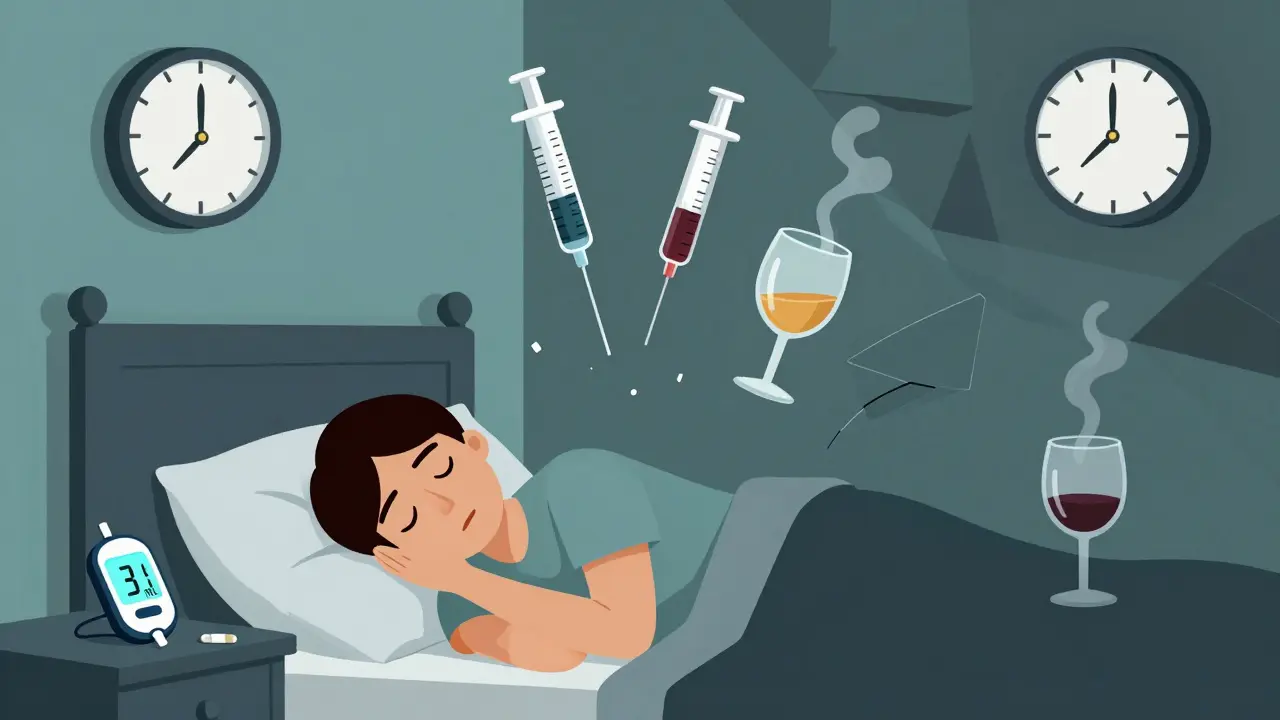
What You Need to Do - Step by Step
The ADA’s 2023 guidelines are clear: if you choose to drink, you must be smart about it. Here’s how to stay safe.- Never drink on an empty stomach. Always eat a meal with carbohydrates before drinking. A sandwich, rice, or pasta helps your liver hold onto glucose longer.
- Limit how much you drink. One drink per day for women, two for men. A standard drink is 12 oz beer, 5 oz wine, or 1.5 oz distilled spirits.
- Choose low-sugar drinks. Dry white wine, light beer, or spirits with soda water and lime are your best bets. Avoid sweet cocktails, dessert wines, and sugary mixers.
- Check your blood sugar before, during, and after. Test before you drink. Test again 2 hours later. Test before bed. If your level is below 100 mg/dL, eat a snack with complex carbs - like peanut butter on whole grain toast - to prevent nighttime lows.
- Wear your medical ID. If you pass out, paramedics need to know you have diabetes. Studies show wearing identification cuts emergency response time by nearly half.
- Tell someone. Make sure a friend or family member knows you have diabetes. Give them a quick rundown: "If I seem confused or pass out, check my blood sugar and give me juice or call 911."
What About "Sugar-Free" Alcoholic Drinks?
Just because a drink says "zero sugar" doesn’t mean it’s safe. The problem isn’t the sugar - it’s the alcohol. Even a vodka soda can trigger a drop in blood sugar because it shuts down your liver’s glucose production. The sugar-free label doesn’t change how alcohol affects your body. Many people think they’re safe because they’re avoiding carbs - but they’re still at high risk for hypoglycemia.What Happens If You Ignore the Warnings?
In 2023, alcohol-related hypoglycemia accounted for 12.7% of all emergency visits for low blood sugar in the U.S. That’s over 18,000 trips to the ER in one year. The cost? $417 million. Most of these cases were preventable. One patient, 54, had been on insulin for 12 years. He drank two beers every Friday night with his wife. He never tested his blood sugar after. One night, he woke up confused, shaking, and unable to speak. His wife called 911. He was found with a blood sugar of 31 mg/dL. He spent three days in the hospital. His doctor told him: "You got lucky. The next time, you might not wake up."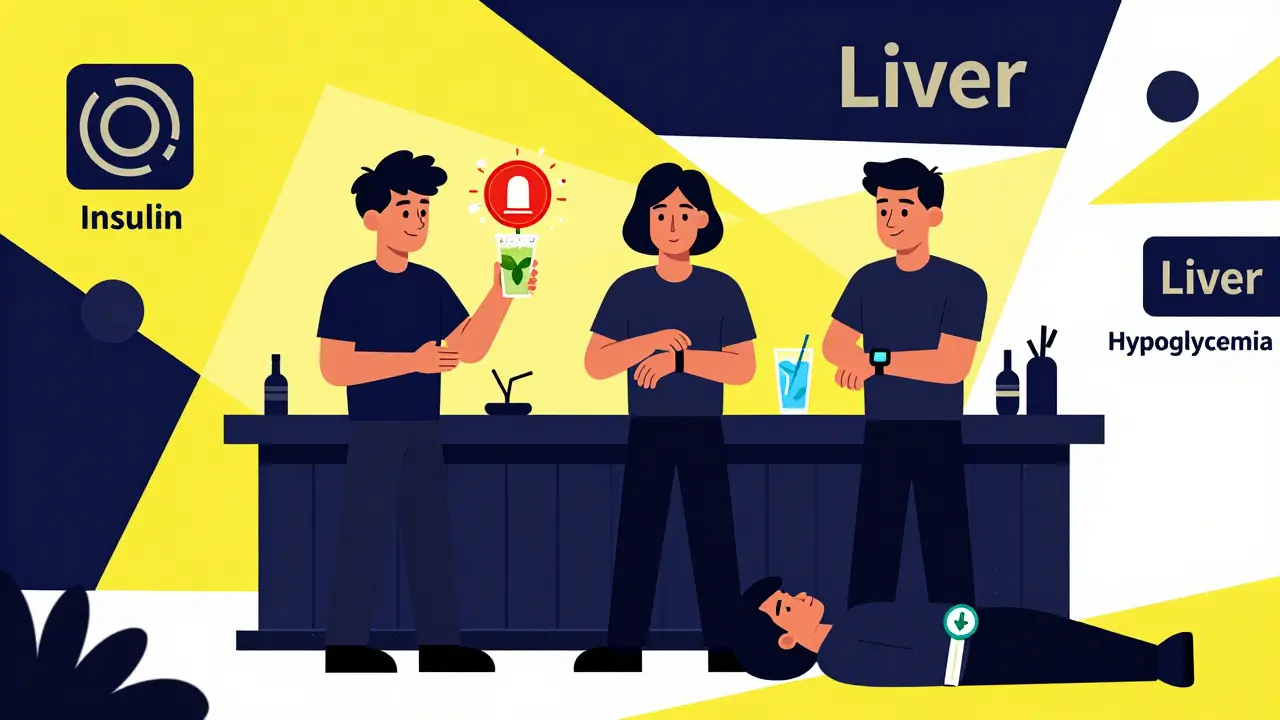
Is It Ever Safe to Drink?
Yes - but only if you’re informed and careful. The ADA doesn’t say "never." It says "be smart." If you’ve never had a low blood sugar episode, your liver works well, and you’re not on insulin or sulfonylureas, you might be able to drink occasionally with precautions. But if you’ve had a recent low, your liver is damaged, or you’re on insulin - skip it. The risk isn’t worth it.What’s New in 2025?
New technology is helping. Dexcom’s G7 continuous glucose monitor, released in late 2023, now lets you log alcohol consumption. It alerts you if your blood sugar is trending low after a drink. Some apps are even using AI to predict your risk based on your medication, activity, and past patterns. But tech doesn’t replace awareness. You still need to know the signs.Research in early 2024 showed that drinking alcohol within 4 hours after dinner - instead of late at night - reduced nighttime lows by 31%. Why? Because your liver still has food to work with. Timing matters.
Final Thought
Alcohol doesn’t care if you’re managing your diabetes. It doesn’t care if you’re careful. It just does what it does: shuts down your liver’s glucose production. If you’re on the wrong meds, that’s all it takes to put you in danger. No one wants to wake up in the ER because they had one drink. But it happens - more often than you think.Know your meds. Know your limits. Test your numbers. And if you’re unsure - don’t drink. Your body will thank you.
Can I drink alcohol if I have type 2 diabetes and take metformin?
You can, but with major caution. Metformin itself doesn’t cause low blood sugar, but alcohol increases the risk of lactic acidosis - a rare but serious condition. Symptoms include muscle pain, fast heartbeat, nausea, and confusion. The FDA warns that combining alcohol with metformin raises this risk by 5.7 times. If you drink, do it rarely, with food, and avoid binge drinking. If you have liver or kidney issues, skip alcohol entirely.
Why does alcohol cause low blood sugar hours after drinking?
Alcohol forces your liver to focus on breaking it down instead of making glucose. This process can last 8-24 hours, depending on how much you drank and your liver function. If you’re on insulin or sulfonylureas, your body keeps pushing glucose down - but your liver can’t make more. So your blood sugar drops slowly over time, often while you’re asleep. That’s why checking your blood sugar before bed is critical.
Are some types of alcohol safer than others for people with diabetes?
Yes. Dry wines (under 1 gram of sugar per 5 oz), light beers (under 5 grams carbs per 12 oz), and distilled spirits (vodka, gin, whiskey) mixed with soda water or diet tonic are lowest risk. Avoid sweet cocktails, dessert wines, and sugary mixers like juice or soda - they spike blood sugar first, then crash it later. A mojito has 24 grams of sugar; a vodka soda has zero.
Can alcohol make my diabetes medications less effective?
It doesn’t make them less effective - it makes them more dangerous. Alcohol doesn’t reduce how well insulin or sulfonylureas work. Instead, it blocks your liver’s ability to protect you from low blood sugar. So your medication keeps lowering glucose, but your body can’t fight back. That’s why the risk of hypoglycemia increases - not because the drug stops working, but because your safety net disappears.
I didn’t know alcohol could cause low blood sugar. Is this common?
Yes - and it’s dangerously under-discussed. A 2024 survey from Diabetes Daily found 73% of people with diabetes had at least one alcohol-related low blood sugar episode in the past year. Many didn’t connect the two. Even healthcare providers sometimes overlook it. The American Association of Diabetes Educators found that 61% of endocrinologists say patients underestimate how long the risk lasts - sometimes for up to 24 hours.


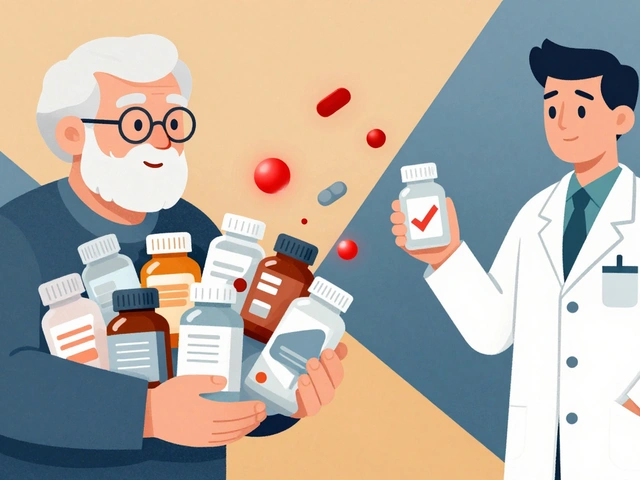

I had a beer after dinner last night and woke up at 3 AM sweating like I was in a sauna 😅 Turns out my BG was 38. My wife almost called 911. Don't be like me. Test before bed. 🍻⚠️
March 7Aaron Pace