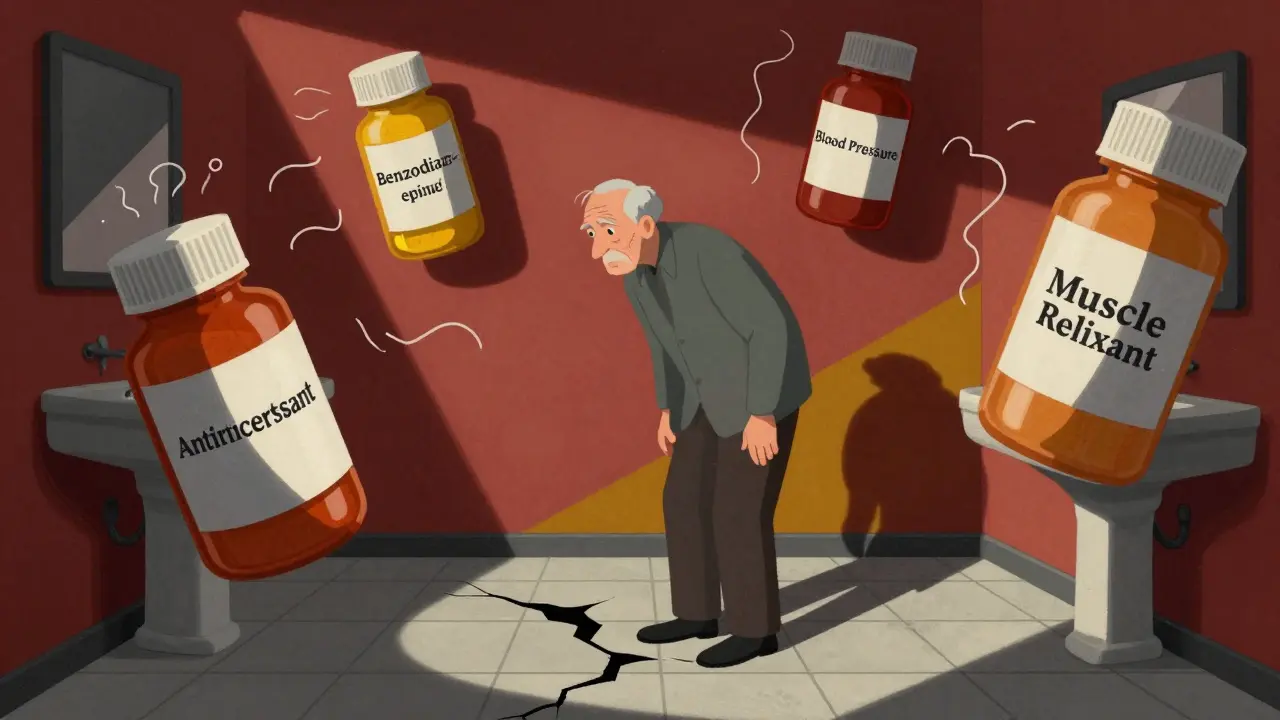
Every year, more than 1 in 4 adults over 65 falls. Many of these falls aren’t bad luck-they’re caused by medications. Not the ones you take for pain or heart disease, but the ones you’ve been on for years without thinking twice. Dizziness. Confusion. Weakness. These aren’t just side effects-they’re warning signs that a pill might be setting you up for a broken hip, a hospital stay, or worse.
Why Medications Make Seniors Fall
Falls don’t happen because someone’s just getting older. They happen because certain drugs mess with the body’s balance system. The brain, inner ear, heart, and muscles all need to work together to keep you steady. When a medication throws off one of those systems, even slightly, you’re at risk.The biggest offenders are drugs that slow down your central nervous system. They make you drowsy, blur your vision, or drop your blood pressure when you stand up. That sudden drop-called orthostatic hypotension-is one of the most common reasons seniors fall. It’s not just from standing too fast. It’s from a pill that’s been quietly weakening your body for months.
And here’s the scary part: it’s rarely just one drug. Most older adults take four or more prescriptions. When you stack them up, the effects multiply. A sleep aid plus an antidepressant plus a blood pressure pill? That’s not just a routine. That’s a recipe for a fall.
Top 5 Medication Categories That Raise Fall Risk
- Antidepressants-especially SSRIs like sertraline and tricyclics like amitriptyline. These don’t just lift your mood-they lower your blood pressure and slow your reaction time. Studies show they double the risk of falling in seniors.
- Benzodiazepines-drugs like diazepam (Valium) and lorazepam (Ativan). Used for anxiety or sleep, they cause dizziness, confusion, and muscle weakness. Long-acting versions are especially dangerous. Even short-acting ones aren’t safe for long-term use in older adults.
- Antipsychotics-used for dementia-related behavior, but often prescribed off-label. Medications like risperidone and quetiapine can cause sedation, stiffness, and tremors. They’re linked to a 40% higher fall risk, even at low doses.
- Blood pressure meds-ACE inhibitors, beta-blockers, and diuretics. These are essential for heart health, but if the dose is too high or changed too quickly, they can cause your blood pressure to crash when you stand. The risk spikes during the first two weeks after a dose change.
- Antihistamines and muscle relaxants-over-the-counter sleep aids like diphenhydramine (Benadryl) and muscle relaxers like cyclobenzaprine. These have strong anticholinergic effects, which fog your thinking and dry out your mouth, eyes, and throat. They’re common in nighttime cold meds and allergy pills, and many seniors don’t realize they’re taking them.
The Hidden Danger: Polypharmacy
Taking five or more medications is called polypharmacy. It’s not a diagnosis-it’s a red flag. A 2023 study in JAMA Health Forum found that 65% to 93% of seniors hospitalized after a fall were taking at least one medication known to increase fall risk. Nearly half were taking three or more.The problem isn’t just the number of pills. It’s how they interact. Opioids and benzodiazepines together? That combination increases fall risk by 150% compared to either drug alone. Antidepressants and antihistamines? That’s a double hit on your balance system.
And here’s what most doctors don’t tell you: many of these drugs were prescribed years ago and never reviewed. A senior might have been put on a sleep aid after a family death, or an antidepressant after surgery. Now, five years later, they’re still taking it-even if their mood’s fine and they sleep through the night.
What Experts Say: The Beers Criteria
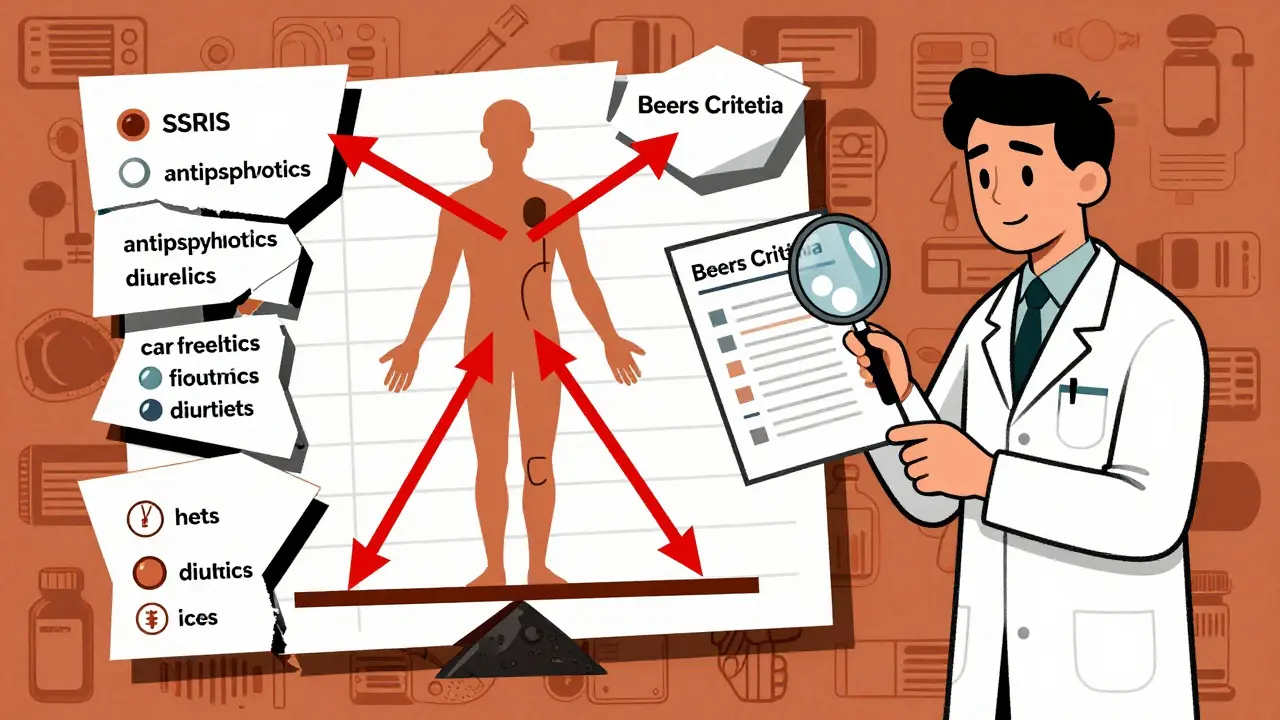
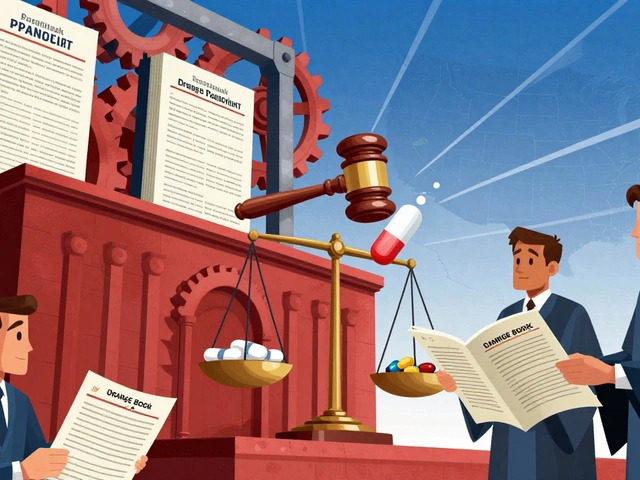
The American Geriatrics Society (AGS) has been warning doctors for over 30 years. Their Beers Criteria, updated every two years, is the gold standard for identifying risky medications in older adults. The 2023 update lists dozens of drugs that should be avoided or used with extreme caution.Here’s what the Beers Criteria says clearly:
- Avoid benzodiazepines for insomnia or anxiety in seniors. There are safer alternatives.
- Don’t prescribe tricyclic antidepressants like amitriptyline. SSRIs are better-but still carry risk.
- Antipsychotics should only be used for psychosis, not behavioral issues in dementia, and only as a last resort.
- First-generation antihistamines like diphenhydramine are a no-go. Use non-sedating options like loratadine instead.
The guidelines aren’t suggestions. They’re based on decades of data showing these drugs cause more harm than good in older adults. Yet, many are still prescribed routinely.
How to Protect Yourself or a Loved One
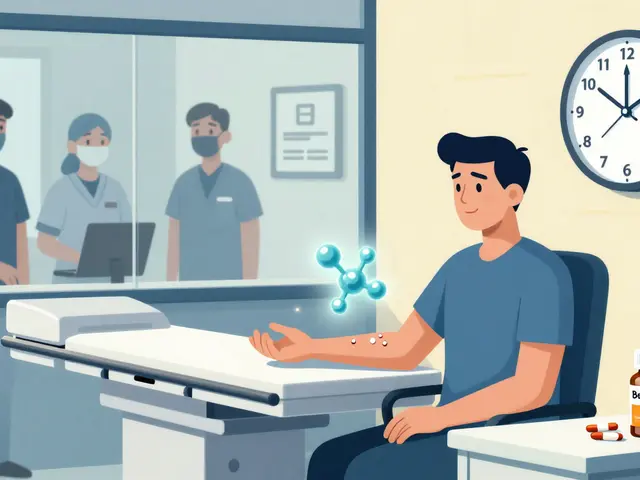
You don’t have to live in fear. You can take control.Step 1: Get a full medication review. Ask your doctor or pharmacist to go through every pill, patch, and OTC medicine you take. Bring the actual bottles. Don’t rely on memory.
Step 2: Ask these three questions for each drug:
- Why am I taking this?
- Is it still necessary?
- Could it be making me dizzy or unsteady?
Step 3: Watch for changes after a new prescription. If you start a new drug and feel foggy, lightheaded, or wobbly, don’t wait. Call your doctor. The first two weeks are the riskiest.
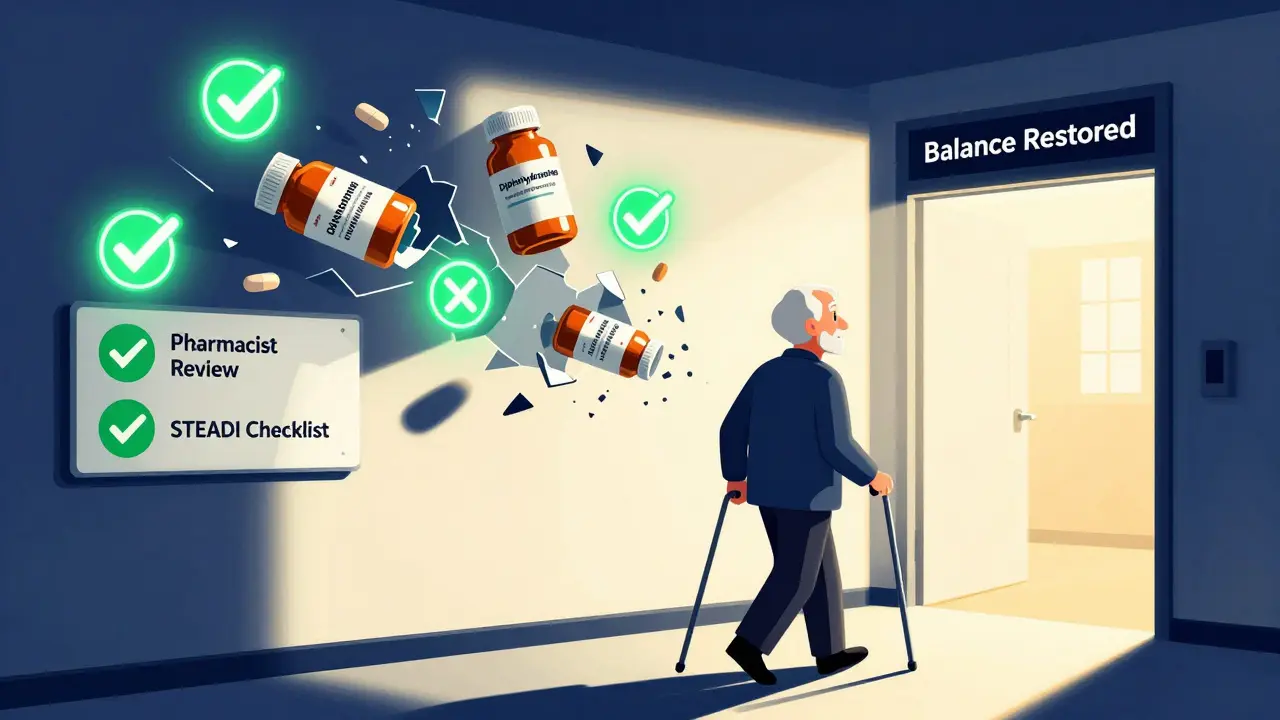
Step 4: Use the CDC’s STEADI checklist. It’s free. It’s simple. It asks you about balance, walking, medications, and vision. Many clinics use it. Ask if yours does.
Step 5: Consider a pharmacist-led review. Programs like HomeMeds have shown that when a pharmacist reviews a senior’s meds, fall rates drop by 22%. Pharmacists spot interactions doctors miss.
What Happens When You Stop the Wrong Meds
Some people worry that stopping a medication will make things worse. But the opposite is often true.A 2022 study in JAMA Internal Medicine found that when doctors carefully reduced or eliminated fall-risk drugs, fall rates dropped by 20% to 30%. One 82-year-old woman stopped her nighttime antihistamine and benzodiazepine. Within a week, her dizziness vanished. She started walking to the mailbox again. She didn’t need a cane.
Deprescribing isn’t about cutting pills. It’s about giving your body back its natural balance. Many seniors feel more alert, sleep better, and have more energy once the heavy drugs are gone.
But don’t quit cold turkey. Work with your doctor. Some meds need to be tapered slowly. Others can be stopped quickly. Your pharmacist can help you do it safely.
The Bigger Picture: Why This Keeps Happening
You might wonder: if the risks are so clear, why are these drugs still so common?Because it’s easier to write a prescription than to have a hard conversation. It’s easier to give a sleep aid than to help someone find non-drug ways to sleep. It’s easier to prescribe an antipsychotic for agitation than to restructure a care environment.
And many seniors don’t know to speak up. They think dizziness is just part of aging. They don’t connect their fall to a pill they’ve been taking since 2015.
But awareness is growing. By 2025, 75% of academic medical centers plan to have formal deprescribing protocols in place. That’s up from 35% in 2022. More doctors are learning to ask the right questions. More pharmacies are offering free med reviews.
The change starts with you. If you’re over 65-or care for someone who is-ask the questions. Demand a review. Don’t accept dizziness as normal. Your balance is worth protecting.
Which medications are most likely to cause falls in seniors?
The top offenders include antidepressants (especially tricyclics and SSRIs), benzodiazepines like Valium and Xanax, antipsychotics such as risperidone, blood pressure medications like lisinopril and hydrochlorothiazide, and over-the-counter antihistamines like diphenhydramine (Benadryl). These drugs affect balance, blood pressure, and brain function, increasing fall risk by up to double in some cases.
Can stopping these medications really reduce falls?
Yes. Studies show that carefully reducing or stopping fall-risk-increasing medications can lower fall rates by 20% to 30%. One study found that pharmacist-led medication reviews reduced falls by 22%. The key is doing it safely-with medical supervision, not on your own.
What is polypharmacy, and why is it dangerous for seniors?
Polypharmacy means taking four or more medications at once. It’s dangerous because drugs interact. A blood pressure pill plus a sleep aid can cause a sudden drop in blood pressure when standing. Two drugs that are safe alone can become risky together. Over half of seniors over 65 take five or more prescriptions, making them far more likely to fall.
What is the Beers Criteria, and should I check it?
The Beers Criteria is a list of medications that experts say older adults should avoid or use with caution because they increase fall risk, confusion, or other side effects. It’s updated every two years by the American Geriatrics Society. If you’re over 65, it’s worth asking your doctor if any of your meds are on the list.
How can I get a medication review?
Ask your doctor or pharmacist for a full medication review. Bring all your pills, supplements, and OTC meds in a bag. Many pharmacies offer free reviews. Programs like HomeMeds, used by the National Council on Aging, have proven effective. The CDC’s STEADI toolkit also provides free resources for patients and providers.




I never thought my grandma's dizziness was from her meds. She's been on that Benadryl for years. Just last week she stopped it and started walking without her cane. Life changed.
January 21Jerry Rodrigues