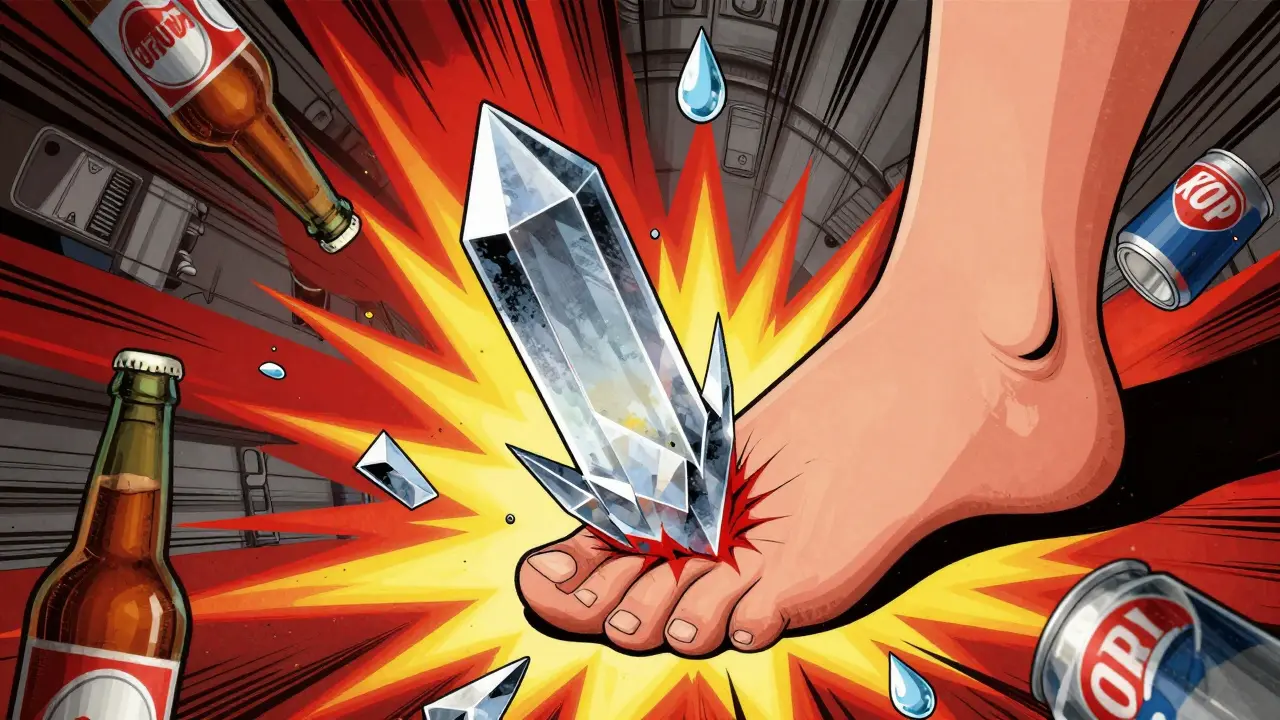
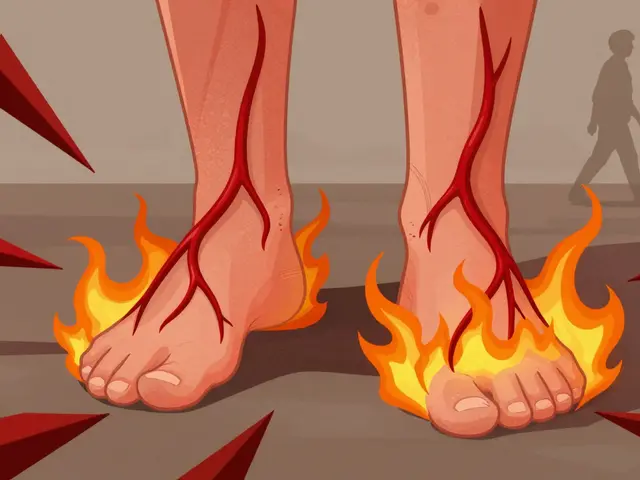
When your big toe swells up so badly you can’t even wear a sock, and the pain feels like someone’s crushing your joint with pliers-you’re not just having a bad day. You’re having a gout attack. It doesn’t come out of nowhere. It builds silently for months or years, hidden in your bloodstream as too much uric acid turns into sharp, needle-like crystals in your joints. These crystals don’t cause trouble until something shakes them loose. Then, your immune system goes into overdrive, and what follows is one of the most painful experiences in medicine.
What Exactly Is Uric Acid, and Why Does It Cause Pain?
Uric acid isn’t a toxin. It’s a natural byproduct of breaking down purines, which are found in your body’s cells and in certain foods. Most people handle it just fine. But if your kidneys can’t flush it out fast enough-or if your body makes too much of it-uric acid builds up. Once it hits 6.8 mg/dL, it starts to crystallize. That’s the tipping point. Think of it like salt in water: if you keep adding salt, eventually it won’t dissolve anymore. It settles out as crystals.
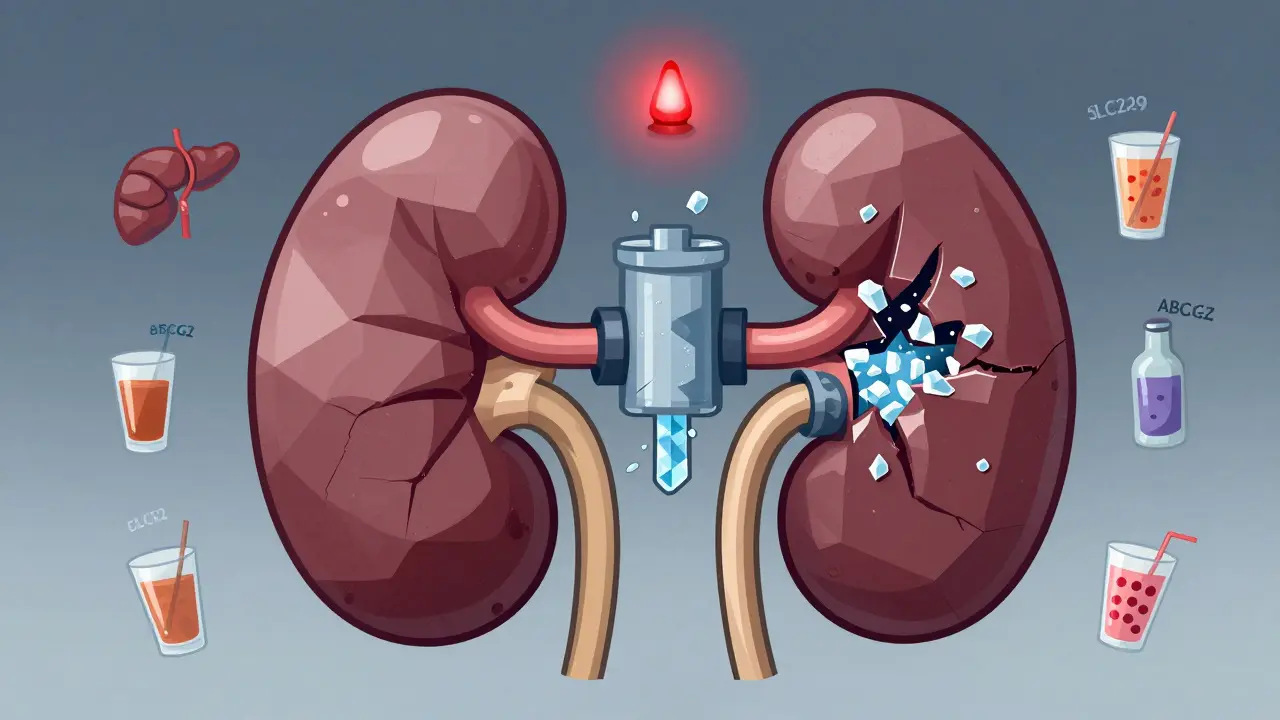
Here’s the twist: humans and great apes are among the only animals that can’t break down uric acid further. We lost the enzyme uricase millions of years ago. So we’re stuck with it. And if you’re one of the 90% of people whose gout comes from under-excretion (not overproduction), your kidneys are simply not doing their job. Genetic mutations in transporters like SLC2A9 and ABCG2 make this worse. Your body might be reabsorbing uric acid it should be peeing out.
What Triggers a Gout Attack?
A flare isn’t caused by eating shrimp last night. It’s caused by a sudden change. The crystals have been sitting there quietly for months. Then something shifts-fast.
- Dehydration: If you’re not drinking enough water, your urine output drops below 1.5 liters a day. That means uric acid concentrates in your blood and joints. One hot day without enough fluids? That’s enough.
- Alcohol, especially beer: Beer isn’t just high in purines-it’s loaded with ethanol, which blocks uric acid excretion. Studies show each 12-ounce daily serving increases gout risk by 49%. Spirits? Only 15%. Wine? Little to no effect.
- Fructose-sweetened drinks: Soda, sweetened iced tea, energy drinks. Fructose triggers ATP breakdown in your liver, which produces more uric acid. One study found a 20-30% spike after drinking just one sugary beverage.
- Starting or changing gout meds: This is the biggest surprise. If you begin allopurinol or febuxostat to lower uric acid, your body reacts. The crystals shift. Your immune system sees them as invaders. That’s why 30-40% of people get a flare in the first six months of treatment. It’s not the drug failing-it’s working.
- Joint injury or surgery: Even a minor stub or a fall can knock crystals loose. Trauma doesn’t cause gout-but it can trigger the first attack in someone who’s already sitting on a pile of crystals.
And here’s the myth busted: eating a steak doesn’t cause an attack. But if you’ve been drinking beer, eating organ meats, and skipping water for days? That combo? That’s the trigger.
How Gout Medications Actually Work (And Why Timing Matters)
There are two phases of treatment: stopping the pain now, and stopping the disease for good.
For the Acute Attack: Kill the Fire
When you’re in the middle of a flare, you need fast relief. Three options are backed by solid evidence:
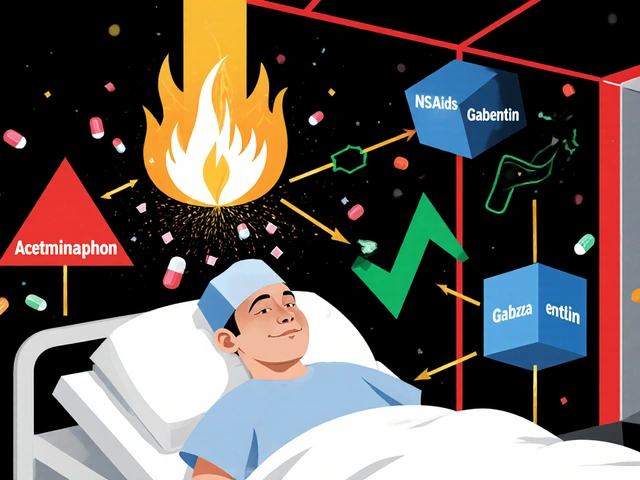
- NSAIDs (like indomethacin): 50 mg three times a day for 3-5 days. They reduce inflammation fast. But if you have kidney problems or stomach ulcers, skip this.
- Colchicine: 0.6 mg three times a day for a few days. It blocks the immune system’s response to crystals. Side effect? Diarrhea. It’s common. If you get it, lower the dose.
- Corticosteroids (like prednisone): 30-40 mg daily for 5 days, then taper. Great if NSAIDs and colchicine won’t work. Can be taken orally or injected directly into the joint.
Important: These don’t lower uric acid. They just calm the inflammation. Taking them won’t prevent your next attack.
For Long-Term Control: Lower the Level
This is where most people fail. They feel better after a flare and stop their meds. Big mistake.
Urate-lowering therapy isn’t optional if you’ve had more than one attack. The goal? Keep your blood uric acid below 6 mg/dL. For severe cases with tophi (those lumps under the skin), aim for 5 mg/dL.
- Allopurinol: First-line. Start at 100 mg daily. Increase by 100 mg every few weeks until you hit target. Most people need 300-600 mg. Some need up to 800 mg. It works by blocking uric acid production.
- Febuxostat: Alternative if allopurinol causes a reaction. 40-80 mg daily. Works the same way.
- Probenecid: Only if your kidneys are healthy (GFR >50 mL/min). It helps your kidneys flush out uric acid. Not for people with kidney disease.
Here’s the key: you must take these every day. If you stop, your uric acid rebounds in 2-4 weeks. The crystals come back. The attacks return.
The Hidden Rule: Prophylaxis During Treatment
If you start allopurinol or febuxostat, you’re almost guaranteed a flare in the first six months. That’s not a side effect-it’s part of the process. The solution? Low-dose colchicine (0.6 mg once or twice daily) from day one.
Studies show this cuts flare frequency by 50-75%. The 2007 CONFIRMS trial proved it. You’re not treating the attack-you’re preventing the reaction to the treatment. This isn’t optional. It’s essential.
Diet and Lifestyle: What Actually Helps
You don’t need to become a vegan. But you do need to make smart changes.
- Drink water: At least 2 liters a day. More if you’re active or it’s hot. Hydration = less concentrated uric acid.
- Limit beer: Even one 12-ounce serving daily increases risk. Switch to wine or skip alcohol.
- Avoid organ meats: Liver, kidney, sweetbreads-these have 300-500 mg of purines per 3-ounce serving. That’s a lot.
- Choose low-fat dairy: One daily serving (milk, yogurt) reduces gout risk by 43%. Why? It helps your kidneys excrete uric acid.
- Cut out sugary drinks: Soda, energy drinks, sweetened coffee. They spike uric acid fast.
And no, cherry juice doesn’t cure gout. It might help a little, but it’s not a substitute for medication.
What Happens If You Ignore It?
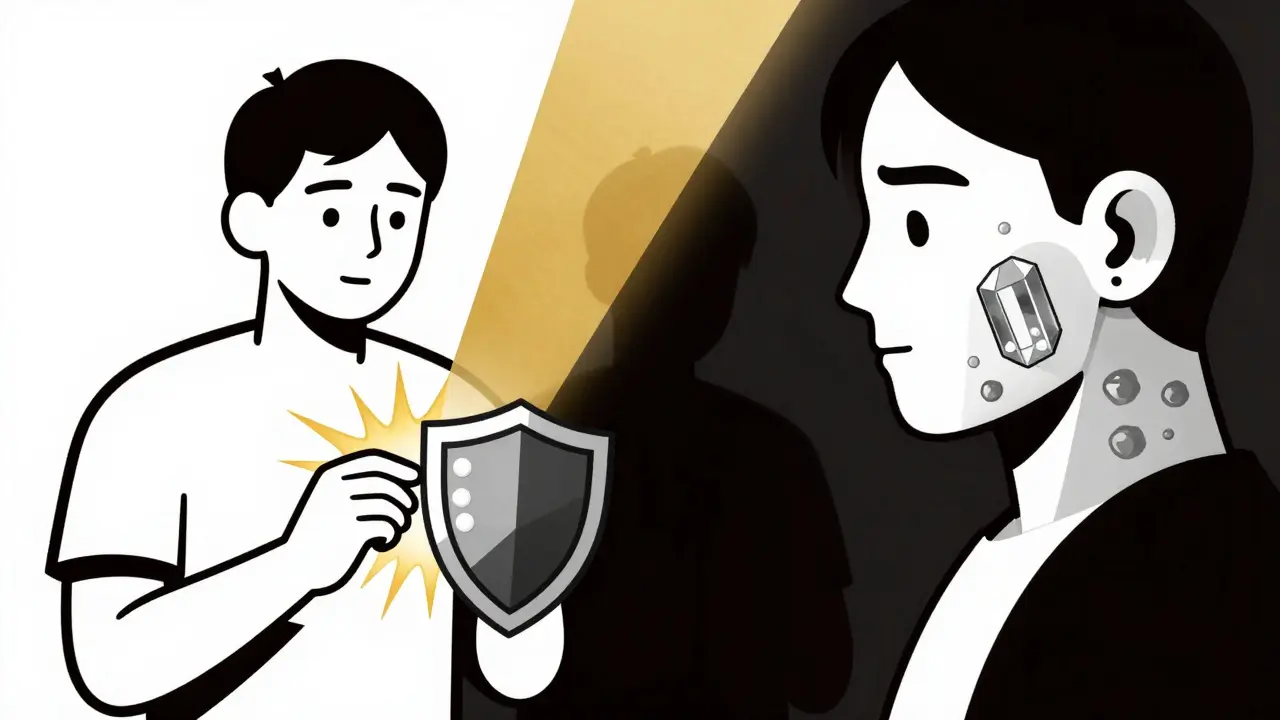
Gout isn’t just a bad toe. Left untreated, uric acid crystals form tophi-chalky lumps under the skin, around joints, even in the ears. These can destroy cartilage and bone. They can get infected. They can rupture. And once they form, you need to keep your uric acid below 5 mg/dL for at least a year to dissolve them.
Research from the 2023 American College of Rheumatology meeting shows that if you maintain uric acid below 5 mg/dL for 12 months, 70% of people with tophi see them completely disappear. At 6 mg/dL? Only 30% do.
Long-term, uncontrolled gout increases your risk of kidney disease, heart attack, and stroke. It’s not just pain. It’s systemic damage.
Common Mistakes and How to Avoid Them
- Stopping allopurinol during a flare: This is the #1 mistake. You’re not supposed to. Keep taking it. Use colchicine or NSAIDs for the flare instead.
- Thinking "I feel fine, so I’m cured": Gout is a chronic disease. Like high blood pressure. You don’t stop meds when your BP is normal. Same here.
- Ignoring kidney function: If your GFR drops below 60 mL/min, you need to adjust doses. Some meds can harm your kidneys if not dosed right.
- Not monitoring uric acid: Get your level checked every 2-5 weeks during dose changes. Then every 6 months. If you don’t measure it, you can’t control it.
The Future of Gout Treatment
There’s new hope. Researchers are testing drugs that block the NLRP3 inflammasome-the exact immune switch that turns on gout inflammation. Early trials with dapansutrile show a 40% reduction in flare duration. This could be the first treatment that stops the inflammation at its source, not just the symptoms.
Another area? Gut health. Early studies suggest certain probiotics may help break down purines in the gut, lowering uric acid by 10-15%. It’s not ready for prime time, but it’s a sign we’re moving beyond just pills and diet.
One thing is clear: gout is no longer just a "rich man’s disease." It’s a metabolic condition tied to obesity, diabetes, and poor hydration. And it’s entirely manageable-if you treat it right, consistently, and for life.



It’s wild how evolution just… gave up on uricase. Like, we’re the only primates stuck with this biological glitch, and now it’s causing people to scream because they drank a beer after a long day of dehydration. It’s not just a disease-it’s a monument to our evolutionary laziness. We optimized for energy storage, survival in famine, and now we’re paying for it with toe pain. The fact that we can’t break down uric acid anymore feels like nature’s passive-aggressive joke. We were meant to be efficient, but instead we’re just… broken in a very specific, painful way. And yet, here we are, medicating it, managing it, living with it. Maybe the real lesson isn’t about diet or drugs-it’s about accepting that biology doesn’t care if you’re modern. It just remembers what it forgot to fix.
March 22Natali Shevchenko