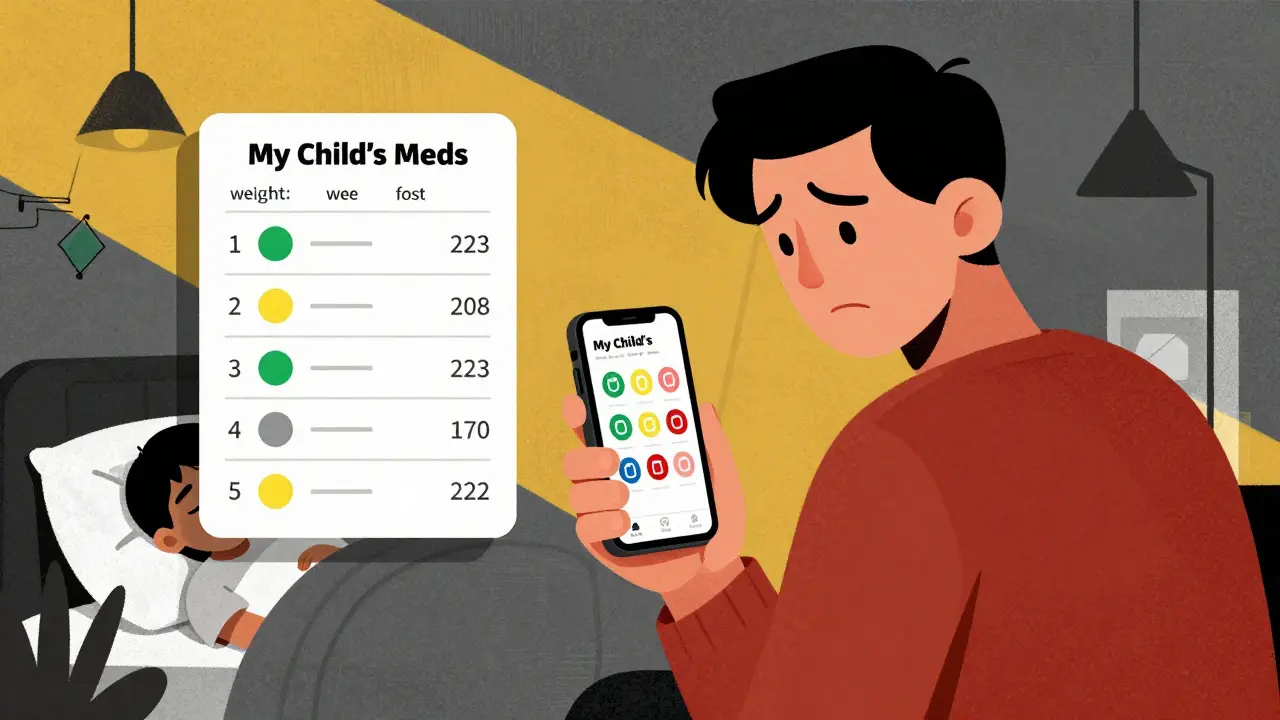
Getting the right dose of medicine for a child isn’t just about reading the label. It’s about math, timing, and precision - and one mistake can be dangerous. Kids don’t just get smaller versions of adult pills. Their bodies process drugs differently, and even a small miscalculation can lead to serious harm. That’s why tracking pediatric doses with apps and dosing charts has become a necessity, not a luxury. Whether you’re a parent managing your child’s asthma inhaler or a nurse rushing through an emergency, the right tool can mean the difference between safety and crisis.
Why Pediatric Dosing Is So Tricky
Adult medications are often dosed by pill count or fixed amounts. Pediatric dosing? It’s almost always based on weight - in kilograms. That means if you get the weight wrong, or mix up pounds and kilograms, the dose can be off by hundreds of percent. A 2022 study in Pediatric Emergency Care found that manual calculations took an average of 18.7 seconds and had a 12.3% error rate. In a real emergency, those seconds and mistakes matter. The Institute for Safe Medication Practices says pediatric medication errors happen up to three times more often than in adults. And it’s not just hospitals. Most errors happen at home, where parents are juggling schedules, multiple kids, and confusing instructions.
Take ibuprofen for fever. The standard dose is 10 mg per kilogram of body weight. If your child weighs 15 kg, that’s 150 mg. But if you think they weigh 15 pounds - and don’t convert - you’d give them 450 mg. That’s a 300% overdose. That’s not hypothetical. A 2024 case in the Journal of Pediatric Pharmacology and Therapeutics documented exactly that happening because a parent used an unvalidated app and entered weight in pounds instead of kilograms.
Clinician Tools: What Hospitals Use
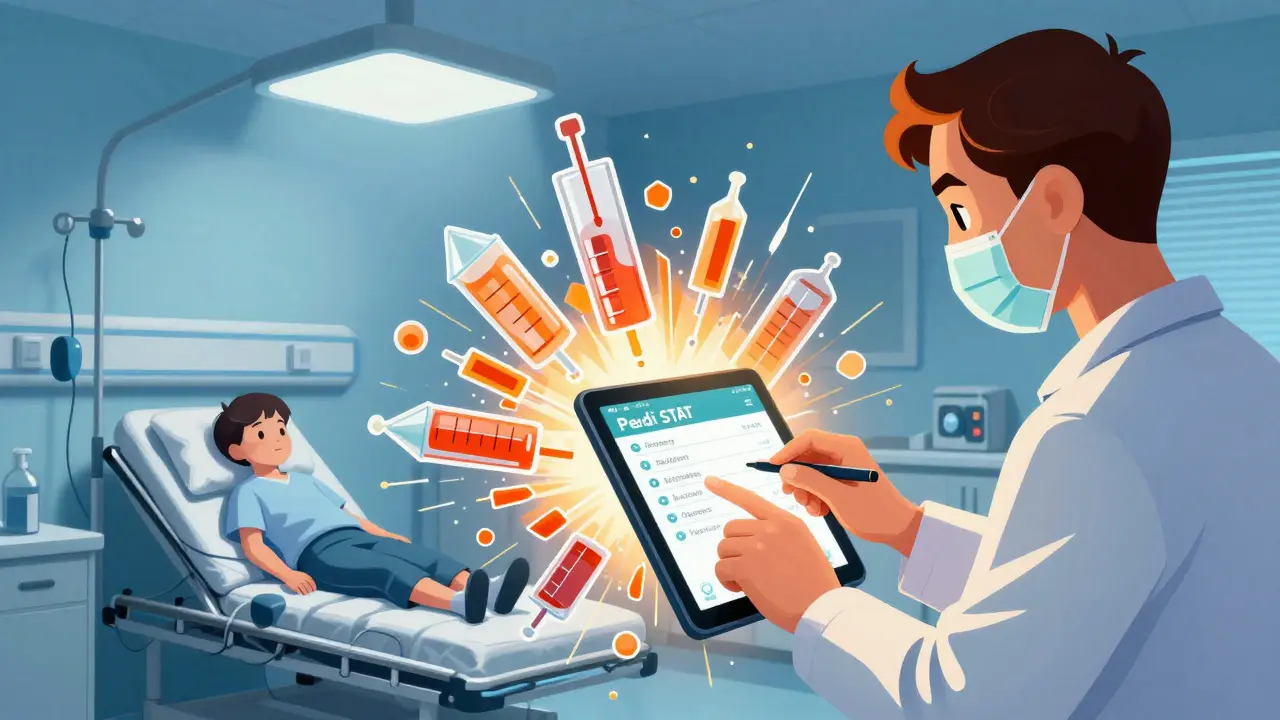
Hospitals and emergency rooms rely on professional-grade apps built for speed and accuracy. The most widely used is Pedi STAT a mobile application designed for emergency pediatric care that automatically calculates drug doses based on patient weight and provides real-time guidance for over 200 medications. Launched in 2009 by Connecticut Children’s Medical Center, it’s now in version 4.2.1 and used in over 89% of U.S. children’s hospitals. Its one-touch weight entry lets providers type in a number and choose kg or lb - the app converts it instantly. Within three seconds, it gives you the correct dose for epinephrine, albuterol, antibiotics, and more.
Another staple is Epocrates a clinical decision support tool with a database of over 4,500 medications, including pediatric dosing, drug interactions, and allergy alerts. It’s been around since 1998 and has a massive user base. The free version covers basics, but the $175/year Plus subscription adds advanced features like automatic interaction checks across 35,000+ drug combinations. It’s not just for kids - it’s used by doctors across specialties - but its pediatric module is one of the most reliable.
Then there’s PedsGuide a comprehensive pediatric reference app developed by Children’s Mercy Kansas City that provides dosing guidelines for over 600 medications and requires institutional licensing for use. It’s the gold standard for detailed reference, but it’s not meant for parents. It’s dense, clinical, and requires hospital login. It’s also FDA-cleared as a Class II medical device - meaning its calculations are legally validated for clinical use.
Parent Apps: What Works at Home
At home, parents need simplicity, reminders, and safety nets - not medical jargon. The standout here is My Child’s Meds a parent-focused medication tracker developed with input from the Royal College of Paediatrics and Child Health that features calendar reminders, visual dose tracking, and double-dose prevention. It’s iOS-only, free, and designed with input from pediatric pharmacists and charities like WellChild. Parents love its color-coded icons: green for given, yellow for upcoming, red for missed. It won’t calculate a dose for you - but it will remind you when to give it, and it won’t let you enter the same dose twice in a 4-hour window.
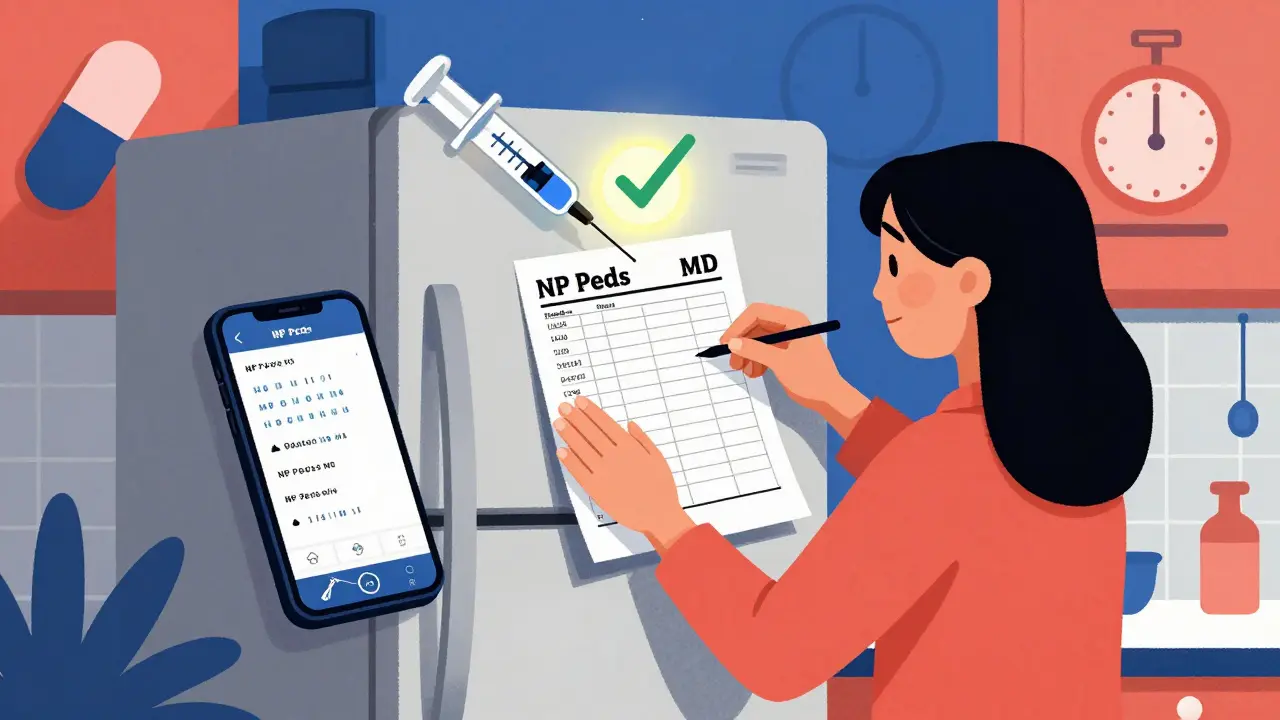
Another useful tool is NP Peds MD a dosing chart app developed by Northpoint Pediatrics that provides pediatrician-approved weight-based tables for common over-the-counter medications like acetaminophen and ibuprofen. It doesn’t have alarms or logs. But it has clean, printable charts that show exactly how much to give based on weight ranges. In a 2023 Consumer Reports test, parents using NP Peds MD’s charts got the dose right 78% of the time - compared to just 52% using paper handouts.
These apps are lifesavers. One mom, Sarah K., wrote in the App Store: “This app saved us from a potential overdose when my toddler’s fever reducer schedule got confusing during night feedings.” That’s not marketing - that’s real.
The Big Problem: No Bridge Between Hospital and Home
Here’s the ugly truth: the tools doctors use and the tools parents use don’t talk to each other. A child gets discharged from the hospital with a handwritten dosing sheet. The parent downloads My Child’s Meds. The hospital uses Pedi STAT. The pharmacy uses a different system. No one shares data. A 2023 American Academy of Pediatrics survey found that 87% of medication errors in kids happened during transitions - like going from hospital to home. Parents reported spending hours trying to match hospital instructions to their app. One mom told us she spent 45 minutes calling the pharmacy just to confirm if “5 mL twice daily” meant the same thing as what the nurse wrote.
Even worse, many apps on the Google Play Store are unregulated. A 2024 study found that 78% of consumer apps claiming to help with pediatric dosing couldn’t actually calculate doses. They just stored notes. One app called Child Medical History costs $3.99 and lets you log meds - but if you type in “15 lb” as weight, it doesn’t convert it. It just stores it. That’s not helpful. That’s risky.
Best Practices: How to Use These Tools Safely
Even the best app can’t fix bad habits. Here’s what actually works:
- Always check the unit. Did you enter weight in kg or lb? If you’re unsure, ask your pharmacist. Most apps let you toggle, but you have to be intentional.
- Double-check the math. If the app says 3.5 mL, grab a syringe and measure it. Then check your dosing chart. Don’t assume.
- Keep a paper backup. Power outages, app crashes, dead phones - they happen. Keep a printed copy of your child’s dosing schedule taped to the fridge.
- Reconcile weekly. Every Sunday, compare what’s in your app with what your pharmacy says you picked up. If you were supposed to get 100 mL but only got 80, find out why.
- Never trust an app without clinical backing. If it’s not developed with a hospital, pharmacy, or pediatric group - skip it.
The Children’s Hospital of Philadelphia recommends parents do a “weekly reconciliation” with their pharmacy. It sounds tedious, but it catches 90% of discrepancies before they become problems.
What’s Next: Smart Pills, AI, and Better Integration
The future is coming fast. Pedi STAT is testing AI that predicts when a dose might be wrong based on past patterns. Boston Children’s Hospital is trialing smart pill dispensers that sync with My Child’s Meds - so when the app says “give 5 mL,” the dispenser releases exactly that. The Healthcare Information and Management Systems Society (HIMSS) is building a standard protocol to let hospital systems share dosing data with parent apps. It’s expected to launch in late 2025.
But until then, the best tool is still the one you use correctly. Apps and charts aren’t magic. They’re tools - and like a stethoscope or a thermometer, they only help if you know how to use them.
Can I use a regular medication app for my child?
No. Most general medication apps aren’t built for children. Pediatric dosing depends on weight, age, and developmental stage - not just the drug. Apps designed for adults often don’t include pediatric-specific guidelines or weight-based calculations. Always use an app developed specifically for children, preferably one backed by a hospital or pediatric pharmacy group.
Is it safe to rely only on an app for dosing?
No. Apps reduce errors, but they don’t eliminate them. Always cross-check the dose with a printed dosing chart or your pharmacist. A 2023 simulation study found that 22% of medical residents couldn’t manually calculate a dose if their app failed. That’s why experts say: use the app, but know the math behind it.
What’s the difference between Pedi STAT and My Child’s Meds?
Pedi STAT is for clinicians - it’s fast, complex, and designed for emergencies. It calculates doses for over 200 medications and integrates with hospital systems. My Child’s Meds is for parents - it’s simple, visual, and focused on reminders and preventing double dosing. One helps you give a dose in 3 seconds; the other helps you remember to give it on time.
Do I need to pay for a pediatric dosing app?
Not necessarily. My Child’s Meds and NP Peds MD are free and highly effective for home use. Professional tools like Epocrates and Pedi STAT have free versions, but full features require subscriptions. For most parents, free apps with clinical backing are enough. Avoid paid apps that don’t explain who developed them or how they calculate doses.
How do I know if a dosing chart is trustworthy?
Look for the source. Trustworthy charts come from hospitals (like Children’s Mercy or Boston Children’s), professional organizations (like the Royal College of Paediatrics), or pharmacy groups. If the chart is from a random website, a blog, or an app without a clear developer name - don’t use it. The American Academy of Pediatrics warns against unvalidated tools that lack clinical oversight.
Final Thoughts
Tracking your child’s medication isn’t about being tech-savvy. It’s about being careful. Apps and charts don’t replace your judgment - they support it. The right tool can cut your risk of error in half. But only if you use it right. Always verify weight. Always check units. Always have a backup. And if something feels off - call your doctor. No app can replace a human who cares enough to ask, “Are you sure?”




I swear by My Child’s Meds. My 2-year-old has asthma and I used to panic every time her inhaler schedule got messed up. Now? Green dots, chill vibes, and zero double-dosing. Even my partner uses it now and he’s a tech skeptic. Free, simple, and actually saved us from a hospital trip last winter.
February 28PS: Always double-check the weight unit. I once typed 14 lb instead of 14 kg. The app flagged it. Thank god.
Aisling Maguire