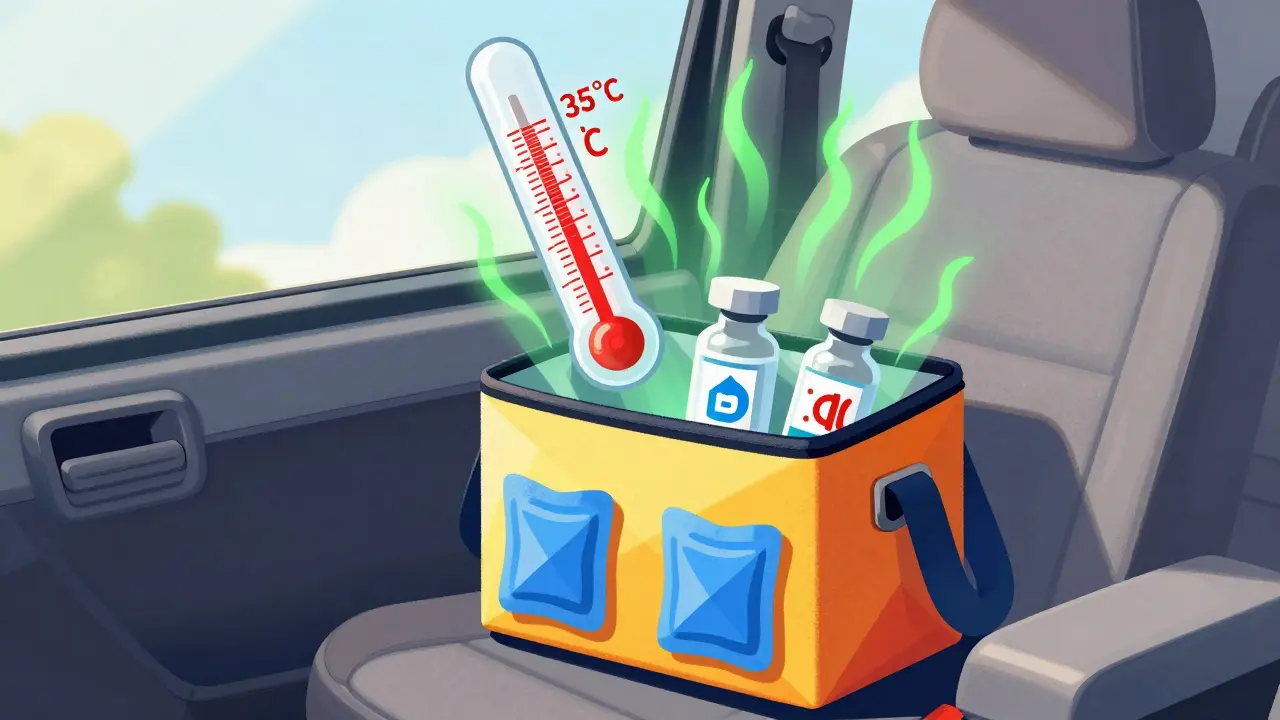
Getting your medication from point A to point B shouldn’t be a gamble. If you’re carrying insulin, vaccines, or other temperature-sensitive drugs, a hot car or freezing porch can ruin them - and that’s not just a risk, it’s a real danger. I’ve seen people lose weeks’ worth of insulin because they left it in a car for an hour. Others have shown up at the pharmacy with frozen vials, thinking the cold made them last longer. Neither works. Medications aren’t like milk. They don’t just spoil - they lose power, change chemistry, or become unsafe. And when that happens, your health is on the line.
Know Your Medication’s Temperature Needs
Not all meds need the same care. The first thing you must do is check the label or packaging. Most medications fall into one of three temperature zones:- Ambient (15°C-25°C): Tablets, capsules, and some oral liquids. These are the easiest to transport. Keep them out of direct sunlight and don’t leave them in a hot car.
- Refrigerated (2°C-8°C): Insulin, some biologics, certain vaccines (like Pfizer’s original COVID-19 shot), and injectables. These are the most common culprits for temperature failures.
- Cryogenic (below -150°C): Rare for personal use. Mostly hospital or research-grade products like some gene therapies or tissue samples.
If your medication says “store in the refrigerator,” assume it needs to stay cold - even when you’re traveling. Don’t assume it’s fine just because it’s in a pill organizer. That box won’t protect it from heat or freezing.
Hot Weather: Keep It Cool, Not Frozen
Summer travel is the most dangerous time for meds. Cars can hit 60°C inside in under 30 minutes. That’s enough to ruin insulin in an hour. Here’s what actually works:- Use an insulated lunch bag with two frozen gel packs. This setup can keep insulin at 2°C-8°C for up to 8 hours in 35°C heat. Don’t use dry ice - it’s too cold and can freeze your meds.
- Keep the bag in the passenger compartment, not the trunk. Trunks get hotter and are harder to monitor.
- Carry your meds with you, not in checked luggage. Airplane cargo holds can drop below freezing or spike above 40°C.
- Ask the airline for a refrigerated storage option if you’re flying with insulin or vaccines. Most major carriers have a procedure for this.
- Never leave meds in a parked car, even for “just a minute.” That minute can cost you your dose.
One patient in Manchester told me she lost three vials of insulin during a July road trip because she thought the cooler bag was “enough.” The bag was in the sun. The gel packs melted. The insulin turned cloudy. The pharmacist confirmed it was degraded. She had to pay £180 for replacements. A £15 insulated bag with reusable gel packs would’ve saved her.
Cold Weather: Avoid Freezing at All Costs
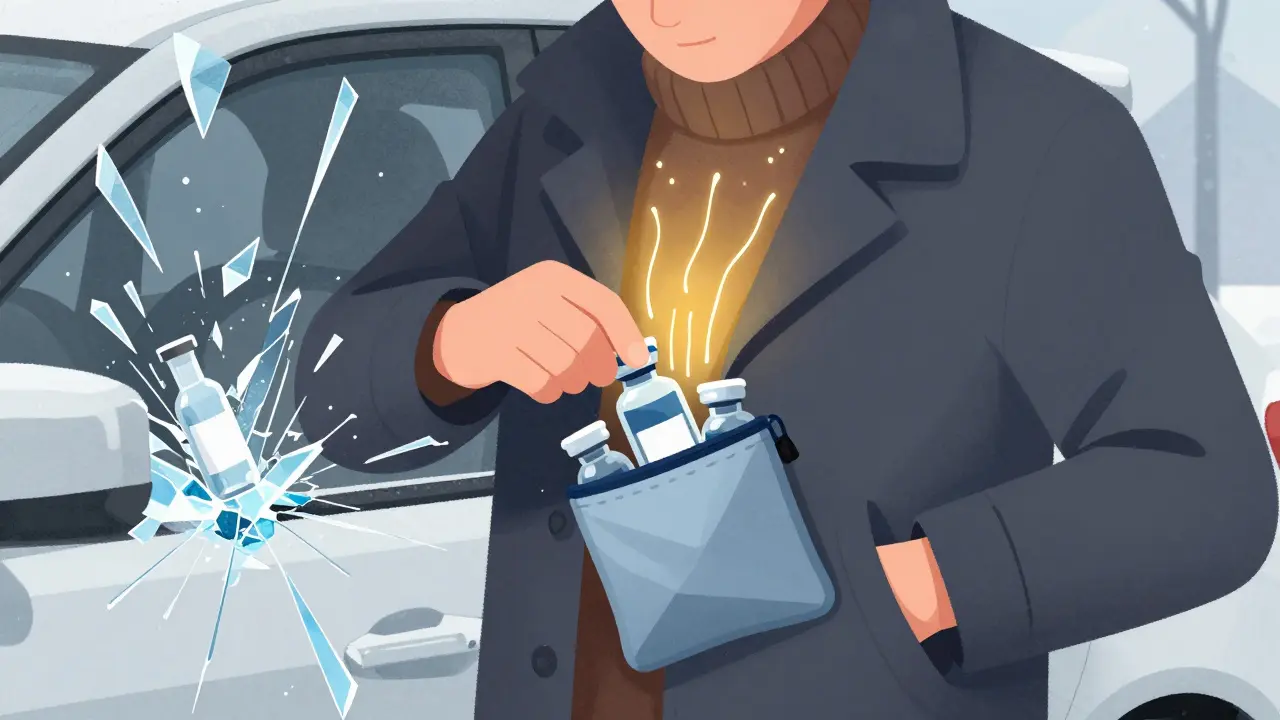
Winter is just as risky - but for the opposite reason. Freezing doesn’t just make meds cold - it breaks them. Insulin, for example, forms crystals when frozen. Even if it thaws, it won’t work right. Vaccines can lose potency permanently.- Keep refrigerated meds close to your body. Tuck them into an inner coat pocket or carry them in a small insulated pouch worn under your jacket.
- Don’t leave meds in the car overnight. If you must, wrap them in a towel and keep them inside the cabin, not the trunk.
- Avoid placing them near windows. Glass gets colder than the air outside. One patient in Leeds had her insulin freeze against a car window during a winter trip. She didn’t notice until she needed it.
- If you’re traveling by plane, carry meds in your hand luggage. Checked baggage gets dumped into unheated holds where temps can dip below -20°C.
- Use a thermal wrap or insulated case designed for cold weather. Some travel cases (like the TempAid 2.0) are tested to maintain 2°C-8°C even when outside temps hit -15°C.
Pharmacies in northern England report a 22% spike in damaged insulin cases during December and January. Most of these happen because people assume “cold is safe.” It’s not. Cold can be just as deadly as heat.
What Works: The Right Gear
You don’t need fancy tech to protect your meds - but you do need the right tools.| Option | Best For | Duration | Cost | Pros | Cons |
|---|---|---|---|---|---|
| Insulated bag + gel packs | Day trips, car travel | 6-12 hours | £10-£25 | Lightweight, reusable, easy to find | Needs pre-freezing, no alerts |
| Active cooler (e.g., TempAid 2.0) | Long trips, air travel | 24-48 hours | £120-£180 | Maintains exact temp, built-in battery | Heavy (3.2 lbs), expensive |
| Phase-change packs | Refrigerated meds | 24-72 hours | £15-£40 | Stays at 5°C, no ice melt | Requires special freezing |
| Standard cooler box | Short-term storage | 2-4 hours | £5-£15 | Cheapest option | Too slow to cool, melts fast |
Don’t use regular coolers meant for food. They’re not designed for medical use. They don’t hold steady temps. They leak. And they don’t protect against freezing.
Monitoring: You Can’t Guess What’s Inside
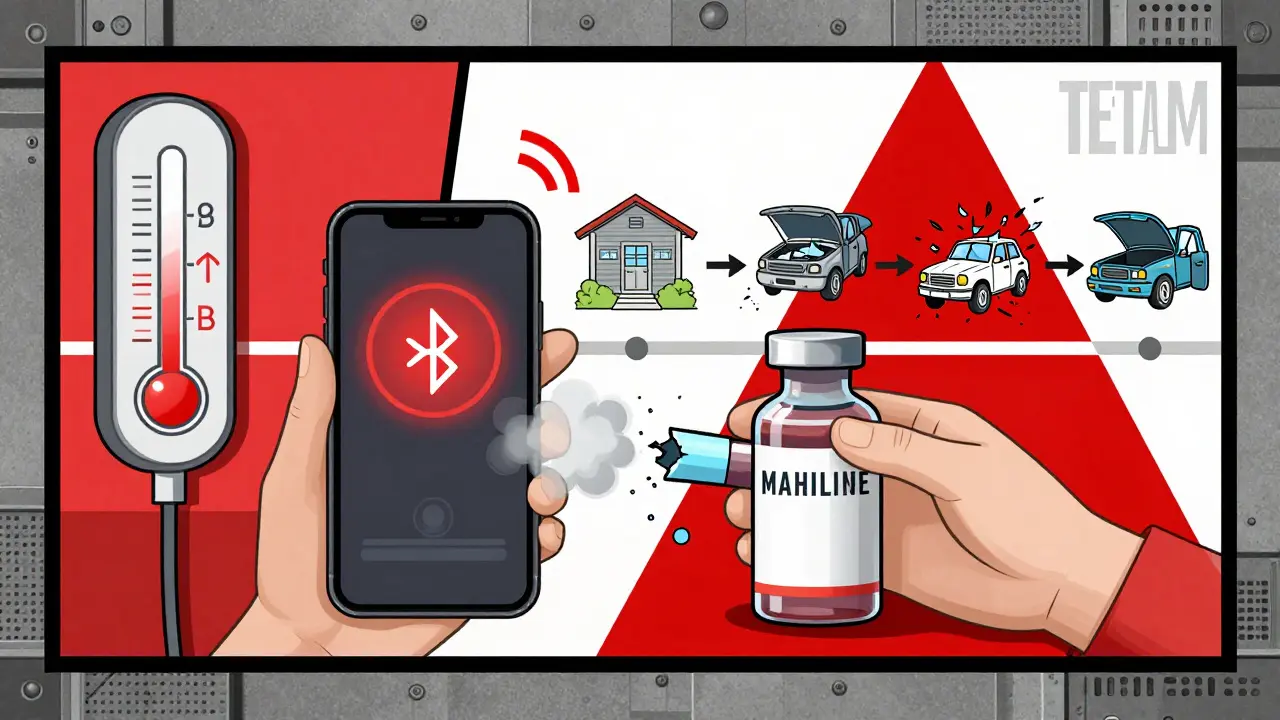
A thermometer that shows max/min temps? Useless. That’s like checking your car’s odometer once a week and hoping you didn’t speed. The pharmaceutical industry uses continuous data loggers for a reason.- Buy a small, disposable temperature monitor. These cost £5-£15 and record every 15 minutes. Some even have Bluetooth apps that alert you if it goes out of range.
- Stick it inside your bag with your meds. If the device shows a spike above 25°C or a drop below 0°C, don’t use the meds. Call your pharmacist.
- Even if your meds look fine - cloudy insulin, discolored vaccines - don’t risk it. Degradation isn’t always visible.
A 2022 study found that shipments with real-time monitors had 92% fewer failures than those with just a sticker thermometer. That’s not a small difference. That’s life or death.
Last-Mile Failures Are the Biggest Risk
Most people think the danger is in transit. It’s not. The biggest problem happens after you get home - or after you land.- Don’t leave your meds on the porch. Not even for 10 minutes. Delivery drivers aren’t trained to handle them.
- Ask your pharmacy to hand you your meds in person if you’re picking them up. Don’t let them sit in a locker.
- If you’re traveling and your meds arrive by mail, be home to receive them. Use a delivery service that requires signature and doesn’t leave packages outside.
One survey found that 68% of temperature excursions happen during the final delivery step. That’s right - your meds are fine in the truck, but then they sit on a freezing doorstep for three hours. That’s the moment they break.
What to Do If Your Meds Get Too Hot or Too Cold
If you suspect your meds were exposed to bad temps:- Don’t use them.
- Take a photo of the temperature monitor (if you have one).
- Call your pharmacist or doctor immediately.
- Ask: “Is this still safe?” They’ll know based on the drug, exposure time, and temp range.
- Never guess. Even if it looks normal, it might not work.
Some meds, like insulin, can be replaced under warranty if you have documentation. Others, like vaccines, can’t be reused at all. Your pharmacist can help you navigate this.
Traveling? Plan Ahead
If you’re flying or driving long distances:- Bring double the amount you think you’ll need. Always.
- Carry a doctor’s note explaining your meds. Airlines and customs sometimes ask.
- Use a travel case with a temperature log. Some even come with pre-filled forms for airport security.
- Know where pharmacies are along your route. Use the NHS website to find nearby ones.
- Don’t rely on buying replacements abroad. Medication names, strengths, and formulations vary by country.
One woman from Manchester flew to Spain with her insulin. She packed it in her carry-on with gel packs. When she landed, the airport security asked her to open it. She showed them the label and the note from her doctor. They let her keep it. She didn’t lose a single dose.
Storage After Arrival
Once you reach your destination:- Refrigerated meds go straight into the fridge - not the door. Door shelves fluctuate too much.
- Keep them in their original packaging. That’s where the expiration date and batch number are.
- Don’t store meds near the freezer compartment. Condensation can damage them.
- Write the date you opened the vial on it. Most insulins last only 28 days after opening.
And never, ever store meds in the bathroom. Humidity and heat from showers ruin tablets and capsules. A bedroom drawer is better than a bathroom cabinet.
Document Everything
If you’re traveling with sensitive meds, keep a simple log:- Date and time of exposure
- Temperature range you suspect
- How long the exposure lasted
- What you did (e.g., called pharmacist, used backup dose)
This isn’t just for your records. If you have an issue later - like a hospital visit or insurance claim - this log matters. The pharmaceutical industry requires this for audits. You should too.
Final Rule: When in Doubt, Don’t Use It
There’s no such thing as “probably still good.” If your insulin looks cloudy, your vaccine looks discolored, or your temperature monitor shows a spike - throw it out. Replace it. Your health isn’t worth the risk.Medications aren’t like groceries. You can’t taste them to check if they’re bad. You can’t see the damage. But the damage is real. And it’s silent.
Protect your meds like you’d protect your phone - with care, planning, and a little extra gear. Because when your meds fail, you’re the one who pays the price.
Can I leave my insulin in the car during winter?
No. Even in winter, cars can get colder than -20°C, especially overnight. Insulin freezes at around -5°C. Once frozen, it loses potency permanently - even if it thaws. Always carry insulin with you, inside your clothing or in a heated compartment.
What’s the best way to carry insulin on a plane?
Carry it in your hand luggage in an insulated bag with gel packs. Never check it. Cargo holds can drop below freezing or rise above 40°C. Most airlines allow you to bring medical cooling devices onboard - just show your prescription or doctor’s note at security.
Do I need a doctor’s note to travel with temperature-sensitive meds?
It’s not always required, but it’s highly recommended. Customs, airport security, and even some pharmacies abroad may ask for proof that your meds are legitimate. A note from your GP with your name, medication name, dosage, and reason for use will save you time and stress.
Can I use regular ice packs to keep my meds cold?
Yes - but only if they’re not frozen solid. Use gel packs designed for medical use or standard reusable ice packs. Avoid dry ice unless you’re trained. Regular ice melts too fast and can leak. Gel packs stay colder longer and don’t drip.
How do I know if my medication has been damaged by temperature?
Look for changes: insulin that’s cloudy or clumpy, liquids that are discolored or have particles, tablets that are cracked or sticky. But don’t rely on sight alone. If your temperature monitor shows a spike or drop outside the recommended range, assume it’s damaged. Contact your pharmacist - they can test it or advise on replacement.
Are there apps that track medication temperature?
Yes. Devices like the TempTraq or Inspyre sensors connect to your phone via Bluetooth and log temperature in real time. Some alert you if your meds go out of range. They’re especially useful for long trips or if you’re traveling with multiple vials. Prices start at £40.
Can I reuse gel packs for different trips?
Yes, as long as they’re not damaged or leaking. Wash them gently after each use and store them in the freezer. Replace them if they lose their shape, become hard, or don’t stay cold as long as before. Most last 2-3 years with proper care.
What if I’m traveling to a country with no refrigeration?
Plan ahead. Bring extra meds and use a battery-powered active cooler (like the TempAid 2.0). Some travel clinics offer portable refrigerated containers for rent. Never rely on local pharmacies abroad - formulations may differ. Always carry a backup supply and a doctor’s note.




lol so now i gotta buy a fancy cooler just to carry my insulin? next they'll make me wear a lab coat to the grocery store. i left mine in the car for 20 mins in 90 degree heat and i'm still standing. maybe my body's just built different. 🤷♂️
January 20Jacob Cathro