Patient hesitation regarding generic medicationsmedications approved by regulatory bodies as alternatives to brand-name drugs, containing the same active ingredients at a lower cost is a common roadblock in modern pharmacy practice. Research indicates that roughly one in four patients express genuine concern when a generic substitution occurs. For pharmacists and healthcare providers, overcoming this hurdle isn't just about handing out a pamphlet; it requires a nuanced, human connection. The goal is clear: you want patients to feel safe switching to a cost-effective option without compromising their health outcomes.
Understanding the Root of Patient Hesitation
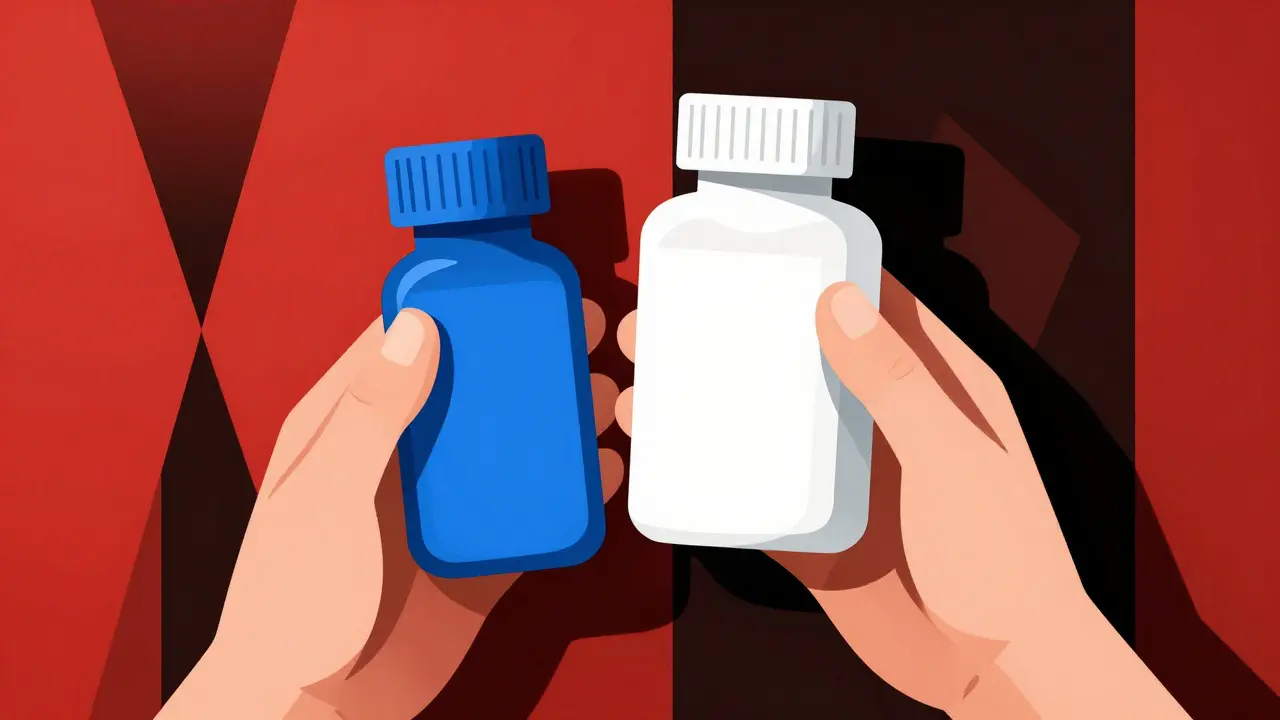
To address the fear, you have to understand what causes it. It isn't always about logic; often, it's about psychology. Studies show that 43% of patients mistakenly believe generic drugs contain significantly fewer active ingredients than their brand-name counterparts. This misconception likely stems from seeing different colors, shapes, or even packaging on the bottle. When a patient used to a blue oval pill sees a white rectangle instead, their brain registers "change," and change often equals risk in their minds.
The Food and Drug Administration (FDA) has established rigorous standards for bioequivalencea measure of how quickly and how much of a generic drug's active ingredient enters the bloodstream compared to the brand-name version. Specifically, generics must demonstrate that they deliver between 80% and 125% of the drug dose compared to the brand name within a set timeframe. This margin ensures clinical performance is identical for the vast majority of people. Yet, a survey by the National Community Pharmacists Association found that awareness of these rigorous standards remains low at just 32%. Bridging this knowledge gap starts with acknowledging that the visual differences are real, even if the chemical equivalence is certain.
The Power of the Ask-Tell-Ask Framework
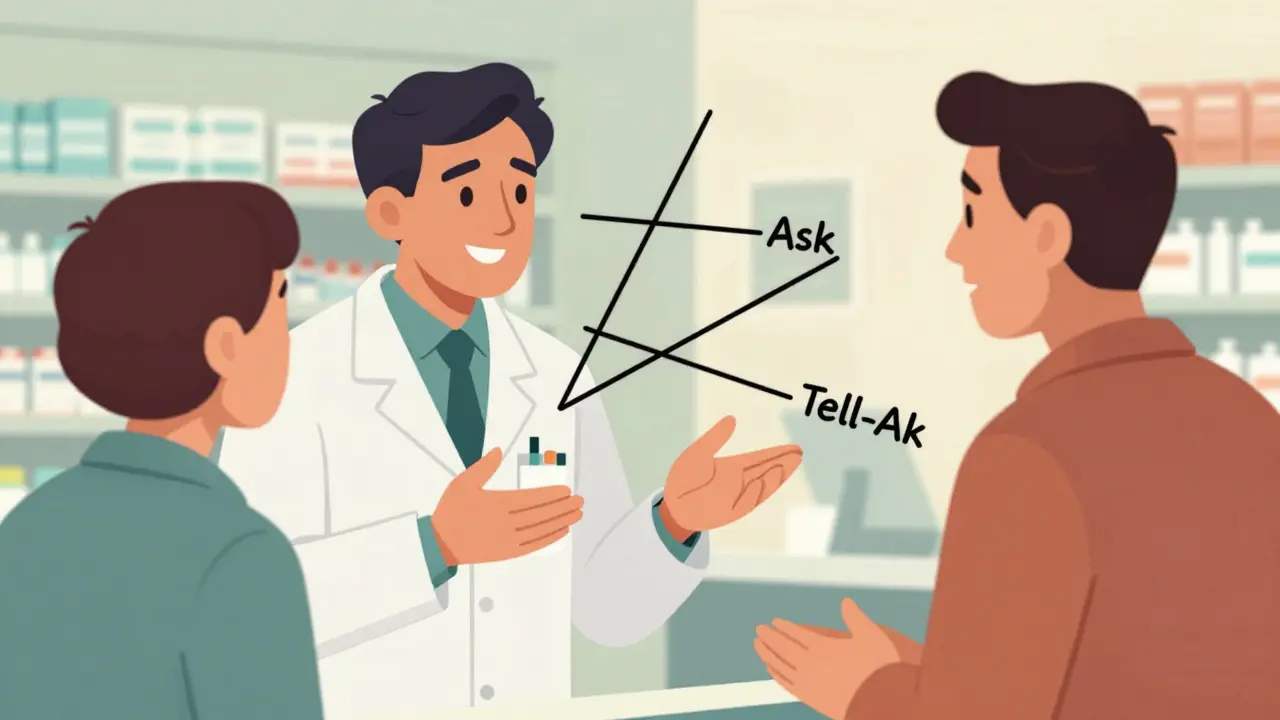
Talking effectively means moving away from lecturing and toward dialogue. The Ask-Tell-Ask framework stands out as a proven method in medical communication. A landmark study published in the Journal of General Internal Medicine tracked over 1,200 patients across multiple practices. Providers who used this technique achieved a 68% acceptance rate for generic drugs compared to just 42% using standard communication methods.
Here is how you apply this in your daily workflow:
- Ask: Begin by checking what the patient already knows or fears. You might say, "Do you know why we switched this prescription to a generic version?" This opens the floor for them to voice concerns immediately rather than hiding them.
- Tell: Provide the information clearly. Explain that the active ingredient is identical, manufactured under strict federal guidelines.
- Ask Again: Verify understanding. Ask them to explain back what was discussed or ask, "Does that make sense to you?"
This simple loop transforms a transaction into a conversation. It signals that you value their input, which builds trust far more effectively than a lecture ever could.
Leveraging Personal Endorsements
Facts alone rarely win hearts. Trust does. According to data from the American Journal of Managed Care, when a provider states, "I prescribe this generic for my own family," acceptance rates jump by 37 percentage points. This works because it moves the recommendation from abstract theory to personal experience. If you, as the professional, would trust it enough to give it to someone you love, the patient is statistically more likely to do the same.
However, there is a balance to strike. Overemphasizing cost savings can sometimes backfire. Dr. Thomas Moore's analysis in JAMA Internal Medicine showed a 22% decrease in trust when cost was the sole justification. Some patients equate price with quality, so saying "It's cheaper" can inadvertently suggest "it's worse." Instead, frame the financial benefit as a bonus. Use phrasing like, "This medication contains exactly the same active ingredient but without the brand name marketing costs." This specific wording increased acceptance by 29% in controlled studies because it validates the value proposition without demeaning the product quality.
Timing Is Critical for Success
When you bring up the switch matters as much as what you say. Many patients receive their explanation after the decision has already been made at the pharmacy counter, when they have already paid. The FDA's GDUFA III report highlights that 89% of patients accepted generic education at the point of prescribing, versus only 63% when education occurred solely at the pharmacy.
This suggests a two-pronged approach is best:
| Timing Strategy | Acceptance Rate | Context |
|---|---|---|
| Point of Prescribing | 89% | Physician explains before filling |
| At Dispensing Counter | 63% | Pharmacist explains during pickup |
| Proactive Explanation | 82% | Pharmacist mentions it before concern is raised |
If you work in a dispensary setting, try to contact patients before they come to pick up the medication. A quick call or text alerting them that a generic version is ready can prepare them mentally. Proactivity yields results; studies show pharmacists who explain substitution before patients express concerns achieve 82% acceptance, compared to 47% when reacting to objections later.

Visual Aids and Evidence Tools
Sometimes words aren't enough. About 68% of patients indicated they would accept generics if shown visual comparison tools. Imagine showing a patient the exact FDA certificate of bioequivalence side-by-side with the package insert. Some pharmacies are adopting digital toolkits that feature 3D pill comparisons. These visuals demonstrate that while the coating differs, the internal composition remains the same.
Consider implementing "teach-back" methods where patients explain the concept in their own words. A Kaiser Permanente case study revealed that utilizing this technique increased acceptance from 54% to 81% across thousands of encounters. It forces active engagement rather than passive listening. Additionally, referencing specific manufacturing standards, such as those mandated by the Hatch-Waxman Act of 1984, adds a layer of historical legitimacy to your argument. Reminding patients that these laws have governed generic safety for decades helps dismantle myths about substandard production.
Building a Team-Based Approach
The burden of persuasion shouldn't fall on the pharmacist alone. Team-based interventions involving both prescribers and pharmacists boost generic acceptance to 85%. This is significantly higher than either group acting solo. The physician holds significant sway; if the doctor explicitly recommends the generic, the patient is more likely to comply.
Collaborating on documentation is key here. Under updated regulations, documenting these conversations in patient records is becoming mandatory for billing purposes. Ensure your electronic health record system has prompts integrated when a brand-name prescription is written. This automation ensures no educational opportunity is missed due to time constraints. Remember, in many primary care settings, doctors average just 18 seconds of uninterrupted patient discussion before interrupting. Using pre-set documentation templates allows for quicker, more consistent messaging that saves time without sacrificing quality.
Why do some patients refuse generic medications?
Patients often refuse generics due to visual differences in pill appearance or misconceptions that they contain fewer active ingredients. Approximately 27% of patients express concerns about efficacy, often stemming from a lack of understanding regarding bioequivalence standards required by the FDA.
What is the difference between brand and generic drugs?
Both types contain the same active ingredients in the same dosage and strength. The primary difference lies in inactive ingredients like dyes or fillers, which may alter the shape or color. Regulatory agencies require generics to prove they perform identically in the body through strict testing.
How can pharmacists explain generics effectively?
Effective communication includes validating patient concerns, explaining the 'Ask-Tell-Ask' method, and avoiding purely cost-based arguments. Personal endorsements and timing the conversation early-at the point of prescribing-are critical factors for increasing acceptance rates among hesitant patients.
Are generic drugs tested by the government?
Yes, the FDA rigorously tests generic drugs to ensure bioequivalence. They must demonstrate that they deliver between 80% and 125% of the drug dose compared to the brand name within a specific timeframe, ensuring safety and effectiveness.
Can I switch back to brand names if needed?
If a patient experiences genuine side effects, a switch is possible, but often necessary. Healthcare providers should advise trying the generic first for an adjustment period unless the drug has a narrow therapeutic index, where small differences matter more clinically.




Generic savings mean nothing when insurance deductibles keep climbing every single year.
March 30Calvin H