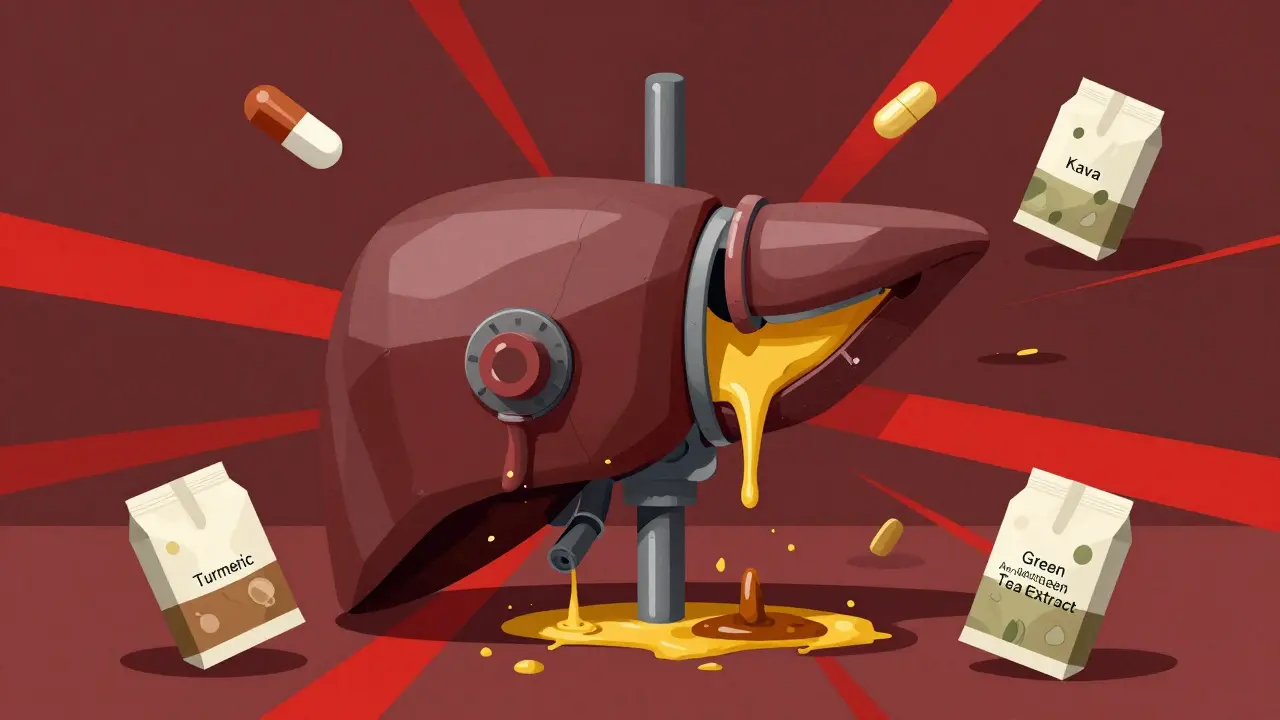
Every year, thousands of people end up in the hospital not because of a virus or bad food, but because of something they took to feel better. Medication-related liver damage is silent, sneaky, and often missed until it’s too late. It doesn’t come with a warning label you can easily spot. No one tells you that your daily turmeric capsule or that antibiotic for a sinus infection could quietly fry your liver. And by the time you feel it, you might already be in serious trouble.
What You’re Actually Taking That Can Hurt Your Liver
Most people think liver damage comes from alcohol or hepatitis. But in the U.S., drug-induced liver injury (DILI) is now the top cause of acute liver failure-surpassing viral hepatitis since 2015. It’s not just prescription drugs. Over-the-counter painkillers, herbal supplements, and even “natural” weight-loss teas are major culprits. Antibiotics like amoxicillin-clavulanate cause about 16% of all cases. Anticonvulsants like valproate and phenytoin are next. But here’s what’s alarming: herbal and dietary supplements now account for nearly 20% of DILI cases in the UK, and green tea extract alone is behind 37% of those supplement-related injuries. Turmeric, kava, and black cohosh are common offenders. Even something as simple as high-dose vitamin A or niacin can trigger liver stress. Acetaminophen (Tylenol) is the most predictable. Take more than 4,000 mg in 24 hours, and you risk severe damage. But even 3,000 mg a day can be dangerous if you drink alcohol regularly. The risk triples. And unlike other drugs, acetaminophen toxicity hits fast-liver enzymes spike within 24 hours. If you don’t get treatment within 8 hours, the chance of survival drops sharply.The Silent Signs You Can’t Ignore
The worst part about medication-related liver damage? It doesn’t hurt-at first. No one feels “liver pain.” Instead, you get vague symptoms that doctors often write off as stress, the flu, or aging. Here’s what actually happens:- Jaundice-yellowing of the skin or whites of the eyes. This is your liver’s last warning before it shuts down.
- Dark urine-like cola or tea. That’s bilirubin leaking into your bloodstream because your liver can’t process it.
- Light-colored stools-pale, clay-colored poop. Your liver isn’t making bile properly.
- Severe itching-especially on the palms and soles. This isn’t dry skin. It’s bile salts building up under your skin.
- Right upper belly pain-a dull ache or sharp stab under your ribs on the right side.
- Nausea, vomiting, loss of appetite-not just from food poisoning. These can be your liver screaming for help.
- Unexplained fatigue-not just tired. Exhausted, even after sleeping.
When It’s Not Just Fatigue-The Diagnostic Trap
Doctors aren’t always trained to think of liver damage from medications. In a 2023 survey of 1,247 patients on the American Liver Foundation’s forum, 68% were misdiagnosed at first. Many were told they had the flu, depression, or just needed more sleep. One woman took amoxicillin-clavulanate for a sinus infection. Two weeks later, she was itching constantly. Her doctor said it was an allergic reaction and gave her antihistamines. Three weeks after that, her eyes turned yellow. Her ALT level was 1,800 IU/L-normal is under 40. She had severe DILI. Her story isn’t rare. The diagnostic tool doctors use is called RUCAM. It’s not a blood test. It’s a scoring system that looks at timing: when did you start the drug? When did symptoms appear? Did they go away after stopping? Are other causes ruled out? It’s 85% accurate, but only if your doctor knows to use it. And here’s the kicker: many patients don’t even tell their doctors about their supplements. A 2023 survey found that 76% of DILI patients had symptoms within 30 days of starting the offending drug-but only 32% connected the dots themselves. They didn’t think “vitamin D” or “CBD oil” could hurt their liver.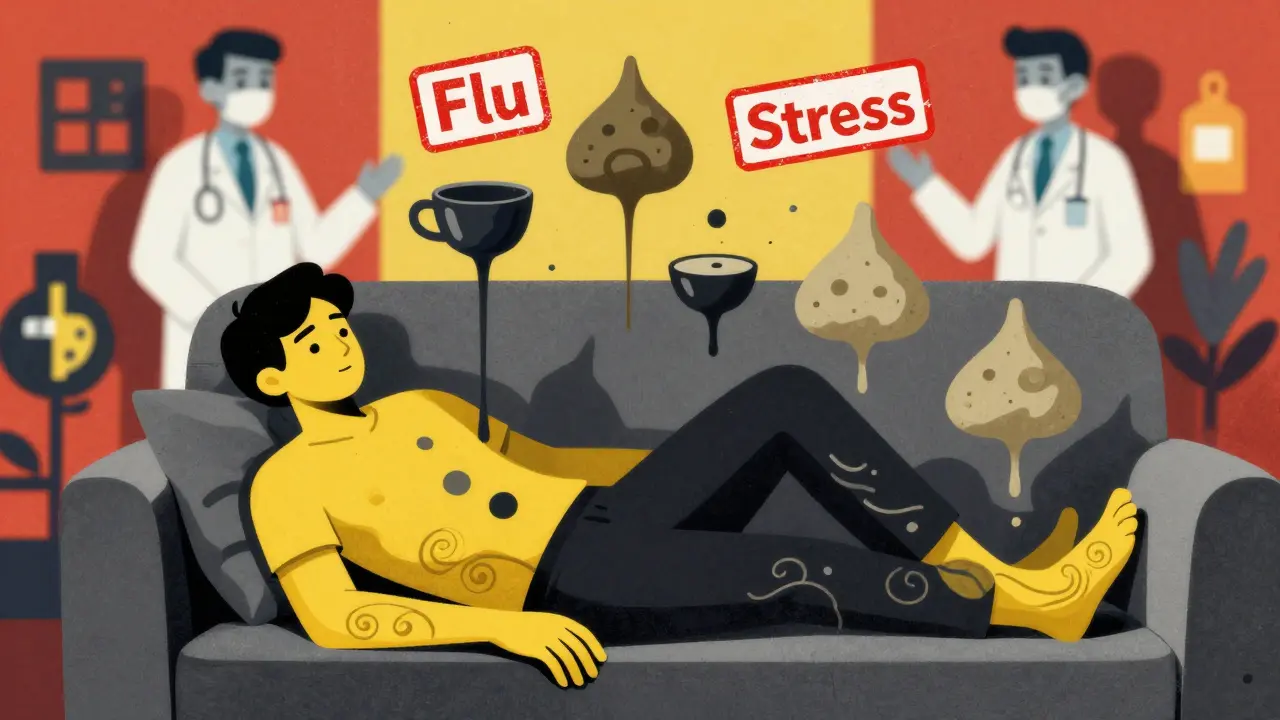
What You Must Do Right Now
If you’re on any of these, listen up:- Acetaminophen: Never exceed 3,000 mg a day if you have any liver condition. Cut it to 2,000 mg if you drink alcohol. Check every cold medicine-you might be doubling up without knowing it.
- Antibiotics: If you’re on amoxicillin-clavulanate and develop itching or nausea, stop and call your doctor. Don’t wait for jaundice.
- Herbal supplements: If you’re taking anything labeled “natural,” “detox,” or “liver cleanse,” stop. These are unregulated. No one tested them for safety.
- Statins: Most are safe, but if your ALT levels jump more than 3 times normal, your doctor should consider switching you.
- Isoniazid (for TB): If you’re on this, get liver tests every 4 weeks. 10% of users develop enzyme spikes.
When to Go to the ER-The Red Flags
You don’t need to wait for a blood test. If you have:- Yellow skin or eyes
- Plus dark urine
- Plus nausea or right-side pain
What’s Changing-And What’s Coming
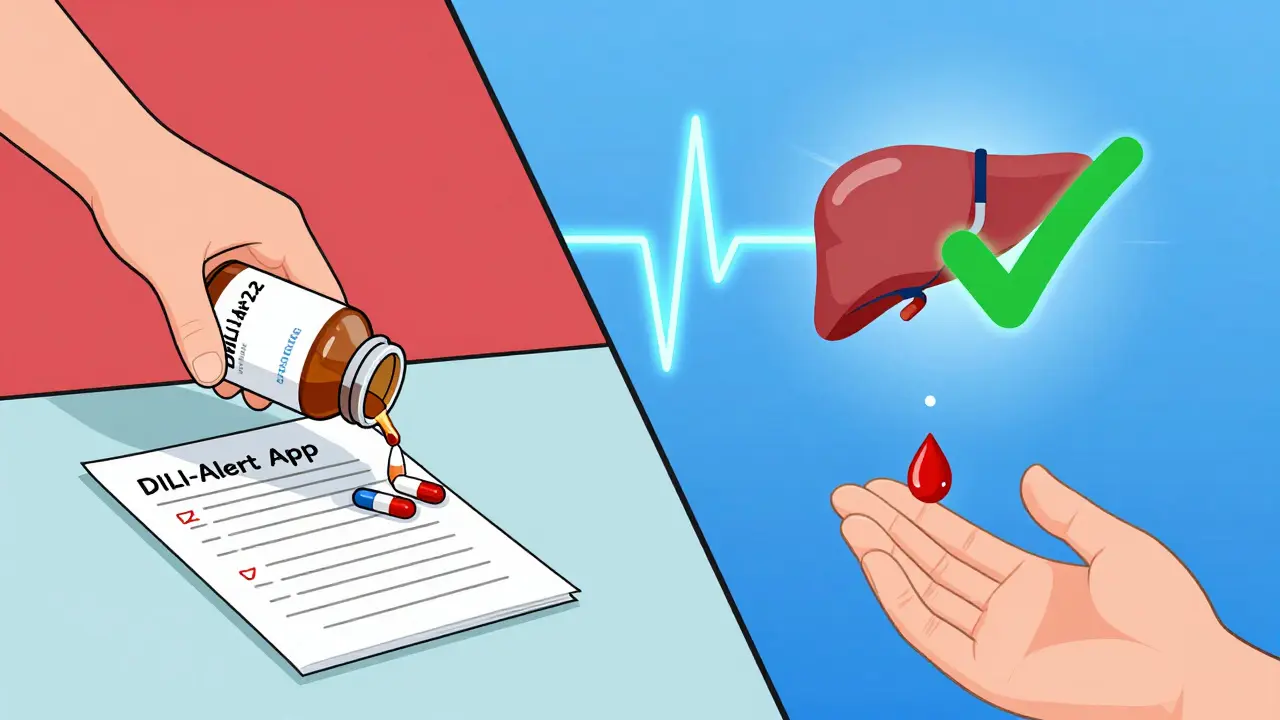
The FDA just approved a new app called DILI-Alert. It scans your meds and tells you if any are linked to liver damage. You can download it now. It’s free and connects to a database of 1,200 drugs and supplements. Researchers are also testing a blood biomarker called microRNA-122. It rises within hours of liver injury-even before ALT spikes. In trials, it’s 92% accurate. That means in the next few years, a simple finger-prick test could catch DILI before you even feel sick. Meanwhile, the European Union now requires all herbal products to carry a liver warning label. The FDA is pushing for the same in the U.S. But the biggest problem isn’t the drugs-it’s the lack of awareness. Only 42% of primary care doctors can correctly name the top 5 hepatotoxic medications. And 68% of people taking supplements don’t know they can damage the liver.You’re Not Alone-But You’re Not Helpless
Medication-related liver damage is preventable. It’s not rare. It’s not mysterious. It’s just ignored. The next time you pick up a new prescription or grab a bottle of “immune support” pills, pause. Ask yourself: “Could this hurt my liver?” If you’re unsure, ask your pharmacist. Or better yet, check the DILI-Alert app. You don’t need to be a doctor to protect your liver. You just need to pay attention.Don’t wait for jaundice. Don’t wait for fatigue to turn into collapse. The signs are there. You just have to know what to look for.



Wow. I’ve been taking turmeric for my knees and now I’m side-eyeing my spice rack like it’s a secret poison cabinet. 😅
December 27Turns out ‘natural’ doesn’t mean ‘safe’-it just means ‘unregulated’ and ‘untested.’
My grandma used to say, ‘If it comes in a bottle with a picture of a tree, it’s probably trying to kill you.’ She was weirdly right.
Teresa Marzo Lostalé