When a child breaks out in hives after eating peanut butter, or an adult gets stomach cramps every time they have milk, the question isn’t just what is causing the reaction-it’s whether it’s truly an allergy at all. Many people assume that if a skin test or blood test says "allergy," then they must avoid the food forever. But that’s not always true. In fact, up to 80% of positive test results for common foods like egg or milk turn out to be false positives. That’s where the oral food challenge comes in. It’s not just another test. It’s the only way to know for sure.
Why Oral Food Challenges Are the Gold Standard
Skin prick tests and blood tests for IgE antibodies are useful starting points. But they don’t tell you if you’ll actually react when you eat the food. They only show that your immune system has seen the allergen before. That’s why doctors call them "sensitization" tests-not "allergy" tests. A positive result might mean nothing more than past exposure. Only an oral food challenge (OFC) can confirm whether your body responds when you actually consume the food. The procedure is simple in concept: you eat small, increasing amounts of the suspected food under medical supervision. If you don’t react, you don’t have an allergy. If you do, you get treated right away. The American Academy of Allergy, Asthma & Immunology (AAAAI) and the European Academy of Allergy and Clinical Immunology (EAACI) both agree: OFC is the gold standard. It’s the only test that gives you real-time, physiological proof. Studies show clinical history and lab tests alone have less than 50% accuracy in diagnosing food allergies. That means nearly half of all diagnosed food allergies might be wrong. And that’s dangerous. Avoiding foods you don’t need to avoid can lead to nutritional gaps, social isolation, and unnecessary anxiety. On the flip side, missing a real allergy can be life-threatening. OFC fixes both problems.How an Oral Food Challenge Works
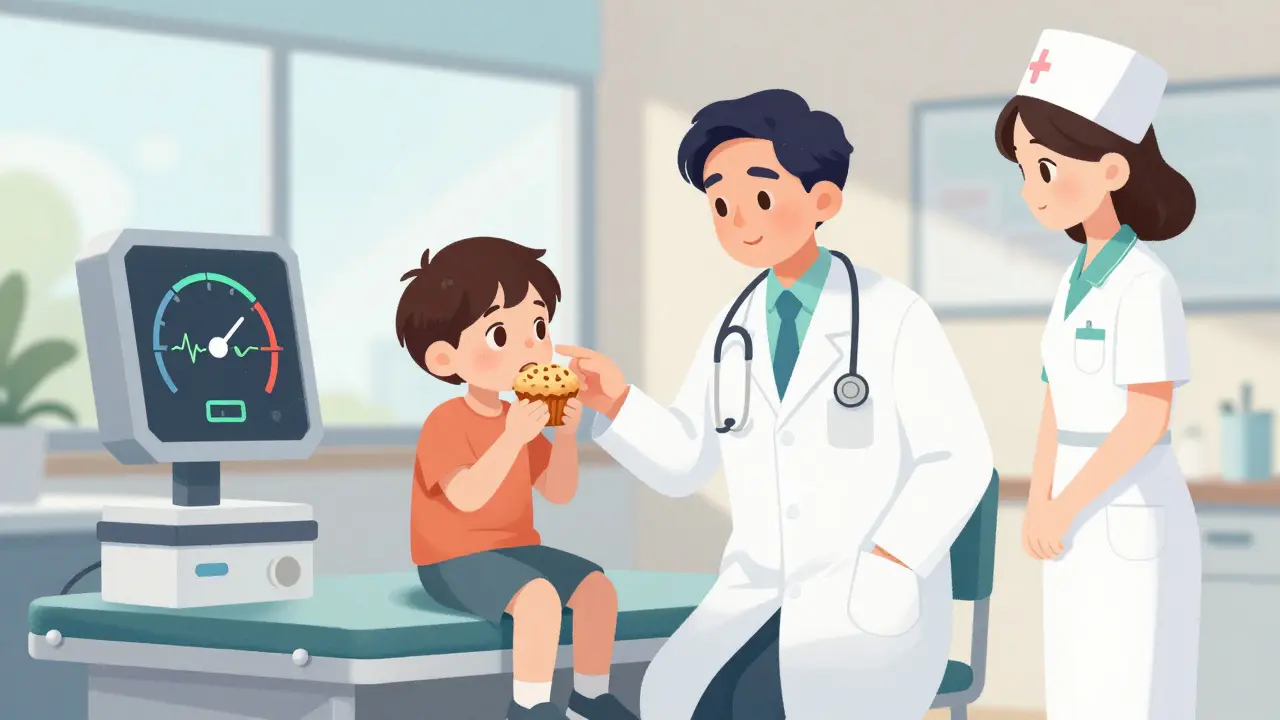
An OFC doesn’t happen in a rush. It takes 3 to 6 hours. You start with a tiny amount-sometimes as little as 1 to 2 milligrams of peanut protein, which is about 1/1000th of a peanut. That’s less than a grain of sand. Then, every 15 to 30 minutes, you get a little more. The doses keep increasing until you’ve eaten a full serving-or until a reaction happens. The food can be given in different ways. For kids, it’s often baked into a muffin or mixed into applesauce so they don’t recognize the taste. For adults, it might be peanut butter, milk, or a capsule filled with powdered allergen. The goal is to mimic real-life eating, not trigger fear. About 90% of challenges are done as open tests-meaning both you and the doctor know what you’re eating. Double-blind tests, where neither party knows if it’s the allergen or a placebo, are rare and mostly used in research. Throughout the challenge, your vital signs are watched closely: heart rate, breathing, skin color, and any signs of itching, swelling, or stomach upset. Two trained medical staff are always present-one doctor and one nurse-ready with epinephrine, antihistamines, and oxygen. If a reaction starts, they stop the food and treat it immediately. Most reactions are mild: a few hives, a flushed face, or mild stomach cramps. Severe reactions requiring epinephrine happen in only 1-2% of cases when protocols are followed.Safety: What Are the Real Risks?
It’s natural to be scared. The word "challenge" sounds risky. And yes, you’re intentionally giving yourself something you might be allergic to. But the setting is designed for safety. Hospitals and allergy clinics that do OFCs have emergency equipment on hand, staff trained in anaphylaxis response, and clear rules about when to stop. A 2020 study in the Journal of Allergy and Clinical Immunology found that only 0.9% of challenges resulted in a reaction needing medical treatment. Most of those were mild. The same study showed that when challenges were done by experienced teams in proper settings, the risk of a serious event was lower than the risk of a car ride to the clinic. The biggest danger isn’t the challenge itself-it’s doing it in the wrong place. A 2022 AAAAI guideline warns that OFCs should only be done by trained allergists in facilities equipped to handle anaphylaxis. That means no office with just a first-aid kit. No urgent care center. No home unless it’s a low-risk, supervised home challenge under strict conditions approved by your doctor. Parents often worry about their child crying or panicking. That’s normal. Many kids are scared of the process. But most say it was worth it afterward. One parent on a food allergy forum shared: "My son screamed through the whole peanut challenge. But when they told us he could eat it now, he hugged the nurse and ate a whole cookie on the spot. We cried too."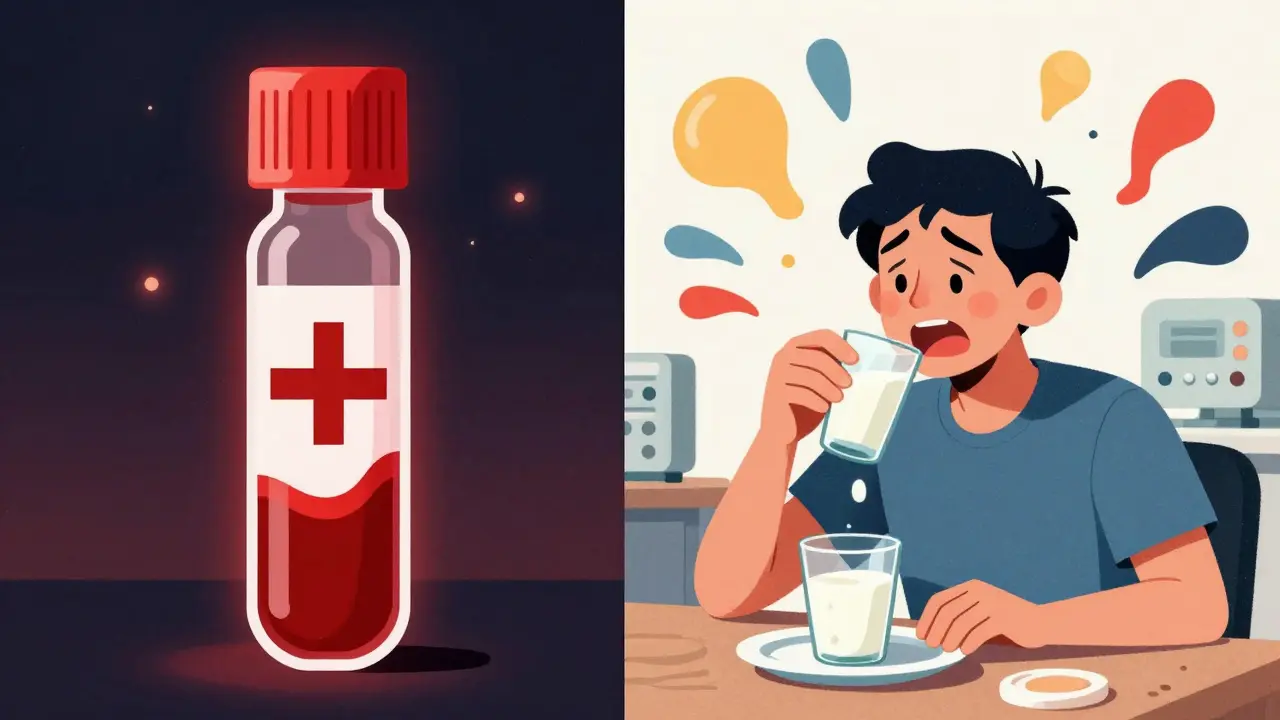
Who Benefits Most From an Oral Food Challenge?
Not everyone needs one. But these groups benefit the most:- Children with suspected milk, egg, wheat, or soy allergies-up to 65% outgrow these by age 5. An OFC can confirm if they’ve developed tolerance.
- People with unclear allergy histories-if you’ve had a reaction years ago but never tested, or if your symptoms were vague (like stomach pain after pasta), an OFC clears up the confusion.
- Those with positive test results but no real symptoms-if your blood test says "allergic" but you’ve eaten the food without issues, you likely aren’t allergic. An OFC can prove it.
- Patients considering reintroducing a food-if you’ve avoided peanuts for 10 years, an OFC can tell you if it’s safe to try again.
What About Other Tests? Are They Good Enough?
Component-resolved diagnostics (CRD) test for specific proteins in foods-like Ara h 2 in peanuts. These are more precise than traditional IgE tests, but they still can’t replace OFC. Even the best CRD tests top out at 85% accuracy. OFC hits nearly 100% when done right. Why? Because CRD tells you if your immune system recognizes a protein. It doesn’t tell you if your body will react when you eat it. That’s the difference between seeing a red light and actually driving through the intersection. You need to see what happens when you consume the food. And no, a negative skin test doesn’t mean you’re safe. A 2019 NIH review found that skin tests for peanut and egg have a positive predictive value of only 50-60%. That means half the time, a positive test is wrong. Blood tests aren’t much better. IgE levels can be high in people who never react. Or low in people who do. OFC is the only test that answers the real question: "Will I react if I eat this?"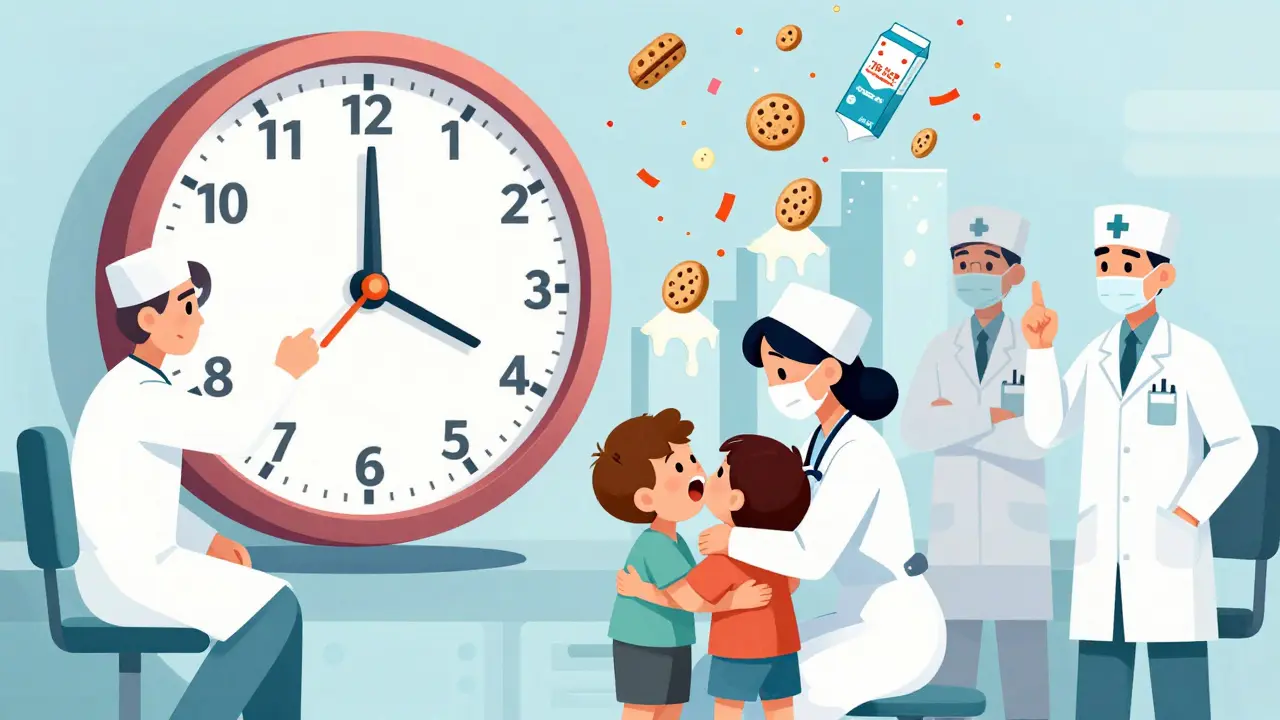
How to Prepare for an Oral Food Challenge
Preparation matters as much as the test itself. Here’s what you need to do:- Stop antihistamines at least 5-7 days before. These drugs can hide early signs of a reaction.
- Don’t come in sick. A cold or asthma flare-up increases your risk of a stronger reaction.
- Wear loose clothing. Tight sleeves or collars can make it harder to notice swelling or flushing.
- Bring distractions. For kids: tablets, books, toys. For adults: music, podcasts. The time flies when you’re not focused on the food.
- Ask about food form. Will it be pure peanut butter? Or baked into a cookie? Knowing helps mentally prepare.