Soy-Levothyroxine Timing Calculator
Soy Consumption Timing
Enter when you plan to consume soy products
Results
Your recommended separation time
Key Recommendations
- 3-4 hours separation between soy and medication is recommended
- Take levothyroxine on empty stomach (30-60 minutes before breakfast)
- Check food labels for hidden soy (soy lecithin, protein isolate)
If you take levothyroxine for hypothyroidism and regularly eat tofu, soy milk, or even granola bars with soy protein, you might be unknowingly reducing how well your medicine works. This isn’t a myth or a scare tactic-it’s backed by clinical studies, patient reports, and guidelines from major medical groups. The issue? Soy can block your body from absorbing levothyroxine properly, leading to unexplained spikes in TSH levels, fatigue, weight gain, and even developmental delays in babies.
How Soy Interferes with Thyroid Medication
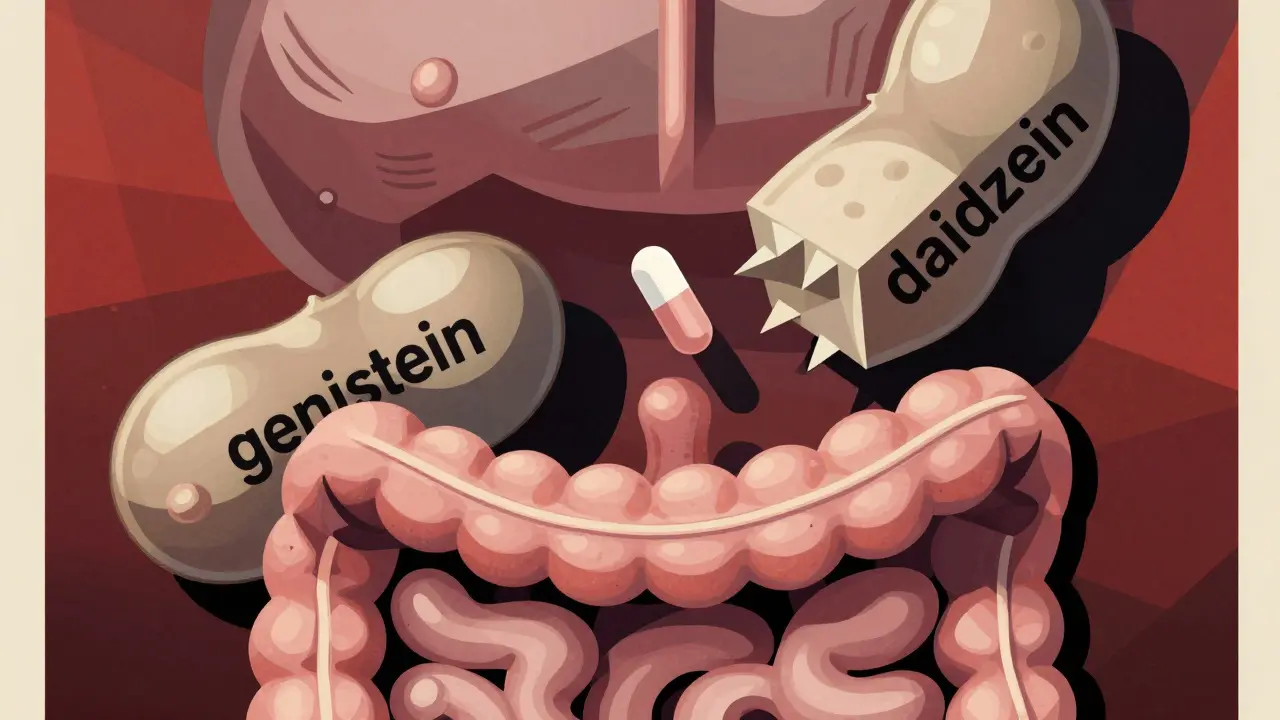
Levothyroxine is a synthetic version of the thyroid hormone T4. It’s absorbed in the small intestine, but soy products contain compounds called isoflavones-mainly genistein and daidzein-that bind to the medication in your gut. This binding prevents levothyroxine from entering your bloodstream the way it should. Studies using liquid chromatography-tandem mass spectrometry show that when soy is taken at the same time as levothyroxine, peak blood levels of the hormone drop by about 22%, and overall exposure (AUC) falls by nearly 19%. This isn’t just about big servings. Even a single serving of soy-like a cup of soy milk or half a block of tofu-can contain 30 to 100 mg of isoflavones. The more soy protein you consume, the worse the effect. One 2006 study found that 20 grams of soy protein reduced absorption by 15.8%, while 40 grams cut it by over 35%. That’s why people who snack on soy bars, drink soy lattes daily, or rely on soy-based protein powders often see their TSH levels creep up even when they take their pill correctly.How Bad Is the Interference Compared to Other Foods?
Soy isn’t the only thing that messes with levothyroxine, but it’s one of the most common-and sneaky. Here’s how it stacks up against other dietary offenders:| Interferent | Average Absorption Reduction | Recommended Separation Time |
|---|---|---|
| Calcium supplements | 35.2% | 4 hours |
| Iron supplements | 32.1% | 4 hours |
| Soy products | 25.3% | 3 hours |
| Coffee | 21.4% | 60 minutes |
| High-fiber foods | 17.8% | 2 hours |
| Tea | 15.3% | 1 hour |
Soy ranks third in severity, right after calcium and iron. But unlike those supplements, soy doesn’t come in a pill-it’s in everything. Soy lecithin is in 70% of packaged foods. Soy protein isolate is in 68% of vegetarian meat alternatives. Even if you avoid obvious soy foods, you might be eating it without realizing.
Who’s Most at Risk?
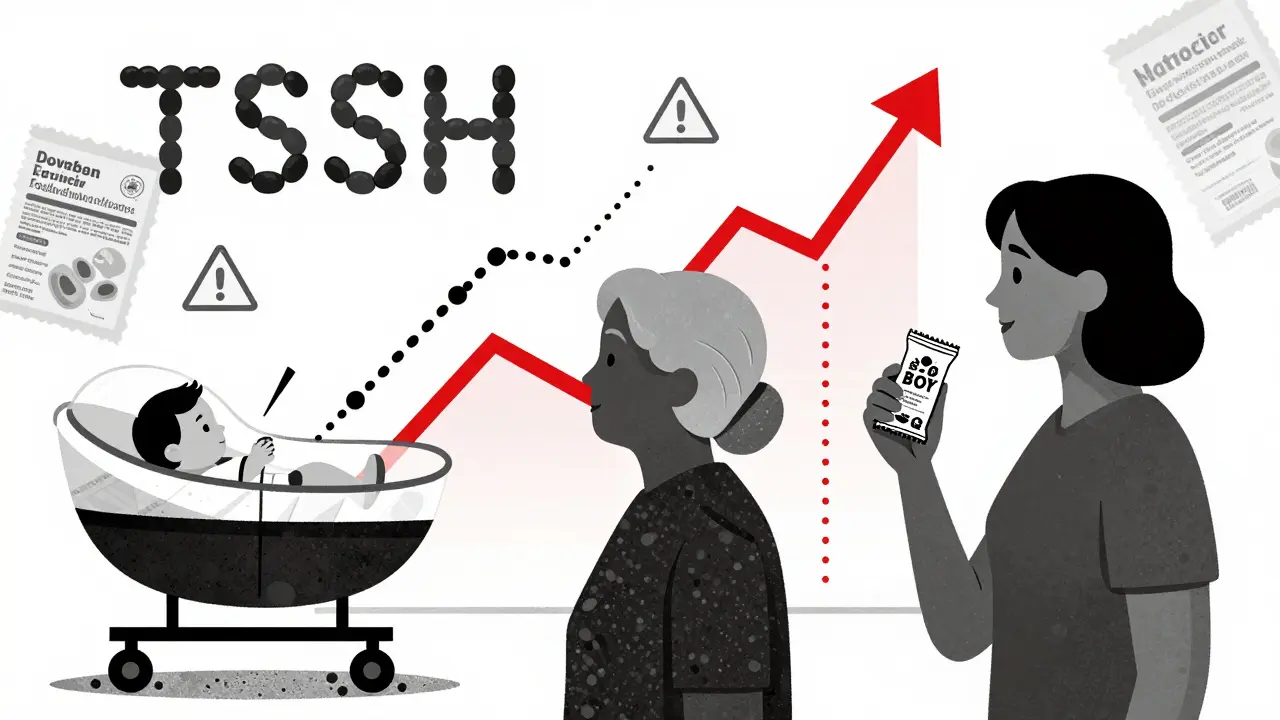
Not everyone experiences this problem the same way. Certain groups are far more vulnerable.- Infants with congenital hypothyroidism: A 2012 study tracked two newborns who were given standard levothyroxine doses but remained severely hypothyroid because they were on soy formula. One had a TSH level of 248 µIU/mL-more than 10 times the normal range. Their development was at risk until soy was removed.
- Elderly patients (65+): About 45% of levothyroxine users are in this group. Aging reduces stomach acid, which already makes absorption harder. Adding soy on top makes it worse.
- Vegetarians and vegans: 78% of this group consumes soy at least three times a week, according to the Endocrine Society. Many don’t know the risk.
- Women aged 30-50: This demographic has the highest soy consumption rate (63%), often due to health trends promoting soy as a “natural” hormone balancer.
One Reddit user, u/ThyroidWarrior, shared: “My TSH jumped from 2.1 to 8.7 after I switched to soy milk for breakfast. My endocrinologist had no idea why.” That’s not rare. A 2023 survey by ThyroidChange found that 17% of unexplained TSH fluctuations were tied to soy-second only to calcium.
What Should You Do?
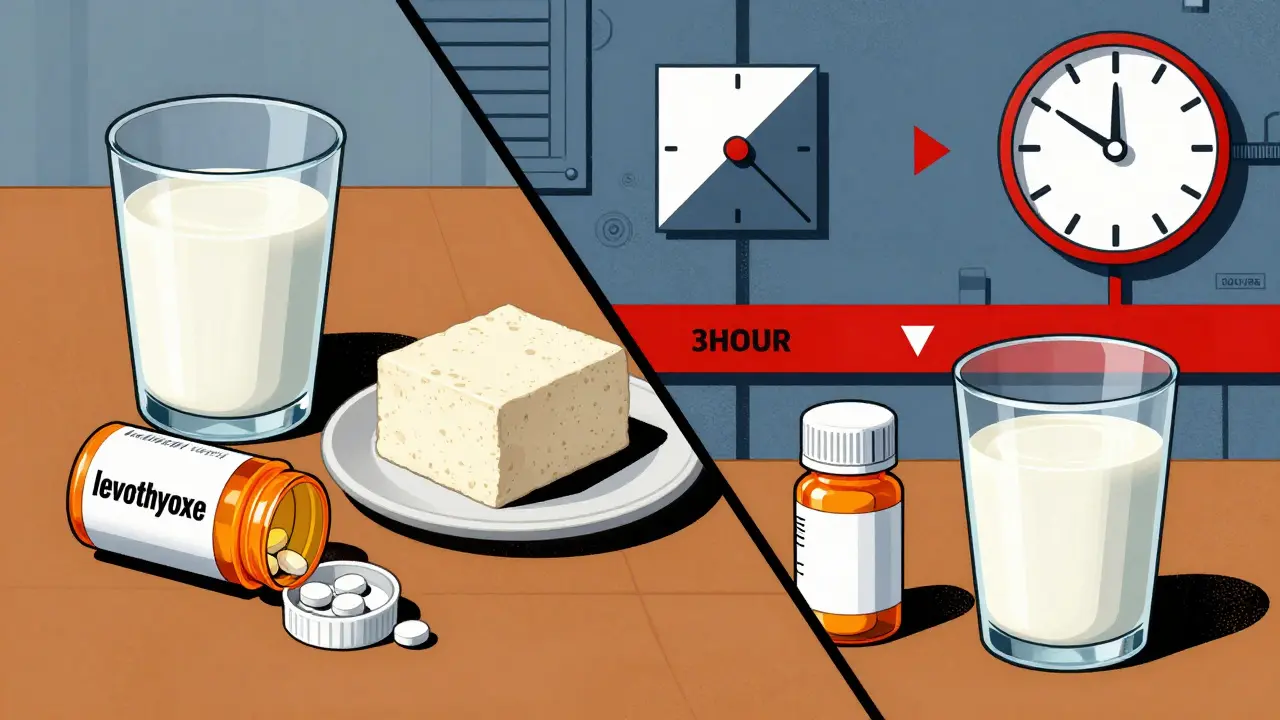
You don’t have to quit soy completely. But you do need to change how you time it.- Wait at least 3 hours after eating soy before taking levothyroxine. Some experts recommend 4 hours for extra safety. The goal is to let soy pass through your stomach before the pill is absorbed.
- Take levothyroxine on an empty stomach. Best practice: 30 to 60 minutes before breakfast, with water only.
- Don’t take it with coffee, calcium, or iron. Even if you space soy correctly, other interferents can still cause problems.
- Check food labels. Look for “soy protein isolate,” “soy lecithin,” “textured vegetable protein,” or “soy flour.” These aren’t always obvious.
For babies on soy formula: The American Academy of Pediatrics says to switch to a non-soy formula immediately if hypothyroidism isn’t improving. Most U.S. infant formulas are soy-free-only 92% contain soy, meaning alternatives are widely available.
What About Soy Alternatives or Special Formulations?
If you struggle with timing or have persistent high TSH levels, talk to your doctor about alternatives.- Tirosint®: This is a softgel version of levothyroxine. A 2020 trial showed it had 18.3% better absorption than tablets when taken with soy. It’s more expensive but may be worth it if you rely on soy.
- Levo-Sorb® (experimental): A new formulation in Phase III trials includes ingredients that block isoflavone binding. Early results show 92.4% absorption maintained even with soy-compared to 58.7% with regular pills.
- CYP1A2 genotyping: Researchers are testing whether your genes affect how you metabolize soy. If you have the *1F polymorphism (common in 40% of Caucasians), you may break down isoflavones slower, making interference worse. NIH trials are ongoing.
Why This Isn’t Just “Theory”
Some doctors still say, “There’s not enough evidence.” But that’s misleading. The evidence isn’t from one study-it’s from dozens. The 2021 systematic review by de A Wiesner analyzed 63 studies, following strict scientific guidelines. Case reports from pediatric endocrinologists show babies with brain development delays because soy wasn’t recognized as the culprit. Pharmacists at CVS and Walgreens now include soy warnings in their counseling because they’ve seen patients with uncontrolled TSH after switching to soy milk.The FDA started requiring soy interaction warnings on levothyroxine packaging in 2021. But only 67% of prescriptions include them-meaning many patients never hear about it. That’s why awareness is still low. A 2022 poll on Reddit’s r/Hashimotos found 63% of 1,847 respondents didn’t know about this interaction-despite 41% consuming soy daily.
Bottom Line: Don’t Panic, Just Adjust
You don’t need to eliminate soy from your life. But you do need to treat it like a drug interaction-not a dietary preference. If you take levothyroxine and eat soy:- Wait 3-4 hours between soy and your pill.
- Take your medicine on an empty stomach.
- Check labels for hidden soy.
- Get your TSH tested if you’ve recently changed your soy intake.
- Ask your doctor about Tirosint® if you’re struggling.
Thyroid medication isn’t one-size-fits-all. What works for one person might not work for another. But ignoring the soy-levothyroxine interaction is like taking your blood pressure pill with grapefruit juice-it doesn’t make sense. Your body needs the full dose. Don’t let soy steal it.
Can I eat soy if I take levothyroxine?
Yes, but not at the same time. Wait at least 3 to 4 hours after eating soy before taking your levothyroxine. This gives your body time to absorb the medication before soy enters your system and blocks it.
Does all soy affect levothyroxine the same way?
No. The amount of isoflavones varies. Tempeh has about 45 mg per 100g, tofu has 25 mg, and soy milk has 15-30 mg per cup. Soy lecithin in snacks usually has too little to matter. But if you eat multiple soy products daily, the effect adds up.
I’ve been eating soy with my thyroid pill for years-why is this a problem now?
Some people metabolize soy differently due to genetics, gut health, or other medications. You might have been lucky so far. But as you age, your stomach acid drops, or your dose changes, the interference can suddenly become noticeable. A TSH jump from 2 to 8 is a red flag-don’t wait for symptoms.
Should I switch to a different thyroid medication?
Not necessarily. Levothyroxine is still the gold standard. Instead, focus on timing and form. Tirosint® (softgel) has better absorption with soy. Some patients do better on natural desiccated thyroid (NDT), but it’s not proven to avoid soy interference. Talk to your endocrinologist before switching.
What if I’m a parent giving my baby soy formula and levothyroxine?
Stop the soy formula immediately. The American Academy of Pediatrics says soy formula can cause severe, dangerous hypothyroidism in infants on levothyroxine. Switch to a non-soy formula right away and retest TSH levels within 2 weeks. Delaying this can affect brain development.
Is there a test to know if soy is affecting my absorption?
Yes. Ask your doctor to check your TSH and free T4 levels. Then, stop soy for 4 weeks and retest. If your levels improve significantly, soy was likely the issue. This is the simplest way to confirm the interaction in your case.