Fever in Adults: When to Seek Medical Help
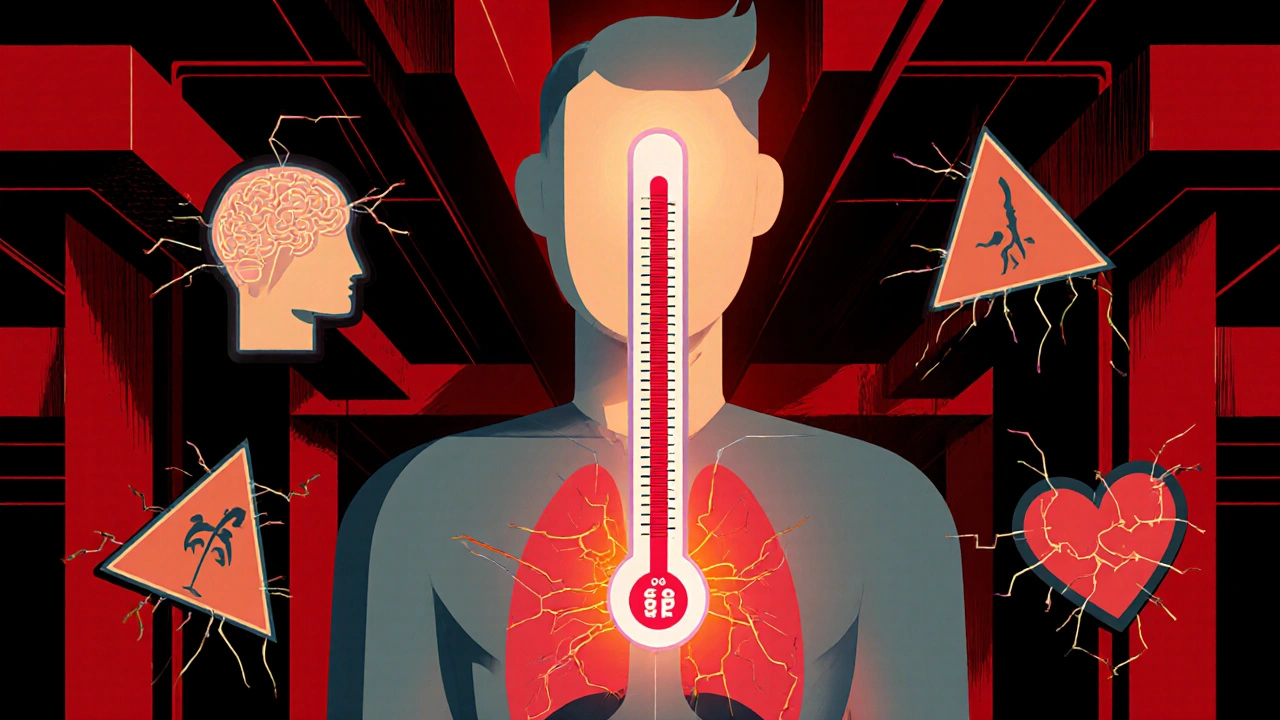
Know when a fever in adults becomes dangerous. Learn the temperature thresholds, warning symptoms, and timelines that mean it's time to seek medical help-before it turns into an emergency.
Read DetailsWhen your body temperature rises, it’s not just a number—it’s a signal. A fever, an elevated body temperature that’s your immune system’s response to infection or inflammation. Also known as pyrexia, it’s one of the most common reasons people visit a doctor. But not all fevers are the same. Some fade with rest and fluids. Others scream for help.
Watch for high fever, a temperature above 103°F (39.4°C) that doesn’t respond to typical treatments. That’s not normal. It can mean a bacterial infection like pneumonia, a urinary tract infection gone unchecked, or even something like meningitis. Combine it with a stiff neck, confusion, or a rash that won’t fade when you press on it? That’s an emergency. Dehydration, dry mouth, no tears, dark urine, or dizziness when standing is another red flag. Kids and older adults are especially at risk—their bodies don’t hold fluids the same way. If someone can’t keep fluids down or hasn’t urinated in 8 hours, they need help fast.
Don’t ignore infection symptoms, like persistent cough, ear pain, sore throat, or painful urination that show up with a fever. These aren’t just side effects—they’re clues. A fever that lasts more than three days, or one that comes and goes for weeks, could point to something deeper: Lyme disease, autoimmune issues, or even hidden abscesses. And if you’re on immune-suppressing meds—like for cancer, transplants, or rheumatoid arthritis—even a low-grade fever can be dangerous. Your body can’t fight back the way it should.
Most fevers are harmless. But knowing the warning signs saves lives. You don’t need to panic at every bump in temperature. But if you’re unsure, if symptoms pile up, or if someone you care about feels worse instead of better—don’t wait. The posts below cover real cases: how a simple fever led to a misdiagnosed infection, why kids with fevers need different care, what doctors look for when a fever won’t break, and how to tell the difference between a viral bug and something that needs antibiotics. You’ll find practical advice on when to call a doctor, what tests might be needed, and how to monitor symptoms at home. This isn’t guesswork. It’s what people actually faced—and what worked.
Know when a fever in adults becomes dangerous. Learn the temperature thresholds, warning symptoms, and timelines that mean it's time to seek medical help-before it turns into an emergency.
Read Details