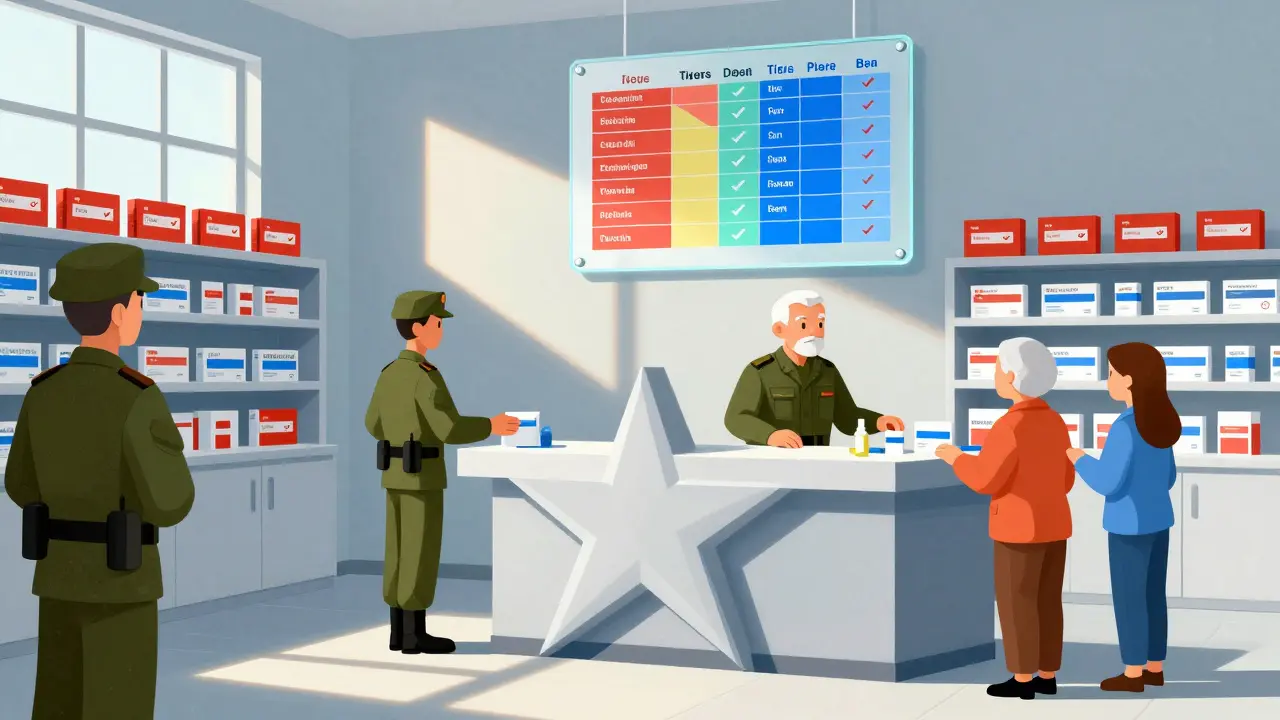
When you're on TRICARE, getting your prescriptions shouldn't feel like a maze. For most military families, generic drugs are the go-to choice-cheaper, just as effective, and covered under the program. But knowing TRICARE coverage for generics isn’t as simple as just saying "it’s generic." There are tiers, copays, formularies, and rules that change depending on where you fill your prescription, who you are, and even what time of year it is.
How TRICARE Handles Generic Drugs
TRICARE doesn’t treat all generics the same. Even if a drug is FDA-approved and chemically identical to its brand-name version, it might not be on the formulary. The TRICARE Formulary, updated every month, lists which generics are covered and at what cost. As of October 2025, over 5,500 drugs are covered, and 92% of all prescriptions filled are for generics. That’s because the program pushes cost-effective options without sacrificing quality.
Here’s how it breaks down:
- Tier 1: Generic formulary drugs - These are your best bet. They’re the cheapest, most widely covered, and often the first choice for doctors prescribing for conditions like high blood pressure, diabetes, or cholesterol.
- Tier 2: Brand-name formulary drugs - Covered, but you pay more. Usually only used if a generic isn’t available or doesn’t work for you.
- Tier 3: Non-formulary drugs - These aren’t on the list. You can still get them, but you’ll need a medical necessity request approved by Express Scripts. About 78% of these requests get approved, but it takes time.
- Tier 4: Non-covered drugs - Not covered at all. This includes things like weight loss medications for TRICARE For Life beneficiaries, which were excluded as of August 31, 2025.
Don’t assume all generics are created equal. About 12% of generic drugs require prior authorization-even if they’re technically the same as a brand-name drug. That’s because TRICARE’s formulary is selective. It’s not about safety; it’s about cost and clinical preference.
Where You Fill Your Prescription Changes the Cost
Your out-of-pocket cost for a generic drug depends entirely on where you get it. There are three main ways to fill prescriptions under TRICARE, and the prices vary dramatically.
Military pharmacies are the gold standard. If you live near a base with a pharmacy, you pay $0 for every covered generic-no exceptions. Whether you’re active duty, a retiree, or a family member, your lisinopril, metformin, or atorvastatin costs nothing. This is a benefit most civilian insurance plans don’t offer.
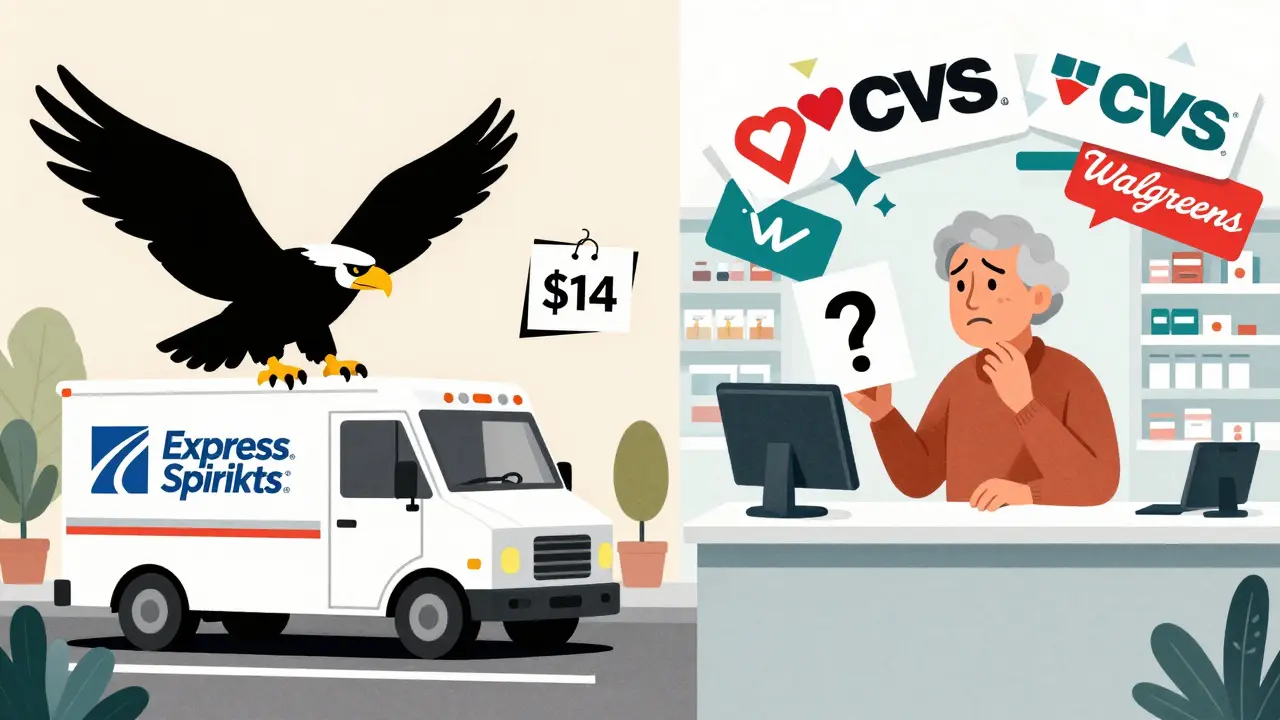
TRICARE Home Delivery (run by Express Scripts) is ideal for chronic medications. You can get up to a 90-day supply shipped to your door. As of January 1, 2026, the copay for generic formulary drugs is $14. That’s up from $13 in 2025, but still far below what most civilian plans charge. A Marine retiree in Florida told Military.com he pays $14 for 90 days of his cholesterol med-his civilian friends pay $30 for just 30 days.
Network retail pharmacies (like CVS, Walgreens, or Rite Aid) charge $16 for a 30-day supply of a generic formulary drug. That rate hasn’t changed since 2025 and won’t change through 2026. But here’s the catch: not every pharmacy knows TRICARE rules. Some staff aren’t trained on the formulary or prior authorization process. That can lead to delays, confusion, or even being charged full price.
What If Your Generic Isn’t on the Formulary?
Let’s say your doctor prescribes a generic version of a drug you’ve been taking for years. You show up at the pharmacy, and they say, “We don’t carry that one under TRICARE.” That’s not a mistake-it’s the formulary at work.
You have two options:
- Ask your provider to switch you to a different generic on the formulary. Often, there are multiple generic versions of the same drug. One might be covered, another isn’t.
- Request a medical necessity exception. Your doctor submits paperwork to Express Scripts explaining why the non-formulary generic is necessary. The approval rate is around 78%, but it takes 48 hours on average. If your medication is urgent, this delay can be stressful.
Some beneficiaries report waiting 72 hours for approval, forcing them to make an extra trip to the clinic or pay out of pocket. That’s why checking the formulary before your appointment is critical.
How to Check If a Drug Is Covered
The TRICARE Formulary Search tool at www.esrx.com/tform is your best friend. You can search by drug name, strength, or even manufacturer. It tells you:
- Which tier the drug is on
- What your copay will be
- Whether prior authorization is required
- Which pharmacies can fill it
The site was updated in February 2025 to show real-time cost estimates, so you know exactly what you’ll pay before you leave the doctor’s office. New users often need one or two tries to get used to it. But once you learn how to use it, you’ll avoid surprises at the pharmacy.
Pro tip: Bookmark the page. Save your most-used medications. If you’re on a chronic medication, check the formulary every few months-drugs get added or removed.
How TRICARE Compares to Other Programs
TRICARE isn’t the cheapest, but it’s not the worst. Compared to Medicare Part D, which averages $7-$10 for generics, TRICARE’s $13-$16 copays seem high. But here’s the catch: Medicare beneficiaries don’t have access to $0 military pharmacies. For retirees, TRICARE’s home delivery option is often cheaper than their Medicare Part D plan’s retail copay.
VA pharmacies give veterans free medications-but only if they’re enrolled in VA care. TRICARE covers a broader group: active duty, retirees, and their families. That’s why TRICARE’s coverage is more complex.
Commercial plans often have wider formularies, covering 98% of prescribed drugs right away. TRICARE covers 90% of commonly prescribed generics, but requires prior authorization for the rest. That’s a trade-off: lower costs for less flexibility.
According to the 2025 Commonwealth Fund Scorecard, TRICARE ranks third among U.S. government health programs for generic drug access-behind Medicare Advantage but ahead of Medicaid.

Recent Changes and What’s Coming in 2026
January 1, 2026 brought the first copay increase for TRICARE Home Delivery since 2023. The generic copay went from $13 to $14. Retail stays at $16. The Defense Health Agency says this small increase won’t hurt adherence-Express Scripts predicts only a 0.8% drop in fills based on pilot data.
Other changes:
- 17 new generics were added to the formulary in October 2025.
- 9 were removed, mostly because better or cheaper alternatives became available.
- Weight loss generics were excluded for TRICARE For Life beneficiaries as of August 31, 2025. This affects about 1.2 million people and has sparked criticism from policy experts.
- By Q3 2026, providers will be able to see real-time coverage and cost info at the point of prescribing. That means your doctor will know right away if your prescription will be covered.
Looking ahead, TRICARE plans to expand step therapy (trying cheaper drugs first) to 15 more drug classes by 2027 and start using pharmacogenomic testing for high-risk medications by 2028. This means your genetics could influence what drug you’re prescribed-making treatment more personalized.
Real Stories From the Front Lines
On Reddit’s r/MilitaryFinance, a November 2025 thread got 87 comments. Of those, 72% were positive. The most common praise? “I got my blood pressure med at the base pharmacy for $0.”
But frustrations are real too. One user wrote: “My doctor prescribed a generic I’ve used for years. It’s not on the formulary. I had to wait three days for approval. I missed a dose.”
A 2025 beneficiary survey showed 86% satisfaction with generic access-but 39% of retirees over 65 were upset about the weight loss drug exclusion. Another common complaint? Pharmacists at retail stores not knowing TRICARE rules. One retiree said, “I paid $48 because the cashier didn’t know how to process my TRICARE card.”
Still, adherence rates for chronic conditions using generics are at 82%, slightly above the national average. That tells you most people are getting what they need.
What You Need to Do Now
Here’s your action plan:
- Check your medications on the TRICARE Formulary Search tool. Don’t assume your current generic is still covered.
- Use military pharmacies whenever possible. $0 is better than $14 or $16.
- Use Home Delivery for long-term meds. 90-day supplies save money and reduce trips.
- Call the TRICARE Pharmacy Helpline at 1-877-363-1303 if you’re confused. They handled 1.2 million calls in 2025.
- Ask your doctor to check the formulary before writing the prescription. A quick lookup can save you time and money.
TRICARE’s system isn’t perfect, but it works. The program saves the military $1.7 billion a year by favoring generics. And for the people who use it, that means lower costs and reliable access to the meds they need.
Are all generic drugs covered by TRICARE?
No. Only generics on the TRICARE Formulary are covered. About 12% of generic drugs require prior authorization, even if they’re FDA-approved. Always check the formulary before filling a prescription.
What’s the copay for generic drugs at military pharmacies?
$0. All covered generic and brand-name drugs are free at military treatment facility pharmacies, no matter your beneficiary status-active duty, retiree, or family member.
Can I use any pharmacy with TRICARE?
You can use any network retail pharmacy, but you’ll pay $16 for a 30-day generic. Non-network pharmacies may not accept TRICARE at all. Always verify the pharmacy is in-network before filling your prescription.
Why was my generic drug denied?
It’s likely not on the TRICARE Formulary. Some generics are excluded because there’s a cheaper or preferred alternative. You can request a medical necessity exception, which has a 78% approval rate but takes up to 72 hours.
Is TRICARE Home Delivery worth it?
Yes, for chronic medications. You pay $14 for a 90-day supply, which is cheaper than paying $16 every 30 days. Plus, it’s delivered to your door. Most retirees use it because it’s convenient and cost-effective.
What happened to weight loss generics in TRICARE?
As of August 31, 2025, TRICARE For Life beneficiaries can no longer get coverage for weight loss medications-even if they’re FDA-approved generics. This change affects about 1.2 million people and was mandated by the 2024 National Defense Authorization Act.






Just got my 90-day supply of metformin via home delivery-$14, delivered to my door. Meanwhile, my buddy in Canada pays $45 CAD for the same thing. TRICARE’s not perfect, but this? This is a win.
January 25And yes, I checked the formulary first. Always do. Don’t be that guy who shows up at CVS and gets charged full price because you assumed.
Also, military pharmacy? $0. Zero. Nada. Why are you even considering anything else?
Juan Reibelo