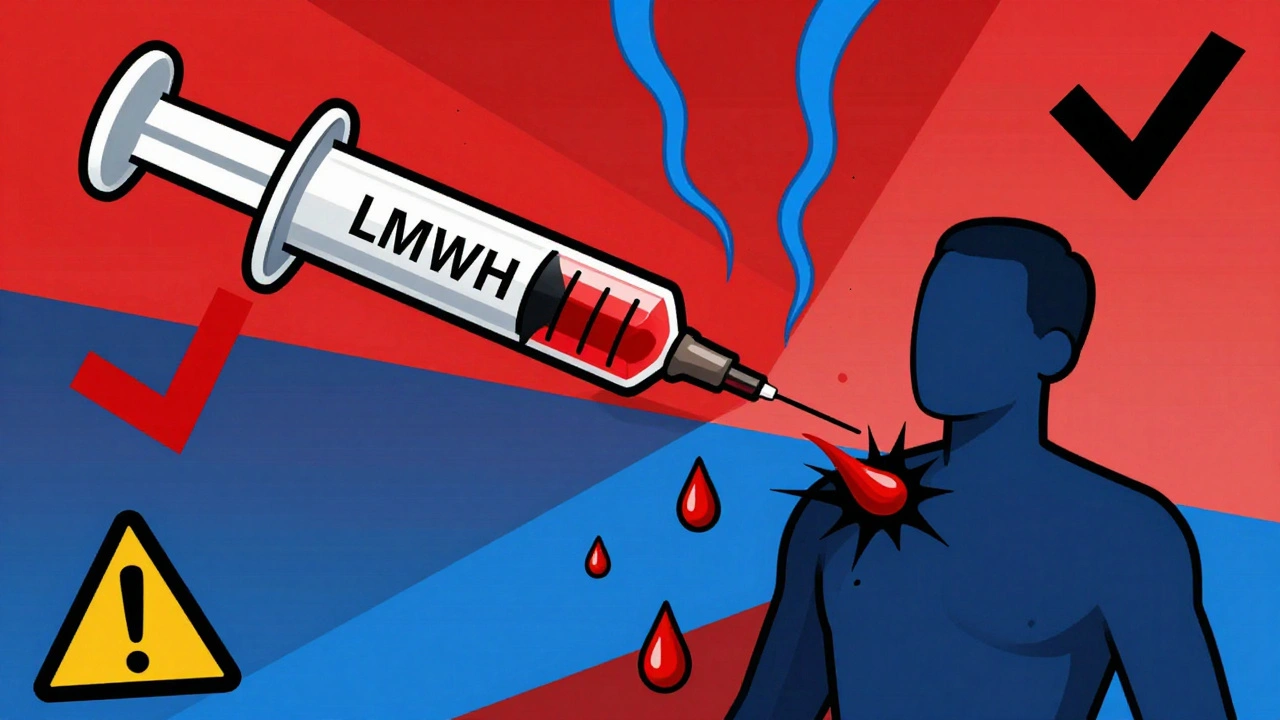
LMWH: What It Is, How It Works, and Why It Matters for Blood Clot Prevention
When you hear LMWH, low molecular weight heparin, a type of anticoagulant used to prevent blood clots. Also known as low-molecular-weight heparin, it's one of the most common ways doctors stop dangerous clots from forming after surgery, during hospital stays, or in people with certain heart or circulation conditions. Unlike regular heparin, which needs frequent blood tests and hospital monitoring, LMWH works predictably with fixed doses—often given as a simple daily shot under the skin. That’s why it’s become the go-to choice for millions of people needing blood thinning without constant doctor visits.
LMWH belongs to a group of drugs called anticoagulants, medications that slow down the blood’s ability to clot. It’s not a cure—it’s a shield. It doesn’t dissolve existing clots, but it stops new ones from growing, giving your body time to break them down naturally. Common brand names like Lovenox and Fragmin are all forms of LMWH. It’s used for deep vein thrombosis, a clot in a deep vein, often in the leg, that can break loose and travel to the lungs, after joint replacement surgery, for people with cancer who are at higher clotting risk, and even during pregnancy when other blood thinners aren’t safe. You’ll often see it paired with other treatments, like compression stockings or early movement, because it works best as part of a plan—not alone.
But LMWH isn’t for everyone. If you’re prone to bleeding, have kidney problems, or have had a bad reaction to heparin in the past, your doctor will think twice. Side effects like bruising, mild pain at the injection site, or rare but serious drops in platelet count (called HIT) are things you should report right away. And while it’s safer than older options, you still need to be careful with other meds—like NSAIDs or even some herbal supplements—that can increase bleeding risk. That’s why medication reviews, like the ones covered in our posts on polypharmacy and drug interactions, matter so much when you’re on LMWH.
What you’ll find below are real-world stories and science-backed guides about how LMWH fits into broader medication safety. You’ll read about how it’s used alongside other drugs, what to do if you miss a dose, how travel affects storage (yes, you can take it on a plane), and how to spot signs something’s wrong before it becomes an emergency. These aren’t theory pieces—they’re practical, lived experiences from people managing clots, recovery, and long-term care. Whether you’re taking LMWH yourself, caring for someone who is, or just trying to understand why your doctor chose it over a pill, this collection gives you the clear, no-fluff facts you need to stay safe and informed.