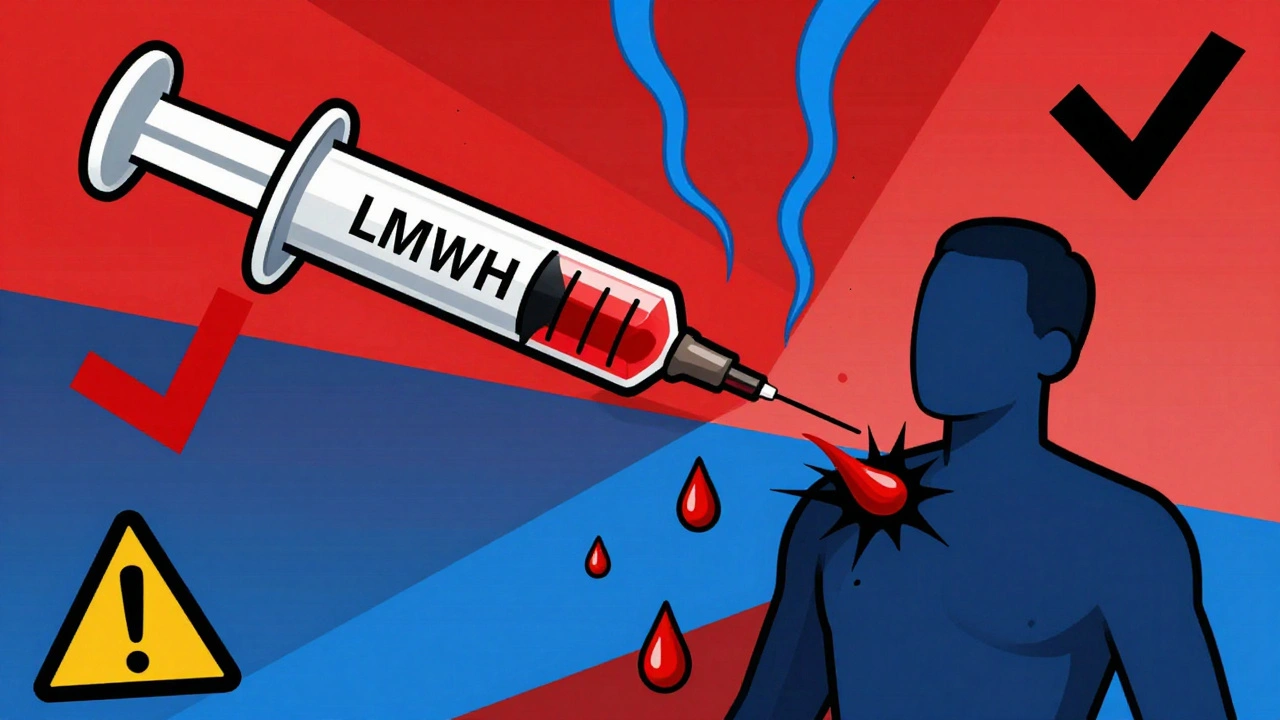
LMWH Anti-Xa Testing Decision Tool
Clinical Scenario Selection
Select all clinical situations present in the patient:
Results will appear here
Most people on low molecular weight heparin (LMWH) like enoxaparin or dalteparin never need an Anti-Xa test. It’s not a routine check like a blood pressure reading. But when something goes wrong-when a patient bleeds for no reason or develops a clot despite being on the drug-that’s when Anti-Xa testing becomes life-saving.
Why Anti-Xa Testing Isn’t Routine
LMWH was designed to be predictable. Unlike unfractionated heparin, which needs frequent blood tests to adjust doses, LMWH works reliably in most people with fixed doses based on weight. That’s why the American College of Chest Physicians says routine Anti-Xa monitoring is unnecessary. In fact, studies show no difference in outcomes between patients who get tested regularly and those who don’t. The test costs $45 to $75 per draw. Labs need special machines like the STA-R Evolution or ACL TOP 750. Turnaround takes hours. For the average patient recovering from knee surgery or flying long-haul, it’s just not worth it.But here’s the catch: predictability breaks down in certain people. When it does, skipping the test can be dangerous.
When Side Effects Demand a Test
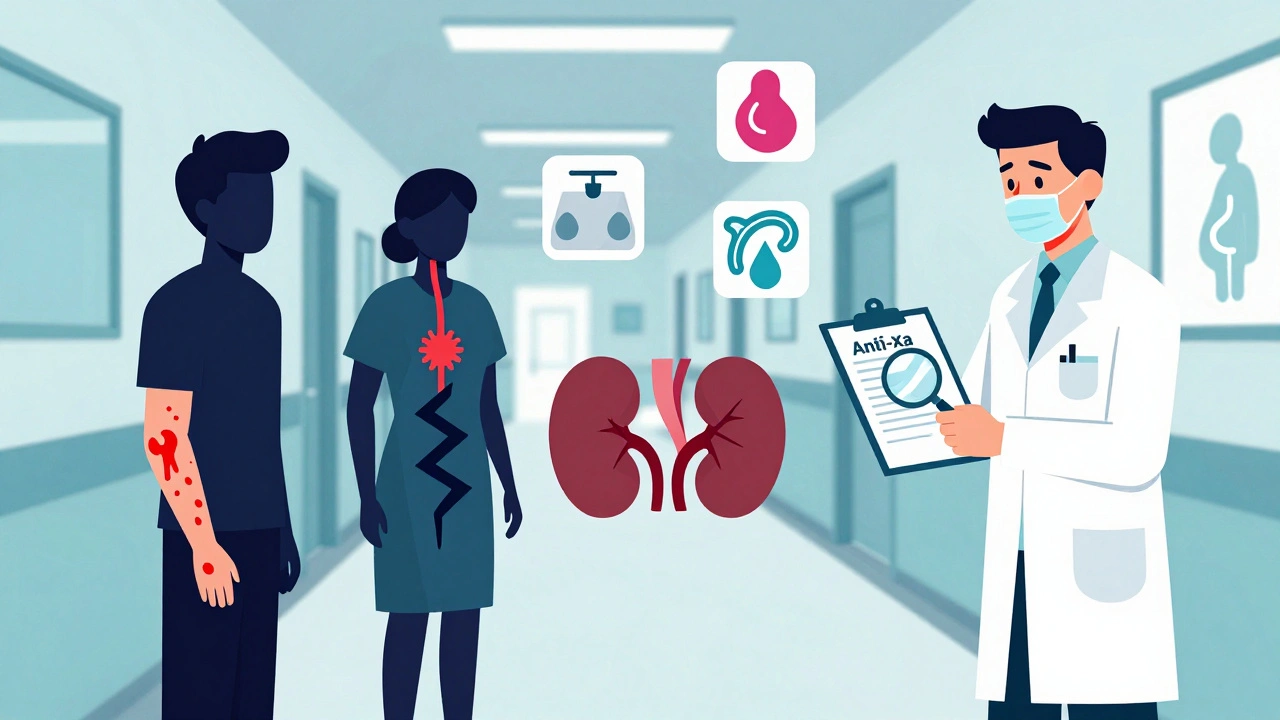
You don’t check Anti-Xa levels because a patient is on LMWH. You check them because something unexpected happened.- Major bleeding: If a patient develops unexplained bruising, blood in urine, vomiting blood, or a sudden drop in hemoglobin after starting LMWH, the drug might be building up in their system. This is especially true in patients with kidney problems.
- Clotting despite treatment: If someone develops a new deep vein thrombosis or pulmonary embolism while on a full therapeutic dose of LMWH, the drug might not be working. Anti-Xa levels can tell you if the dose is too low.
- Unexplained thrombocytopenia: A sudden drop in platelets could signal heparin-induced thrombocytopenia (HIT). While Anti-Xa doesn’t diagnose HIT, it helps confirm if the patient is even getting enough anticoagulation while switching to another drug.
These aren’t theoretical scenarios. At Vanderbilt University Medical Center, a 2018 audit found that when Anti-Xa testing was done for these reasons, 92% of dose changes were correct-and no patient had a complication after a proper adjustment. But when doctors ordered the test just because the patient was obese or had surgery, 8% ended up bleeding because they got over-corrected.
Who Really Needs It?
Not everyone on LMWH needs testing. But these groups are high-risk:- Severe kidney impairment: When creatinine clearance drops below 30 mL/min, LMWH sticks around much longer. In end-stage kidney disease (CrCl <15 mL/min), the half-life jumps from 4-5 hours to 12-24 hours. Standard doses can lead to dangerous buildup. Anti-Xa levels help avoid overdose.
- Extreme body weight: Patients over 150 kg (330 lbs) or under 40 kg (88 lbs) don’t process LMWH the same way. Weight-based dosing can be inaccurate here. A 2022 SAGES survey found 18.7% of bariatric surgery centers monitor Anti-Xa levels in these patients.
- Pregnancy: Blood volume increases, kidney function changes, and drug clearance speeds up. Target levels shift to 0.2-0.6 IU/mL for therapeutic dosing. Many OB-GYNs and hematologists use Anti-Xa to guide dosing in pregnant women with clots or mechanical heart valves.
- Pediatric patients: Kids metabolize drugs differently. The Nohe 1999 protocol is still used in children on LMWH, especially after cardiac surgery or with congenital clotting disorders.
Dr. Evan Lin from UC Davis says it best: “I’ve ordered Anti-Xa levels maybe five times in ten years. Each time, it was because the patient was bleeding or clotting despite being on the right dose.”
How the Test Works
Anti-Xa measures how much the drug is blocking factor Xa, a key protein in blood clotting. The test isn’t complicated, but timing matters.- Draw blood 4-6 hours after the last injection. That’s the peak level, and it’s what you want to measure.
- Don’t test too early. Levels haven’t stabilized until after the third dose.
- Therapeutic range: 0.6-1.0 IU/mL for treatment, 0.2-0.5 IU/mL for prevention.
But here’s the problem: results vary by lab. A level of 0.8 IU/mL in one hospital might read as 0.9 in another. That’s because there’s no universal standard. Different reagents and machines give different numbers. The College of American Pathologists reports up to 15% variation between labs. So never compare results from different facilities.
What the Test Can’t Do
Anti-Xa is specific. It only measures LMWH. It won’t tell you if someone is taking a direct oral anticoagulant like apixaban or rivaroxaban. It won’t predict bleeding risk in a healthy person. And it won’t help if the patient isn’t taking the drug at all.A 2015 meta-analysis by Schulman et al. showed that in most patients, Anti-Xa levels don’t correlate with bleeding. That’s why a single high number without symptoms shouldn’t trigger a dose change. One study found 41% of patients had supratherapeutic levels but no bleeding. Jumping to reduce the dose in those cases can cause clots.
Real Cases, Real Decisions
A 320 kg man was admitted after a car crash. He was given enoxaparin 1 mg/kg twice daily. Two days later, he developed a new clot in his leg. The team ordered an Anti-Xa level. Result: 0.3 IU/mL-way below target. They doubled the dose. The next level came back at 0.9 IU/mL. No more clots. Another patient, a 72-year-old woman with CrCl of 18 mL/min, started on enoxaparin after hip surgery. Three days later, she bled into her abdomen. Her Anti-Xa level was 1.8 IU/mL-more than double the therapeutic range. Her dose was cut in half. Bleeding stopped. These aren’t rare cases. At Ventura County Medical Center, only 28% of Anti-Xa orders were appropriate. The rest were routine checks after surgery. Those unnecessary tests didn’t help anyone. They just added cost and risk.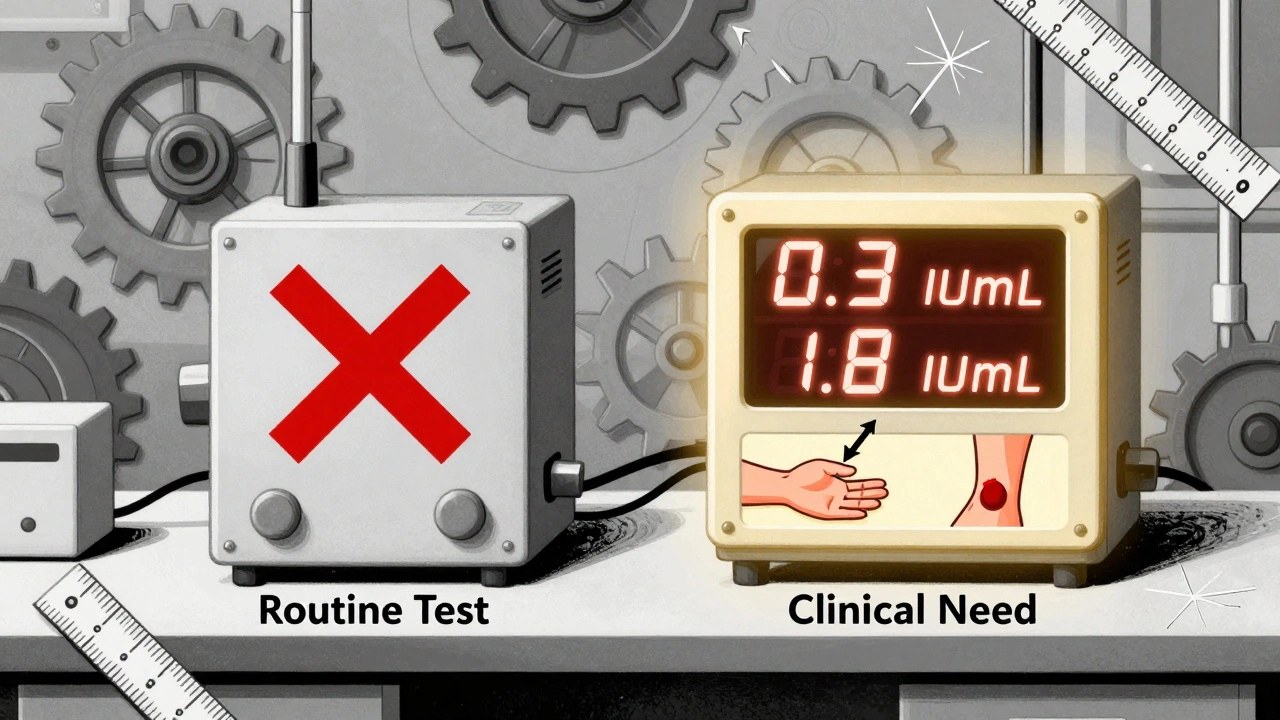
How to Avoid Mistakes
The biggest danger isn’t not testing-it’s testing too much. Too many doctors order Anti-Xa because they’re unsure, not because the patient needs it.- Don’t test for “peace of mind.”
- Don’t test just because the patient is obese or elderly.
- Don’t change the dose based on one level without clinical context.
Best practice? Use a checklist. Hospitals like Vanderbilt and UC Davis have pharmacist-led order sets that require documentation: “Reason for test: ___” and “Clinical finding: ___.” That cut inappropriate testing by 63%.
If you’re unsure, ask a hematologist or anticoagulation pharmacist. Most large hospitals have them. They know when to test-and when to wait.
What’s Next?
Point-of-care Anti-Xa testing is coming. A new device from Diagnostica Stago showed 92% accuracy compared to central labs in 2022. In the future, a nurse might draw blood and get a result in 20 minutes-no waiting for the lab. But even then, the rule won’t change: test only when there’s a clinical reason.The future of LMWH monitoring isn’t more testing. It’s smarter testing. Better guidelines. Less guesswork.
LMWH is a powerful tool. But like any tool, it’s only safe when used correctly. Anti-Xa monitoring isn’t about checking numbers. It’s about listening to the patient-and responding when the body says something’s wrong.
Do I need Anti-Xa testing if I’m on enoxaparin after surgery?
No, not unless something goes wrong. Most patients recovering from surgery don’t need it. Routine testing doesn’t prevent clots or bleeding. Only order the test if you see signs of under-anticoagulation (new clot) or over-anticoagulation (unexplained bleeding).
Can Anti-Xa levels be checked at any time of day?
No. For accurate results, the blood sample must be drawn 4-6 hours after the injection. That’s when the drug reaches its peak level in the blood. Testing at the wrong time gives misleading results. If you’re unsure, ask the lab for their protocol.
Is Anti-Xa testing covered by insurance?
Yes, but only if there’s a documented medical reason. Medicare and most private insurers cover the test when ordered for renal failure, extreme weight, pregnancy, or unexpected bleeding/clotting. Routine or “just in case” orders are often denied.
What if my Anti-Xa level is high but I feel fine?
Don’t change the dose. A high level without symptoms doesn’t mean you’re at risk for bleeding. Many patients have supratherapeutic levels and never bleed. Look at the whole picture: are you bruising? Is your hemoglobin dropping? Is your kidney function worsening? Only adjust the dose if there’s a clear clinical reason.
Can I use Anti-Xa to monitor other blood thinners like rivaroxaban?
No. Anti-Xa tests are calibrated only for low molecular weight heparins like enoxaparin and dalteparin. They won’t detect direct oral anticoagulants (DOACs) like rivaroxaban, apixaban, or dabigatran. Using the test for these drugs gives false results. Always confirm which drug you’re monitoring.
How long does it take to get Anti-Xa results?
Most hospital labs take 2-4 hours. Some academic centers offer faster turnaround. Community hospitals may take longer. If you’re waiting for results to make a decision, ask if the lab can prioritize your sample. In emergencies, results should be available within 2 hours.
Can I monitor LMWH at home with a fingerstick test?
Not yet. There’s no FDA-approved home test for Anti-Xa levels. While research is ongoing into point-of-care devices, none are widely available or validated for routine use. All testing still requires a venous blood draw and lab analysis.
Final Thoughts
Anti-Xa testing for LMWH isn’t about numbers. It’s about answers. It’s for when the drug isn’t doing what it should-or when it’s doing too much. It’s for the patient who bleeds without injury. The one who clots despite being on the right dose. The pregnant woman, the obese patient, the one with failing kidneys.Don’t test because you’re nervous. Test because the patient needs you to.







so like... you're telling me we're spending $75 every time someone sneezes on warfarin? lmao. just let em bleed out and call it a day
December 7Taya Rtichsheva