
Flying across the world is exciting, but for anyone relying on daily prescriptions, it can be a logistical nightmare. The real danger isn't just forgetting a pill; it's the "cascade of missed doses" that happens when your internal clock clashes with a new time zone. Whether you're managing a chronic condition or taking a preventative drug, a mismatched schedule can lead to therapeutic failure or sudden side effects. The goal of a travel medication plans strategy is to keep your blood levels stable while moving through different climates and clocks.
The Time Zone Struggle: When to Shift Your Dose
When you land in a city six hours ahead or behind your home, your body doesn't immediately adapt, but your medication schedule must. If you stick to your home time, you might find yourself taking a morning dose at 3 AM local time, which is a recipe for insomnia or missed doses. Conversely, jumping immediately to local time can create a dangerous gap in medication coverage.
For time differences of less than three hours, you can usually maintain your home schedule without much issue. However, for larger shifts, the strategy depends on the drug's "half-life"-how long it stays active in your system. For example, medications with a long half-life, like some statins, are forgiving if the timing varies by a few hours. But for time-critical drugs, the window is much tighter.
Consider these specific requirements based on current medical data:
- Antiretrovirals: Integrase inhibitors (like dolutegravir) require strict adherence within a 1-hour window to remain effective.
- Contraceptives: Progestin-only pills have a narrow 3-hour window, making them high-risk during time zone jumps. Combined oral contraceptives offer a more flexible 12-hour window.
- Blood Pressure Meds: Antihypertensives can cause a 15-20% increase in blood pressure variability during the first 72 hours of adjustment.
One effective method for eastward travel (crossing 5+ time zones) is gradual adjustment. By shifting your dose one hour earlier each day for five days before you leave, you can reduce side effects by about 37%. Just be careful-this requires a lot of discipline, and some travelers find it increases the risk of forgetting a dose entirely.
Keeping Your Meds Safe: Storage and Stability
The hold of a plane or a humid taxi in Bangkok can destroy the chemistry of your medication. Many people assume a pill bottle is a fortress, but temperature and light are constant threats. Roughly 23% of common prescriptions are light-sensitive and should stay in opaque containers to avoid breaking down.
| Medication Type | Ideal Temp/Condition | Critical Risk |
|---|---|---|
| Insulin | 2-8°C (36-46°F) | Loss of potency if frozen or overheated |
| Solid Oral Tablets | Below 30°C (86°F) | Degradation due to high humidity (>65%) |
| Light-Sensitive Drugs | Opaque/Dark Containers | Chemical breakdown via UV exposure |
If you travel with insulin, a dedicated cooling pouch is non-negotiable. In tropical destinations, the heat can degrade the protein in the insulin rapidly. For other pills, avoid leaving your medication in a hotel safe or a car, as these areas often experience extreme temperature swings that can compromise the drug's stability.

Avoiding the "Travel Crash": Side Effect Prevention
Side effects during travel often aren't caused by the drug itself, but by how the drug interacts with jet lag, dehydration, and changed eating habits. For instance, taking a medication on an empty stomach when your meal times have shifted can lead to intense nausea or gastric distress.
To prevent these crashes, follow these practical rules of thumb:
- Stay Hydrated: Many medications are processed by the kidneys. Dehydration during a long-haul flight can concentrate the drug in your system, potentially increasing toxicity or side effects.
- Avoid In-Flight Dosing: Unless you have a critical condition (like a high viral load in ARV therapy), avoid taking your meds during the flight. The confusion of airplane mealtimes and cabin clocks often leads to dosing errors.
- Buffer Your Supply: Always pack enough medication for the duration of your trip plus an extra seven days. Flight delays or lost luggage are common, and running out of a critical drug in a foreign country is a medical emergency.
Legal Hurdles and International Regulations
Your prescription might be legal in Manchester, but it could be illegal in Tokyo. Some countries have incredibly strict laws regarding stimulants, strong painkillers, or psychiatric medications. For example, Japan prohibits over 50 medications that are commonly prescribed in the US and UK. Similarly, the UAE requires special permits for 17 specific categories of medicine.
To avoid a legal headache at customs, keep your medications in their original pharmacy packaging with the prescription label clearly visible. This proves the medication is for personal use and is legally prescribed. If you're unsure, check the embassy website of your destination at least a month before you fly.
The Pre-Travel Checklist: A 4-Week Plan
Planning your medication strategy shouldn't happen at the airport gate. Start the process 4-6 weeks before departure to allow your body and your schedule to adapt.
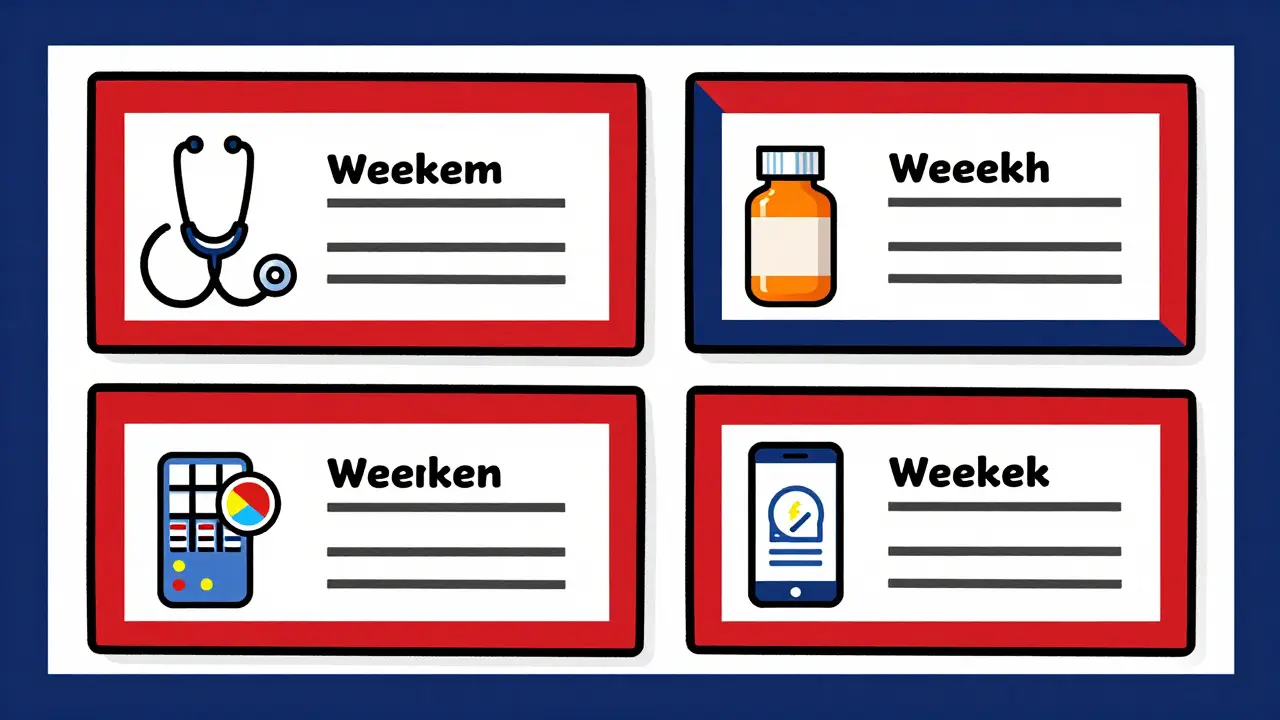
- Week 4: The Doctor Visit. Share your full itinerary with your physician. Discuss the time zone shifts and ask for a written adjustment schedule.
- Week 3: The Pharmacy Audit. Ensure all refills are filled. Ask your pharmacist about the stability of your meds in different climates.
- Week 2: The Tech Setup. Download an adherence app like Medisafe or MyTherapy. These apps can help you manage timing transitions and send alerts based on your current location.
- Week 1: The Trial Run. If you're doing a gradual shift, start moving your dose times now. Use a color-coded pill organizer to visualize your new schedule.
For senior travelers or those taking four or more medications, this window needs to be even wider. Research shows that seniors over 70 are significantly more prone to timing errors, often requiring 7-10 days of pre-travel adjustment to avoid confusion.
What happens if I miss a dose while changing time zones?
The risk depends on the medication. For a preventative drug like a blood pressure pill, missing one dose usually isn't critical. However, for medications like anticoagulants or antiretrovirals, a missed dose can be serious. Always have a "missed dose protocol" written down by your doctor before you travel so you know exactly when to take the next dose without doubling up.
Should I carry my medication in my checked bag or carry-on?
Always carry essential medications in your hand luggage. Checked bags can be lost, delayed, or exposed to extreme temperature drops in the cargo hold (which can freeze liquids like insulin). Keeping them with you ensures you have access regardless of luggage issues.
How do I handle meds that must be taken with food when my appetite is gone due to jet lag?
Carry small, portable snacks like crackers or protein bars. If your medication requires food to prevent stomach irritation or improve absorption, a small snack is sufficient to protect your stomach even if you aren't ready for a full meal in the new time zone.
Can I use a pill organizer instead of original bottles?
While organizers are great for adherence, they can cause issues at customs because the drug isn't identified. The best approach is to use a pill organizer for daily convenience but keep the original prescription bottles in your bag as legal proof of the medication.
Are there apps that actually help with time zone shifts?
Yes, apps like Medisafe and MyTherapy have been clinically validated to improve adherence. They provide location-aware reminders, which means as your phone updates its clock to the destination city, your medication alerts shift accordingly, reducing the cognitive load of doing the math yourself.




The point about the half-life is actually super important. I've noticed that with some of my slower-acting meds, the timing isn't as stressful, but for others, it's a total nightmare. It's a good reminder to actually look up the pharmacology instead of just guessing based on how we feel.
April 7Christopher Cooper