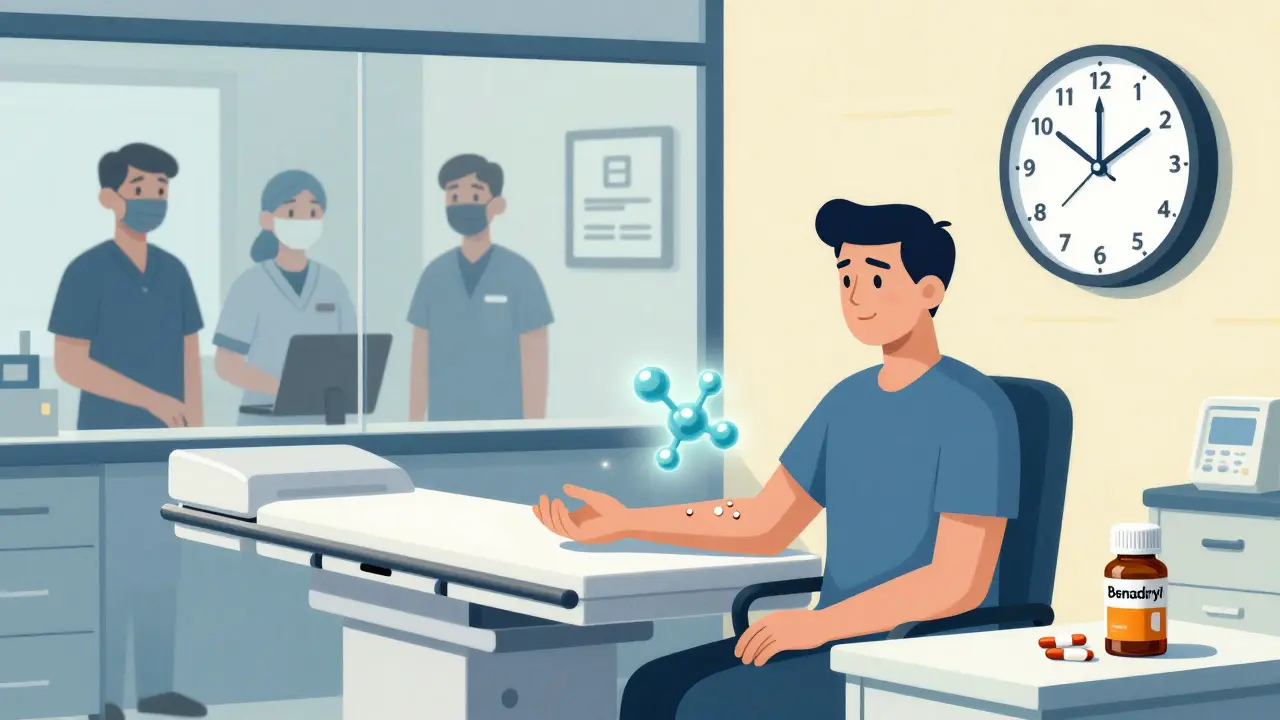
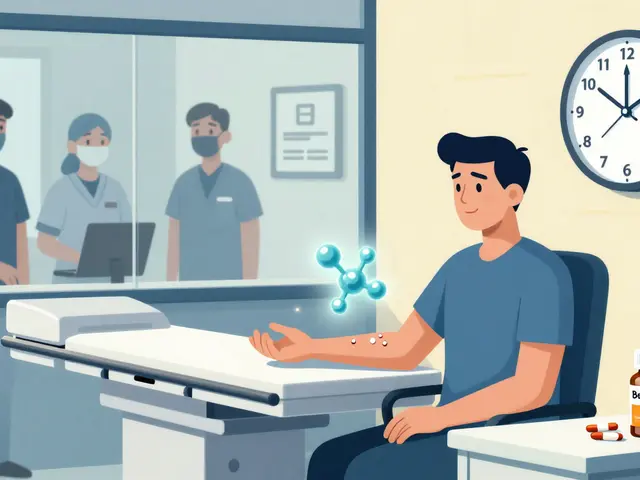
When you’re scheduled for a CT scan or X-ray with contrast dye, most people don’t think twice about it. But if you’ve had a reaction before - even a mild one - the stakes change. A rash, nausea, or itchy skin during a previous scan isn’t just inconvenient. It’s a warning sign. And if you skip the right safety steps, the next reaction could be life-threatening. That’s why pre-medication and careful planning aren’t optional. They’re the difference between getting the scan you need and ending up in an emergency.
What Exactly Is a Contrast Dye Reaction?
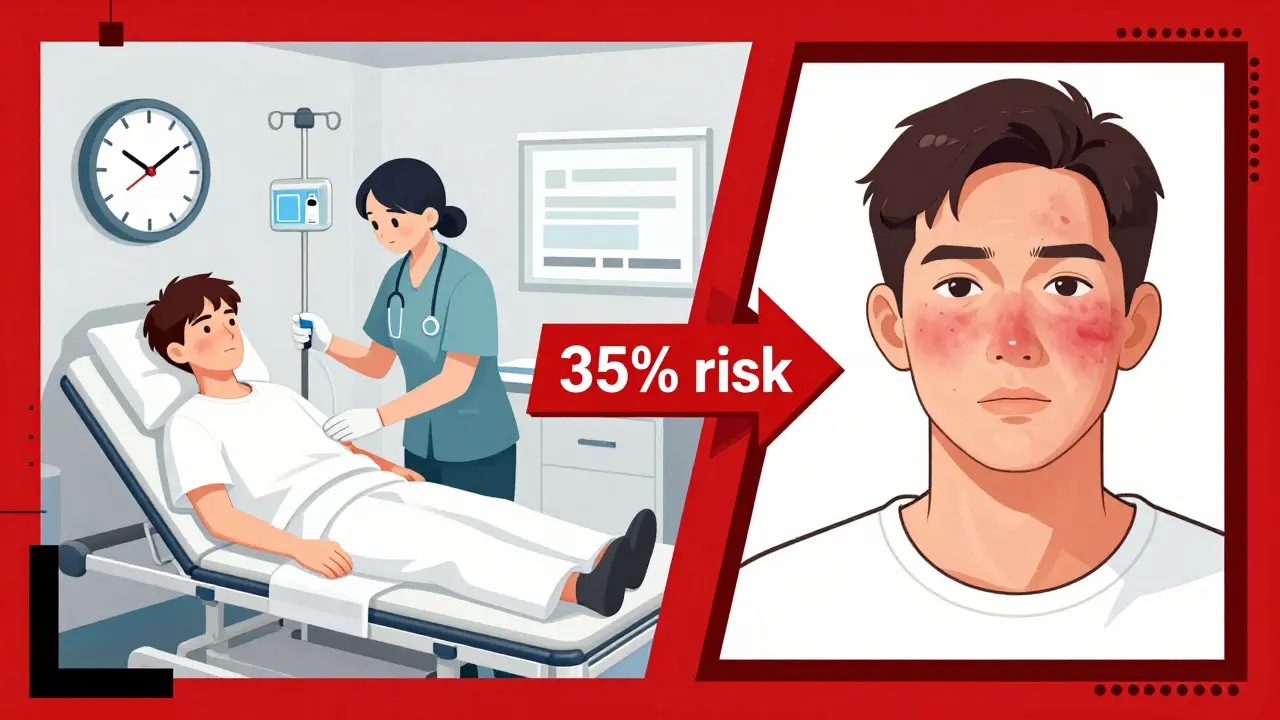
Contrast dye, usually iodinated, helps doctors see blood vessels, organs, and tumors more clearly on scans. But for some people, the body reacts to it. These reactions aren’t true allergies like peanut or bee sting reactions. They’re called anaphylactoid reactions - meaning they look like allergies but don’t involve IgE antibodies. Still, the symptoms are the same: hives, vomiting, trouble breathing, low blood pressure, even cardiac arrest. The good news? Severe reactions are rare. Modern low-osmolar contrast dyes have cut reaction rates dramatically. For most people, the chance of any reaction is less than 0.2%. But for those who’ve had one before? The risk jumps to about 35%. That’s why pre-medication exists - to slash that risk back down.Who Needs Pre-Medication?
Not everyone does. The guidelines are clear: only those with a prior reaction to the same class of contrast dye need it. That’s the biggest risk factor. If you had a reaction to iohexol last year, you’re at higher risk if you get iohexol again. But if you had a reaction to a different dye, switching agents may be enough. Here’s the breakdown:- Mild reactions: Skin rash, mild nausea, vomiting. Most experts now say pre-medication isn’t needed. A 2021 study in Radiology showed recurrence rates were very low without it.
- Moderate reactions: Wheezing, significant vomiting, blood pressure drop. Consider pre-medication.
- Severe reactions: Respiratory arrest, cardiac arrest, severe drop in blood pressure. Pre-medication is essential - but only if the scan can’t be avoided.
And here’s a myth that needs killing: shellfish or iodine allergies don’t increase your risk. That’s outdated thinking. Shellfish allergies are about proteins, not iodine. Iodine is in your thyroid, your salt, your body. If you’re allergic to shrimp, you’re not allergic to contrast dye. The same goes for Betadine (povidone-iodine). No extra risk. No need for pre-medication.
The Standard Premedication Protocols
There are two main ways to prep: oral and IV. Which one you get depends on whether you’re in a hurry or have time.Oral Protocol (for elective scans)
Used when you have at least 13 hours before the scan. This is the classic approach:- Prednisone 50 mg - taken at 13 hours, 7 hours, and 1 hour before the scan
- Diphenhydramine (Benadryl) 50 mg - taken 1 hour before
Why this timing? Steroids take hours to work. Starting too late - say, 3 hours before - doesn’t help. The 13-hour window gives prednisone time to calm your immune system. Benadryl blocks histamine, the chemical that causes itching and swelling.
But here’s the catch: Benadryl makes you sleepy. You must have someone drive you home. If you don’t, the scan gets rescheduled. No exceptions.
IV Protocol (for emergencies or inpatients)
If you’re in the ER or already hospitalized, you can’t wait 13 hours. Two IV options are used:- Option 1: Methylprednisolone (Solu-Medrol) 40 mg IV, then repeat every 4 hours until scan time. Plus diphenhydramine 50 mg IV 1 hour before.
- Option 2: Hydrocortisone (Solu-Cortef) 200 mg IV, repeat every 4 hours, plus diphenhydramine 50 mg IV 1 hour before.
These work fast. The steroid hits your system immediately. But they still need to be given at least 4-5 hours before the scan. Anything less? No proven benefit.
Accelerated Protocols: The New Shortcut
What if you need a scan in 5 hours? A 2017 study in Radiology found a faster option works just as well:- Methylprednisolone 32 mg by mouth - taken at 5 hours and again at 1 hour before the scan
- Diphenhydramine 50 mg - taken 1 hour before
This isn’t the official standard yet, but more hospitals are using it - especially for urgent cases. It’s simpler, avoids IVs, and cuts the wait time in half. Still, it’s not for everyone. If you’ve had a severe reaction before, stick to the IV route if possible.
What About Kids?
Children under 6 don’t usually get pre-medication unless they’ve had a severe reaction. For kids 6 and older who need it:- Cetirizine (Zyrtec) 10 mg - taken by mouth 1 hour before
No steroids needed. Cetirizine is non-sedating and safe. It’s the go-to for pediatric cases. Always check weight-based dosing with your radiology team.
Safety Planning: More Than Just Pills
Pre-medication isn’t the whole story. Here’s what else matters:- Location matters: If you’ve had a severe reaction before, your scan should be done at a hospital with a full emergency team nearby - not a standalone imaging center. Facilities like UCSF’s Moffitt-Long Hospital or UCLA’s Ronald Reagan building are designed for this.
- Staff must be ready: Everyone involved - from the tech to the radiologist - needs to know you’re high-risk. Your chart should be flagged. A crash cart should be in the room.
- Transportation: If you take Benadryl, you can’t drive. Plan ahead. No driver? Reschedule.
- Communication: Your referring doctor must consult with a radiologist before scheduling. This isn’t bureaucracy - it’s safety.
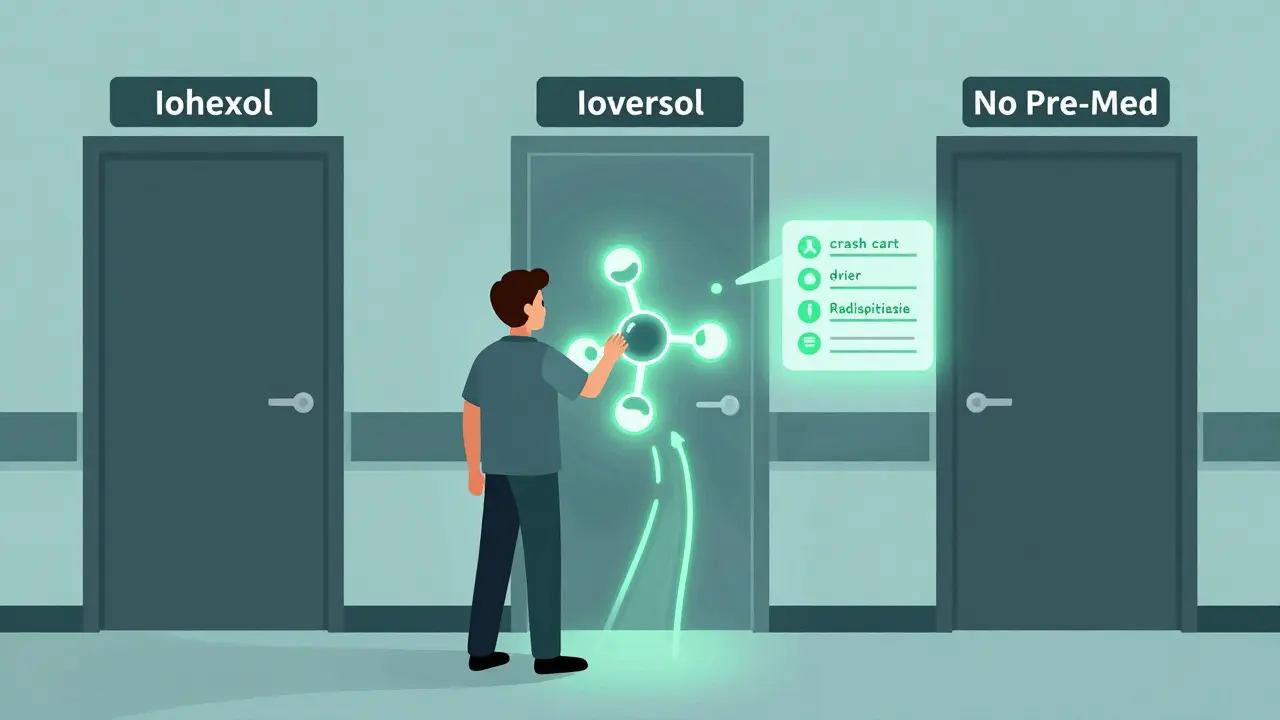
And here’s a key point: switching contrast agents is often just as effective as pre-medication. If you reacted to iohexol, use ioversol instead. Studies show this can cut recurrence risk without any drugs. Ask your radiologist: “Is there a different dye we can use?”
What If I Still React?
Even with all the right steps, about 2% of pre-medicated patients still have reactions. That’s why vigilance never stops. If you feel flushed, itchy, or short of breath during the scan - speak up. Immediately. The team is trained to act fast. Oxygen, epinephrine, IV fluids - they’re all ready.Remember: pre-medication doesn’t make you immune. It just makes you safer. The goal isn’t to prevent every reaction. It’s to prevent a deadly one.
Cost and Accessibility
The cost of pre-medication? Less than $1. Prednisone pills cost about 25 cents each. Benadryl is 15 cents per dose. Compared to a $1,000 CT scan, it’s negligible. Yet not every hospital does it right. A 2020 survey found only 78% of community hospitals follow standardized protocols. Academic centers? Nearly 100%. If you’re going to a smaller facility, ask: “Do you follow the ACR guidelines?”The Future: Less Meds, More Smart Choices
The American College of Radiology is updating its guidelines in late 2024. Early drafts suggest a shift: instead of automatically pre-medicking everyone with a history, we’ll focus more on switching contrast agents. Why? Because evidence shows it works just as well - without side effects.And as newer contrast dyes are developed, reaction rates keep falling. In 10 years, pre-medication may be rare. But for now? It’s still essential for high-risk patients.
Can I skip pre-medication if my reaction was years ago?
Yes - but only if the reaction was mild and you’re switching to a different contrast agent. If you had a moderate or severe reaction, even years ago, you still need pre-medication. The immune system remembers. Don’t assume time has erased the risk.
Is it safe to take Benadryl the night before?
No. Benadryl’s effects wear off after 4-6 hours. Taking it the night before won’t help. You need it exactly 1 hour before the scan. Taking it too early means it won’t be active during the procedure.
Can I use Claritin or Zyrtec instead of Benadryl?
For adults, no. Benadryl (diphenhydramine) is the only antihistamine proven to work in pre-medication protocols. Claritin and Zyrtec are non-sedating and effective for allergies, but they haven’t been shown to prevent contrast reactions. For kids, Zyrtec is used - but not for adults.
What if I’m allergic to steroids?
Tell your doctor. If you have a true steroid allergy, pre-medication with prednisone or methylprednisolone isn’t an option. In that case, switching contrast agents is the best alternative. Your radiologist may also consider pre-treatment with IV antihistamines alone - though this is less effective than the steroid combo.
Do I need pre-medication for an MRI with contrast?
No. MRI contrast is gadolinium-based, not iodine. Reactions to gadolinium are extremely rare and different from iodinated contrast reactions. Pre-medication isn’t used for MRI unless you’ve had a prior gadolinium reaction - which is very uncommon.




So let me get this straight - if I had a rash 5 years ago, I gotta take steroids and Benadryl just to get a CT? Bro, I’m not a lab rat. I’ve had 3 scans since then with zero issues. They’re just being extra cautious now. 😅
March 23Alex Arcilla