Have you ever taken a medication that worked wonders for your sister but left you feeling exhausted or nauseous? Or maybe a generic version of a drug suddenly stopped working as well as the brand-name one did? While we often blame lifestyle changes or stress, there is a deeper biological reason at play. Your DNA dictates how your body processes medicines, a field known as pharmacogenetics. When you switch from a brand-name drug to a generic, you might expect the same effect because the active ingredient is identical. However, if your family history includes specific genetic traits, your body’s reaction to that chemical compound can vary significantly based on your unique enzyme profile.
This isn't just theoretical science; it's a practical reality affecting millions of patients today. Understanding how your family history intersects with these genetic factors can help you communicate better with your doctor and avoid frustrating trial-and-error phases when managing chronic conditions like heart disease, depression, or pain.
The Core Connection: Genetics and Family History
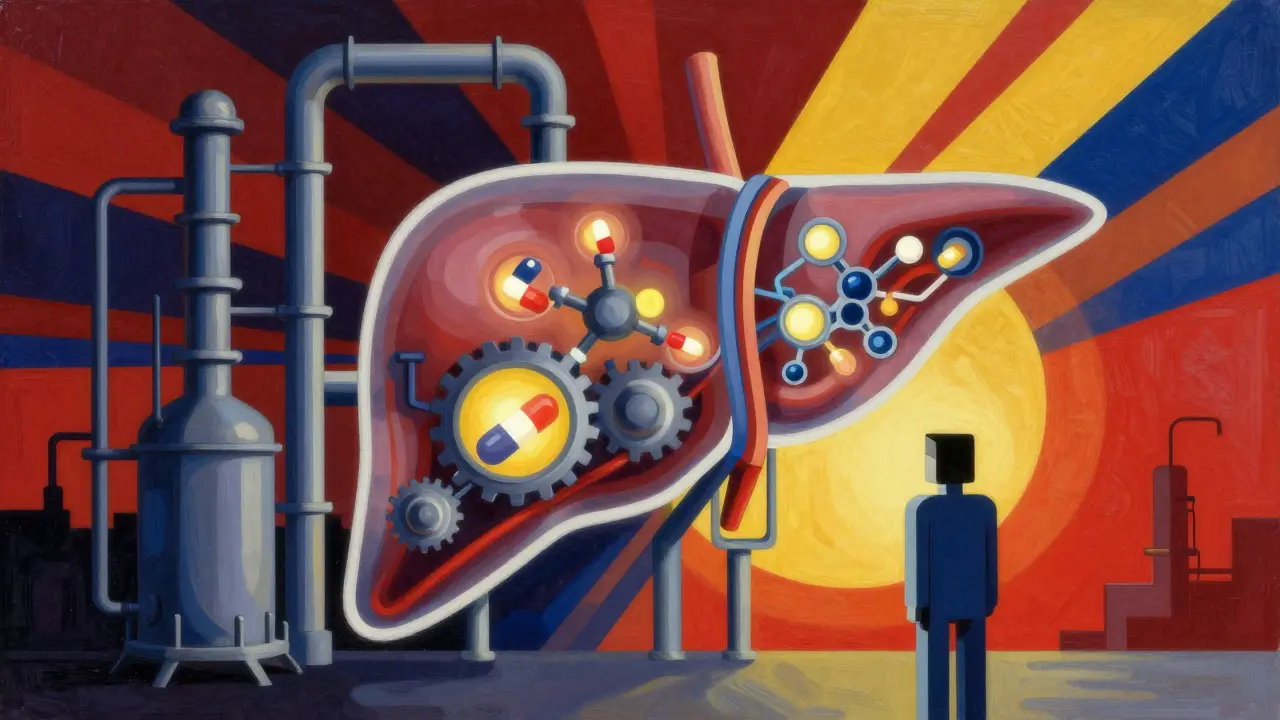
At its core, pharmacogenetics studies how your genes influence your response to drugs. Think of your liver as a chemical factory where enzymes break down medications so they can be absorbed or eliminated. The efficiency of this factory is largely determined by your DNA. If your parents had slow metabolizers for certain chemicals, there is a strong statistical probability you inherited those same traits.
Family history serves as a clinical clue. If multiple generations in your family experienced severe side effects from a specific class of drugs, or conversely, required unusually high doses to see results, this pattern often points to inherited genetic variants. For instance, if your mother struggled with warfarin (a blood thinner) requiring frequent dose adjustments, you likely share similar genetic markers that affect clotting factor metabolism. This hereditary link means that while the generic pill contains the same active molecule as the brand name, your body's "processing speed" remains uniquely yours, regardless of the manufacturer.
Key Genes That Influence Drug Metabolism
Not all genes are created equal when it comes to medication. A small group of genes accounts for the majority of drug processing in the human body. The most critical among these belong to the Cytochrome P450 (CYP450) family. These enzymes handle roughly 75% of all prescription drugs.
- CYP2D6 is a highly polymorphic gene involved in metabolizing approximately 25% of all drugs, including antidepressants and pain relievers. Variations here can make you an ultrarapid metabolizer (the drug disappears too fast to work) or a poor metabolizer (the drug builds up, causing toxicity).
- CYP2C9 plays a vital role in processing blood thinners like warfarin and some anti-inflammatory drugs. Specific variants, such as *2 and *3, result in decreased enzymatic activity, meaning patients may need 15-30% lower doses to avoid bleeding risks.
- TPMT (Thiopurine S-methyltransferase) is crucial for metabolizing chemotherapy drugs used in leukemia treatment. Patients with low TPMT activity face a higher risk of severe bone marrow suppression if given standard doses.
- DPYD encodes a protein responsible for metabolizing 5-fluorouracil, a common chemotherapy agent. Variants here can lead to harmful buildup of the medication in the blood, necessitating significant dose reductions.
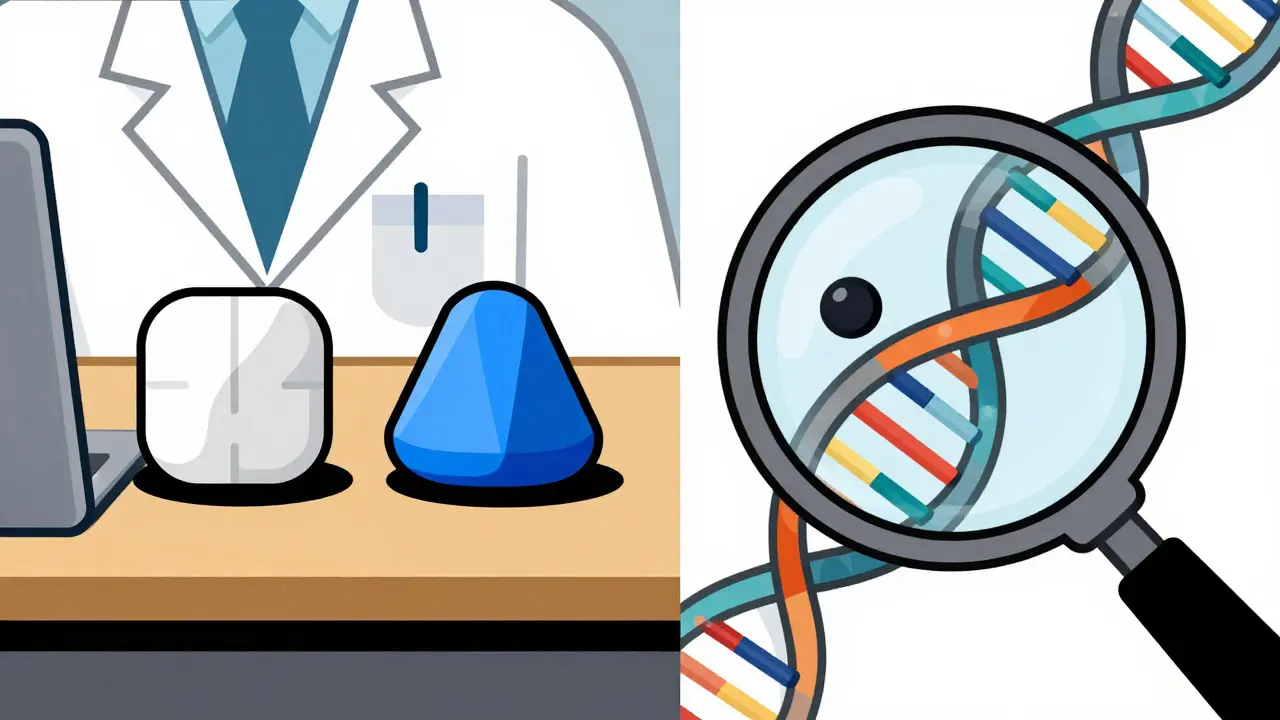
These genes are passed down through families. Knowing which ones are "active" or "variant" in your lineage helps predict how you will react to new prescriptions, whether they come in a blue box or a white bottle.

Does Switching to Generics Change the Genetic Equation?
Here is where confusion often arises. People worry that generics are "weaker" or "different." Chemically, a generic must have the same active ingredient, strength, dosage form, and route of administration as the brand-name drug. Therefore, the fundamental interaction between the drug and your genetics does not change based on the manufacturer.
However, subtle differences in inactive ingredients (excipients) can occasionally affect absorption rates. If you have a genetic variant that makes you a very slow metabolizer, even a slight change in how quickly the drug enters your bloodstream due to different fillers could theoretically shift the balance toward side effects. Conversely, if you are an ultrarapid metabolizer, a formulation that releases the drug slightly slower might actually improve efficacy compared to a faster-releasing brand-name version. While rare, these nuances mean that monitoring your response after switching is always wise, especially if your family history suggests extreme metabolic profiles.
Population Differences and Ethnicity
Your ancestry also plays a role. Genetic variant frequencies differ across populations. For example, about 15-20% of Asian individuals are poor metabolizers of proton pump inhibitors (like omeprazole) due to CYP2C19 variants, compared to only 2-5% of Caucasians. Similarly, African Americans often require higher initial doses of warfarin than Europeans due to variations in VKORC1 and CYP2C9 genes.
These population-level trends are averages, not rules. But they highlight why a "one-size-fits-all" approach to dosing doesn't work. If you know your ethnic background and family medical history, you provide your doctor with valuable context. They can anticipate potential issues before they arise, rather than waiting for adverse reactions to occur.
| Gene | Drugs Affected | Potential Impact of Variants |
|---|---|---|
| CYP2D6 | Antidepressants, Opioids | Reduced effectiveness or increased side effects |
| CYP2C9 | Warfarin, NSAIDs | Bleeding risk or reduced efficacy |
| TPMT | Chemotherapy (Thiopurines) | Severe bone marrow suppression |
| DPYD | 5-Fluorouracil | Toxicity requiring dose reduction |
How to Use Family History in Your Healthcare Conversations
You don't need to be a geneticist to leverage this information. Start by keeping a simple log. Note any medications that caused unusual side effects for you or close relatives. Did your father experience severe drowsiness from a common painkiller? Did your aunt need triple the dose of an antidepressant to feel relief? Share this with your primary care provider or specialist.
If you have a history of difficult drug responses, ask your doctor about pharmacogenomic testing. This isn't a crystal ball, but it provides data. Companies like Color Genomics and OneOme offer multi-gene panels that check for dozens of drug-gene interactions. The cost has dropped significantly, ranging from $249 to $499 for comprehensive panels. In many cases, insurance covers these tests if you are starting high-risk medications like warfarin or chemotherapy.
When reviewing test results, focus on actionable insights. Look for recommendations aligned with guidelines from the Clinical Pharmacogenetics Implementation Consortium (CPIC). They provide evidence-based advice on how to adjust doses based on specific genetic profiles. This turns abstract genetic data into concrete prescribing decisions.
Practical Tips for Patients and Caregivers
- Track your family's drug history: Create a shared document listing medications, dosages, and reactions for parents, siblings, and grandparents.
- Ask about "poor metabolizer" status: If you react poorly to multiple drugs in the same class, ask if you might be a poor metabolizer for a specific enzyme.
- Monitor closely after switching: If you switch from brand to generic, keep a symptom diary for two weeks. Note any changes in energy levels, mood, or physical sensations.
- Consider preemptive testing: Before starting long-term therapy for heart disease or mental health, discuss baseline pharmacogenomic testing with your doctor.
- Stay informed on updates: New genetic markers are discovered regularly. Check resources like PharmGKB for updated evidence on specific drug-gene pairs.
Understanding the interplay between family history and genetic factors empowers you to take control of your medication journey. It transforms passive compliance into active partnership with your healthcare team. By recognizing that your body's chemistry is unique and inherited, you can navigate the world of generic and brand-name drugs with greater confidence and precision.
Do generic drugs work differently for people with genetic variants?
Generally, no. Since generics contain the same active ingredient, the core genetic interaction remains the same. However, differences in inactive ingredients can slightly alter absorption speeds, which might matter for individuals with extreme metabolic profiles (very fast or very slow). Monitoring your response after a switch is recommended if you have known genetic sensitivities.
Is pharmacogenomic testing worth it for everyone?
It is most valuable for patients taking high-risk medications like warfarin, clopidogrel, or chemotherapy agents, or those who have experienced multiple adverse drug reactions. For common over-the-counter pain relievers, the benefit is less clear. Discuss the cost-benefit ratio with your doctor based on your specific medical history.
How does family history impact drug dosing?
Family history acts as a predictive indicator. If close relatives required higher or lower doses of a specific drug class, it suggests you may share similar genetic traits affecting metabolism. Doctors use this anecdotal evidence alongside formal testing to tailor initial dosing strategies and monitor for side effects more closely.
Which genes are most important for common medications?
The CYP450 family, particularly CYP2D6 and CYP2C9, are the most significant. CYP2D6 affects antidepressants and opioids, while CYP2C9 impacts blood thinners and anti-inflammatories. TPMT and DPYD are critical for specific chemotherapy drugs. These genes account for the majority of clinically relevant drug-gene interactions.
Can I get pharmacogenomic results back to my doctor automatically?
Many modern testing services allow direct integration with Electronic Health Records (EHRs). Programs like Mayo Clinic's RIGHT Protocol return results preemptively for hundreds of gene-drug pairs. When ordering a test, ask the provider if they report directly to your EHR to ensure your doctor sees the data without extra steps.