Imagine taking a pill every day to keep your heart safe from clots, only to find yourself dealing with stomach pain or unexpected bleeding. It’s a frustrating paradox that millions of patients face. You need the medication to survive a heart attack or stroke, but the same drug might be damaging your digestive system. This is the reality for anyone prescribed antiplatelet medications, which are drugs designed to prevent blood clots by stopping platelets from sticking together. While these drugs save lives, they come with a significant trade-off: an increased risk of gastrointestinal (GI) bleeding.
If you or a loved one is on these meds, you aren’t alone in worrying about this balance. The good news is that modern medicine has developed clear strategies to protect your stomach without compromising your heart health. Understanding how these drugs work, who is at highest risk, and what protective measures actually work can turn anxiety into action. Let’s break down exactly what you need to know to stay safe.
How Antiplatelet Drugs Work and Why They Cause Bleeding
To understand the risk, you first have to understand the mechanism. Platelets are tiny cells in your blood that rush to the site of an injury to form a clot and stop bleeding. When you have cardiovascular disease, those same platelets can stick together inside your arteries, causing blockages that lead to heart attacks or strokes. Antiplatelet drugs interfere with this process.
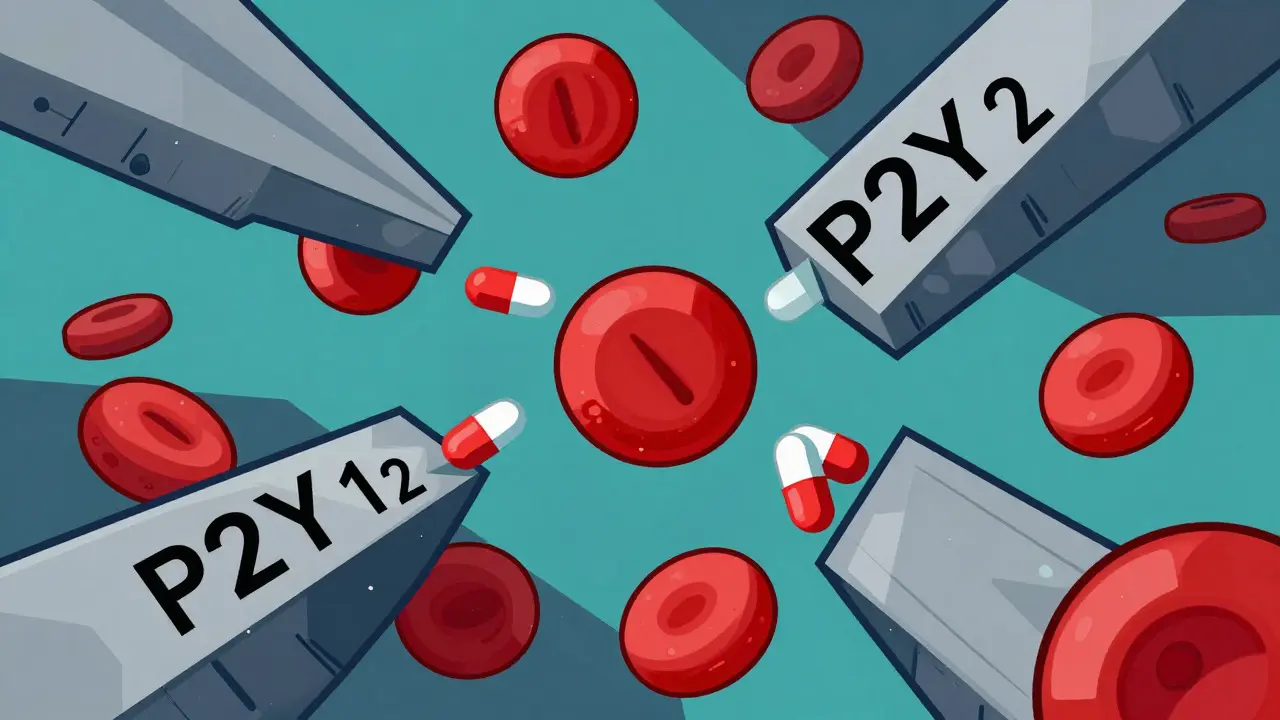
There are two main families of these drugs. First, there is aspirin. Aspirin works by permanently disabling an enzyme called cyclooxygenase-1 in your platelets. This stops them from producing thromboxane A2, a chemical signal that tells other platelets to gather. Because platelets don’t have nuclei, they can’t repair themselves, so this effect lasts for the entire 7-to-10-day lifespan of the cell. Second, there are P2Y12 inhibitors like clopidogrel (Plavix), prasugrel (Effient), and ticagrelor (Brilinta). These drugs block adenosine diphosphate receptors on the platelet surface, preventing activation through a different pathway.
The problem arises because these drugs don’t just stop bad clots in your heart; they also impair your body’s ability to heal small injuries in your stomach lining. Your stomach naturally produces acid that can irritate its own walls. Normally, platelets help repair this micro-damage by releasing growth factors. When antiplatelet drugs suppress this function, minor irritation can turn into ulcers, and ulcers can bleed. Studies show that about 40% of aspirin users and up to 50% of those on dual therapy develop progressive GI injury within a year if left unprotected.
Identifying Your Personal Risk Level
Not everyone faces the same level of danger. Some people take these medications for years without issue, while others experience complications quickly. Doctors use specific criteria to stratify risk. If you fall into high-risk categories, you need more aggressive protection.
| Risk Factor | Impact on Bleeding Risk |
|---|---|
| Age over 65 | Significantly higher risk due to thinner mucosal lining and slower healing. |
| Prior history of ulcers or GI bleeding | The strongest predictor of future bleeding events. |
| H. pylori infection | This bacteria weakens the stomach lining, making it more susceptible to damage. |
| Concurrent NSAID use | Adding ibuprofen or naproxen drastically increases ulcer formation. |
| Dual Antiplatelet Therapy (DAPT) | Taking aspirin plus a P2Y12 inhibitor raises risk by 30-50% compared to single drug use. |
| Corticosteroid or anticoagulant use | Combining these with antiplatelets creates a compounding effect on bleeding tendency. |
For example, if you are 70 years old, had an ulcer five years ago, and are now taking both aspirin and clopidogrel after a stent procedure, you are in the highest risk bracket. In contrast, a 45-year-old with no prior GI issues taking only low-dose aspirin has a much lower baseline risk. Recognizing where you stand helps you advocate for the right preventive care.
Comparing Drug Risks: Aspirin vs. P2Y12 Inhibitors
Not all antiplatelet drugs carry the same weight when it comes to stomach safety. While aspirin is notorious for direct gastric irritation, newer agents have their own nuances. Clopidogrel, for instance, doesn’t directly burn the stomach lining like aspirin might, but it impairs ulcer healing significantly. Research published in JAMA Network Open found that clopidogrel users had a hazard ratio of 1.8 for developing high-risk GI phenotypes compared to aspirin users. This means clopidogrel makes existing stomach issues much harder to fix.
Then there are the potent agents like prasugrel and ticagrelor. These are often used in acute coronary syndromes because they reduce stent thrombosis by up to 50% compared to clopidogrel. However, this superior heart protection comes at a cost. Ticagrelor, in particular, was associated with a 30% increase in GI bleeding risk compared to clopidogrel in major clinical trials. The trade-off is clear: stronger clot prevention equals higher bleeding potential. For patients with a history of GI bleeds, doctors often prefer aspirin monotherapy as the safest option for continued cardiovascular protection.
Protective Strategies: The Role of Proton Pump Inhibitors
If you are at high risk, simply switching to enteric-coated aspirin isn’t enough. Enteric coatings delay dissolution until the pill reaches the intestine, which reduces immediate local irritation but does nothing to stop the systemic antiplatelet effect that prevents healing. The gold standard for protection is the addition of a proton pump inhibitor (PPI).
Proton pump inhibitors like omeprazole, esomeprazole, and pantoprazole drastically reduce stomach acid production. By lowering acidity, they allow the stomach lining to heal and resist damage even when platelet function is suppressed. Guidelines from the American College of Gastroenterology strongly recommend PPIs for any patient on antiplatelet therapy who has a history of ulcers or multiple risk factors. In fact, one case series showed a 92% ulcer healing rate at eight weeks in patients continuing clopidogrel while taking esomeprazole 40mg daily.
A common concern among patients and even some physicians is whether PPIs interfere with the effectiveness of clopidogrel. Clopidogrel requires activation by the liver enzyme CYP2C19, and some PPIs inhibit this enzyme. However, the FDA and major cardiology societies have concluded that the clinical relevance of this interaction is minimal. The benefit of preventing a life-threatening GI bleed far outweighs the theoretical reduction in antiplatelet efficacy. Pantoprazole is often preferred because it has the least impact on CYP2C19, offering a safer profile if interaction is still a worry.
What to Do If Bleeding Occurs
Despite best efforts, bleeding can happen. If you notice black, tarry stools or vomit that looks like coffee grounds, seek medical attention immediately. The management of GI bleeding in patients on antiplatelets has evolved significantly. Old practices involved stopping all blood thinners and giving platelet transfusions, but new evidence suggests this can be harmful.
According to updated 2023 guidelines, platelet transfusions may actually increase mortality in these patients. One study showed a 27% mortality rate in transfused patients versus 12% in those who weren’t. More importantly, stopping aspirin during a GI bleed episode does not improve bleeding outcomes but can increase cardiovascular mortality by 25%. The current standard of care is to continue aspirin for secondary prevention whenever possible. For P2Y12 inhibitors, doctors typically hold the medication for 5 to 7 days during active bleeding but restart it as soon as hemostasis is achieved endoscopically.
Doctors use tools like the AIMS65 score to assess severity. This score looks at albumin levels, INR, mental status, blood pressure, and age. A score of 2 or higher indicates high mortality risk and requires aggressive management, including high-dose IV PPI therapy initially. Once stable, patients transition to oral PPIs, which should be continued for at least eight weeks after ulcer healing, and often indefinitely for those with complicated histories.

Navigating Daily Life and Medication Management
Living with antiplatelet therapy requires vigilance but shouldn’t dictate your life. Here are practical steps to minimize risks:
- Test for H. pylori: If you haven’t been tested recently, ask your doctor. Eradicating this bacteria can significantly lower your ulcer risk.
- Avoid NSAIDs: Skip over-the-counter ibuprofen or naproxen for pain. Use acetaminophen instead, which is gentler on the stomach.
- Timing matters: Take your PPI 30 to 60 minutes before breakfast for maximum acid suppression. Consistency is key.
- Watch for symptoms: Don’t ignore persistent indigestion or abdominal pain. Early detection of ulcers prevents severe bleeding.
- Communicate with all providers: Ensure dentists, surgeons, and specialists know you are on antiplatelets before any procedures.
Cost is another factor. Generic clopidogrel costs around $25 per month, while brand-name ticagrelor can exceed $450. Insurance coverage varies, so discuss cost-effective options with your pharmacist. Sometimes, staying on a cheaper, slightly less potent drug with proper GI protection is better than struggling to afford a premium agent.
Future Directions in Personalized Care
The field is moving toward precision medicine. Researchers are exploring CYP2C19 genotyping to identify "non-responders" to clopidogrel. If you metabolize the drug poorly, it might not protect your heart effectively, yet still carries GI risks. In such cases, switching to ticagrelor or prasugrel could be beneficial, provided GI protection is optimized. Additionally, novel agents like selatogrel are in development, showing promise for lower GI toxicity in early trials. Biomarkers such as serum pepsinogen are being studied to predict individual susceptibility to gastric damage, potentially allowing for targeted prophylaxis rather than blanket PPI prescriptions.
Should I stop taking my antiplatelet medication if I have stomach pain?
Do not stop abruptly without consulting your doctor. Stopping aspirin can increase your risk of heart attack or stroke. Instead, contact your healthcare provider immediately. They may prescribe a proton pump inhibitor (PPI) to treat the underlying cause while keeping your heart protected.
Is enteric-coated aspirin safer for the stomach?
Enteric coating delays absorption, reducing immediate local irritation, but it does not eliminate the risk of GI bleeding. The systemic effect on platelets remains the same, meaning ulcer healing is still impaired. For high-risk patients, adding a PPI is more effective than relying solely on coated aspirin.
Can I take ibuprofen while on clopidogrel?
It is generally recommended to avoid nonsteroidal anti-inflammatory drugs (NSAIDs) like ibuprofen and naproxen while on antiplatelet therapy. NSAIDs independently damage the stomach lining and inhibit platelet function, creating a synergistic effect that drastically increases bleeding risk. Acetaminophen is a safer alternative for pain relief.
How long do I need to take a PPI?
If you have a history of ulcers or multiple risk factors, you may need to take a PPI indefinitely while on antiplatelet therapy. After an ulcer heals, guidelines suggest continuing the PPI for at least eight weeks. Your doctor will determine the duration based on your ongoing risk profile.
Does omeprazole make clopidogrel less effective?
There is a theoretical interaction because omeprazole inhibits the enzyme that activates clopidogrel. However, clinical studies show this interaction is rarely significant enough to cause treatment failure. The protection against GI bleeding usually outweighs the minor potential loss of antiplatelet effect. Pantoprazole is often chosen if minimizing interaction is a priority.