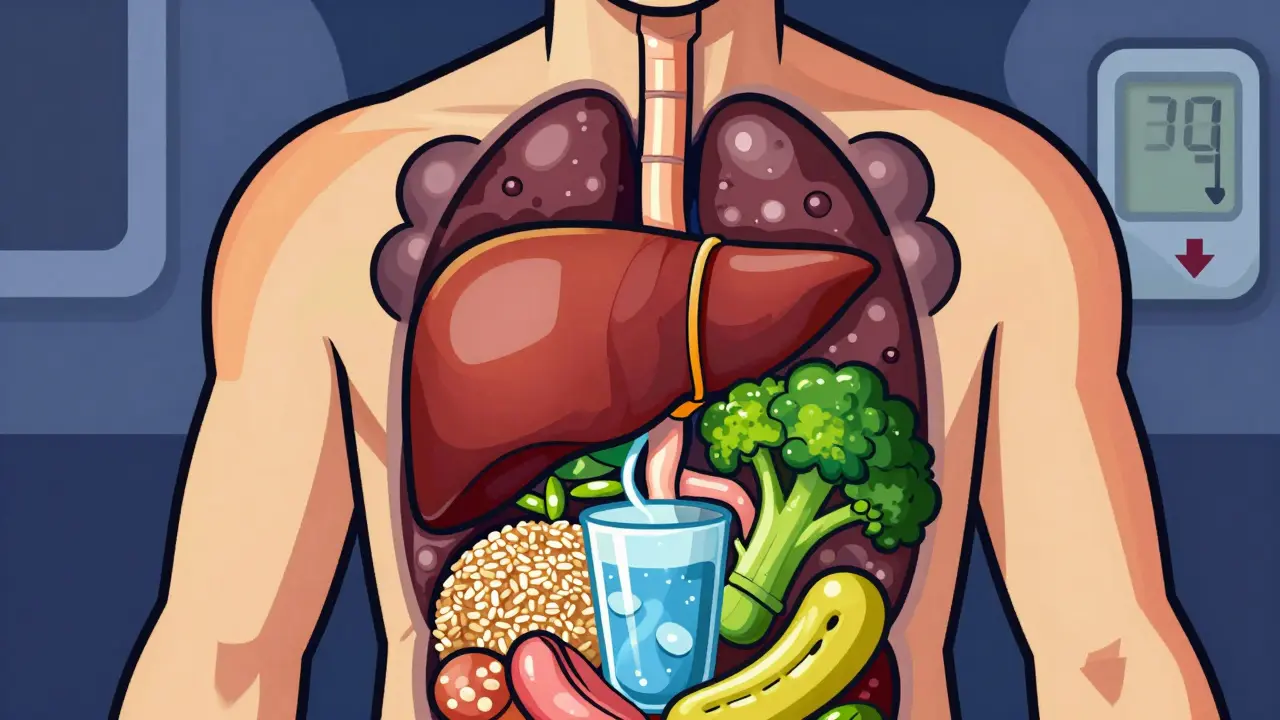
More than 96 million adults in the U.S. have prediabetes. That’s more than one in three people. And most of them don’t even know it. Your blood sugar is higher than it should be - not high enough for a diabetes diagnosis, but high enough to put you on a path toward it. Left unchecked, about half of these people will develop type 2 diabetes within five years. But here’s the good news: prediabetes reversal isn’t just possible. It’s common. And you don’t need drugs, surgery, or extreme diets to do it.
What Exactly Is Prediabetes?
Prediabetes means your body is starting to struggle with insulin. Insulin is the hormone that tells your cells to take sugar from your blood and use it for energy. When your cells stop listening - usually because they’re overwhelmed by too much sugar over time - your blood sugar rises. That’s insulin resistance. It’s the first step toward type 2 diabetes.
The official signs? A fasting blood sugar between 100 and 125 mg/dL, an HbA1c between 5.7% and 6.4%, or a 2-hour glucose level of 140-199 mg/dL after a sugar challenge test. These numbers aren’t scary on their own. They’re warning signs. And like a check engine light, they mean something needs attention - not an emergency, but definitely not ignore-it.
Why Lifestyle Changes Work Better Than Pills
You’ve probably heard about medications that lower blood sugar. GLP-1 agonists, metformin, insulin sensitizers - they all have their place. But here’s what the science says: lifestyle changes are more effective than any drug for reversing prediabetes.
A 2023 review of dozens of studies found that people who made real changes to how they eat and move were 18% more likely to get their blood sugar back to normal than those who didn’t. That’s a number needed to treat (NNT) of just 6. Meaning, if six people make these changes, one of them will reverse their prediabetes. That’s better than most medications.
And here’s the kicker: you don’t even need to lose a lot of weight. One study in Nature Medicine showed people who reversed their prediabetes didn’t lose much - or sometimes any - weight at all. What changed? Their belly fat. Specifically, the deep fat around their organs. That’s the fat that messes with insulin. Lose that, and your body starts working right again.
The Two Biggest Changes: Food and Movement
Two things matter more than anything else: what you eat and how much you move. Not fancy diets. Not juice cleanses. Just two simple, sustainable shifts.
1. Eat Real Food - Not the Fake Stuff
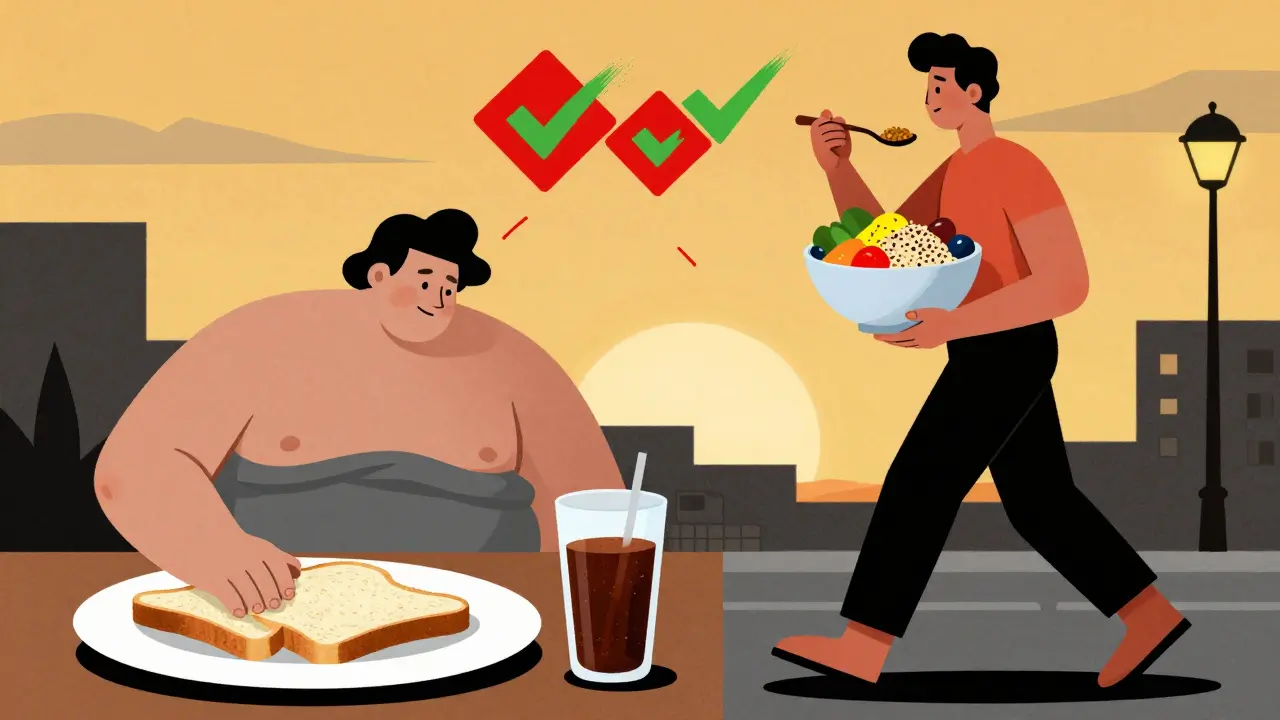
Processed foods are the silent driver of insulin resistance. White bread, sugary cereals, pastries, soda, fruit juice - they spike your blood sugar fast. Your body doesn’t know how to handle it. So it stores it as fat. Especially around your belly.
Swap them out:
- Replace white rice with brown rice, quinoa, or farro
- Swap white bread for whole grain or sourdough
- Ditch sugary drinks. Drink water, unsweetened tea, or sparkling water with lemon
- Fill half your plate with non-starchy vegetables: spinach, broccoli, peppers, zucchini, kale
- Add beans, lentils, or chickpeas - they’re packed with fiber and protein
- Limit red meat and skip processed meats like bacon, sausage, and deli slices
It’s not about cutting carbs. It’s about choosing the right ones. Whole grains, legumes, and vegetables digest slowly. They don’t spike your blood sugar. They keep you full. And they help your liver and pancreas recover.
2. Move - Even a Little - Every Day
The CDC recommends 150 minutes of moderate exercise per week. That’s 30 minutes, five days a week. But here’s the truth: even 10 minutes a day helps. Walking after dinner. Taking the stairs. Parking farther away. Gardening. Dancing while you cook.
What matters isn’t intensity. It’s consistency. A study from the CDC’s National Diabetes Prevention Program found that people who stuck with regular movement - even if it was just brisk walking - cut their diabetes risk by 58%. That’s more than half.
And you don’t need a gym. You just need to get moving. Try this: after every meal, take a 10-minute walk. It’s one of the most powerful things you can do to lower blood sugar. Your body uses sugar as fuel during movement. A short walk after eating can prevent the spike that happens after meals.
Weight Loss? Not the Goal - Blood Sugar Control Is
You’ve heard: “Lose 5-7% of your body weight.” That’s 10-14 pounds if you weigh 200. And yes, that helps. But it’s not the whole story.
Some people reverse prediabetes without losing any weight. Others gain a little and still improve. Why? Because it’s not about the scale. It’s about where the fat goes. Belly fat - the kind that wraps around your liver and pancreas - is the real problem. That’s the fat that blocks insulin. Lose that, and your body resets.
One study tracked people for a year. Those who reversed prediabetes lost more visceral fat - even if their total body fat stayed the same. That’s the secret. You can’t see visceral fat. You can’t weigh it. But your blood sugar tells you when it’s gone.
What About Sleep, Stress, and Hydration?
Yes, they matter. And they’re often overlooked.
Sleep. If you sleep less than 6 hours a night, your insulin sensitivity drops. You become more resistant. Aim for 7-8 hours. Even one night of poor sleep can mess with your blood sugar the next day.
Stress. When you’re stressed, your body releases cortisol - a hormone that raises blood sugar. Chronic stress = chronic high sugar. Try 5 minutes of deep breathing. Walk outside. Listen to music. Reduce stress, and your blood sugar follows.
Hydration. Dehydration makes your blood sugar concentrate. Drink water. Not soda. Not juice. Water. If you’re thirsty, drink water. It’s that simple.
Real People. Real Results.
Meet Sarah, 58, from Portland. She was diagnosed with prediabetes after a routine checkup. Her HbA1c was 6.2%. She didn’t want pills. So she started walking 20 minutes after dinner. She swapped her morning bagel for scrambled eggs with spinach. She cut out soda. Three months later, her HbA1c dropped to 5.4%. No weight loss. Just better habits.
Or James, 42, from Atlanta. He was 30 pounds overweight. He tried a keto diet - quit after two weeks. Then he started eating more vegetables, walking 30 minutes daily, and sleeping better. He lost 12 pounds. His blood sugar dropped into the normal range. He didn’t count calories. He just changed his routine.
These aren’t outliers. They’re the norm.
What About the CDC’s Diabetes Prevention Program?
The CDC’s National DPP is a structured program that’s been running since 2012. It’s not magic. It’s practical. You meet weekly for 16 weeks with a coach - online or in person. You learn how to eat better, move more, manage stress, and set realistic goals. Then you keep going with monthly check-ins.
Participants lose an average of 5.6% of their body weight in a year. And 58% reduce their diabetes risk. Many programs are covered by Medicare and private insurance. If you’ve been told you have prediabetes, ask your doctor: “Is there a CDC-recognized program near me?”
You don’t need to join a program to succeed. But if you’re stuck, it helps. A coach keeps you accountable. And you’re not alone.
How Long Until You See Results?
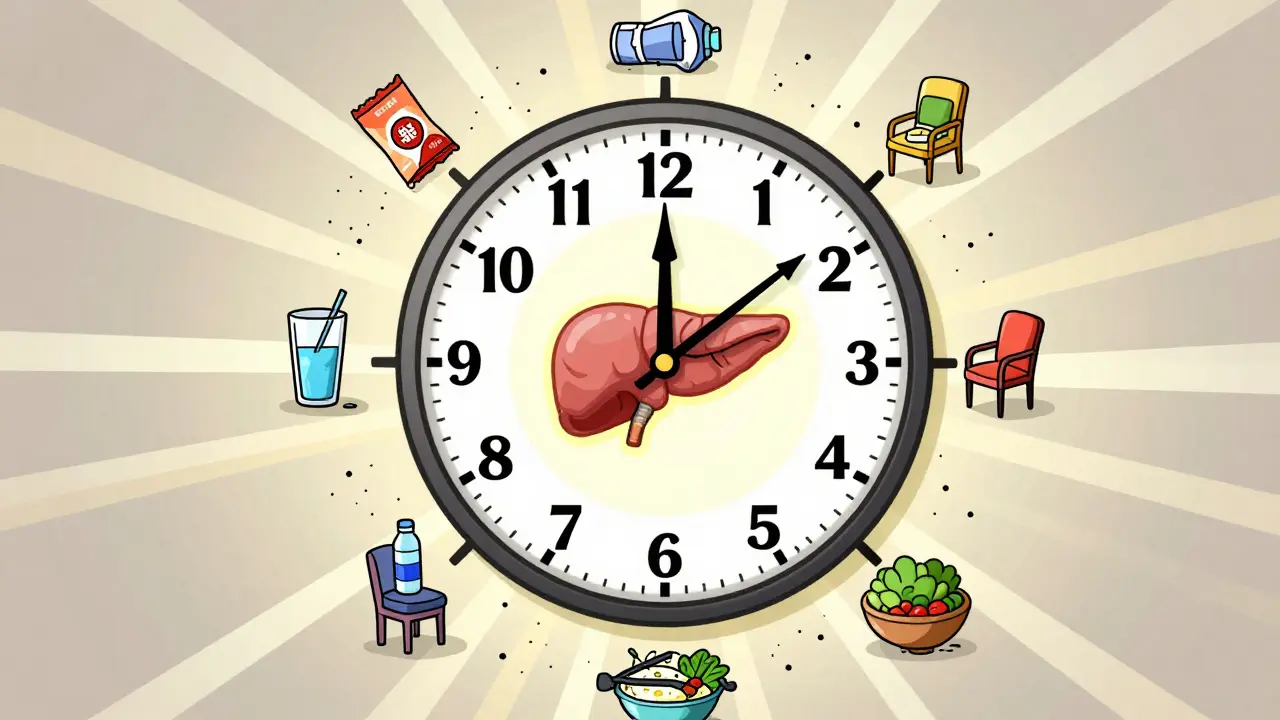
Some people see blood sugar improvements in 2-3 weeks. Others take 3-6 months. It depends on how long you’ve had prediabetes, how much insulin resistance you have, and how consistent you are.
The key? Don’t wait for perfection. Start with one change. Then another. Maybe it’s swapping soda for water. Or walking after dinner. Or adding one vegetable to dinner. Do that for a month. Then add another.
Studies show that if you keep up these changes for at least three years, your protection against type 2 diabetes lasts for decades. It’s not a quick fix. It’s a lifelong shift.
What Not to Do
- Don’t jump on the latest fad diet. They don’t last. And they often make insulin resistance worse.
- Don’t skip meals to “save calories.” That makes your body hold onto fat and spike sugar later.
- Don’t think you need to lose 20 pounds. Focus on blood sugar, not the scale.
- Don’t wait until you’re diagnosed with diabetes to act. Prediabetes is your last chance.
Final Thought: You’re Not Broken
Prediabetes isn’t a failure. It’s a signal. Your body is telling you: “I’ve been overloaded. I need help.” And you can help it. With food. With movement. With sleep. With calm.
You don’t need to be perfect. You just need to be consistent. Small changes, repeated daily, add up to big results. And the best part? You don’t need a prescription. You don’t need a special app. You just need to start.
Can prediabetes be reversed without losing weight?
Yes. While weight loss helps, it’s not required. Research shows that people who reversed prediabetes didn’t always lose weight - some even gained a little. What changed was their fat distribution. Specifically, they lost visceral fat around the liver and pancreas. This fat blocks insulin. When it’s reduced, blood sugar improves - even without a lower number on the scale.
How long does it take to reverse prediabetes?
Some people see improvements in blood sugar within 2-3 weeks of making changes. For most, it takes 3-6 months to see clear, lasting results. But the key is consistency. Studies show that people who stick with healthy habits for at least three years cut their risk of type 2 diabetes by up to 70% over the next decade.
Is walking enough exercise to reverse prediabetes?
Yes - especially if done regularly. A 30-minute brisk walk five days a week meets CDC guidelines and reduces diabetes risk by 58%. Even shorter walks, like 10 minutes after meals, help lower blood sugar spikes. Movement doesn’t need to be intense. Consistency matters more than intensity.
Do I need to take medication to reverse prediabetes?
No. Lifestyle changes are the first-line treatment recommended by the American Diabetes Association. Medications like metformin can help, but studies show lifestyle changes are more effective at returning blood sugar to normal. Plus, they have no side effects and improve overall health beyond just blood sugar.
What foods should I avoid if I have prediabetes?
Avoid added sugars, sugary drinks, white bread, white rice, pastries, and processed snacks. These foods spike blood sugar quickly and worsen insulin resistance. Also limit processed meats like bacon and sausage. Instead, choose whole grains, vegetables, legumes, lean proteins, and healthy fats like nuts and olive oil.
Can stress cause prediabetes?
Stress doesn’t directly cause prediabetes, but it makes it worse. When you’re stressed, your body releases cortisol, which raises blood sugar. Chronic stress can lead to insulin resistance over time. Managing stress - through sleep, walking, breathing, or hobbies - helps your body regulate sugar better.
If you’ve been told you have prediabetes, you’re not alone. And you’re not doomed. You’re just at a turning point. The next few months will shape your health for the next 20 years. Start small. Stay steady. And remember - your body is ready to heal. You just need to give it the right tools.







This is the kind of info we need more of. No hype, no gimmicks. Just real science. I swapped my morning bagel for eggs and spinach last week and my fasting sugar dropped 18 points in 10 days. No meds. Just food. 🙌
March 22Johny Prayogi