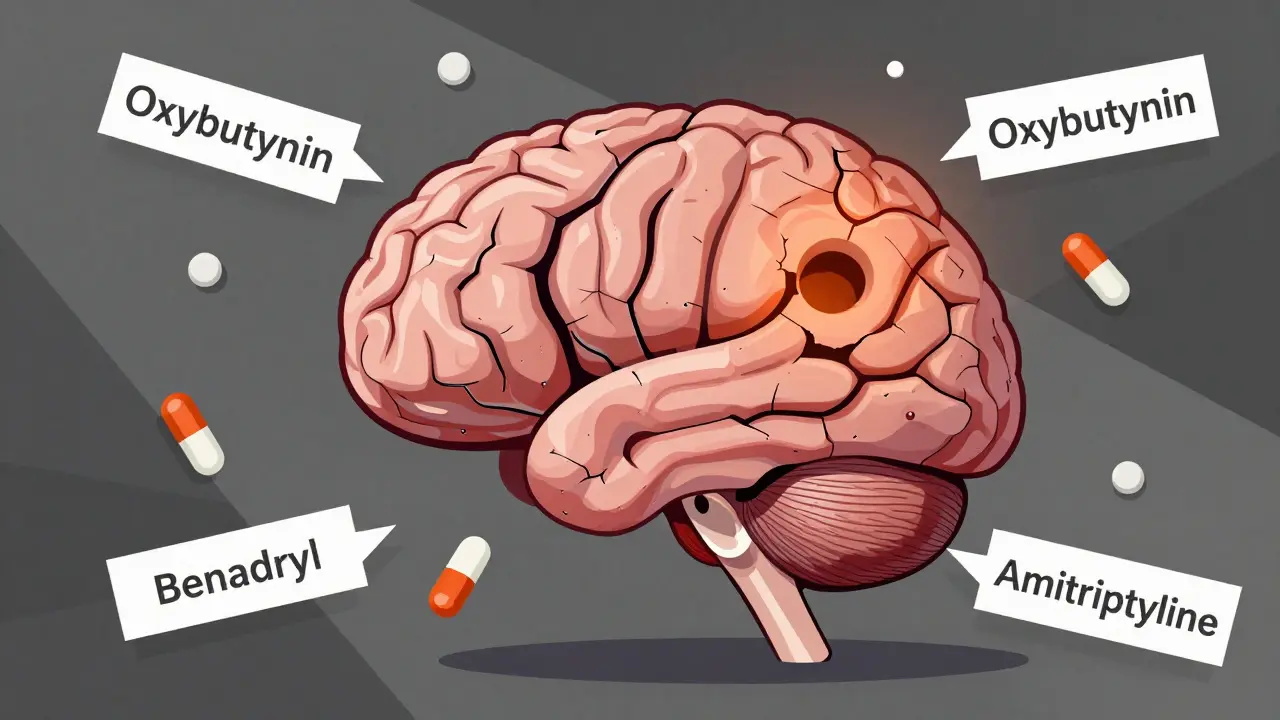
Many older adults take anticholinergic medications without realizing they might be slowly harming their brain. Drugs like oxybutynin for overactive bladder, diphenhydramine (Benadryl) for allergies, and amitriptyline for depression all block acetylcholine - a key chemical in your brain that helps with memory, focus, and learning. What seems like a simple fix for one problem can quietly lead to another: memory loss, confusion, and even faster brain shrinkage.
What Anticholinergics Do to Your Brain
Anticholinergics work by blocking acetylcholine, a neurotransmitter that helps nerve cells communicate. In the brain, this mainly affects M1 and M2 receptors, which are critical for forming new memories and staying mentally sharp. When these signals get disrupted, even temporarily, it can feel like brain fog - forgetting names, struggling to follow conversations, or losing track of where you put your keys.
Long-term use doesn’t just cause temporary confusion. Brain scans from the Alzheimer’s Disease Neuroimaging Initiative show that people taking high-ACB (Anticholinergic Cognitive Burden) drugs lose 0.5% to 1.2% more brain volume each year than those who don’t. That’s not just a small change - it’s the kind of shrinkage you’d expect over decades of aging, but happening in just a few years. Glucose metabolism in the hippocampus, the brain’s memory center, drops by 8-14%. Ventricles - fluid-filled spaces in the brain - grow 10-15% larger, which is a known sign of neurodegeneration.
Testing backs this up. People on high-ACB medications perform 23-32% worse on memory recall tasks and 18-27% worse on problem-solving tests. The more you take, the worse it gets. Each extra point on the ACB scale adds 0.3% more brain shrinkage per year. A score of 3 (like scopolamine or high-dose oxybutynin) is the worst. A score of 1 or 2? Still risky, but less so.
Which Medications Are the Worst?
Not all anticholinergics are created equal. The ACB scale rates them from 0 (no effect) to 3 (high risk). Here’s what you need to know:
- High risk (ACB 3): Scopolamine, high-dose oxybutynin, diphenhydramine (Benadryl), amitriptyline
- Moderate risk (ACB 2): Tolterodine (lower dose), chlorpheniramine
- Low risk (ACB 1): Glycopyrrolate, trospium, darifenacin, tiotropium, ipratropium
Oxybutynin is one of the most common culprits. A 2020 analysis of 12 clinical trials found that people on oxybutynin had 28% greater cognitive decline than those on tolterodine - even though both treat the same bladder condition. Meanwhile, trospium and darifenacin show almost no cognitive impact in multiple studies. Why? Because they don’t cross the blood-brain barrier as easily. That’s a big deal.
And here’s the kicker: mirabegron, a non-anticholinergic drug for overactive bladder, works just as well as oxybutynin but doesn’t touch your brain. Yet, it’s still underused. Why? Cost. Generic oxybutynin costs about $15 a month. Mirabegron? Around $350. For many, the price makes the choice easy - even if the brain pays the price.
Dry Mouth: The Most Common Side Effect
If you’re on an anticholinergic, you’ve probably noticed your mouth feels like cotton. That’s not just annoying - it’s a sign the drug is working exactly where it shouldn’t. Acetylcholine tells your salivary glands to make saliva. Block it, and you get dry mouth.
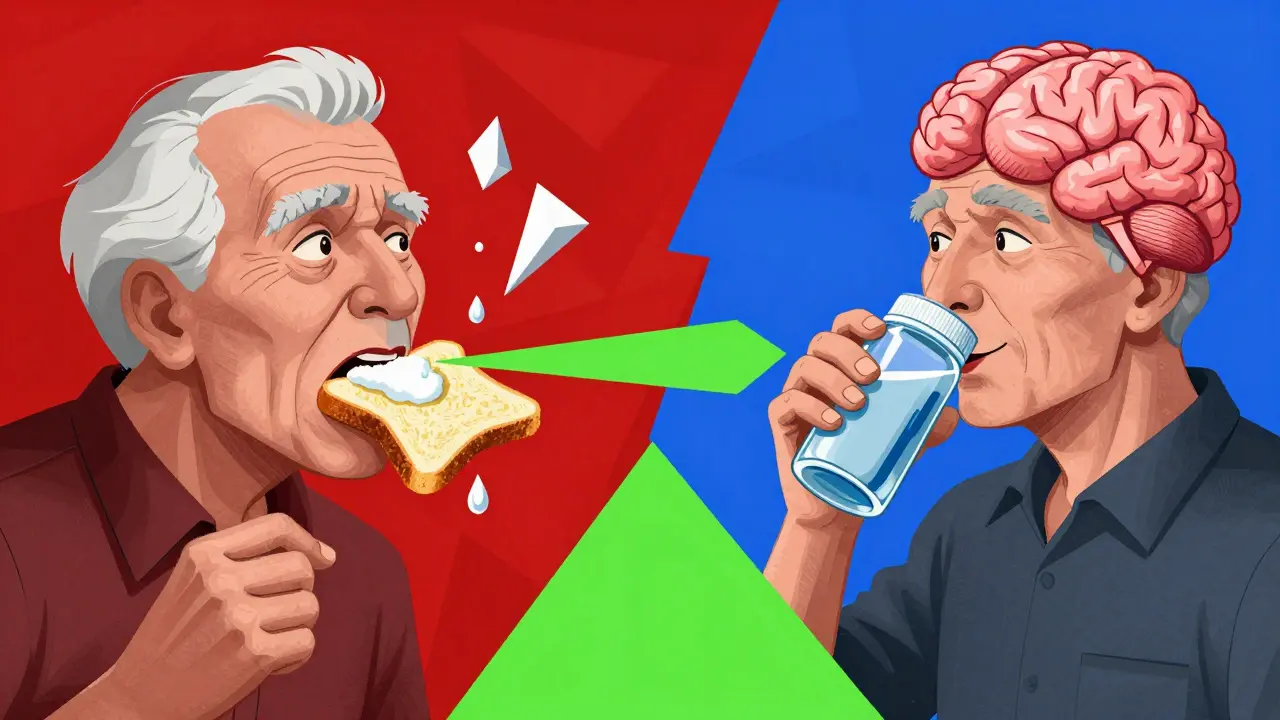
Studies show 60-70% of users report this side effect. On Drugs.com, 82% of reviews mention dry mouth. People describe constant thirst, needing to drink 2-3 liters of water a day, or struggling to speak or swallow. Some say they can’t eat dry foods like toast or crackers without water. Dentists see more cavities and gum disease in these patients because saliva protects teeth and washes away bacteria.
It’s not just discomfort - it’s a health risk. Dry mouth increases the chance of oral infections, tooth decay, and even pneumonia in older adults who aspirate food particles. And it’s often ignored by doctors who focus only on the original problem - like bladder leaks or depression.
Real Stories, Real Consequences
On Reddit’s r/agingparents, a March 2023 thread with 142 responses found that 78% of families noticed sudden memory problems in relatives taking oxybutynin. One woman said her 78-year-old dad went from remembering birthdays to forgetting his own address within six months of starting the drug.
On Healthgrades, one patient wrote: “Oxybutynin cut my incontinence from 10 times a day to 1 or 2. Worth the dry mouth.” But another, posting on the Alzheimer’s Association forum, described devastating decline after five years on amitriptyline. Their MMSE score - a standard memory test - dropped from 29/30 to 22/30. That’s the difference between being sharp and needing help with daily tasks.
These aren’t rare cases. Dr. Malaz Boustani’s 2015 study of 48,000 UK patients found long-term anticholinergic use doubles dementia risk after three years. Dr. Shannon Risacher’s brain imaging work showed 63% of high-ACB users developed mild cognitive impairment or Alzheimer’s within 10 years - compared to 38% of non-users.
What You Can Do
You don’t have to suffer in silence. If you’re on an anticholinergic, ask these questions:
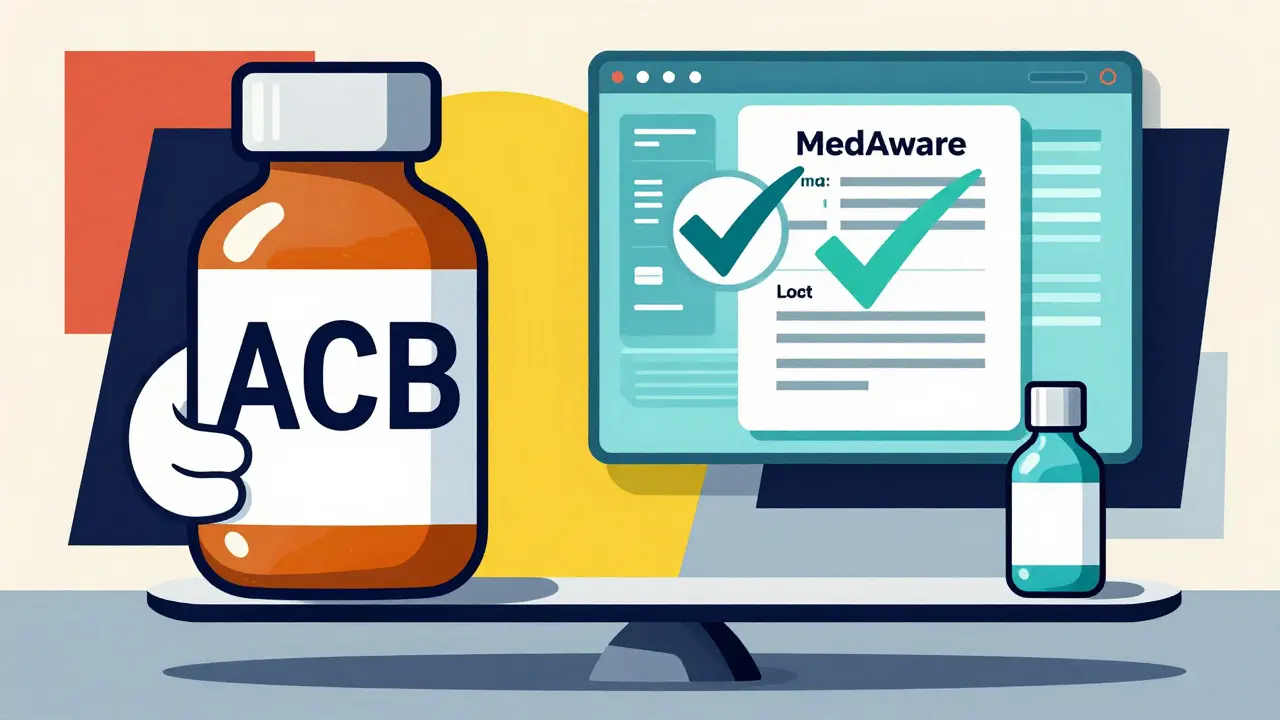
- What’s the ACB score of this drug? (Ask your pharmacist or look it up on the Anticholinergic Cognitive Burden Scale - it’s public.)
- Is there a non-anticholinergic alternative? For bladder issues, mirabegron or behavioral therapy (like timed bathroom trips) works just as well. For depression, SSRIs like sertraline have no anticholinergic effect.
- Can you lower the dose? Sometimes, half a pill is enough.
- How long have you been on it? If it’s been over a year, it’s time to re-evaluate.
The American Geriatrics Society says 56 medications are potentially inappropriate for older adults. Diphenhydramine, oxybutynin, and amitriptyline are on that list. Yet, many doctors still prescribe them because they’re cheap and familiar.
Managing Dry Mouth
If you must stay on an anticholinergic, don’t ignore dry mouth. Try these proven fixes:
- Sugar-free gum or lozenges - boosts saliva by 30-40%
- Water sipping throughout the day - keep a bottle handy
- Saliva substitutes like Xerolube or Biotene - $25-40/month, covered by some insurance
- Pilocarpine (5mg three times daily) - a prescription drug that increases saliva flow by 50-70%
Also, avoid caffeine, alcohol, and tobacco. They make dry mouth worse. Brush and floss daily. See your dentist every six months - they’ll catch problems before they become serious.
What’s Changing in 2025
Things are shifting. The FDA now requires stronger warning labels on 12 high-risk anticholinergics. Medicare prescriptions for oxybutynin dropped 32% between 2015 and 2022 as mirabegron use rose. The UK’s NICE guidelines now recommend deprescribing anticholinergics in 68% of older adults on long-term use.
New drugs are coming. Trospium chloride XR (Sanctura XR) has 70% less brain penetration than oxybutynin. Karuna Therapeutics’ xanomeline, in Phase III trials, reduces dry mouth by 40% compared to older antipsychotics - a breakthrough for patients with dementia-related psychosis.
And AI is stepping in. Tools like MedAware, recently cleared by the FDA, scan prescriptions and flag high-ACB drugs before they’re written. Early data shows they can cut inappropriate prescribing by 35-50%. That could prevent 200,000-300,000 dementia cases in the U.S. over the next decade.
It’s not about fear. It’s about awareness. Anticholinergics have a place in medicine. But they shouldn’t be the first or only choice - especially for older adults. Ask questions. Demand alternatives. Your brain will thank you.
Do all anticholinergics cause dementia?
No, not all anticholinergics cause dementia, but long-term use of high-ACB drugs (score 2-3) significantly increases the risk. Drugs like oxybutynin, diphenhydramine, and amitriptyline are linked to brain shrinkage and memory decline. Lower-ACB drugs like trospium and darifenacin show little to no cognitive risk. The key is duration and dose - three or more years of high-ACB use doubles dementia risk.
Can I stop taking anticholinergics cold turkey?
Never stop abruptly. For conditions like Parkinson’s disease, sudden withdrawal can cause severe muscle stiffness, tremors, or even delirium. Even for bladder drugs, stopping suddenly can cause rebound incontinence. Always work with your doctor to taper slowly. A gradual reduction over weeks or months reduces withdrawal risks and gives your brain time to readjust.
Is dry mouth from anticholinergics dangerous?
Yes. Dry mouth isn’t just uncomfortable - it raises your risk of cavities, gum disease, oral infections, and even aspiration pneumonia. Saliva protects teeth, neutralizes acids, and clears food particles. Without it, bacteria thrive. Older adults are especially vulnerable. Use sugar-free gum, saliva substitutes, or pilocarpine to manage it. Don’t ignore it.
Are there safe alternatives to oxybutynin for overactive bladder?
Yes. Mirabegron (Myrbetriq) is a beta-3 agonist that works just as well as oxybutynin without affecting cognition or causing dry mouth. Behavioral changes like timed voiding and pelvic floor exercises are also effective. The American Urological Association now recommends these as first-line treatments for patients over 65. Cost is a barrier - mirabegron is expensive - but insurance may cover it if you try and fail on lower-risk options.
How do I know if my medication has anticholinergic effects?
Ask your pharmacist or check the Anticholinergic Cognitive Burden (ACB) scale online. Common drugs with anticholinergic effects include Benadryl, Imodium, certain sleep aids, tricyclic antidepressants (like amitriptyline), and bladder medications like oxybutynin and tolterodine. Look for side effects listed as “dry mouth,” “blurred vision,” “constipation,” or “confusion” - these are red flags.
Should I get a brain scan if I’ve been on anticholinergics for years?
Routine brain scans aren’t recommended unless you’re showing symptoms of memory loss. But if you’ve been on high-ACB drugs for 3+ years and notice confusion, forgetfulness, or trouble concentrating, talk to your doctor about cognitive testing (like the MoCA) and possibly an MRI. Early detection of brain changes can help guide decisions about stopping or switching medications.






Wow, so my grandma’s constant dry mouth and forgetting my name isn’t just ‘getting old’ - it’s the damn Benadryl she’s been popping like candy since 2010. Guess I know what to tell her next Thanksgiving.
December 31Frank SSS