Why Your Sleep Isn’t Better (Even If You’re Trying)
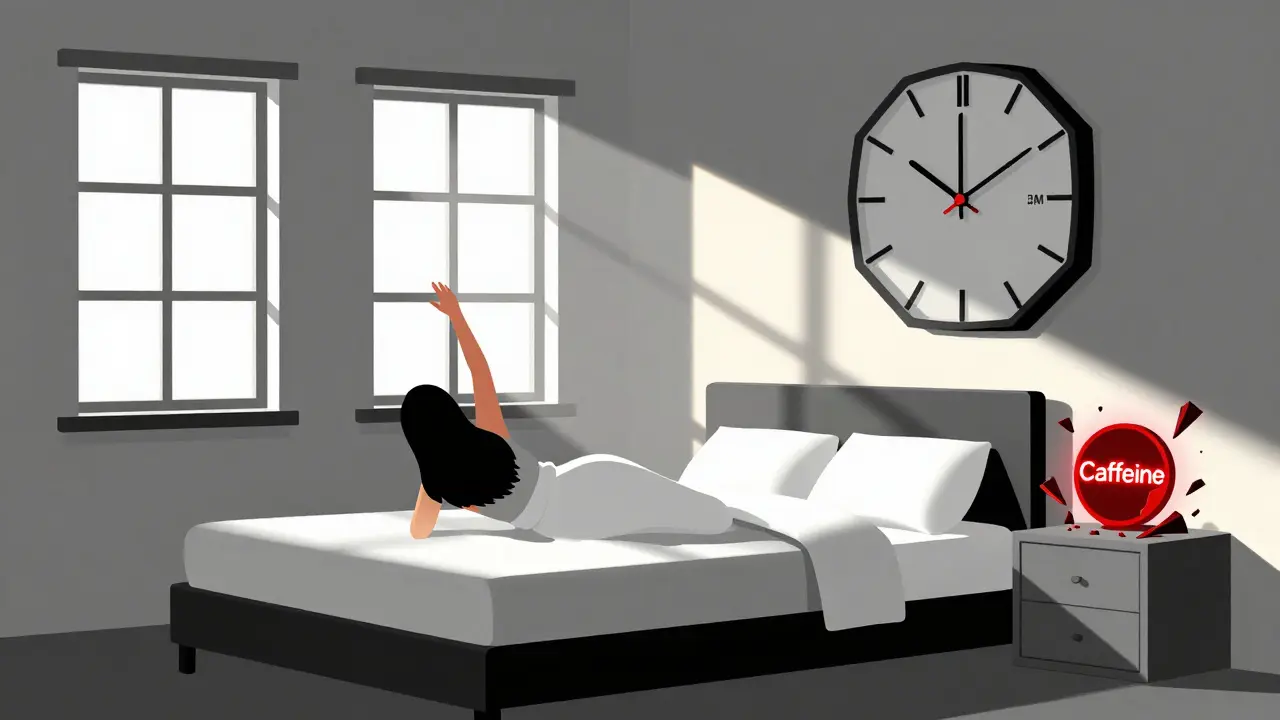
You go to bed at the same time every night. You turn off the lights. You even avoid coffee after 4 p.m. But you still toss and turn. You wake up tired. You feel groggy all day. Sound familiar?
It’s not that you’re doing everything wrong. It’s that you’re doing some things right - but missing the real game-changers.
Sleep hygiene isn’t about fancy gadgets, expensive mattresses, or melatonin gummies. It’s about the small, daily habits that quietly rebuild your body’s ability to fall asleep and stay asleep. And the science is clear: if you fix these behaviors, your sleep improves - no pills needed.
The 4 Core Habits That Actually Work
Not all sleep advice is created equal. Some tips you’ve heard - like avoiding exercise before bed or drinking warm milk - have little proof behind them. But four behaviors, backed by decades of research, make the biggest difference.
- Wake up at the same time every day - even on weekends. This is the single most powerful habit for regulating your internal clock. A 2023 study found that people who stuck to a consistent wake time (within 30 minutes) saw their sleep onset latency drop by over 70% in just three weeks. Your body doesn’t care if it’s Friday or Tuesday. It just wants predictability.
- Keep your bedroom cool - between 60 and 67°F (15.6-19.4°C). Your core temperature needs to drop to trigger sleep. If your room is too warm, your body fights against falling asleep. You don’t need a smart thermostat. Just open a window, use a fan, or lower the heat a few degrees.
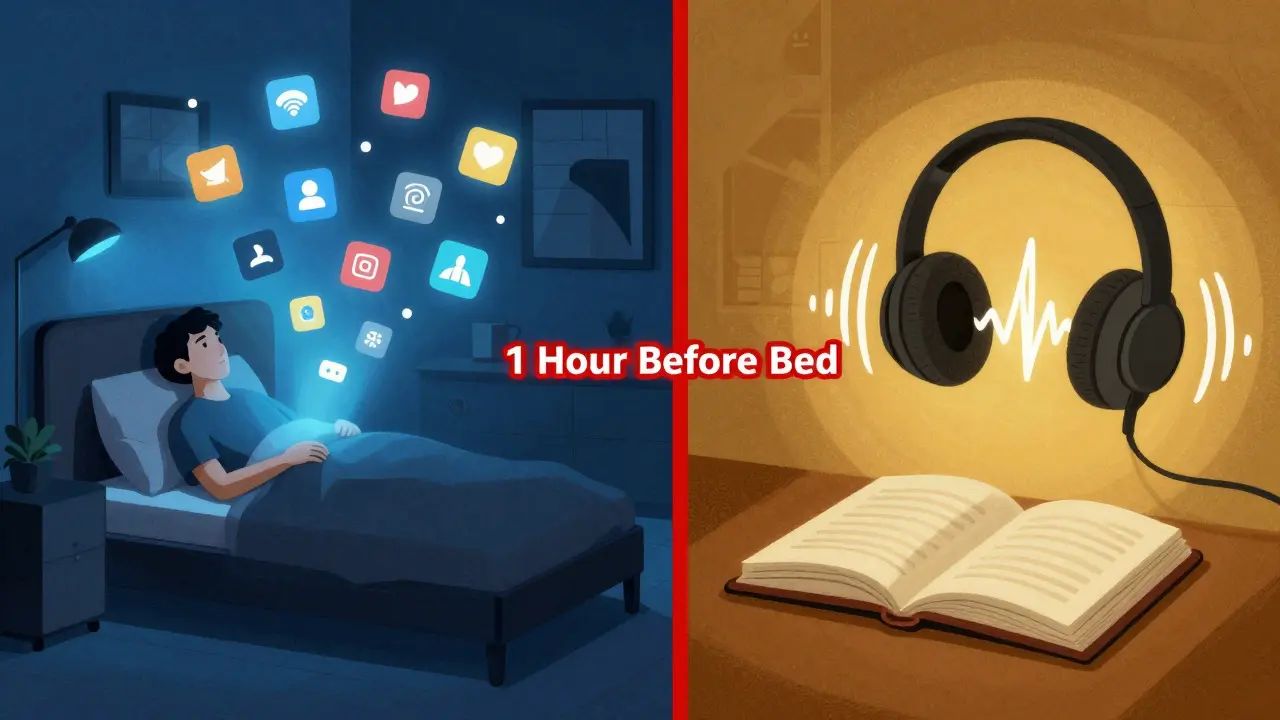
- Stop screens one hour before bed. Blue light isn’t the whole story - it’s the mental stimulation. Scrolling through social media, checking emails, or watching Netflix keeps your brain in ‘alert’ mode. A 2024 review found that people who replaced screen time with reading or quiet music fell asleep 18 minutes faster on average.
- Avoid caffeine after 2 p.m.. Caffeine stays in your system for 6-8 hours. That afternoon latte? It’s still in your bloodstream when you’re trying to sleep. Even if you think you can fall asleep fine, your deep sleep is still disrupted. Cut it out completely for two weeks. You’ll notice the difference.
What Doesn’t Matter (As Much As You Think)
There’s a lot of noise out there. You’ve probably heard that you shouldn’t eat after 7 p.m., that you must meditate before bed, or that you need blackout curtains to sleep well. But the data tells a different story.
Research from the American Academy of Sleep Medicine shows that many commonly recommended practices - like avoiding heavy meals before bed or taking a warm bath - have weak or inconsistent links to sleep quality. For example:
- Going to bed hungry? For some people, it helps. For others, it makes sleep harder. It depends on your body.
- Exercise at night? A 2023 study from Japan found that 68% of participants slept better after evening workouts. The old rule about stopping exercise three hours before bed? Outdated.
- Blue light glasses? They reduce sleep onset by only 4-7 minutes on average. That’s less than turning off your phone for 10 minutes.
The truth? Sleep hygiene isn’t about perfection. It’s about focusing on the habits that actually move the needle. Don’t waste energy on things that don’t matter.
Why You’re Failing (And How to Fix It)
Most people give up on sleep hygiene because they try to change everything at once. They buy a new pillow, download five apps, start journaling, quit caffeine, and go to bed at 10 p.m. - and then feel overwhelmed when nothing changes in a week.
Here’s what works instead: Start with one thing.
- Choose just one habit - say, waking up at the same time every day.
- Stick with it for 14 days. No exceptions. Even if you stayed up late, set the alarm. Get up. Open the curtains. Drink water. Go for a short walk.
- Only after that habit feels automatic, add the next one - maybe turning off screens an hour before bed.
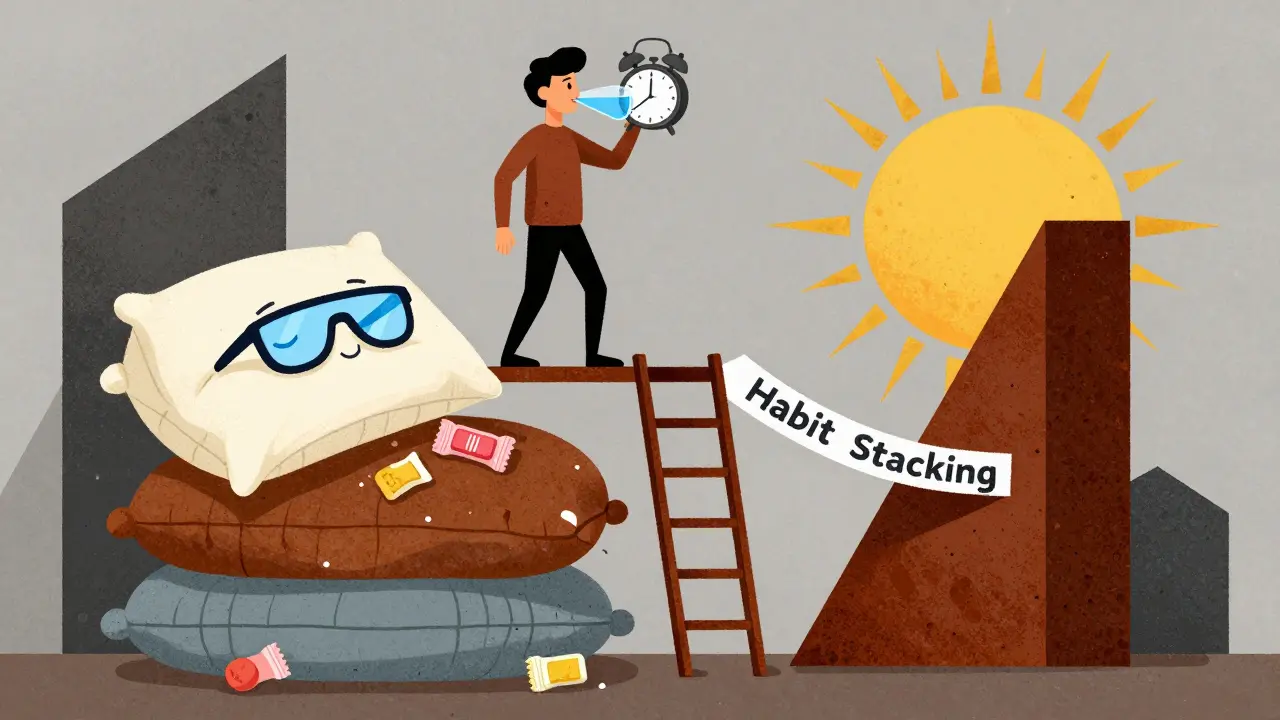
This method - called habit stacking - works because your brain doesn’t resist change when it’s tied to something you already do. For example: ‘After I brush my teeth, I put my phone in another room.’
People who use this approach have a 79% success rate, according to the Behavioral Sleep Medicine journal. Those who try to overhaul everything? Most quit within a week.
What Happens When You Stick With It
It takes time. Don’t expect miracles on day three. But by day 14-21, most people start noticing real shifts:
- You fall asleep faster - not because you’re tired, but because your body knows it’s sleep time.
- You wake up less during the night. No more 3 a.m. panic checks.
- You feel more alert during the day. No more 3 p.m. crashes.
- You stop reaching for sleep aids. A 2023 Harvard survey found that 67% of people who improved their sleep hygiene cut back on over-the-counter sleep meds.
One user on Reddit, u/NightOwlPhD, went from taking 90 minutes to fall asleep to just 25 minutes - after only three weeks of waking up at 6:30 a.m. every day, no matter what. That’s not luck. That’s circadian rhythm regulation.
When Sleep Hygiene Isn’t Enough
Sleep hygiene is powerful - but it’s not a cure-all.
If you’ve tried the core habits for 4-6 weeks and still can’t sleep, you might be dealing with clinical insomnia. Signs include:
- Struggling to sleep three or more nights a week for over a month
- Feeling anxious about sleep itself
- Needing sleeping pills to fall asleep
In these cases, sleep hygiene is still important - but it needs to be part of a bigger plan. Cognitive Behavioral Therapy for Insomnia (CBT-I) combines sleep hygiene with mental techniques to break the cycle of sleep anxiety. It’s the most effective treatment for chronic insomnia - and it’s available through many online programs and therapists.
Sleep hygiene is the foundation. But if your house is crumbling, you don’t just clean the floors. You fix the walls.
Tools That Help (Without the Hype)
You don’t need expensive gear. But a few simple tools make consistency easier:
- Sleep diaries - free templates from the National Sleep Foundation. Write down your bedtime, wake time, caffeine intake, and how you felt the next day. After 10 days, patterns become obvious.
- Sleep Cycle or ShutEye apps - not because they track sleep perfectly (they don’t), but because they gently nudge you to stick to a schedule. Their reminder features work better than any alarm.
- A simple alarm clock - not your phone. Place it across the room. No snoozing. No scrolling.
The goal isn’t to track every minute of sleep. It’s to build trust in your body’s rhythm.
Final Thought: Sleep Is a Habit, Not a Task
You don’t ‘do’ sleep hygiene like a chore. You live it. Like brushing your teeth or drinking water. It’s not about being perfect. It’s about showing up.
Some nights you’ll stay up late. Some mornings you’ll hit snooze. That’s okay. What matters is the pattern over weeks and months.
The people who sleep well aren’t the ones who never struggle. They’re the ones who kept going - even when it felt pointless. Because they knew: small changes, repeated daily, become unshakable habits.
Can sleep hygiene cure insomnia?
Sleep hygiene alone isn’t enough to cure clinical insomnia. It’s a critical foundation, but if you’ve been struggling with sleep for over a month, you likely need more - like cognitive behavioral therapy (CBT-I). Sleep hygiene improves sleep quality for most people, but it doesn’t fix deep-seated anxiety or conditioned wakefulness around bed.
Is it okay to nap during the day?
Short naps (20-30 minutes) before 3 p.m. are fine for most people and won’t hurt nighttime sleep. But longer or later naps - especially after 4 p.m. - can make it harder to fall asleep at night. If you’re having trouble sleeping, skip naps for two weeks. You might be surprised how much it helps.
Should I avoid alcohol before bed?
Yes. Alcohol might make you fall asleep faster, but it destroys your deep sleep and causes frequent awakenings in the second half of the night. Even one drink can reduce sleep quality by 25%. If you drink, do it earlier in the evening - at least 3 hours before bed.
How long until I see results from sleep hygiene?
Most people notice small improvements after 10-14 days. Real changes - falling asleep faster, waking up less, feeling rested - usually show up between 3 and 6 weeks. The key is consistency. Don’t quit if you don’t see results in a week.
Do I need to go to bed at the same time every night?
Not as much as you need to wake up at the same time. Your wake time is the anchor for your internal clock. If you wake up at 7 a.m. every day, your body will naturally start feeling sleepy around the same time at night - even if you go to bed at 10:30 one night and 11:15 the next. But try to keep bedtime within a 60-minute window for best results.



![Buy Generic Topamax (Topiramate) Online Cheap Safely in the UK [2025 Guide]](/uploads/2025/08/thumbnail-buy-generic-topamax-topiramate-online-cheap-safely-in-the-uk-2025-guide.webp)

I've been trying the wake-up-at-the-same-time thing for two weeks now. Honestly? My brain feels less foggy by noon. No magic, just consistency.
December 20Swapneel Mehta