Fever in Adults: When to Seek Medical Help
Know when a fever in adults becomes dangerous. Learn the temperature thresholds, warning symptoms, and timelines that mean it's time to seek medical help-before it turns into an emergency.
Read DetailsWhen your body temperature rises above 100.4°F, you’re experiencing a fever, a natural immune response that helps fight off infections by making your internal environment less friendly to viruses and bacteria. Also known as pyrexia, it’s not an illness itself—it’s a warning sign. Most fevers last 1 to 3 days and go away on their own. But when a fever lasts longer than 3 days, or keeps coming back, it’s your body screaming for attention.
Not all fevers are the same. A short fever from a cold might spike to 102°F and vanish in 48 hours. A fever from the flu can hang on for 5 days, sometimes longer. But if your body temperature, the core measure of your internal heat regulation stays above 102.2°F for more than 24 hours without improvement, or if you’re sweating through sheets at night, losing weight, or feeling worse instead of better, that’s a red flag. It could point to something deeper—a bacterial infection like strep throat, a urinary tract infection, or even something rare like tuberculosis or Lyme disease. Fever symptoms, the full picture of how your body reacts beyond just heat include chills, muscle aches, headaches, and fatigue. If you’re also having trouble breathing, confusion, stiff neck, or a rash that doesn’t fade when you press on it, don’t wait—get checked.
What you do during a fever matters more than you think. Taking acetaminophen or ibuprofen brings the number down, but it doesn’t fix the cause. Staying hydrated helps your body cool itself. Rest lets your immune system do its job. But if you’re treating the fever and not the root problem, you’re just masking the signal. That’s why tracking fever duration, how long the fever lasts from start to finish is more important than the number on the thermometer. A fever that peaks and drops? Usually harmless. A fever that creeps up day after day? That’s when you need answers.
The posts below cut through the noise. You’ll find real stories about fevers that turned out to be something serious, tips on when to call a doctor, how medications affect fever patterns, and what to do when a fever won’t break. No fluff. Just what you need to know to decide if it’s just a bug—or something that needs real medical attention.
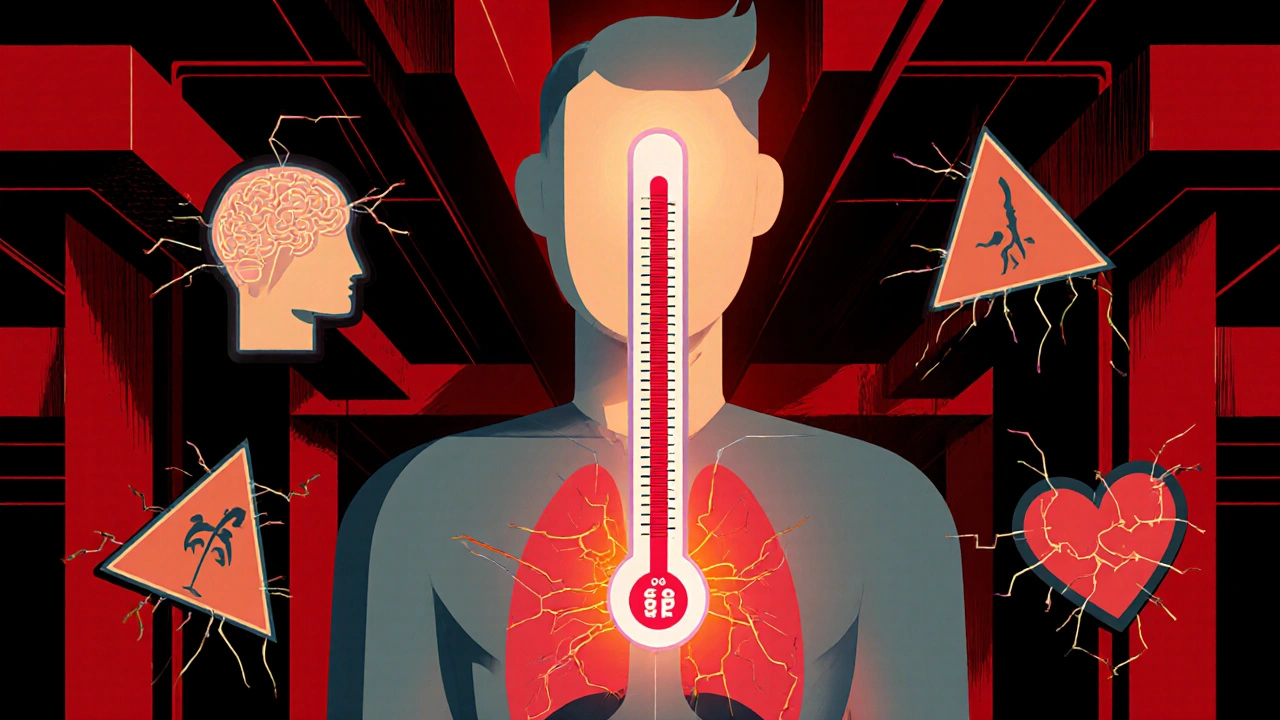
Know when a fever in adults becomes dangerous. Learn the temperature thresholds, warning symptoms, and timelines that mean it's time to seek medical help-before it turns into an emergency.
Read Details