Fever in Adults: When to Seek Medical Help
Know when a fever in adults becomes dangerous. Learn the temperature thresholds, warning symptoms, and timelines that mean it's time to seek medical help-before it turns into an emergency.
Read DetailsWhen your body temperature rises above 100.4°F (fever in adults, an elevated core body temperature triggered by the immune system in response to infection or inflammation), it’s not a disease—it’s a signal. Your immune system is working. But not all fevers are the same. A low-grade spike after a long day might be nothing. A sudden 103°F with chills and confusion? That’s a red flag. infection, a harmful invasion by bacteria, viruses, or fungi that triggers the body’s fever response is the most common cause, but it’s not the only one. Medications, autoimmune conditions, and even heat stress can turn up your internal thermostat.
What makes high temperature, a body temperature significantly above the normal range of 97.8–99.1°F, often indicating active immune activity dangerous isn’t the number alone—it’s what’s behind it. A fever from a cold usually fades in a few days. But if it lasts more than three days, spikes above 103°F, or comes with confusion, stiff neck, trouble breathing, or a rash that doesn’t fade when you press it, you need care. hyperthermia, a dangerous rise in body temperature caused by external heat exposure, not immune response can look like fever but requires totally different treatment. Mixing them up can delay life-saving help. And don’t assume a fever means you’re contagious. Some people run high temps with nothing contagious at all—like a reaction to a new drug or an overactive thyroid.
Most adults manage fever at home with rest, fluids, and OTC meds like acetaminophen or ibuprofen. But too many wait too long. If you’re over 65, have cancer, are on immunosuppressants, or have a chronic illness, even a mild fever needs attention. Your body might not respond the same way it used to. And if you’ve just returned from travel, been bitten by a tick, or started a new medication, that fever could be the first clue to something serious. The posts below cover exactly what to watch for, how to tell if it’s viral or bacterial, when to skip the thermometer and call a doctor, and how some common meds can actually hide or worsen your symptoms. You’ll find real stories, practical tips, and clear warnings—not guesswork.
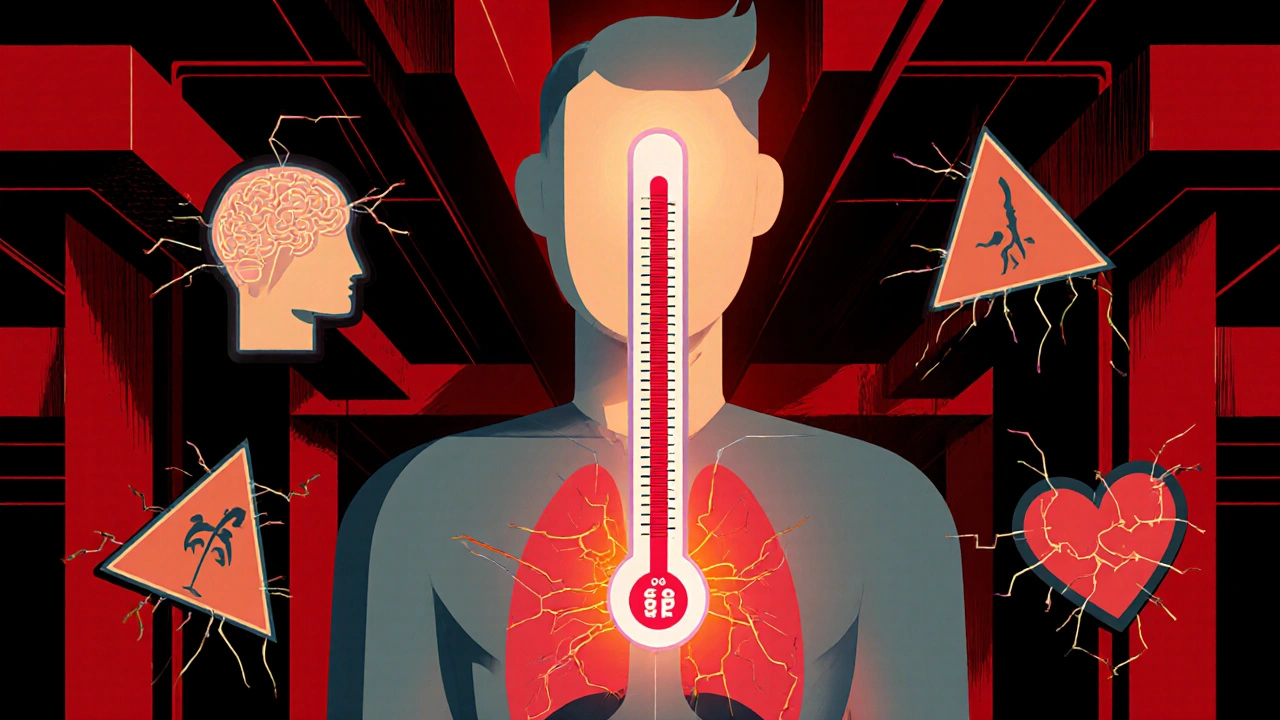
Know when a fever in adults becomes dangerous. Learn the temperature thresholds, warning symptoms, and timelines that mean it's time to seek medical help-before it turns into an emergency.
Read Details