Fever in Adults: When to Seek Medical Help
Know when a fever in adults becomes dangerous. Learn the temperature thresholds, warning symptoms, and timelines that mean it's time to seek medical help-before it turns into an emergency.
Read DetailsWhen you have a fever, a temporary rise in body temperature that signals your immune system is fighting something. Also known as pyrexia, it’s not the illness itself—it’s your body’s alarm system.
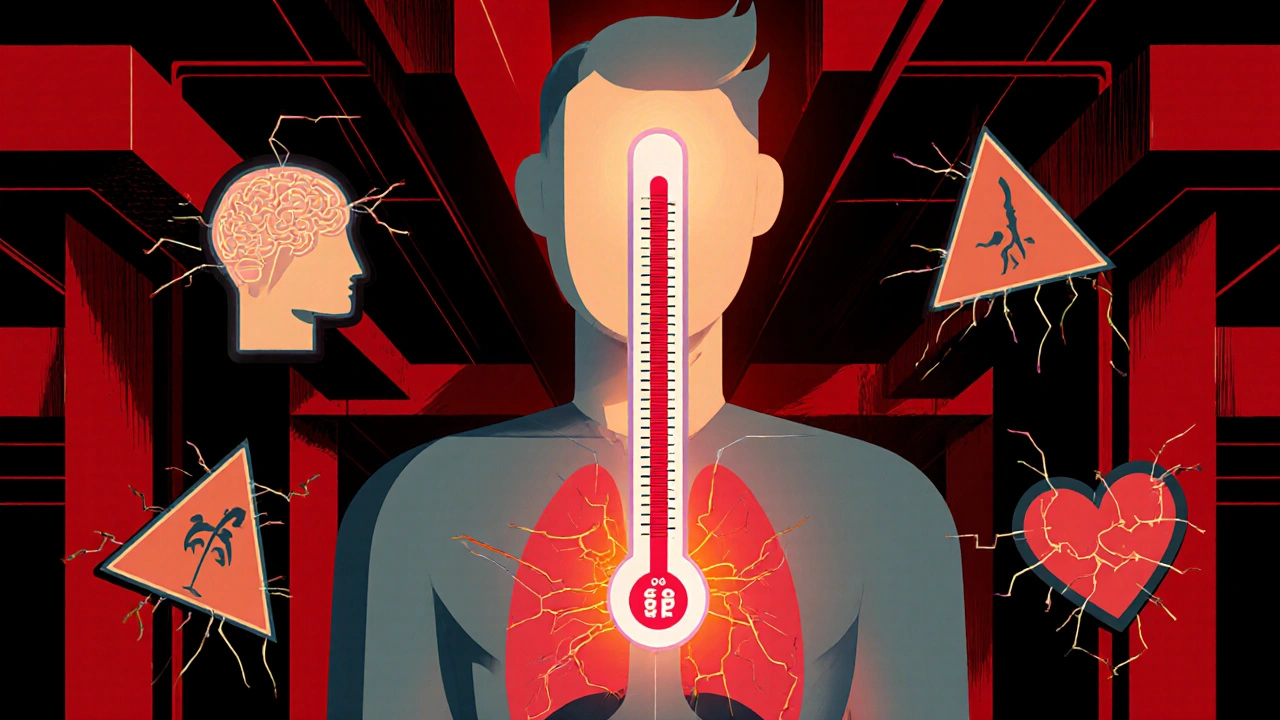
Most fevers are harmless and go away on their own. But if your fever hits 103°F or higher, lasts more than three days, or comes with confusion, stiff neck, trouble breathing, or a rash that won’t fade when you press on it, you need medical help. These aren’t just "bad flu" signs—they’re clues your body might be fighting something serious like meningitis, pneumonia, or a hidden infection. Kids under three months with any fever need to be seen immediately, no waiting. For adults, a fever that won’t break after taking acetaminophen or ibuprofen, especially with chills or sweating that soaks your clothes, is a red flag.
Fevers often come with other symptoms that tell you more than the temperature alone. If you’re dizzy, have chest pain, or your urine turns dark and you haven’t drunk much water, dehydration could be making things worse. A fever after recent travel, especially to areas with malaria or dengue, needs urgent attention. Even if you feel okay otherwise, a fever that spikes after surgery or while on chemotherapy isn’t normal—it could mean an infection is spreading. Don’t assume it’s just a virus. Sometimes, the fever is the only sign of something deeper, like a kidney infection, abscess, or even a hidden cancer.
What you do next matters more than the number on the thermometer. If you’re over 65, have diabetes, HIV, or take medicines that weaken your immune system, even a low-grade fever can be dangerous. Your body might not show the usual signs, so don’t wait for it to get worse. Keep track of how long it lasts, what else is happening, and whether it responds to meds. That info helps your doctor faster.
Below, you’ll find real stories and medical insights from people who learned the hard way when to act—and when to wait. These aren’t generic tips. They’re based on actual cases where missing the warning signs led to delays, and catching them early saved time, pain, and sometimes lives.
Know when a fever in adults becomes dangerous. Learn the temperature thresholds, warning symptoms, and timelines that mean it's time to seek medical help-before it turns into an emergency.
Read Details