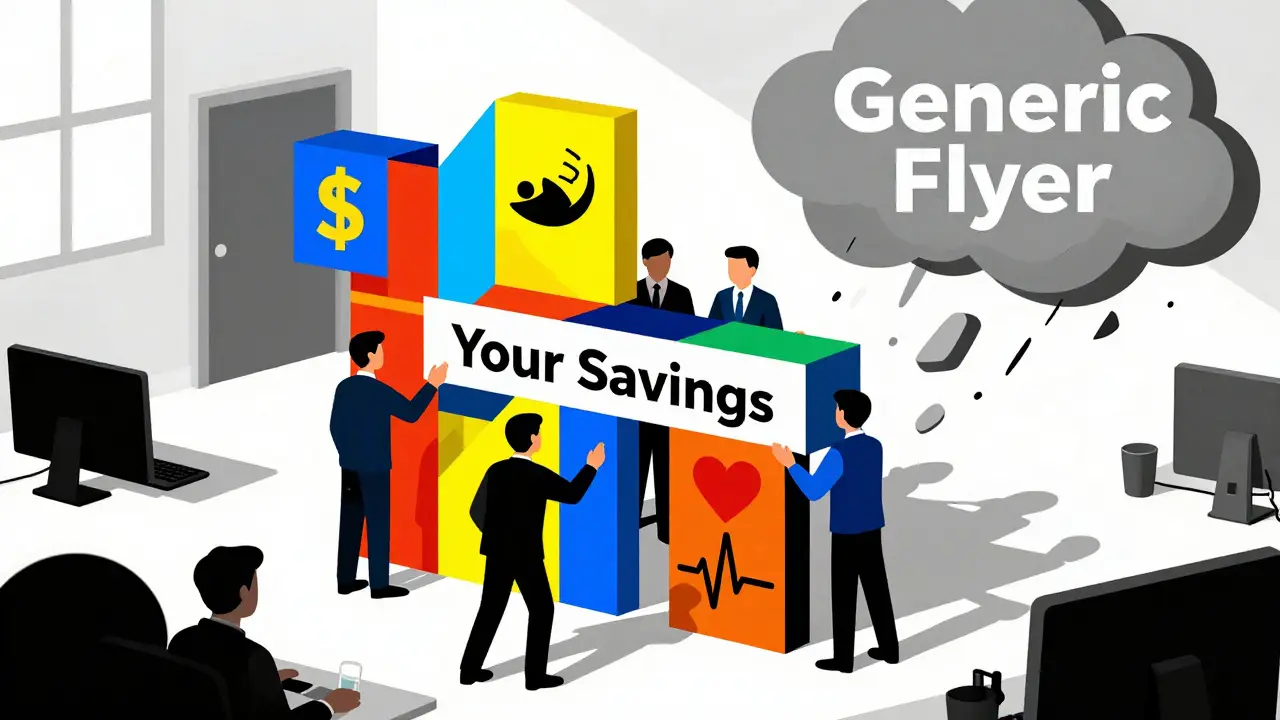
Most companies think workplace wellness is about free yoga classes or flu shots. But if you’re not teaching employees why it matters, none of it sticks. You can offer gym memberships, mental health days, and healthy snacks all day long-but if people don’t understand how it connects to their paychecks, stress levels, or future health, they’ll ignore it. And that’s exactly what’s happening in 68% of workplaces where wellness programs fail.
Why Generic Messages Fail
"Join our wellness program for a healthier you!" That’s the kind of message most companies send. It sounds nice. It’s polite. And it’s useless.
Research from Harvard Business Review shows that generic wellness messaging gets only 19% engagement. That means out of 100 employees, only 19 even bother to look at the email. Why? Because it doesn’t answer the question they’re really asking: "What’s in it for me?"
Employees don’t care about abstract ideas like "well-being." They care about real things: Can this lower my monthly insurance bill? Will it help me sleep better after my third kid was born? Can I actually use this without feeling like I’m being watched?
One HR manager in Manchester told us her team saw participation jump from 32% to 67% in six months after they stopped sending generic newsletters and started giving each employee a personalized benefit statement. It showed them exactly how much they could save on healthcare if they joined the walking challenge or completed the stress management course. No fluff. Just numbers tied to their own data.
The Real Benefits Employees Care About
Workplace wellness isn’t just about avoiding sickness. It’s about making life easier. Here’s what actually moves the needle for employees:
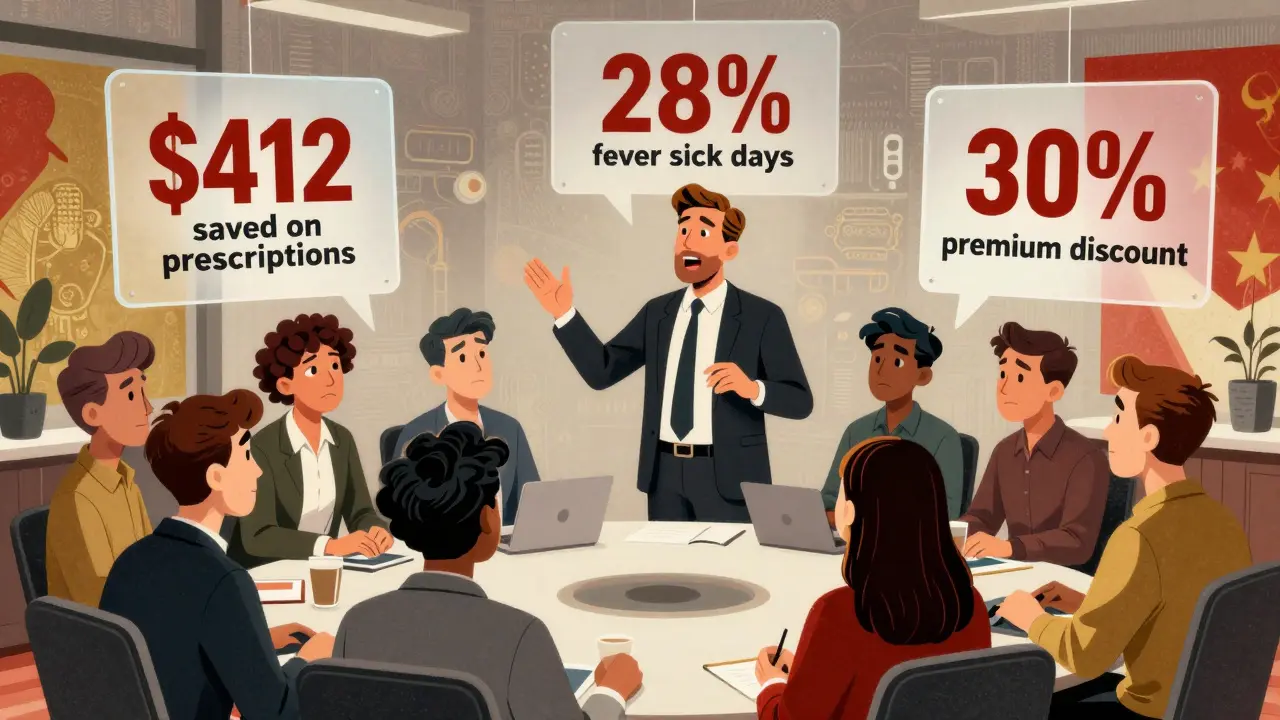
- Lower health insurance costs - Employees in well-educated programs see an average 22% reduction in healthcare claims, according to Strive Well-Being’s 2023 client data.
- More take-home pay - If your company offers premium discounts for wellness participation (up to 30% under ACA rules), that’s extra cash in your pocket every month.
- Fewer sick days - Educated employees take 28% fewer sick days, per the American College of Occupational and Environmental Medicine. That means less stress, fewer missed deadlines, and more control over your time.
- Better mental health support - 68% of employees say financial stress is their biggest worry. Wellness programs that include financial coaching and mental health access aren’t "nice to have"-they’re survival tools.
- Higher retention - Companies with strong wellness education have 11% lower turnover, according to Mercer’s 2023 survey. People stay where they feel supported.
These aren’t theoretical benefits. They’re measurable outcomes. But they only work if you explain them clearly, consistently, and personally.
What Great Wellness Education Looks Like
Top companies don’t just announce a program. They build a communication system. Here’s how they do it:
- Start with a survey - Ask employees what they care about. Is it sleep? Debt? Back pain? Don’t guess. Find out. Strive Well-Being’s clients who use this step see 34% higher participation.
- Break it into chunks - Don’t dump everything at once. Roll out one benefit per month. Maybe January is "Understand Your Health Insurance," February is "How Mental Health Support Works," March is "Your Financial Wellness Options."
- Use multiple channels - Email alone doesn’t cut it. Use your intranet, manager talking points, posters in the break room, and even quick 5-minute huddles during team meetings. Personify Health found 53% higher engagement when using 4+ channels.
- Show real numbers - Instead of saying "Wellness saves money," say "Employees who completed the diabetes prevention course saved an average of $412 on prescriptions last year. Here’s how you could too."
- Train managers - Managers are the most trusted source of info. If they don’t understand the benefits, they can’t explain them. Give them simple scripts, not PowerPoint slides.
Companies like Johnson & Johnson do this well. Their Glassdoor reviews consistently mention "clear explanations of how wellness activities translate to reduced premiums." That’s the gold standard.
What Doesn’t Work (And Why)
Not every wellness program fails because of bad design. Sometimes it’s because of bad promises.
A Trustpilot review from July 2024 sums it up: "They claimed $1,200 annual savings per employee. Our actual reduction was $217 after 18 months." That’s not just misleading-it’s damaging. When employees feel tricked, they tune out forever.
Another big mistake? Ignoring legal risks. The EEOC received over 2,100 wellness-related complaints in 2023-a 37% jump from the year before. Why? Because some programs ask invasive health questions or punish people for not participating. That’s not just unethical-it’s illegal under ADA and GINA rules.
And small businesses? They’re getting left behind. Only 38% of companies under 50 employees offer structured wellness education, according to the Bureau of Labor Statistics. It’s not that they don’t care. It’s that they don’t know where to start. The tools are out there-but they’re not always affordable.
Costs and Investment: What You Really Need to Spend
You don’t need a $50,000-a-year platform to make this work. But you do need to budget for education.
Here’s what real programs spend:
- Basic education modules - $495 per employee per year (CCWS-certified programs)
- Mid-tier platforms - $15-$25 per employee per month (like Strive Well-Being)
- Enterprise solutions - $50,000+ annually for 500+ employees
But here’s the kicker: The average ROI is $3.27 for every $1 spent, according to Harvard Business Review. That’s not marketing fluff-it’s peer-reviewed data.
And the cost of NOT doing it? Higher turnover. More absenteeism. Lower productivity. Those numbers are invisible on your balance sheet, but they’re real.
WELCOA recommends spending 3-5% of your total wellness budget on education. That’s not a cost-it’s insurance. Insurance against failure.
How to Start (Even If You’re a Small Business)
If you’re a small company with 20 employees and no HR department, here’s your starter plan:
- Ask your team: "What’s one thing that would make your work life easier?" Use a free Google Form.
- Choose one low-cost benefit you already offer-maybe it’s an EAP (Employee Assistance Program) or a discount on a meditation app.
- Write a 300-word email explaining exactly how it works and how much it could save them. Use real numbers if you have them.
- Have your manager say it in a team meeting. Not read it. Say it. Like a human.
- Track participation for 90 days. If it’s under 40%, tweak the message. Don’t give up.
You don’t need a fancy platform. You need honesty. You need clarity. And you need to stop treating wellness like a perk and start treating it like a core part of how you support your people.
The Future Is Personal
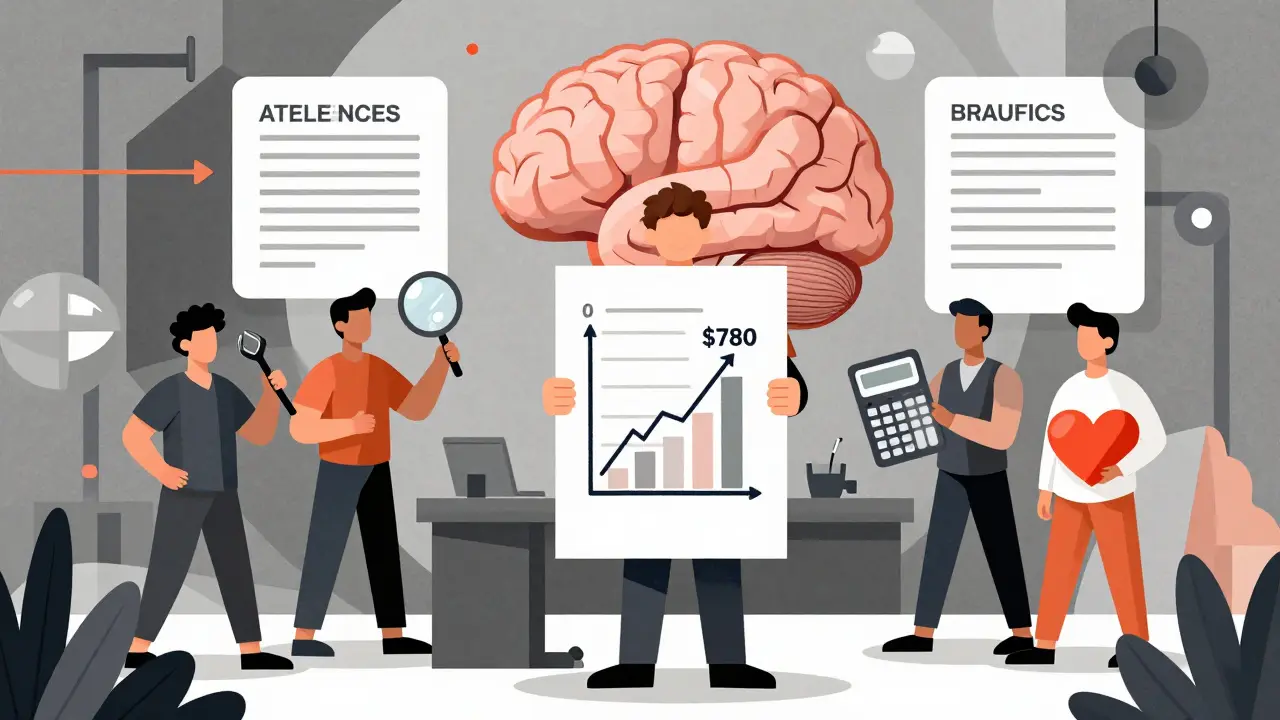
By 2026, Forrester predicts 45% of large employers will use AI to generate personalized wellness benefit statements for each employee. That means your report might say: "Based on your age, location, and claims history, you could save $780/year by joining the smoking cessation program."
This isn’t sci-fi. It’s coming fast. And the companies that start building this now-by collecting data ethically, explaining it clearly, and respecting privacy-will be the ones that keep their best people.
Workplace wellness isn’t about fitness trackers or kale smoothies. It’s about showing people that their employer sees them-not as a cost, but as a person with real needs, real fears, and real potential to thrive.
That’s the kind of education that changes lives. And businesses.
Why do most workplace wellness programs fail?
Most fail because they rely on generic messages like "Be healthier!" without explaining how participation directly benefits employees-like lowering insurance costs, reducing sick days, or improving mental health. Without clear, personal connections to tangible outcomes, engagement stays below 20%. Employees disengage when they don’t understand how the program affects them.
What’s the biggest mistake companies make with wellness education?
Overpromising results. Some vendors claim employees will save $1,200 a year, but actual savings are often under $250. When employees realize the math doesn’t add up, trust collapses. Transparency matters more than hype. Show real data, even if it’s modest, and explain how outcomes vary by individual behavior.
Can small businesses afford workplace wellness education?
Yes. You don’t need expensive platforms. Start with free tools: use Google Forms to survey employees, pick one existing benefit (like an EAP or mental health app), and explain it clearly in a short email or team meeting. Focus on one thing, do it well, and track participation. Many small businesses see results with under $1,000 in annual investment.
How do you measure if wellness education is working?
Track participation rates, healthcare claim reductions, absenteeism, and employee feedback. A 22% drop in claims, 28% fewer sick days, or a jump from 30% to 60% participation are strong indicators. Also, ask employees directly: "Do you understand how this program helps you?" If more than 30% say no, your messaging needs work.
Are there legal risks with wellness programs?
Yes. The EEOC received over 2,100 complaints in 2023 related to wellness programs violating ADA and GINA rules. Risks include asking invasive health questions, penalizing non-participation, or tying incentives too tightly to health outcomes. Always ensure incentives stay under 30% of total health coverage cost and avoid collecting genetic or disability-related data without consent.
What’s the difference between wellness programs and wellness education?
A wellness program offers activities-gyms, screenings, counseling. Wellness education explains why those activities matter. One gives you a tool; the other teaches you how to use it. Without education, tools sit unused. Education turns participation from optional into obvious.
Should I use AI to personalize wellness messages?
If you can do it ethically and transparently, yes. AI can generate messages like: "Based on your claims history, you could save $620/year by joining the stress management course." But only if employees know how their data is used and have control over it. Start simple-use existing HR data to tailor messages. Don’t rush into tech. Focus first on clarity and trust.






Most companies are clueless. They throw a yoga mat in the breakroom and call it a wellness program. Meanwhile, employees are drowning in debt, sleep-deprived, and scared of their next medical bill. You don’t need more perks-you need transparency. Show people the numbers. If they can save $400 on prescriptions by walking 10k steps a week, they’ll show up. No fluff. No buzzwords. Just cold hard math that hits their wallet. This isn’t HR theater-it’s survival.
December 19Sajith Shams