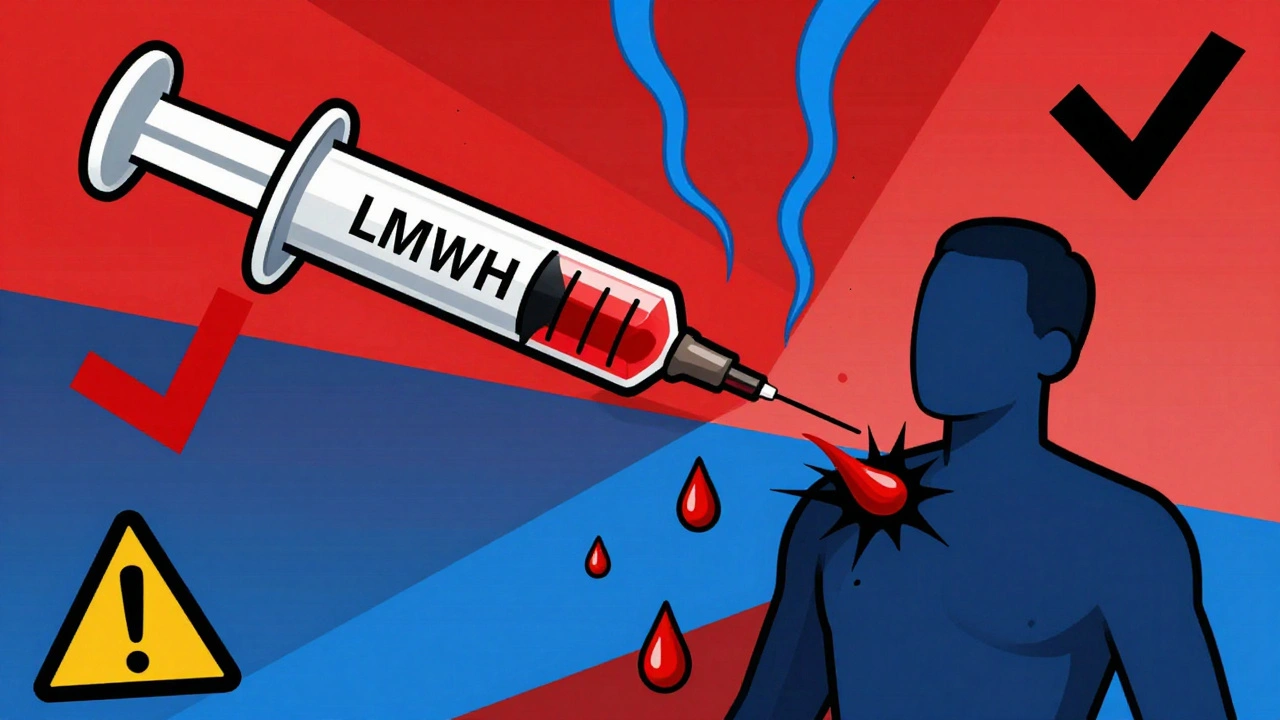
Enoxaparin: What It Is, How It Works, and What You Need to Know
When your doctor prescribes enoxaparin, a low-molecular-weight heparin used to prevent dangerous blood clots. Also known as Lovenox, it's one of the most common anticoagulants given by injection to stop clots before they form. Unlike warfarin, which needs regular blood tests, enoxaparin works predictably with fixed doses—making it easier to manage after surgery, during hospital stays, or for people with limited mobility.
Enoxaparin is a type of blood thinner, a medication that reduces the blood’s ability to form clots. It doesn’t dissolve existing clots, but it stops them from growing bigger. This is critical for people recovering from hip or knee surgery, those with deep vein thrombosis (DVT), or anyone at risk of pulmonary embolism, a life-threatening clot that travels to the lungs. It’s also used in patients with certain heart conditions or those on long-term bed rest. The key is timing: starting it early reduces complications, but missing a dose or taking too much can lead to serious bleeding.
People on enoxaparin need to watch for signs of bleeding—unusual bruising, nosebleeds, blood in urine or stool, or headaches that won’t go away. It’s not safe if you have active bleeding, a spinal catheter, or a history of heparin-induced thrombocytopenia. If you’re taking other meds like NSAIDs or SSRIs, those can increase bleeding risk too. Your pharmacist can flag these interactions before you even leave the pharmacy.
Many of the posts below dive into how medications like enoxaparin interact with other drugs, how to manage them safely, and what to watch for when you’re on multiple prescriptions. You’ll find real advice on avoiding dangerous combinations, recognizing side effects early, and working with your care team to stay protected. Whether you’re on enoxaparin now or just learning about it, these guides help you cut through the noise and focus on what matters: staying safe and in control of your health.