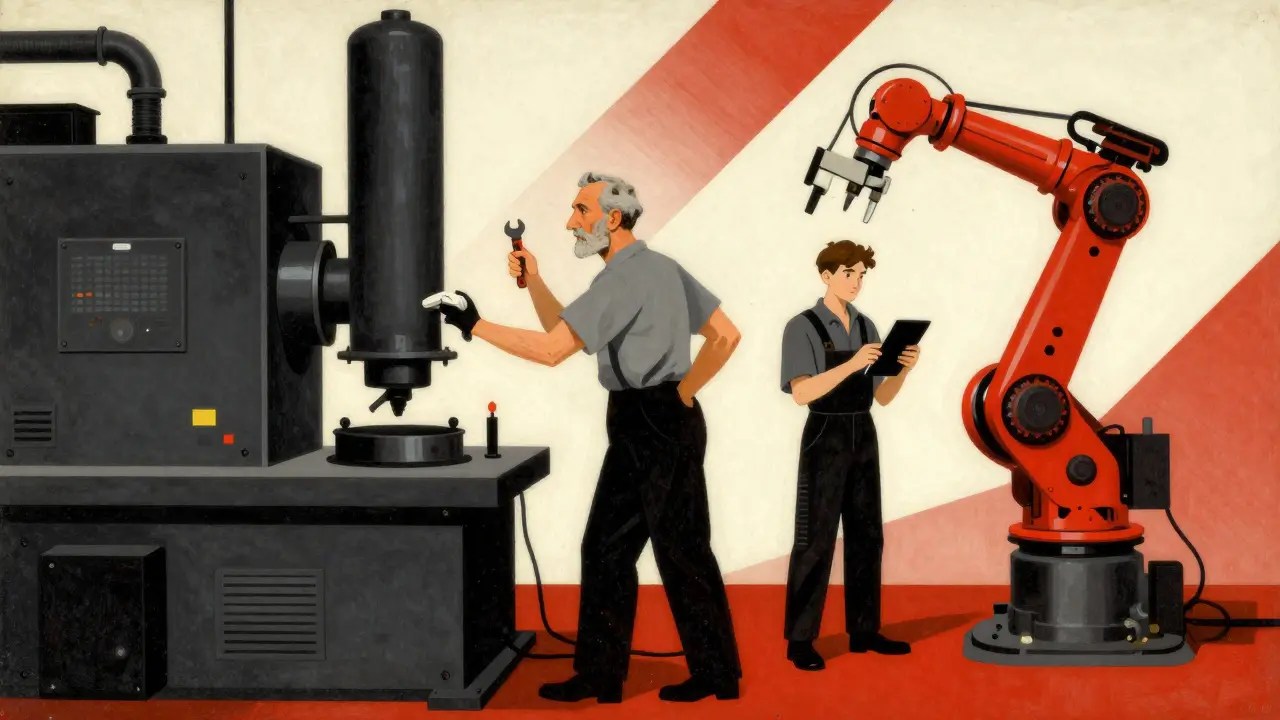
Walk onto any modern factory floor and you'll see a clash of eras. You have veteran operators who can hear a bearing failing from fifty feet away, working alongside new hires who can program a robotic arm in their sleep but struggle to read a manual caliper. This gap isn't just a quirk of demographics; it's a systemic risk. With 78% of manufacturers reporting that skills gaps are actively hurting their operations, the question isn't whether you need training, but whether your personnel training strategy actually maps to the jobs your people do.
The goal of formal qualifications is to move away from the "watch and learn" method, which is prone to error, and toward a standardized set of competencies. Whether you're managing a small machine shop or a massive automotive plant, getting your staff certified doesn't just check a compliance box-it directly impacts your bottom line. For instance, workers with formal certifications often show 28% higher productivity metrics when measured by Overall Equipment Effectiveness (OEE) standards.
Key Takeaways for Manufacturing Training
- Certification vs. Experience: Nationally recognized credentials like CPT offer higher wage potential and better portability than traditional apprenticeships.
- The Safety Dividend: Proper safety training is proven to reduce workplace injuries by up to 52%.
- Digital Shift: Industry 4.0 requires a blend of traditional mechanical aptitude and new digital literacy (Python, SQL, and data analytics).
- Tiered Approach: Training must be scaled from entry-level diplomas to advanced Six Sigma Black Belts depending on the role.
The Hierarchy of Manufacturing Qualifications
Not every employee needs the same set of credentials. Attempting to over-certify entry-level staff creates "credential inflation," where you pay for certifications that don't actually improve job performance. Instead, use a tiered model based on the complexity of the role.
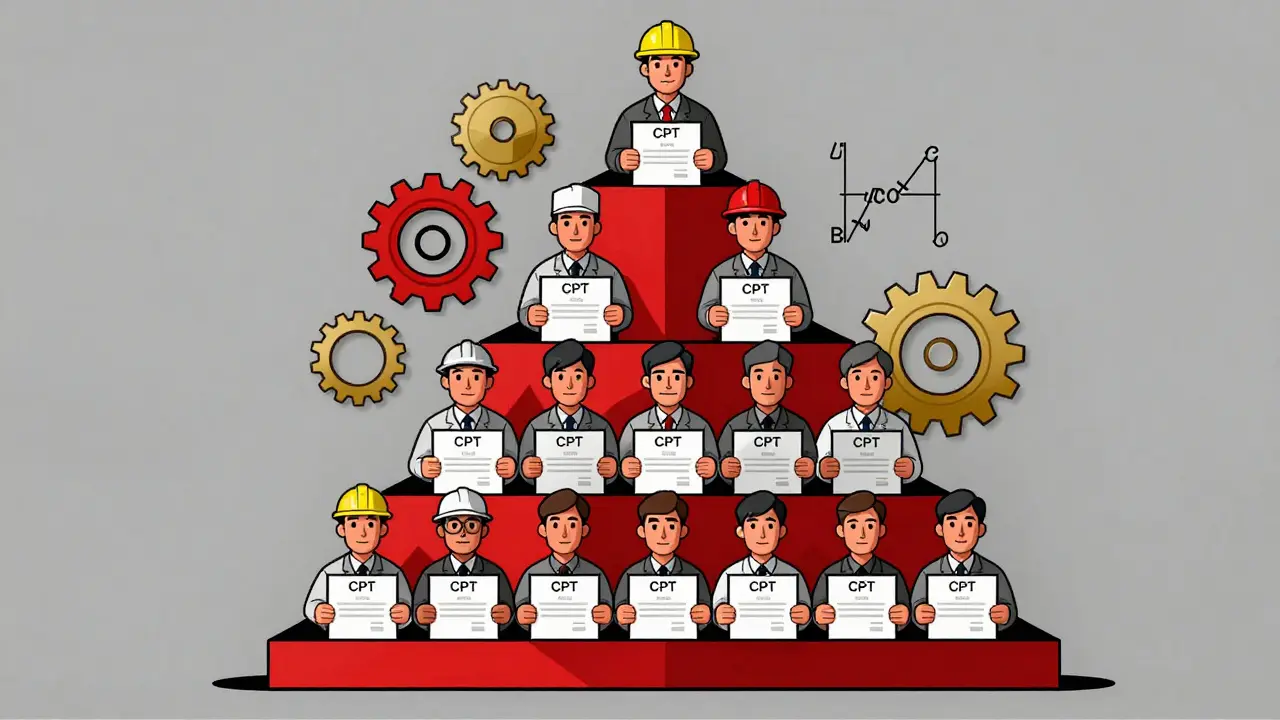
For entry-level production workers, a high school diploma is the baseline, but that's where the risk starts. Data shows that positions relying solely on diplomas face 37% higher turnover rates. This is where Certified Production Technician (CPT) is a nationally portable credential developed by the Manufacturing Skill Standards Council (MSSC) that validates safety, quality, and maintenance skills comes into play. It transforms a general laborer into a technician with a recognized standard of skill.
As you move into technical roles-like welding or mechanical technology-the requirements shift toward 1-2 year college programs. At the top of the pyramid, engineering and management roles require bachelor's degrees in fields like industrial engineering, focusing on physics and process design. This structure ensures that the person designing the process understands the physics, while the person running the machine understands the safety and quality tolerances.
| Pathway | Typical Duration | Estimated Cost | Key Benefit | Primary Drawback |
|---|---|---|---|---|
| Traditional Apprenticeship | 2-4 Years | Paid (Earn while learn) | Deep hands-on experience | Low credential portability |
| CPT Certification | Short-term course | Low to Moderate | 76% higher wage potential | Less depth than a degree |
| Community College Diploma | 18-24 Months | $3,000 - $8,000/yr | 91% job placement rate | Requires full-time study |
| University Degree | 4 Years | $20,000 - $50,000/yr | Path to senior management | High cost and time investment |
Mastering Quality with Six Sigma and Lean
While technical certifications tell you if someone can operate a machine, Six Sigma is a set of techniques and tools for process improvement that seeks to improve quality by reducing the possible causes of defects tells you if they can make the process better. This is the gold standard for quality control in manufacturing.
Six Sigma operates on a belt system, much like martial arts. A White Belt is an introductory level, often costing between $99 and $200. As workers move to Green Belt (requiring 100-160 hours of study) and Black Belt levels, their value to the company increases. For example, the median salary for a Green Belt is roughly $85,000, while a Black Belt jumps to $110,000. This isn't just about the title; it's about the ability to lead complex projects that save the company millions in waste reduction.
However, a certification alone isn't a magic bullet. Research shows that Six Sigma retention rates are 85% when paired with mentorship, compared to only 57% for those who just take the course. If you want your staff to actually use these tools, you have to embed them in a culture of continuous improvement, not just a one-time classroom event.
The Industry 4.0 Pivot: Digital Literacy
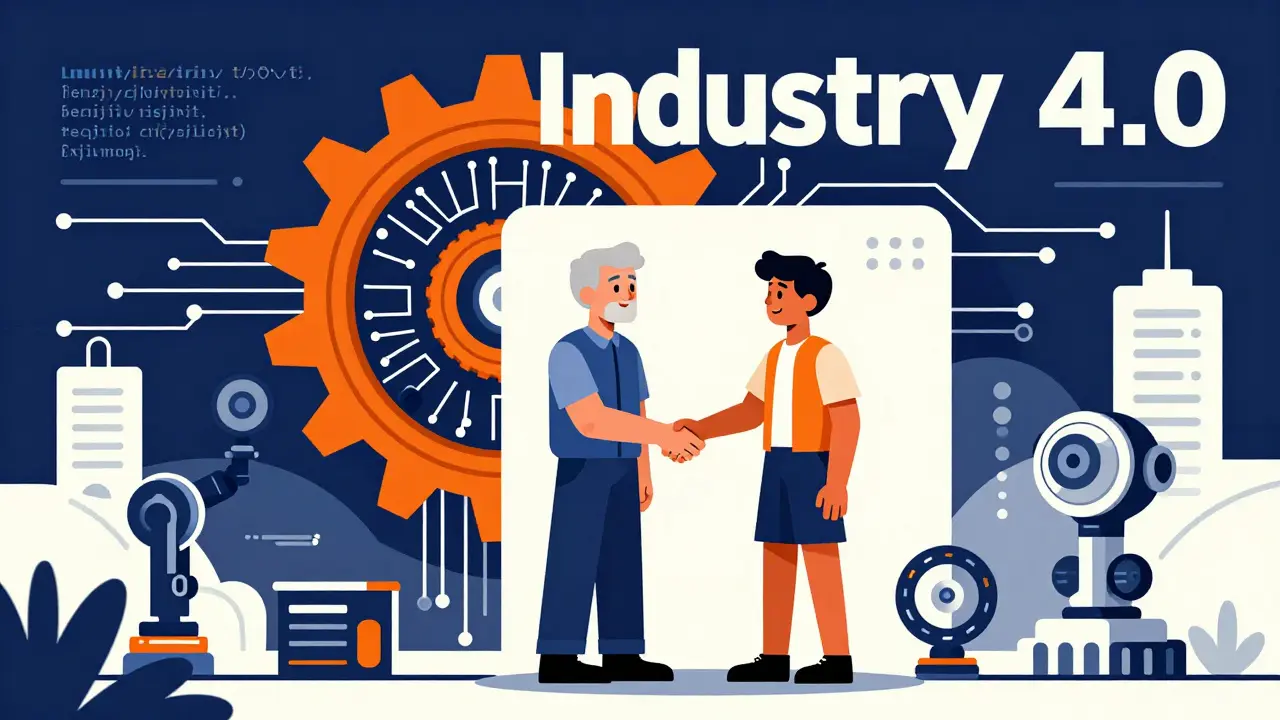
We are currently seeing a massive shift toward "smart factories." This means the old definition of a "qualified" worker is changing. It's no longer enough to know how to turn a wrench; workers now need to be comfortable with Mechatronics, which is the synergistic integration of mechanical engineering, electronics, and computer control systems . Currently, 67% of companies report a shortage of mechatronics skills.
This digital pivot is creating a strange divide. Younger workers often have high digital literacy but lower mechanical aptitude, while veteran workers-who make up about 42% of the workforce-struggle with digital adoption. To fix this, many plants are implementing cross-training initiatives. By rotating workers through different stations and pairing a "digital native" with a "mechanical expert," companies have seen resistance to new technology drop by 41%.
Looking ahead to 2026 and beyond, certifications are becoming more modular. Instead of one giant degree, we're seeing "stackable micro-credentials." This allows a worker to earn a certificate in data analytics, then one in PLC programming, and then one in robotic maintenance, building their qualification profile incrementally as the business needs evolve.
Designing an Effective Training Program
If you're building a training roadmap from scratch, don't start with a brochure. Start with your data. The most successful programs use a systematic skill assessment-looking at production metrics, quality control failures, and incident reports-to find where the actual gaps are. Companies that use this data-driven approach report 33% faster skill acquisition.
Your program should cover four non-negotiable pillars:
- Safety Protocols: This isn't just a lecture. It includes PPE usage and emergency response. According to the National Safety Council, this is the single most effective way to drop incident rates.
- Equipment Operation: Moving from basic controls to advanced troubleshooting. This should be documented in a skills matrix so you know exactly who can run which machine.
- Quality Control: Training on inspection tools, understanding tolerance levels, and knowing when a part is "out of spec."
- Industry-Specific Processes: Tailoring the training to whether you're doing chemical processing, electronics assembly, or heavy machining.
To keep this sustainable, avoid the trap of "one-and-done" training. Implement a digital tracking system for development plans. Manufacturers who document their employees' growth see 27% higher retention rates because workers feel there is a clear path upward.
What is the difference between a CPT and a Six Sigma certification?
The CPT (Certified Production Technician) focuses on the fundamental skills needed to operate in a production environment, such as safety, basic maintenance, and quality practices. It is designed for frontline workers. Six Sigma, on the other hand, is a methodology for process improvement and defect reduction. While a CPT knows how to run the machine correctly, a Six Sigma practitioner knows how to analyze the entire production line to eliminate waste and variability.
How much does it cost to certify staff in Six Sigma?
Costs vary wildly by belt level. A White Belt is an affordable entry point, typically ranging from $99 to $200. However, moving up to a Master Black Belt can cost between $3,000 and $5,000, reflecting the intensity of the training and the level of expertise required.
Do I really need formal certifications if my staff has years of experience?
Experience is invaluable, but formal certifications provide a standardized baseline. They ensure that "the way we've always done it" isn't actually a dangerous or inefficient habit. Furthermore, certifications like CPT provide a portable credential that increases worker morale and wage potential, leading to higher retention.
How do I handle veteran workers who resist new digital tools?
The most effective method is cross-training and reverse mentorship. Pair your veteran workers (who have the mechanical intuition) with younger workers (who have the digital skills). This creates a mutual exchange of knowledge and reduces the fear of being replaced by technology, which has been shown to reduce resistance by 41%.
What is the ROI of investing in comprehensive personnel training?
Large enterprises typically see a return on investment (ROI) within 14 months. This comes from a combination of reduced errors, less equipment downtime, and a 52% reduction in workplace injuries, which lowers insurance costs and workers' compensation claims.
Next Steps for Implementation
If you are a small manufacturer, financing can be a hurdle. Start by looking into the Manufacturing Extension Partnership (MEP), which provides free training consultations across 1,400 centers. Focus on "stackable" micro-credentials so you can train staff in small, affordable increments rather than paying for massive degrees upfront.
For enterprise-level managers, the priority should be integrating AI-powered adaptive learning and virtual reality (VR) training. VR can reduce assembly errors by up to 39% by allowing workers to fail in a simulated environment before touching expensive machinery. Your goal is to move toward a blended approach: combine on-the-job experience with formal, industry-recognized certifications to create a workforce that is both agile and expert.






The reverse mentorship idea is a total game changer for the shop floor! I've seen this work in real-time where the new kids teach the veterans how to navigate the tablets and the veterans show them why the machine is actually making that rattling sound. It builds a huge amount of respect between the generations and honestly makes the whole team more agile. If you aren't doing this, you're leaving money on the table!
April 5Rauf Ronald